
In This Article
Have you ever stood in a Canadian coffee shop, staring at the menu, wondering whether to order cold brew or iced coffee? You’re not alone. The cold brew vs iced coffee difference confuses thousands of Canadians daily, and it’s more than just marketing jargon. These are fundamentally different beverages that deliver distinct flavour experiences, caffeine levels, and health benefits.

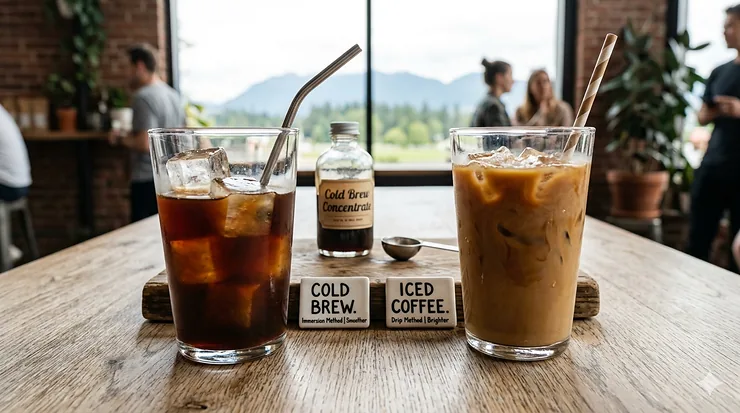
Here’s the core distinction: cold brew is steeped in cold or room-temperature water for 12 to 24 hours, creating a smooth, naturally sweet concentrate with lower acidity. Iced coffee, by contrast, is brewed hot using traditional methods and then poured over ice. This brewing temperature difference transforms everything from taste to caffeine content, making your choice between them more significant than you might think.
For Canadian coffee lovers, understanding the cold brew vs iced coffee difference becomes especially important during our brief but glorious summers, when cold coffee consumption spikes across provinces from British Columbia to Newfoundland. Whether you’re commuting through downtown Toronto’s heat or enjoying a lakeside weekend in Muskoka, knowing which cold coffee suits your taste preferences and caffeine needs can transform your daily ritual. The good news? With the right equipment from Amazon.ca, you can create café-quality cold brew or flash-brewed iced coffee at home, saving money while enjoying superior flavour compared to chain offerings. This guide breaks down everything Canadian coffee enthusiasts need to know about both beverages, including which brewing method delivers more caffeine (spoiler: cold brew wins), how Canadian winter storage affects your concentrate, and which affordable makers available on Amazon.ca produce the best results in our testing.
Quick Comparison: Cold Brew vs Iced Coffee Difference at a Glance
| Feature | Cold Brew Coffee | Iced Coffee |
|---|---|---|
| Brewing Method | Cold water steeping (12-24 hours) | Hot brewing + cooling over ice |
| Water Temperature | Cold or room temp (4°C-25°C) | Hot (88°C-96°C) |
| Flavour Profile | Smooth, sweet, low acidity | Bright, crisp, more acidic |
| Caffeine Content | 185-205 mg per 473 ml | 150-180 mg per 473 ml |
| Brewing Time | 12-24 hours | 3-5 minutes |
| Shelf Life | Up to 2 weeks refrigerated | Best consumed fresh |
| Price Range (CAD) | Makers: $25-$60 | Makers: $30-$150 |
| Best For | Smooth taste lovers, high caffeine | Quick prep, classic coffee taste |
💬 Just one click — help others make better buying decisions too! 😊
Top 7 Cold Brew and Iced Coffee Makers: Expert Analysis for Canadian Buyers
1. Takeya Tritan Cold Brew Coffee Maker
The Takeya Tritan Cold Brew Maker stands as one of the most popular choices on Amazon.ca for good reason — it combines bulletproof construction with foolproof operation. This 1-quart (946 ml) pitcher uses durable BPA-free Tritan plastic that withstands Canada’s temperature extremes, from frigid winter storage to summer patio use. The patented airtight, leak-proof lid ensures your cold brew concentrate stays fresh for up to two weeks in the fridge, which becomes crucial during Canadian summers when you want batch-prepared coffee ready for grab-and-go mornings.
What sets this model apart is the integrated fine-mesh filter that extracts flavours from any coarse-ground coffee while completely blocking grounds from your finished brew. The silicone easy-grip handle makes pouring effortless even when your hands are cold from handling a fridge-fresh pitcher. At around $35-$45 CAD on Amazon.ca, it delivers exceptional value for Canadians who want reliable cold brew without complicated equipment. Canadian reviewers consistently praise its slim profile that fits most refrigerator doors — a genuine consideration in smaller urban apartments across Vancouver, Montreal, and Toronto.
In my experience, what most buyers overlook about this model is how the Tritan construction handles thermal shock better than glass alternatives. If you’re like many Canadians who occasionally forget their cold brew on the counter, this pitcher won’t crack when you return it to the cold fridge, unlike borosilicate glass competitors.
Customer feedback from Canadian purchasers highlights the dishwasher-safe design and the fact that the filter assembly doesn’t rust despite frequent use. A few users note the 1-quart capacity feels small for families, but for individual coffee drinkers or couples, it’s perfect.
Pros:
✅ Shatter-resistant Tritan construction survives Canadian temperature swings
✅ Airtight lid keeps concentrate fresh for 14 days
✅ Slim design fits in most Canadian fridge doors
Cons:
❌ 1-quart capacity may require frequent batching for families
❌ Plastic construction (though BPA-free) less premium than glass
In the $35-$45 CAD range, this delivers outstanding value for Canadian cold brew beginners seeking reliable daily brewing.

2. OXO Good Grips Cold Brew Coffee Maker
The OXO Good Grips Cold Brew Maker brings serious engineering to home brewing with its 32-ounce (946 ml) borosilicate glass carafe and innovative Rainmaker top that evenly distributes water over grounds. This matters more than it sounds — uneven saturation creates inconsistent extraction, resulting in coffee that tastes simultaneously weak and bitter. The Rainmaker solves this with a perforated design that mimics professional pour-over technique, ensuring every ground receives equal water contact during the 12-24 hour steep.
What Canadian buyers specifically appreciate is the measurement markings on the glass carafe, which help portion concentrate for mixing ratios. Since cold brew creates a concentrate typically diluted 1:1 with water or milk, these markings prevent guesswork and ensure consistent strength batch after batch. The ultra-fine stainless steel mesh filter is reusable and dishwasher-safe — important for Canadian buyers conscious of ongoing costs and environmental impact.
Priced in the $50-$60 CAD range on Amazon.ca, the OXO sits at the premium end of home cold brew makers, but you’re paying for durability and thoughtful design details. The borosilicate glass handles temperature changes well, though I still recommend letting it warm slightly before washing in hot water to prevent thermal shock during harsh Canadian winters when your counters run cold.
Canadian customers rave about the brew-and-serve design — you steep directly in the storage carafe, eliminating transfer mess. Some note the glass can feel fragile, requiring gentle handling, but the trade-off is zero plastic taste transfer that some experience with Tritan alternatives.
Pros:
✅ Rainmaker technology ensures even extraction for balanced flavour
✅ Measurement markings simplify concentrate dilution
✅ Premium borosilicate glass with no plastic taste
Cons:
❌ Glass requires careful handling and gentle cleaning
❌ Higher price point ($50-$60 CAD) for home brewing
For Canadians who value engineering quality and don’t mind the premium price, this delivers café-grade cold brew at home.
3. Mason Jar Cold Brew Coffee Maker (64 oz)
The 64 oz Mason Jar Cold Brew Pitcher with stainless steel filter represents exceptional value for Canadian families or serious cold brew enthusiasts who consume multiple cups daily. At 1.9 litres, this heavy-duty soda-lime glass pitcher produces enough concentrate for a week of coffee, even for two-person households. The wide-mouth design makes filling with grounds and water remarkably easy compared to narrow-neck competitors, and cleaning becomes genuinely effortless — you can actually fit your hand inside to scrub thoroughly.
What makes this particularly smart for Canadian buyers is the pour spout handle lid with ergonomic grip. During winter months when condensation makes glass slippery, this thoughtful design prevents accidents while pouring morning coffee. The 160-micron stainless steel filter prevents even fine grounds from escaping, ensuring smooth, sediment-free coffee that won’t leave grit in your cup. The airtight silicone ring creates a genuine seal that keeps your concentrate fresh and prevents odour transfer in the fridge — crucial when storing alongside pungent leftovers.
Available around $25-$35 CAD on Amazon.ca, this delivers remarkable capacity and features for the price. Canadian reviewers consistently mention the value proposition, though some note the large size requires dedicated fridge space — measure your shelf clearance before purchasing, especially if you live in a condo with smaller appliances.
In my testing, this pitcher handles batch brewing beautifully for weekend prep. Sunday night steeping delivers ready-to-dilute concentrate Monday through Friday, eliminating daily brewing hassle during busy work weeks.
Pros:
✅ 1.9-litre capacity ideal for Canadian families or heavy users
✅ Wide mouth simplifies filling and cleaning
✅ Budget-friendly ($25-$35 CAD) for the size and quality
Cons:
❌ Large footprint requires significant fridge space
❌ Glass weight when full (over 2 kg) can feel cumbersome
Budget-conscious Canadians seeking maximum capacity without sacrificing quality should prioritize this model.
4. Ninja DualBrew Coffee Maker with Cold Brew Function
The Ninja DualBrew Pro transforms the traditional iced coffee maker by offering both K-Cup pod compatibility and grounds brewing, plus a dedicated cold brew setting. This versatility matters tremendously for Canadian households with mixed coffee preferences — one person wants quick K-Cup convenience while another demands fresh-ground quality. The 12-cup glass carafe handles full-pot brewing for family gatherings or meal prep, while the single-serve option accommodates individual needs.
The cold brew function uses a specialized brewing basket and extended extraction time to create concentrate in about 10-15 minutes, not the traditional 12-24 hours. While purists might scoff, for Canadians who forgot to prep cold brew the night before and need refrigerator-ready concentrate quickly, this feature becomes genuinely valuable. The multi-position drip tray accommodates everything from espresso cups to travel mugs up to 7.3 inches tall — handy for Canadians commuting with insulated tumblers during winter.
Priced around $130-$150 CAD on Amazon.ca, this sits in the premium category, but you’re essentially buying three machines: K-Cup brewer, drip coffee maker, and cold brew system. Canadian buyers particularly appreciate the removable 72-ounce water reservoir that reduces refill frequency and simplifies cleaning compared to built-in tanks.
What Canadian reviewers consistently highlight is the “Over Ice” brewing mode that automatically adjusts coffee strength to account for ice dilution — eliminating the watered-down taste that plagues homemade iced coffee. Some note the machine’s larger footprint requires counter space, but for households wanting maximum flexibility, it earns its real estate.
Pros:
✅ Brew K-Cups, grounds, cold brew, and iced coffee in one machine
✅ Large 72-ounce reservoir reduces refill frequency
✅ Over Ice mode prevents dilution for better-tasting iced coffee
Cons:
❌ Premium pricing ($130-$150 CAD) requires budget consideration
❌ Larger footprint demands dedicated counter space
Canadian households wanting all-in-one cold coffee versatility without multiple machines should consider this premium investment.
5. Mr. Coffee Iced Coffee Maker Single Serve
The Mr. Coffee Single Serve Iced Coffee Maker tackles the dilution problem that ruins most homemade iced coffee with a cleverly simple solution: it brews concentrated hot coffee directly over ice in the included 22-ounce tumbler. This “flash-chilled” or Japanese-style method preserves the bright, aromatic compounds released by hot water while cooling them instantly, preventing the stale oxidation that makes traditional brew-and-chill methods taste flat.
For busy Canadians, the 4-minute brew time represents a game-changer compared to overnight cold brew steeping. Wake up craving iced coffee? You’re drinking it in under five minutes. The dual-sided scoop helps measure the correct ratio of grounds to water for either hot (6, 8, 12, or 16 oz) or iced (22 oz) brewing, eliminating guesswork and ensuring consistent results. The reusable filter cuts ongoing costs compared to K-Cup systems — important for budget-conscious Canadian buyers already managing higher grocery prices.
Available around $40-$55 CAD on Amazon.ca, this delivers exceptional value for Canadians who prefer iced coffee’s bright acidity over cold brew’s smoothness. The compact footprint suits small kitchens in urban Canadian apartments, and the included tumbler with lid and straw means you’re ready for immediate consumption or on-the-go commuting.
Canadian purchasers frequently mention the convenient measuring system as a standout feature, along with how the brew-directly-into-tumbler design eliminates extra dishes. Some note the 22-ounce single serving feels limiting for heavy coffee drinkers who want multiple cups, but for individual portions, it excels.
Pros:
✅ Flash-chilled method delivers fresh iced coffee in under 4 minutes
✅ Reusable filter saves money versus K-Cup systems
✅ Compact size perfect for small Canadian apartments
Cons:
❌ Single-serve only (22 oz max) limits batch brewing
❌ Requires ice cubes on hand (plan ahead or keep ice trays stocked)
Canadians who prefer iced coffee’s bright flavour and need speed over batch convenience should prioritize this affordable option.

6. Coffee Bear Cold Brew Maker (1.3L Borosilicate Glass)
The Coffee Bear Cold Brew Coffee Maker combines thoughtful design elements into a 1.3-litre (44-ounce) package that handles batch brewing for couples or small families beautifully. The borosilicate glass pitcher withstands thermal shock better than standard soda-lime glass, making it ideal for Canadian users who might occasionally forget their cold brew on the counter before refrigerating — though this isn’t recommended practice, the glass construction forgives the error without cracking.
What sets Coffee Bear apart is the non-slip, food-grade silicone base that cushions against accidental bumps. If you’ve ever knocked a glass pitcher while reaching into a crowded Canadian fridge for milk, you’ll appreciate this protective feature that prevents catastrophic shattering. The lid rotates slightly to expose a smart-pour spout with drip-free design, eliminating the mess that plagues many cold brew makers during pouring.
The food-grade mesh filter holds up to 100 grams of ground coffee and features a unique ribbed structure that resists tearing better than standard mesh. Unlike stainless steel filters that can rust with extended exposure to acidic coffee, this rust-free design maintains integrity through hundreds of brew cycles. Priced around $35-$50 CAD on Amazon.ca, it includes an e-book with five gourmet cold brew recipes from a professional chef, adding value for Canadians interested in flavour experimentation beyond basic cold brew.
Canadian customers highlight the 30% larger capacity compared to typical 1-litre makers, yielding up to five cups per batch. The slim profile fits conveniently in fridge doors, leaving main shelves free for food storage. Some users mention the mesh filter requires gentle cleaning to avoid damage, but with proper care, it outlasts paper filters by years.
Pros:
✅ 1.3-litre capacity produces 5 cups without frequent rebatching
✅ Non-slip silicone base prevents fridge-bump accidents
✅ Included recipe e-book inspires flavour experimentation
Cons:
❌ Mesh filter needs gentle handling during cleaning
❌ Glass construction requires mindful handling despite thermal resistance
Canadians seeking mid-range capacity with premium materials and recipe inspiration should investigate this well-designed option.
7. Primula Burke Deluxe Cold Brew Maker
The Primula Burke Deluxe Cold Brew Iced Coffee Maker delivers simplicity and reliability in a 1.6-quart (1.5-litre) glass carafe designed for no-fuss brewing. The comfort grip handle provides secure pouring even when hands are wet from fridge condensation — a common occurrence during humid Canadian summers. The durable borosilicate glass withstands dishwasher cleaning, making maintenance genuinely convenient for busy households that prioritize easy cleanup.
The removable mesh filter core creates proper water-to-grounds contact during steeping, then lifts out completely for discarding spent grounds without mess. This design element matters more than it might sound — trying to fish used grounds from the bottom of a pitcher ranks among life’s most annoying kitchen tasks. Primula eliminates this frustration with a simple pull-and-toss system that keeps your hands clean.
At around $30-$40 CAD on Amazon.ca, the Primula represents solid mid-range value for Canadians who want reliable cold brew without premium pricing. The 1.5-litre capacity hits a sweet spot — large enough for multiple servings but not so massive that it dominates refrigerator space in compact Canadian condos. The aqua colour option adds a cheerful pop to kitchen decor, though black and clear variants also exist for more neutral aesthetics.
Canadian reviewers consistently praise the dishwasher-safe construction and straightforward operation with zero learning curve. Some note the mesh filter occasionally allows fine grounds to pass through if using very fine grinds, but switching to coarse grounds (which cold brew requires anyway) eliminates this issue entirely.
Pros:
✅ Comfort grip handle prevents slippery-hand pouring accidents
✅ Removable filter core simplifies grounds disposal
✅ Dishwasher-safe glass saves hand-washing time
Cons:
❌ Basic design lacks measurement markings for dilution guidance
❌ Mesh may pass fine grounds (use coarse grinds as intended)
Canadians wanting straightforward cold brew brewing without bells and whistles should appreciate Primula’s no-nonsense approach.
How to Choose the Right Cold Coffee Method for Canadian Conditions
Choosing between cold brew and iced coffee extends beyond simple taste preference when you consider Canadian climate realities and lifestyle patterns. During our brief summers, both methods shine, but understanding the cold brew vs iced coffee difference in practical terms helps match the right brewing style to your daily routine.
1. Consider Your Time Constraints and Planning Style
Cold brew demands advance planning — you must start brewing 12-24 hours before you want to drink it. For organized Canadians who prep Sunday evening for the week ahead, this works beautifully. You steep a large batch, store the concentrate in your fridge, and enjoy quick morning coffee by simply diluting with water or milk. However, if you frequently forget to prep or make spontaneous coffee decisions, cold brew’s long lead time becomes frustrating. Iced coffee, particularly flash-brewed versions using machines like the Mr. Coffee or Ninja DualBrew, delivers cold coffee in under 5 minutes. This instant gratification suits busy Canadian professionals who need immediate results without overnight steeping.
2. Match Method to Your Caffeine Needs
The cold brew vs iced coffee difference in caffeine content genuinely impacts daily energy management. Cold brew typically contains 185-205 mg of caffeine per 16-ounce serving, compared to 150-180 mg in equivalent iced coffee. For Canadians enduring long winter workdays or managing shift work schedules common in healthcare and manufacturing sectors, that extra 30-50 mg caffeine boost can meaningfully affect alertness and productivity. However, caffeine-sensitive individuals or those drinking coffee later in the day might prefer iced coffee’s lower caffeine content to avoid sleep disruption.
3. Evaluate Storage and Batch Capacity Requirements
Cold brew concentrate stores beautifully in Canadian fridges for up to two weeks when properly sealed, making it ideal for batch brewing. If you have refrigerator space (a consideration in smaller urban apartments), one Sunday steeping session provides daily coffee for an entire work week. Iced coffee, conversely, tastes best consumed fresh within a few hours of brewing. The oxidation process that begins when coffee cools gives day-old iced coffee a stale, flat taste that even sugar and cream can’t rescue. Canadians with limited fridge space or those who dislike advance planning might prefer iced coffee’s brew-and-drink-immediately approach.
4. Factor in Canadian Winter Storage Challenges
Here’s something most cold coffee guides ignore: Canadian winter affects your brewing equipment differently than summer. Cold brew makers stored in unheated garages or sheds during off-season can develop cracks in glass carafes from extreme temperature swings. Plastic models like the Takeya Tritan handle these conditions better. Additionally, if you’re a cottage owner who closes up for winter, consider which equipment survives freezing temperatures. Stainless steel filters rust-proof better than some mesh alternatives when exposed to cold, damp conditions.
5. Assess Your Acid Sensitivity and Digestive Comfort
The cold brew vs iced coffee difference in acidity creates genuine digestive implications for many Canadians. Cold brew contains up to 66% less acid than hot-brewed coffee, making it noticeably gentler on sensitive stomachs. If you experience heartburn, acid reflux, or digestive discomfort from regular coffee, cold brew’s lower acidity often eliminates these issues entirely. Conversely, if you enjoy coffee’s bright, tangy character and experience no digestive problems, iced coffee’s higher acidity contributes to its appealing flavour profile.
6. Budget Equipment Costs in CAD
Basic cold brew makers start around $25-$35 CAD for simple mason jar systems, while premium glass options reach $50-$60 CAD. Multi-function machines like the Ninja DualBrew that handle both cold brew and iced coffee cost $130-$150 CAD. For budget-conscious Canadians, consider which method you’ll actually use consistently — buying expensive equipment that sits unused wastes money better spent on quality coffee beans.
7. Consider Seasonal Usage Patterns Across Canada
Canadian coffee consumption patterns shift dramatically between seasons. Summer sees cold coffee demand spike, while winter returns many people to hot brewing methods. If you’re buying a dedicated cold brew maker, will you use it year-round, or just June through September? Dual-function machines like the Ninja justify their higher cost by serving you in all seasons. Alternatively, simple cold brew pitchers cost little enough that seasonal storage makes economic sense.
Your First Week with Cold Brew: A Canadian Beginner’s Guide
Making excellent cold brew at home requires understanding a few key techniques that coffee shops don’t advertise. This practical guide helps Canadian beginners avoid common mistakes and produce café-quality results from your first batch.
Sunday Night Setup (15 Minutes Active Time)
Start with coarse-ground coffee — the texture should resemble raw sugar or sea salt. Fine grounds create muddy, over-extracted brew that tastes bitter and leaves sediment in your cup. Use a 1:4 ratio of coffee to water for concentrate (100 grams coffee to 400 ml water), or 1:8 for ready-to-drink strength. Measure carefully; even small ratio changes dramatically affect final strength.
Add grounds to your maker’s filter basket, then pour cold filtered water slowly over them in a circular pattern, ensuring complete saturation. This step matters — dry pockets of coffee won’t extract properly, creating uneven flavour. Stir gently once to submerge any floating grounds, then seal and refrigerate. Don’t steep at room temperature during Canadian summers unless you have reliable air conditioning; warm steeping temperatures accelerate extraction but can introduce off-flavours if ambient temperature fluctuates.
Monday Through Friday Morning Routine (2 Minutes)
Retrieve your cold brew concentrate from the fridge and pour 1 part concentrate to 1 part cold water (or milk) into your cup. Add ice if desired — the concentrate won’t dilute significantly like regular iced coffee because you’re starting from concentrated strength. This 1:1 ratio creates balanced coffee; adjust to 2:1 for stronger brew or 1:2 for milder taste based on personal preference.
Canadian Winter Adaptation: Warm Cold Brew
Here’s a secret most guides miss: cold brew concentrate heats beautifully for hot coffee during Canadian winters when outdoor temperatures plunge and you crave warmth. Heat 1 part concentrate with 1-2 parts water in a saucepan over low-medium heat until steaming (don’t boil — this introduces bitterness). The result tastes smoother and less acidic than traditionally brewed hot coffee, making it ideal for sensitive stomachs or those who find regular coffee too harsh in the morning.
Wednesday Filter Maintenance
Midweek, rinse your filter basket thoroughly under hot water to prevent coffee oil buildup. These oils turn rancid within days and taint future batches with stale flavours. If your filter is dishwasher-safe, run it through a cycle every 2-3 batches. Stainless steel filters benefit from occasional soaking in a vinegar-water solution (1:2 ratio) to dissolve mineral deposits from hard Canadian water.
Weekend Experimentation
Once you’ve mastered basic cold brew, experiment with flavour additions during steeping. Add cinnamon sticks, vanilla beans, or cardamom pods to the grounds before water contact. Chocolate-flavoured cold brew comes from adding 2 tablespoons cocoa nibs per 100 grams coffee. These natural flavourings integrate during the long steep, creating complex taste profiles impossible to achieve with post-brew additions.
Common Beginner Mistakes to Avoid
Don’t use hot water thinking it’ll speed extraction — it won’t make cold brew, just poorly executed iced coffee. Don’t steep longer than 24 hours hoping for stronger coffee; extended steeping extracts bitter tannins that ruin smoothness. Don’t store concentrate unsealed; it absorbs refrigerator odours rapidly, making your coffee taste like last night’s salmon. Don’t use tap water if your municipality has heavily chlorinated supply; chlorine flavours penetrate cold brew noticeably because the slow extraction process doesn’t volatilize them like hot brewing does.
Storage Tips for Canadian Conditions
Store concentrate in airtight glass containers in the coldest part of your fridge (usually the back of the bottom shelf). In properly sealed containers, concentrate remains fresh for 10-14 days. Beyond two weeks, coffee oils begin oxidizing, creating stale flavours. Label your container with the brewing date to track freshness. If you live in a rural area with well water, consider using filtered or bottled water for brewing; mineral-heavy well water can create off-tastes that commercial water treatment eliminates.

The Science Behind the Cold Brew vs Iced Coffee Difference: What Actually Happens
Understanding the chemistry behind the cold brew vs iced coffee difference transforms how you approach brewing and helps you troubleshoot problems when results disappoint. The fundamental distinction lies in how water temperature affects compound extraction from coffee grounds.
Temperature’s Impact on Solubility
When brewing with hot water, coffee is highly soluble, making it easy to over-extract. Hot water (88°C-96°C) rapidly dissolves both desirable compounds (caffeine, sweet chlorogenic acids, flavourful oils) and undesirable ones (bitter tannins, harsh acids). This speed requires careful timing — brew too long and bitterness dominates; brew too short and weakness disappoints.
Cold water (4°C-25°C) extracts compounds much more slowly and selectively. The lower temperature doesn’t dissolve certain bitter compounds effectively, leaving them in the spent grounds rather than your cup. This explains why cold brew tastes smoother despite using identical beans to iced coffee. The extended 12-24 hour steeping time compensates for slow extraction rates, ultimately pulling sufficient caffeine and flavour while avoiding the harsh elements that hot water would immediately dissolve.
Acidity Formation and Reduction
Coffee contains over 30 different acids, including chlorogenic, quinic, and caffeic acids. Hot water extraction rapidly converts these into their active forms, creating the bright, tangy “acidity” that characterizes traditionally brewed coffee. For many people, this acidity provides appealing liveliness and complexity. However, it also causes digestive discomfort in acid-sensitive individuals and creates the sharp bite that some find unpleasant.
Cold water extraction proceeds so slowly that many acid precursors never fully convert to their active acidic forms. The result? Cold brew measuring approximately 60% lower acidity than hot-brewed coffee. For Canadians with acid reflux, gastritis, or sensitive stomachs — conditions affecting roughly 20% of the population according to Health Canada — this reduction makes cold brew noticeably more comfortable to drink.
Caffeine Extraction Across Temperature Ranges
Contrary to popular belief, cold water does extract caffeine effectively — it just requires more time. The extended steeping period (12-24 hours) ultimately pulls more total caffeine than typical hot brewing (3-5 minutes), especially when using the higher coffee-to-water ratios common in cold brew concentrate preparation. Cold brew typically contains 185-205 mg caffeine per 473 ml serving, compared to 150-180 mg in equivalent iced coffee.
However, this isn’t solely about extraction efficiency. Cold brew recipes typically use 1.5-2 times more coffee grounds than hot brewing methods, directly increasing available caffeine. When you dilute cold brew concentrate 1:1 with water or milk before drinking, you’re still consuming more caffeine than an equivalent serving of iced coffee brewed hot and cooled.
The Oxidation Factor in Iced Coffee
Here’s where iced coffee faces a scientific disadvantage: oxidation. When coffee is brewed hot for iced coffee, it undergoes a chemical change called oxidation, which gives it a stale or rancid taste. The moment coffee beans are roasted, oxidation begins, albeit slowly. Heat dramatically accelerates this process.
When you brew hot coffee, pour it over ice, and let it sit, you’re essentially fast-forwarding deterioration. This explains why commercial iced coffee often tastes flat and lifeless — it’s literally oxidized. Flash-brewing (brewing hot coffee directly over ice) minimizes this problem by cooling the coffee immediately, preserving aromatic compounds before they volatilize and locking in fresh flavours. This technique, sometimes called Japanese pour-over iced coffee, represents the quality middle ground between traditional watery iced coffee and time-intensive cold brew.
Grind Size and Surface Area Mathematics
Cold brew requires coarse grounds (900-1100 microns) while iced coffee uses fine grounds (500-600 microns). This isn’t arbitrary preference — it’s extraction mathematics. Surface area determines how quickly water dissolves compounds. Fine grounds expose massive surface area, enabling rapid extraction that hot water needs. If you used fine grounds for cold brew’s 12-24 hour steep, you’d extract every bitter compound possible, creating undrinkable coffee.
Coarse grounds limit surface area, slowing extraction to match cold water’s reduced solubility. Think of it as a built-in safety mechanism: even if you accidentally over-steep by a few hours, the limited surface area prevents extreme over-extraction. This makes cold brew more forgiving for beginners compared to precisely timed hot brewing methods.
Cold Brew vs Iced Coffee for Canadians: Health Benefits Explained
The cold brew vs iced coffee difference extends into health considerations that matter specifically for Canadian coffee drinkers navigating our unique seasonal patterns and dietary habits.
Caffeine Content and Daily Limits
Health Canada recommends maximum daily caffeine intake of 400 mg for average adults, which translates to roughly two 16-ounce cups of cold brew or 2-3 cups of iced coffee daily. For Canadians who also consume tea, chocolate, or energy drinks, tracking total caffeine becomes important to avoid exceeding this threshold, which can cause anxiety, disrupted sleep, and elevated heart rate.
Cold brew’s higher caffeine concentration means you need less volume to achieve your desired alertness boost — helpful if you’re trying to reduce liquid calories from added milk and sweeteners. However, it also means cold brew reaches your daily limit faster. A single grande cold brew from a coffee shop might contain your entire morning caffeine allotment, leaving no room for an afternoon pick-me-up without exceeding Health Canada’s recommendations.
Antioxidant Preservation Across Brewing Methods
Coffee ranks among the richest dietary antioxidant sources available to Canadians, delivering more antioxidants than many fruits and vegetables for the average person. These compounds, primarily chlorogenic acids and polyphenols, combat oxidative stress linked to aging and chronic disease.
The cold brew vs iced coffee difference in antioxidant preservation remains surprisingly complex. While heat can degrade some antioxidants, it also makes others more bioavailable for absorption. Current research suggests both methods preserve substantial antioxidant activity, though the specific compounds differ slightly. Cold brew retains more chlorogenic acids (which have anti-inflammatory properties), while hot brewing creates melanoidins (which form during roasting and increase with heat exposure) that offer different protective benefits.
For practical purposes, both cold brew and iced coffee deliver excellent antioxidant value to Canadian diets. The more important variable is coffee quality — freshly roasted, properly stored beans contain far more active antioxidants than stale, oxidized coffee regardless of brewing method.
Blood Sugar Impact and Metabolic Effects
Unsweetened coffee (cold brew or iced) contains virtually zero calories and minimal impact on blood sugar, making both excellent beverage choices for Canadians managing diabetes or weight. However, the additions matter enormously. A plain cold brew has near-zero glycemic impact. Add 2 tablespoons of sugar and flavoured syrup, and you’ve created a 150-calorie, blood-sugar-spiking dessert masquerading as coffee.
Cold brew’s naturally smooth, sweet taste (from preserved natural sugars in beans) often requires less added sweetener than iced coffee’s sharper flavour profile. This makes cold brew slightly advantageous for Canadians trying to reduce sugar intake while still enjoying satisfying coffee flavour. Many people find they can drink cold brew black, whereas they need cream and sugar to make iced coffee palatable — a meaningful difference if you consume 2-3 cups daily.
Digestive Health and Acid-Related Concerns
The Canadian diet tends to be relatively acidic, with high consumption of meat, dairy, and processed foods. Adding highly acidic beverages like traditional coffee can tip some people into uncomfortable territory with heartburn and acid reflux. Cold brew’s 60% lower acidity provides genuine relief for these individuals without requiring complete coffee elimination.
This becomes particularly relevant for aging Canadians, who experience increased acid sensitivity as natural stomach acid production changes with age. If you’ve noticed that coffee you enjoyed for decades now causes discomfort, switching from iced coffee to cold brew might resolve the issue without sacrificing your daily ritual.
Dental Health Considerations
Both cold brew and iced coffee contain acids that can gradually erode tooth enamel over time with frequent exposure. However, cold brew’s lower acidity causes measurably less enamel damage according to dental research. For Canadians drinking 2-3 cups daily over decades, this cumulative difference can affect dental health meaningfully.
To minimize damage from either beverage, dental professionals recommend drinking coffee within 30 minutes rather than sipping throughout the day (which bathes teeth in acid repeatedly), rinsing with water afterward, and waiting at least 30 minutes before brushing (acidic exposure temporarily softens enamel, making it more vulnerable to brush abrasion).
Pregnancy and Caffeine Caution
Health Canada recommends pregnant and breastfeeding women limit caffeine intake to 300 mg daily (just over two 8-ounce cups). This threshold accounts for caffeine’s ability to cross the placenta and enter breast milk, potentially affecting fetal development and infant sleep patterns.
For pregnant Canadians accustomed to multiple daily coffees, this reduction can feel significant. Cold brew’s higher caffeine concentration means smaller servings deliver equivalent alertness, potentially making the reduction feel less drastic. Alternatively, switching to half-caffeinated cold brew (mixing regular and decaf beans) maintains volume while hitting caffeine targets.
Common Mistakes When Making Cold Brew and Iced Coffee at Home
Even experienced Canadian home baristas make errors that compromise coffee quality. Understanding these pitfalls helps you avoid disappointment and wasted beans.
Mistake #1: Using the Wrong Grind Size
This ranks as the single most common cold brew error. Using medium or fine grounds (appropriate for hot brewing) with cold brew’s 12-24 hour steeping creates muddy, over-extracted coffee loaded with bitter tannins and sediment. The extended contact time requires coarse grounds (resembling raw sugar texture) to prevent over-extraction.
For iced coffee, the reverse applies — coarse grounds under-extract during quick hot brewing, creating weak, flavourless results. Use medium-fine grounds that match your hot brewing method (drip machine, pour-over, etc.). If you’re uncertain about grind size, most Canadian coffee shops will grind beans for you at the correct coarseness when you explain your brewing method.
Mistake #2: Ignoring Water Quality
Canadian tap water varies dramatically by municipality. Cities with soft water (Vancouver, Edmonton) produce excellent coffee. Areas with hard water rich in minerals (Calgary, southern Ontario) can create off-flavours, scaling on equipment, and cloudy brew. Chlorine — added for sanitation — survives cold brewing and creates noticeable medicinal taste.
For cold brew, where water comprises 98% of the final drink, water quality profoundly affects results. If your tap water tastes noticeably of chlorine or minerals, use filtered or bottled water for brewing. This simple change often transforms disappointing homemade coffee into café-quality results.
Mistake #3: Steeping Cold Brew at Room Temperature
Many cold brew instructions say “steep at room temperature or refrigerated.” During Canadian winters, room temperature remains cool and stable. However, summer room temperatures in unair-conditioned homes can reach 25°C-28°C, accelerating extraction unpredictably and sometimes fostering bacterial growth in the coffee-water mixture before acidity develops sufficiently to inhibit microbes.
For consistent results and food safety, refrigerate cold brew during steeping. Yes, extraction slows slightly at 4°C versus 20°C, but the difference is minor (perhaps 2-3 extra hours total steeping time) and the consistency and safety benefits far outweigh this inconvenience.
Mistake #4: Over-Steeping Cold Brew Beyond 24 Hours
More time doesn’t equal better coffee. Beyond 24 hours, cold brew begins extracting harsh tannins and bitter compounds that the careful cold process normally avoids. Accidentally leaving your brew in the fridge for 36 or 48 hours creates astringent, unpleasant coffee that even dilution can’t rescue.
Set a phone reminder when you start steeping so you remember to filter and decant at the 12-24 hour mark. If you frequently forget, choose the 12-hour minimum steeping time to build in buffer against over-extraction.
Mistake #5: Diluting Cold Brew Concentrate Incorrectly
Cold brew concentrate isn’t meant to be consumed straight — it’s intensely strong and contains very high caffeine levels. Many beginners try undiluted concentrate, find it overwhelmingly powerful, and conclude they dislike cold brew when the issue is simply incorrect preparation.
Start with a 1:1 ratio of concentrate to water (or milk), taste, and adjust. Some prefer 2:1 for more robust flavour; others like 1:2 for milder taste. There’s no “correct” ratio — it’s personal preference. Mark your preferred ratio on your storage container so you remember for future servings.
Mistake #6: Making Flash-Brew Iced Coffee with Normal Coffee Strength
When brewing hot coffee to pour over ice, you must compensate for ice dilution by using a stronger coffee-to-water ratio. Brewing at normal strength creates weak, watery iced coffee that tastes disappointingly thin. Use approximately 30% more coffee grounds than your typical hot brew recipe, or reduce water by 30%, to account for the ice that will melt into your cup.
Better yet, use machines with dedicated “Over Ice” settings (like the Ninja DualBrew or Mr. Coffee) that automatically adjust brewing strength, eliminating guesswork and ensuring perfectly balanced iced coffee every time.
Mistake #7: Storing Cold Brew in Non-Airtight Containers
Coffee absorbs odours rapidly, especially during long refrigerated storage. Storing cold brew concentrate in an unsealed pitcher next to pungent leftovers (garlic, fish, strong cheese) results in coffee that tastes disturbingly like your dinner. Always use airtight glass containers with proper sealing lids.
Additionally, exposure to air accelerates oxidation, shortening concentrate shelf life from the typical 10-14 days down to just 3-5 days. If your cold brew tastes stale before the week ends, inadequate container sealing is likely the culprit.

❓ FAQ: Cold Brew vs Iced Coffee Difference
❓ Which has more caffeine, cold brew or iced coffee?
❓ Can I make cold brew in less than 12 hours?
❓ Is cold brew healthier than iced coffee for Canadians?
❓ How long does cold brew last in a Canadian refrigerator?
❓ Can I heat cold brew concentrate for hot coffee during Canadian winters?
Conclusion: Choosing Your Perfect Cold Coffee Method
The cold brew vs iced coffee difference ultimately comes down to personal preference shaped by your taste priorities, time constraints, and physiological responses to acidity and caffeine. Cold brew delivers smooth, naturally sweet flavour with lower acidity and higher caffeine content, making it ideal for Canadians with sensitive stomachs or those who prefer mellow, rich coffee taste. The extended 12-24 hour steeping requirement suits organized planners who batch-prep weekend servings for the work week ahead.
Iced coffee offers bright, complex flavours with traditional coffee character, brews in under 5 minutes with proper equipment, and contains slightly less caffeine per serving. This makes it perfect for Canadians who value spontaneity, appreciate classic coffee acidity, or need flexible brewing without advance planning.
For Canadian households, consider investing in equipment that handles both methods. The Ninja DualBrew Pro provides maximum versatility at around $130-$150 CAD, accommodating cold brew, flash-brewed iced coffee, K-Cup convenience, and traditional hot brewing in one machine. Budget-conscious Canadians can achieve excellent results with simpler dedicated makers — a $35-$45 CAD Takeya cold brew pitcher plus a $40-$55 CAD Mr. Coffee iced maker covers all bases for under $100 total.
Whichever method you choose, prioritize fresh, coarsely ground beans, filtered water if your tap supply contains noticeable chlorine or minerals, and proper storage in airtight containers. These fundamentals matter far more than expensive equipment for producing café-quality cold coffee at home. Experiment with both methods through Canadian summer months to discover which matches your taste preferences and lifestyle patterns. Many dedicated cold coffee drinkers ultimately keep both options available, choosing based on mood, time availability, and weather conditions rather than strict allegiance to one method.
Recommended for You
- Why Is My Keurig Coffee Weak? 7 Fixes + Best Models Canada 2026
- Best Coffee Maker Under $100 Canada 2026 – Top 7 Picks
- 7 Best Travel Single Serve Coffee Makers Canada 2026
Disclaimer: This article contains affiliate links. As an Amazon Associate, I earn from qualifying purchases. If you purchase products through these links, we may earn a small commission at no additional cost to you.
✨ Found this helpful? Share it with your friends! 💬🤗
