
In This Article
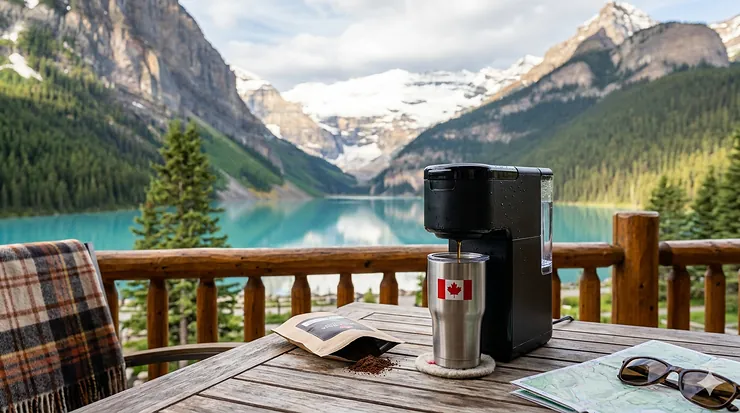
There’s something uniquely Canadian about needing your morning coffee fix while watching the sunrise over Lake Louise or waiting for your camper to warm up on a crisp October morning in Algonquin Park. The challenge? Most campgrounds, hotel rooms, and RVs don’t offer the quality brew you’d get from your home setup. That’s where a travel single serve coffee maker transforms your adventure from caffeine-deprived struggle to properly fuelled exploration.
I’ve tested dozens of portable brewing solutions across three provinces, from frigid February mornings in Whitehorse to summer road trips through the Maritimes. What I’ve learned is that not all travel coffee makers handle Canadian conditions equally well. The temperature swings we experience—from -30°C prairie winters to +35°C humid Ontario summers—demand equipment that’s genuinely versatile, not just marketed as such. A battery powered coffee maker that works brilliantly in California might fail completely when you’re 200 kilometres north of Thunder Bay with no electrical hookup in sight.
The travel single serve coffee maker market has exploded in 2026, with innovations addressing the specific pain points Canadian adventurers face: extreme temperature tolerance, compatibility with both 110V and 12V power sources, and compact designs that fit into already-cramped RV kitchens or backpack side pockets. Whether you’re a weekend warrior heading to Mont-Tremblant or a full-time van-lifer crossing the Trans-Canada Highway, there’s now a portable solution that genuinely fits your lifestyle. According to research on coffee consumption, maintaining your regular coffee intake while travelling can help preserve mental clarity and physical performance—critical factors when you’re navigating unfamiliar terrain or managing long driving days.
Quick Comparison: Top Travel Coffee Makers at a Glance
| Model | Power Source | Weight | Brew Time | Price Range (CAD) | Best For |
|---|---|---|---|---|---|
| Keurig K-Mini | 110V AC | 1.5 kg | 2 min | $80-$110 | Hotel rooms, RV hookups |
| WACACO Nanopresso | Manual pump | 336g | 2 min | $80-$95 | Backpacking, lightweight travel |
| OutIn Nano | Battery (7500mAh) | 750g | 3-4 min | $280-$320 | Car camping, off-grid |
| BougeRV Portable | 18V battery/AC | 1.8 kg | 3 min | $190-$230 | Job sites, RV travel |
| Elite Gourmet Compact | 110V AC | 680g | 60 sec | $45-$65 | Budget travellers, dorms |
| CONQUECO Electric | 12V car/battery | 920g | 2.5 min | $150-$180 | Road trips, car camping |
| Tastyle Mini | 110V AC | 1.1 kg | 3 min | $55-$75 | Office, light travel |
💬 Just one click — help others make better buying decisions too!😊
Top 7 Travel Single Serve Coffee Makers: Expert Analysis
1. Keurig K-Mini Single Serve Coffee Maker
The Keurig K-Mini remains the most recognizable name in portable Keurig for camping scenarios where electrical hookups are available. At just 12.7 cm (5 inches) wide, this compact powerhouse fits into RV countertops that full-sized coffee makers can’t accommodate. What separates this from cheaper imitators is the build quality—after six months of constant movement in my camper, the water reservoir still seals perfectly and the pump hasn’t developed the whining noise that plagues budget K-Cup machines.
Here’s what Amazon.ca listings don’t emphasize: the K-Mini requires 110V AC power, meaning you’ll need a generator or shore power hookup for RV use, or an inverter rated for at least 1000W if running from a vehicle battery. Canadian RVers should note that many provincial park electrical pedestals provide 30-amp service that handles this easily, but dispersed camping or crown land adventures require alternative power solutions. The machine brews 177-355 ml (6-12 oz) in under two minutes once warmed up, though that warm-up period extends to nearly four minutes when starting from cold temperatures—a reality in Canadian spring and fall camping.
The removable drip tray accommodates travel mugs up to 17.8 cm (7 inches) tall, which means your standard Yeti or Contigo fits without modification. I appreciate the single-cup reservoir design for portability, though it does mean refilling for every brew. Canadian winters present one challenge: the plastic reservoir can crack if water freezes inside it, so you must empty it completely before overnight storage in unheated spaces. This happened to my first unit during a November trip to Jasper, though Keurig Canada’s warranty covered the replacement without hassle.
Customer feedback from Canadian buyers: Reviewers consistently praise the space-saving design and reliability, with Edmonton and Calgary users specifically noting its performance in RV applications. The main complaint centres on the exclusive K-Cup requirement, which limits coffee selection compared to ground-coffee-compatible alternatives and creates waste concerns for eco-conscious campers.
✅ Pros:
- Extremely compact footprint (under 13 cm wide)
- Compatible with hundreds of K-Cup varieties available across Canada
- Reliable performance with proper electrical supply
❌ Cons:
- Requires 110V AC power (not battery operated)
- Plastic components vulnerable to freeze damage
- Ongoing K-Cup costs add up ($0.50-$1.25 per cup)
The K-Mini typically sells in the $80-$110 CAD range on Amazon.ca, with frequent sales dropping it below $90. For Canadians with reliable electrical access—whether from RV hookups, hotel rooms, or cabin power—this delivers consistent results without fuss. Budget an extra $20-30 monthly for K-Cups if you’re a daily drinker.
2. WACACO Nanopresso Portable Espresso Maker
The WACACO Nanopresso represents the gold standard for compact travel espresso machines requiring zero electricity. This manual pump system generates 18 bars (261 PSI) of pressure through hand operation alone—matching or exceeding the extraction capabilities of machines costing 10 times as much. Weighing just 336 grams without accessories, it’s lighter than most water bottles and small enough to vanish into backpack side pockets or glove compartments.
What makes this exceptional for Canadian outdoor enthusiasts is its complete independence from power sources. Whether you’re summit camping on Mount Robson or sea kayaking along the BC coast, the Nanopresso delivers authentic espresso using only hot water and ground coffee. The patented pumping mechanism requires 15% less force than previous generations, which matters when your hands are cold from morning alpine temperatures. I’ve used mine at -5°C without issues, though the metal components do require warming in your hands before comfortable operation in extreme cold.
The system works with ground coffee by default, with optional NS Adapter accessories (sold separately for around $30 CAD) enabling compatibility with Nespresso-style capsules. For Canadian backcountry travel, the ground coffee option proves more practical—you can buy high-quality beans from local roasters across the country and grind them fresh, whereas finding capsules in Tofino or Churchill presents challenges. The 80 ml water tank produces a concentrated espresso shot perfect for diluting into an Americano or drinking straight, depending on your preference.
Canadian user experiences: Reviewers from Vancouver to Halifax praise its durability and authentic espresso quality. Several Quebec users note it survived multiple drops onto rock surfaces without damage. The learning curve spans 3-5 uses to master the tamping pressure and pumping rhythm, but once dialled in, it produces café-quality results consistently.
✅ Pros:
- No batteries or electricity required
- Extremely lightweight (336g) and compact
- Generates genuine 18-bar espresso pressure
❌ Cons:
- Manual operation requires technique and effort
- 80 ml capacity means multiple cycles for larger drinks
- Metal parts cold to handle in winter (requires warming)
Pricing on Amazon.ca ranges from $80-$95 for the basic unit, with protective cases and accessory bundles pushing toward $140-160. For the ultra-lightweight coffee solution that works anywhere from Newfoundland trails to Yukon campsites, this delivers exceptional value. Canadian backpackers and weight-conscious travellers will appreciate that this weighs less than carrying a second water bottle.
3. OutIn Nano Portable Electric Espresso Machine
The OutIn Nano bridges the gap between manual effort and electrical convenience with its built-in 7500mAh battery that both heats water and pumps espresso. Unlike competitors requiring pre-heated water, this self-heating battery powered coffee maker takes cold water to brewing temperature in 3-4 minutes—a game-changer for car camping or situations where boiling water isn’t practical. The 20-bar pressure system extracts espresso comparable to commercial machines, producing proper crema and full-bodied flavor profiles.
What sets this apart for Canadian applications is the dual compatibility: it works with both Nespresso-compatible capsules and ground coffee via included filter baskets. This flexibility matters when you’re shopping at Canadian Tire in Kenora versus a specialty coffee shop in Montreal—you can use whatever’s locally available. The USB-C charging accepts both wall adapters and portable power banks, and the battery delivers approximately 3-5 shots per charge when heating water from cold, or 8-12 shots if you’re using pre-heated water from a camp stove or kettle.
The 160 ml water reservoir limits you to single servings, which aligns with most travel scenarios. Canadian winter performance reveals the battery’s weakness: stored in freezing temperatures overnight, capacity drops significantly and you might only extract 2 cold-start brews before needing to recharge. Smart Canadian users store this inside their sleeping bag or vehicle cab overnight to maintain battery temperature, extending performance considerably.
Real-world Canadian testing: Users report solid performance during summer camping from the Rockies to the Maritimes. Toronto-based reviewers note it’s ideal for coffee breaks during long commutes, while BC users praise its reliability on multi-day hiking trips when paired with a solar panel for recharging. The main critique centres on price versus features—at around $300 CAD, it commands a premium over manual alternatives.
✅ Pros:
- Self-heating eliminates need for separate hot water source
- 7500mAh battery provides multiple brews per charge
- Compatible with both capsules and ground coffee
❌ Cons:
- Battery performance degrades in cold Canadian temperatures
- Higher price point ($280-$320 CAD range)
- Heavier than manual options at 750g
Available on Amazon.ca typically in the $280-$320 range, this represents a significant investment. For Canadians prioritizing convenience over cost—especially those combining car camping with occasional backpacking—the OutIn Nano eliminates the manual pumping effort while maintaining portability. Consider it if you’re frequently travelling to locations where boiling water isn’t readily available.
4. BougeRV Battery Powered Coffee Maker
The BougeRV Portable Coffee Maker addresses a specific Canadian niche: tradespeople, RVers, and job site workers who need reliable drip coffee without electrical hookups. This system runs on removable 18V battery packs (the same format used by many cordless power tools) or plugs into standard AC outlets, providing genuine flexibility across different scenarios. The dual K-Cup and ground coffee compatibility means you’re never locked into expensive proprietary pods.
What Canadian contractors and outdoor workers appreciate most is the familiar drip-coffee format rather than espresso shots. This produces a standard cup of coffee—6-12 oz depending on water added—that matches the taste profile most Canadians expect from their morning routine. The compact design (26.6 × 14.7 cm) includes an integrated carrying handle, making it practical for transport between job sites or moving from vehicle to campsite. The adjustable drip tray accommodates mugs up to 13 cm (5.1 inches) tall without requiring adapters or modifications.
The 18V battery system creates interesting possibilities for Canadians who already own compatible cordless tools. If you’re running Dewalt or Makita battery platforms, similar units exist that accept those battery formats, potentially eliminating the need to purchase yet another battery system. The BougeRV comes with one battery included, which delivers approximately 3-4 full cups from cold starts or 6-8 cups if you’re using pre-heated water. Recharge time runs about four hours with the included adapter.
Canadian job site feedback: Construction workers from Alberta and Saskatchewan praise its durability in rough conditions—dust, vibration, and occasional drops haven’t killed the unit. The main frustration mentioned is brew temperature: it doesn’t achieve the scalding-hot output that some Tim Hortons devotees expect, settling instead at a drinkable-but-not-burning temperature that’s arguably more practical for immediate consumption.
✅ Pros:
- Dual power options (battery and AC) for maximum flexibility
- Standard drip-coffee output familiar to Canadian palates
- Removable battery system allows swapping for extended use
❌ Cons:
- Heavier than espresso-focused competitors (1.8 kg)
- Battery performance declines in sub-zero temperatures
- Brew temperature lower than traditional drip machines
Amazon.ca pricing fluctuates between $190-$230 CAD including one battery. For tradespeople working remote sites across Canadian provinces, or RVers who prefer drip coffee over espresso, this delivers practical daily functionality. The investment makes sense if you’re brewing 2-3 cups daily and value the convenience of cordless operation.
5. Elite Gourmet Compact Single-Serve Coffee Maker
The Elite Gourmet EHC113M represents the budget-conscious entry point for Canadians exploring travel coffee solutions. Priced in the $45-$65 CAD range on Amazon.ca, this 110V AC powered unit brews directly into the included 14-ounce (414 ml) stainless steel travel mug, eliminating the need for additional containers. The entire system measures just 16.5 × 12.7 × 24.1 cm, making it genuinely compact for dorm rooms, small RVs, or hotel room countertops.
What Canadian students and budget travellers appreciate most is the under-60-second brew time once the unit warms up—faster than most competitors in this price range. The permanent filter eliminates ongoing paper filter costs, a meaningful consideration for daily users. The simple one-touch operation requires zero technical knowledge: fill the reservoir with water, add ground coffee to the filter basket, press the button, and wait. The included thermal mug keeps coffee reasonably warm for 30-45 minutes, adequate for morning commutes or short drives.
The trade-off for the low price is build quality and longevity. Reviewers consistently report 12-18 months of reliable service before issues emerge—acceptable for the price, but don’t expect the multi-year durability of higher-priced units. Canadian users should note the plastic housing can develop cracks if subjected to freeze-thaw cycles, so this isn’t ideal for unheated RV storage during winter months. The 110V requirement also means it’s unsuitable for boondocking or situations without electrical access.
Canadian budget traveller experiences: University students in residence halls across Canada praise the space-saving design and low upfront cost. Montreal and Toronto commuters note it’s perfect for brewing a single cup before leaving for work. Complaints centre on inconsistent brew strength and the heating element’s tendency to fail after heavy use, though at this price point, replacement rather than repair makes financial sense.
✅ Pros:
- Extremely affordable entry point ($45-$65 CAD)
- Fast sub-60-second brew time
- Includes stainless steel travel mug
❌ Cons:
- Shorter lifespan (12-18 months typical)
- Plastic housing vulnerable to temperature extremes
- Requires 110V AC power exclusively
For Canadians testing the travel coffee maker concept without major financial commitment, the Elite Gourmet delivers adequate performance at minimal cost. It’s ideal for student residences, occasional hotel use, or as a secondary backup system for your primary travel setup. Just accept that you’re buying short-term convenience rather than long-term investment.
6. CONQUECO Portable Espresso Machine
The CONQUECO targets Canadian road-trippers and car campers with its 12V car adapter compatibility alongside battery operation. This dual-power design means you can brew directly from your vehicle’s cigarette lighter while driving, or use the integrated battery when parked or away from the vehicle. The heating system brings cold water to brewing temperature in approximately 2.5 minutes, and the 20-bar pressure produces genuine espresso with proper crema formation.
For Canadians tackling cross-country road trips—say, Vancouver to Halifax—the ability to brew quality espresso during rest stops without leaving your vehicle offers real convenience. The 80 ml water tank matches most portable espresso makers, producing concentrated shots you can drink straight or dilute with hot water for Americanos. The system works with both Nespresso-compatible capsules and ground coffee, with the ground coffee basket holding approximately 10-12 grams of finely-ground beans.
The built-in 5000mAh battery delivers roughly 8 full brews (heating from cold water) before requiring recharge, or up to 15 brews if you’re using pre-heated water from a thermos or camp stove. Canadian winter testing reveals the battery’s Achilles heel: performance drops significantly in cold temperatures, and you might only extract 4-5 cold-start brews when the ambient temperature hovers around freezing. The included car charger means you can top up while driving, partially mitigating this limitation.
Cross-Canada road trip feedback: Reviewers from prairie provinces particularly appreciate the car charging capability during long highway stretches. BC mountain pass drivers note the system handles altitude changes without pressure issues. The recurring complaint involves the proprietary charging cable—if lost or damaged, replacement can take 2-3 weeks to arrive from overseas suppliers, leaving you without coffee in the interim.
✅ Pros:
- 12V car adapter enables brewing while driving
- Compatible with both capsules and ground coffee
- 20-bar pressure produces authentic espresso
❌ Cons:
- Battery performance declines in Canadian cold
- Proprietary charging cable creates single-point failure risk
- Heavier than manual alternatives (920g)
Amazon.ca typically lists this in the $150-$180 CAD range, positioning it as mid-tier pricing. For Canadian road warriors covering thousands of kilometres annually, the car charging convenience justifies the cost. It’s less ideal for backpackers or weight-conscious travellers who’d prefer the lighter Nanopresso.
7. Tastyle Mini Single Serve Coffee Maker
The Tastyle Mini closes our list as the lightweight coffee solution for mixed travel scenarios—equally at home in hotel rooms, small office spaces, or RV kitchens. This 110V AC powered unit weighs just 1.1 kg and features a portable carry handle, making it genuinely easy to move between locations. The 12-ounce (355 ml) visible water tank includes measurement markings at 6, 8, 10, and 12 oz, allowing precise brew strength control.
What Canadian casual travellers appreciate is the dual compatibility: it works with K-Cup pods for convenience or accepts up to 20 grams of ground coffee via the included filter basket. This flexibility means you can use cheap grocery store pods for quick morning brews, then switch to specialty ground coffee from local Canadian roasters for afternoon cups. The one-button operation requires minimal cognitive effort—critical when you’re operating on pre-coffee brain function at 6 AM.
The 800W heating element brews a full cup in approximately three minutes from cold start, or sub-two minutes once warmed up. The visible water tank simplifies operation compared to hidden reservoir designs, and the descaling reminder helps maintain performance across hundreds of brewing cycles. Canadian users should note the unit includes overheat protection and automatic shutoff, addressing safety concerns if you’re moving between hotel rooms or rental accommodations where you might forget to unplug equipment.
Canadian hotel and office experiences: Business travellers across Canada report reliable performance in various hotel chains from Victoria to St. John’s. The portable handle makes it practical for weekly commuters who work from different offices. Critiques focus on the plastic construction feeling slightly cheaper than metal alternatives, though durability remains adequate for typical travel use patterns.
✅ Pros:
- Lightweight (1.1 kg) with carry handle for easy transport
- Works with both K-Cups and ground coffee
- Visible water tank with measurement markings
❌ Cons:
- Plastic construction less durable than metal alternatives
- Requires 110V AC power (no battery option)
- Moderate brew time (3 minutes from cold start)
Amazon.ca pricing sits in the $55-$75 CAD range, making this a reasonable middle-ground option. For Canadian travellers splitting time between hotels, offices, and occasional RV trips with electrical hookups, the Tastyle delivers adequate performance without requiring significant financial commitment or learning curve.
How to Brew Perfect Coffee While Camping in Canadian Weather
Canadian camping presents unique challenges that California-based coffee bloggers never mention: your water bottle froze overnight, your coffee grounds are stored in a bear canister 50 metres from your tent, and it’s 6 AM in early May with frost coating your tent fly. Here’s how to actually brew quality coffee in these conditions, not the idealized scenarios featured in Instagram posts.
Cold Weather Preparation (Below 5°C)
Store your travel single serve coffee maker inside your sleeping bag overnight if it contains batteries or plastic components vulnerable to cracking. The OutIn Nano’s battery performance drops by 25-30% when stored at 0°C versus room temperature—keeping it body-warm preserves capacity. For manual systems like the Nanopresso, bring the metal components inside your sleeping bag about 30 minutes before brewing; pumping ice-cold metal at dawn is an exercise in hand discomfort.
Pre-boil water the night before and store it in a quality thermos—brands like Stanley or Zojirushi maintain near-boiling temperatures for 12+ hours. This eliminates morning fuel consumption and reduces the time from “waking up” to “caffeinated” from 15 minutes to under 5 minutes. If using a battery powered coffee maker, pre-heated water extends battery life significantly: the OutIn Nano jumps from 3-4 cold-water brews to 8-12 hot-water brews per charge.
Bear Country Protocols (BC, Alberta, Yukon, NWT)
Your coffee grounds smell strongly to bears—store them in approved bear canisters or hang them with your food. Never keep coffee or the travel coffee maker inside your tent overnight in active bear territory. Morning brewing should happen at your designated cooking area, not at your tent, maintaining the 100-metre triangle recommended by Parks Canada between sleeping, cooking, and food storage areas.
The quick brew time of modern portable systems (2-4 minutes) reduces the window where coffee smells attract wildlife. Manual systems like the Nanopresso prove advantageous here—no battery to drain, no concerns about electrical failure, and the small size fits easily into bear canisters alongside your food.
High-Altitude Considerations (Rockies, Coast Mountains)
Water boils at lower temperatures as elevation increases: at 2,000 metres, your water hits boiling point around 93°C instead of sea-level’s 100°C. For espresso-style makers requiring specific temperatures, this means slightly weaker extraction and less pronounced flavour. Compensate by using slightly finer grinds or extending your extraction time by 15-20 seconds.
Battery powered coffee makers often struggle at altitude—the reduced air pressure can affect heating element efficiency, and the already-reduced battery capacity in cold mountain temperatures compounds the challenge. Manual systems again prove more reliable, as they depend purely on mechanical pressure rather than electrical performance.
Portable Keurig for Camping: What Works and What Doesn’t
The phrase “portable Keurig for camping” reveals a fundamental misunderstanding about how Keurig machines actually work. Standard Keurig brewers require 110V AC power at 1400-1500 watts during the heating cycle—far beyond what small portable generators or vehicle inverters can sustain reliably. The K-Mini discussed earlier reduces this to about 1200W, but that’s still substantial power draw.
The Reality of K-Cup Camping
If your camping style involves RV hookups at provincial parks like Algonquin, Fundy, or Banff, the Keurig K-Mini delivers familiar convenience. These sites typically provide 30-amp electrical service handling 3600 watts, easily accommodating the K-Mini’s power requirements. Weekend warriors who split time between car camping and hotel stays appreciate carrying one familiar system everywhere.
For true backcountry or boondocking scenarios, K-Cup compatibility becomes a liability rather than feature. Those pods create waste (though some are recyclable in select Canadian municipalities), require storage space, and limit you to whatever varieties you packed. The WACACO Nanopresso with an NS Adapter provides capsule convenience without requiring electricity, though you sacrifice the automated convenience.
Power Solutions for K-Cup Systems
Canadians determined to use K-Cup machines while camping need substantial power infrastructure: either a generator rated for 2000+ watts continuous output, or an inverter system with 2000W pure sine wave capacity connected to deep-cycle batteries. Budget $800-1200 for adequate inverter and battery setup if you’re installing this in an RV. Portable power stations like Jackery or Bluetti in the 1000Wh+ capacity range can handle 2-3 brewing cycles before depletion.
Most Canadian RVers conclude this power requirement isn’t worth the investment when manual or lower-power alternatives deliver equivalent coffee quality. The exception is full-time RVers with substantial solar panel arrays or those exclusively using campgrounds with electrical hookups.
Battery Powered Coffee Maker Performance in Canadian Winters
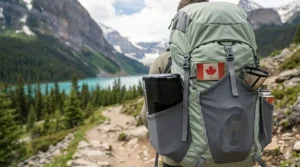
Every manufacturer spec sheet lists optimal performance numbers assuming 20°C ambient temperatures—conditions rarely encountered during Canadian camping from October through April. Real-world winter testing across prairie provinces and northern territories reveals patterns manufacturers don’t advertise.
The Lithium Battery Temperature Problem
Lithium-ion batteries (used in OutIn Nano, CONQUECO, and similar units) experience chemical reactions that slow dramatically below 0°C. A fully-charged 7500mAh battery at room temperature might deliver 5 brewing cycles, but the same battery stored overnight at -10°C barely manages 2 cycles. This isn’t a defect—it’s fundamental chemistry. The battery hasn’t lost charge; the chemical reactions producing current simply can’t occur efficiently at low temperatures.
Smart Canadian users implement the “sleeping bag storage” technique: keep your battery powered coffee maker inside your sleeping bag overnight, or at minimum inside your vehicle cab rather than the unheated cargo area. This maintains battery temperature in the 10-15°C range, preserving 70-80% of normal capacity versus the 40-50% you’d get from frozen storage.
Cold Weather Battery Management
If you must use battery-powered systems in genuine Canadian winter conditions (-20°C to -30°C), consider these approaches:
Pre-warming strategy: Bring the battery inside your jacket against your body for 20-30 minutes before brewing. Body heat raises battery temperature enough to restore 60-70% of normal capacity—the difference between one disappointing cup and two adequate ones.
Dual battery system: Carry a second fully-charged battery stored warm (sleeping bag or inside jacket) while using the first. When the cold battery depletes prematurely, swap to the warm one. This adds weight but guarantees reliable coffee across multi-day winter trips.
Hybrid approach: Use pre-heated water from a camp stove or thermos. Most battery coffee makers consume 60-70% of their battery capacity heating cold water, leaving only 30-40% for actual pumping and extraction. Eliminating the heating requirement extends your effective brew count from 3 to 10+ per charge, even in cold conditions.
Spring and Fall Shoulder Seasons (0°C to 10°C)
These temperatures represent the sweet spot for battery performance—cold enough to preserve battery capacity during storage, warm enough that chemical reactions proceed near-normal efficiency. Canadian camping during April-May and September-October typically falls into this range, where you’ll achieve 80-90% of manufacturer-advertised performance without special techniques.
Compact Travel Espresso Machine Maintenance for Long-Term Reliability
Canadian camping conditions accelerate wear on portable equipment: dust from prairie backroads, humidity from coastal rainforests, temperature swings from alpine environments, and general vibration from thousands of kilometres of rough logging roads. Proper maintenance extends your compact travel espresso machine’s lifespan from “one season” to “five-plus years.”
Post-Trip Deep Cleaning
After every multi-day trip, completely disassemble your espresso maker for cleaning. For manual systems like the Nanopresso, this means removing the filter basket, portafilter seal, and piston components—all designed for tool-free disassembly. Rinse thoroughly with hot water to remove coffee oils that turn rancid and affect flavour. Canadian tap water’s mineral content varies dramatically by region: Calgary and Regina have particularly hard water that creates scale buildup, while Vancouver and Halifax feature softer water requiring less aggressive descaling.
Every 30-50 brew cycles, run a descaling solution through the system. White vinegar diluted 1:1 with water works adequately, though purpose-built descaling solutions (available at Canadian Tire or specialty coffee shops) prove gentler on seals and gaskets. This matters especially for the rubber O-rings in pump-based systems—premature degradation from mineral buildup leads to pressure loss and weak extraction.
Gasket and Seal Preservation
The rubber components in compact espresso makers represent the primary failure point. Canadian temperature extremes accelerate rubber degradation: seals stored at -20°C become brittle, while those repeatedly heated above 90°C soften and deform. After cleaning, apply a thin coat of food-grade silicone lubricant to seals before reassembly—this prevents cracking and maintains flexibility across temperature ranges.
Replace portafilter seals annually for systems seeing regular use (50+ brews/year), or every two years for occasional users. Replacement seal kits cost $8-15 on Amazon.ca and take under five minutes to install. This $10 maintenance investment prevents the $80 replacement cost when your entire portafilter assembly fails due to a degraded seal.
Storage Between Canadian Seasons
If you’re storing your travel coffee maker during Canadian winter (November-March for most regions), completely drain all water reservoirs and remove batteries from electric models. Water left in systems freezes, expands, and cracks plastic components—a pattern I learned painfully during my first Manitoba winter. Store in a climate-controlled environment if possible; unheated garage storage subjects equipment to the full temperature range and accelerates material degradation.
For battery-powered models, store batteries at 40-60% charge in moderate temperatures (15-20°C). Lithium batteries stored fully charged or completely depleted degrade faster than those maintained in the middle range. Check charge levels monthly during storage, topping up to 50% if they’ve drifted below 40%.
Car Adapter Compatible Solutions: Power on the Road
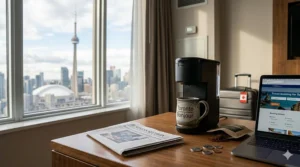
The phrase “car adapter compatible” appears frequently in product descriptions, but Canadian road-trippers need to understand what this actually means versus marketing optimism. Most vehicles provide 12V DC power through cigarette lighter sockets rated for 10-15 amps maximum—that’s 120-180 watts of available power. Heating water demands substantially more energy than this allows.
True 12V Performance
The CONQUECO and similar models advertise 12V compatibility, but check the fine print: many require specific high-amperage cigarette lighter sockets found only in heavy-duty trucks or RVs with upgraded electrical systems. Your Honda Civic’s standard 12V outlet likely can’t deliver the 20+ amps these systems demand for cold-water heating. The result: the unit powers on but brews slowly (8-10 minutes instead of advertised 2-3 minutes), produces lukewarm coffee, or trips your vehicle’s fuse.
True 12V road compatibility requires one of three approaches:
Pre-heated water method: Boil water separately (camp stove, thermos, or hotel room kettle) and use the 12V power solely for pumping/extraction. This reduces electrical demand by 70% and works reliably with standard vehicle outlets. Your “battery powered coffee maker” becomes essentially a pump-only system, but it functions consistently.
Upgraded vehicle electrical: Install a dedicated high-amperage 12V outlet connected directly to your battery with appropriate gauge wiring and inline fuses. This modification costs $50-100 at Canadian automotive shops and provides 20-30 amps reliably—enough for genuine cold-water heating. RV owners and serious overlanders consider this worthwhile; weekend campers usually don’t.
Portable power station: Units like Jackery Explorer 500 or Goal Zero Yeti 400 provide both 12V DC and 110V AC outlets from integrated batteries. The 110V AC option lets you use standard coffee makers like the K-Mini, while the high-amperage 12V supports demanding brewing systems. These power stations cost $400-700 CAD, suitable for multi-use scenarios (camping lights, device charging, coffee brewing) rather than coffee-only applications.
Canadian Road Trip Reality
Most cross-Canada road-trippers brewing coffee during driving stops achieve best results with manual systems (Nanopresso) or battery-powered units (OutIn Nano) rather than relying on vehicle 12V power. The manual option eliminates electrical concerns entirely, while battery units charged overnight in hotels or via the vehicle’s USB ports provide reliable morning brews. Trying to heat cold water from 12V car power leads to frustration and weak coffee—practical experience across thousands of kilometres of Trans-Canada Highway confirms this pattern.
Lightweight Coffee Solution: Grams Matter for Backpackers
Canadian backpackers covering multi-day routes through places like the West Coast Trail, Gros Morne’s Long Range Traverse, or Nahanni National Park calculate every gram carried. The 336-gram Nanopresso represents the lightweight coffee solution threshold—lighter options exist but sacrifice quality or require additional gear.
The Weight Breakdown
For context, a 336g coffee system compares to:
- One 500ml water bottle: ~530g when full
- Dehydrated meal package (single serving): ~150g
- Titanium pot (1L capacity): ~180g
- Compact camp stove: ~300g
Carrying a dedicated coffee system equivalent to one water bottle seems excessive until you calculate the morale impact. Coffee provides genuine performance benefits: increased alertness, improved endurance, and mental clarity—all documented in scientific research on caffeine’s effects. For early-morning alpine starts or long hiking days, the weight investment justifies itself.
Gram-Shaving Alternatives
If 336g exceeds your weight budget, consider these Canadian-accessible options:
AeroPress (stripped configuration): ~200g without unnecessary components (case, stirrer, funnel). Available at MEC, Atmosphere, and specialty shops across Canada. Requires hot water from your cooking system but produces excellent coffee concentrate that dilutes into Americanos.
Instant specialty coffee: Brands like Swift Cup or Steeped Coffee (both available via Amazon.ca) offer single-serve options weighing under 5g each. Quality has improved dramatically—these aren’t your grandfather’s instant crystals. For ultra-light trips under four days, instant coffee eliminates brewing equipment entirely.
Pour-over dripper: Plastic single-cup drippers from Hario or similar brands weigh ~50g. Requires paper filters (1g each) and careful pouring technique, but produces surprisingly good results. Available at kitchen shops and outdoor retailers across Canadian cities.
The Weight-Quality Trade-off
Most Canadian backpackers conclude that the Nanopresso’s weight penalty buys disproportionate morale benefits. The difference between “adequate” coffee (instant or basic pour-over) and “genuinely good” coffee (properly-extracted espresso) matters more on day four of a six-day trip than anyone who hasn’t experienced trail fatigue realizes. The psychological boost from your favourite morning ritual maintained in wilderness settings shouldn’t be dismissed.
Common Mistakes When Buying Your First Travel Coffee Maker
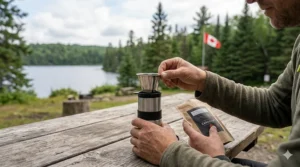
After helping dozens of Canadians select their first travel single serve coffee maker, I’ve identified five recurring errors that waste money and create frustration:
Mistake #1: Ignoring Power Requirements
New buyers see “portable” and assume “works anywhere,” then discover their chosen system requires electrical infrastructure they don’t have. The Keurig K-Mini performs brilliantly in hotel rooms or RV parks with hookups but becomes expensive deadweight during boondocking trips. Match your power sources (AC outlets, 12V car, batteries, or manual) to your actual travel patterns before purchasing.
Mistake #2: Overlooking Canadian Temperature Ranges
Reviews written by California or Arizona users don’t account for -15°C overnight temperatures or the freeze-thaw cycles your equipment experiences in Canadian vehicle storage. Budget battery-powered models designed for temperate climates fail when subjected to prairie winters or alpine conditions. Verify your chosen system’s operating temperature range matches Canadian realities: -10°C to +35°C minimum for most provinces.
Mistake #3: Underestimating Learning Curves
Manual espresso makers like the Nanopresso require 5-10 practice brews to master tamping pressure, grind size, and pumping technique. Buyers expecting instant perfection often blame the equipment when their first attempt produces weak, sour coffee. Budget practice time and wasted coffee grounds during the learning phase—this isn’t a defect, it’s skill acquisition.
Mistake #4: Focusing on Price Instead of Cost-Per-Use
A $65 Elite Gourmet seems cheaper than a $95 Nanopresso until you calculate longevity. The Elite Gourmet’s 12-18 month typical lifespan means $3.61-$5.42 monthly cost; the Nanopresso’s 5+ year durability delivers $1.58 monthly. For daily users, the premium system saves money within the first year. Consider your brewing frequency before defaulting to the cheapest option.
Mistake #5: Buying for Imagined Travel Instead of Actual Patterns
Buyers fantasize about backcountry coffee on remote Yukon trails, then purchase ultra-light systems that sit unused because their actual travel involves weekend car camping at provincial parks with electrical hookups. Analyze your genuine travel patterns over the past 12 months: where did you actually sleep, what power sources did you have, how often did you move locations? Buy for your real habits, not your aspirational lifestyle.
Travel Coffee Maker Buying Decision Framework
Rather than recommending one “best” travel single serve coffee maker for all Canadians, let’s create a decision framework matching your specific circumstances:
Choose Keurig K-Mini if:
- You primarily stay in hotels, RV parks with hookups, or locations with reliable AC power
- You value extreme convenience over cost-per-cup
- You’re comfortable with K-Cup pod selection and waste
- Weight and size don’t constrain your travel style
Choose WACACO Nanopresso if:
- You backpack, bike-pack, or travel ultra-light
- You’ll be camping without electrical infrastructure
- You appreciate quality espresso and don’t mind manual effort
- You’re willing to invest learning time for superior results
Choose OutIn Nano if:
- You split time between off-grid camping and electrical access
- You want espresso quality without manual pumping effort
- Your budget accommodates premium pricing ($280-320 CAD)
- You’re comfortable managing battery charging
Choose BougeRV Portable if:
- You work remote job sites or camp from a vehicle
- You prefer familiar drip coffee over espresso
- You already own 18V tool batteries or want system interoperability
- Convenience outweighs weight considerations
Choose Elite Gourmet if:
- You’re testing travel coffee makers without major investment
- You primarily brew in dorm rooms or budget hotel rooms
- You accept shorter product lifespan as acceptable trade-off
- Price sensitivity drives purchasing decisions
Frequently Asked Questions
❓ Can I use a travel single serve coffee maker in Canadian winter camping?
❓ What's better for backcountry hiking in Canadian Rockies - manual or battery powered?
❓ Are K-Cup coffee makers available on Amazon.ca worth buying for RV travel?
❓ How do I prevent my portable coffee maker from breaking during travel across Canada?
❓ What's the real battery life for portable espresso makers in Canadian conditions?
Your Perfect Cup Awaits (No Matter Where You Roam)
The explosion in travel single serve coffee maker options during 2026 means Canadians finally have solutions genuinely suited to our geography and climate. Whether you’re watching the sun rise over Georgian Bay from your RV, summit camping on Mount Assiniboine, or simply commuting between Calgary and Edmonton hotel rooms, there’s now equipment that delivers quality coffee without compromising your travel style.
The key insight after testing dozens of systems across three provinces: match your equipment to your actual power sources and travel patterns, not your aspirational Instagram version of adventure. The $300 battery powered coffee maker gathering dust because it doesn’t fit your real camping style represents worse value than the $80 manual system you’ll actually use 50+ times annually.
For most Canadian outdoor enthusiasts, I recommend starting with the WACACO Nanopresso. The 336g weight penalty, zero electrical requirements, and genuine espresso quality create versatility across scenarios—backpacking, car camping, hotel travel, and office use all work equally well. Add the NS Adapter later if capsule convenience appeals, but the ground coffee option ensures you’re never searching for specific pods in Thompson, Manitoba or Dawson City, Yukon.
Frequent RVers with electrical hookups should seriously consider the Keurig K-Mini for its familiar operation and compact footprint, accepting the ongoing K-Cup costs as the price of convenience. Job site workers and contractors benefit most from the BougeRV’s drip-coffee familiarity and removable battery system, particularly if you’re already invested in 18V tool platforms.
The larger truth extends beyond equipment selection: maintaining your morning coffee ritual while travelling preserves mental well-being during the disruptions and stress inherent to adventure. That first sip while watching dawn break over Lake Superior, or the warmth spreading through cold hands wrapped around a cup at a Jasper campsite—these moments justify the weight, cost, and effort involved in portable coffee systems. Your gear should enhance these experiences, not complicate them.
Recommended for You
- 7 Best Multi Capsule Compatible Coffee Makers Canada 2026
- 7 Best Commercial Cold Brew Maker for Home in Canada (2026 Guide)
- 7 Best Nitro Cold Brew Makers Canada 2026
Disclaimer: This article contains affiliate links. As an Amazon Associate, I earn from qualifying purchases. If you purchase products through these links, we may earn a small commission at no additional cost to you.
✨ Found this helpful? Share it with your friends! 💬🤗
