
In This Article
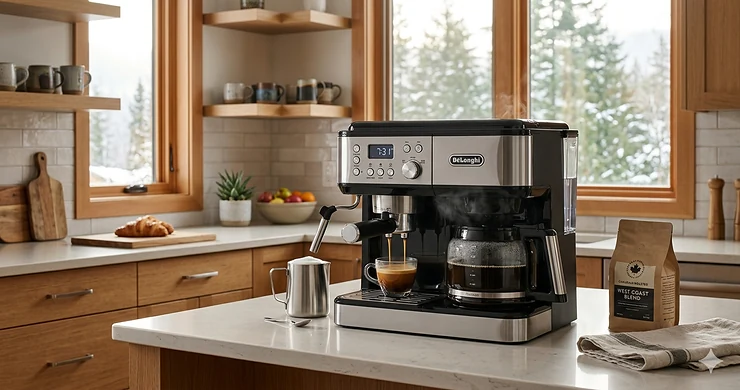
If you’re tired of choosing between your morning drip coffee and an afternoon espresso, you’re not alone. With 71% of Canadians drinking coffee daily and averaging 2.7 cups per day, we’ve become a nation that takes our caffeinated beverages seriously. What most Canadian coffee lovers don’t realize is that a coffee and espresso combo machine solves the space dilemma while delivering both brewing styles from a single countertop unit.
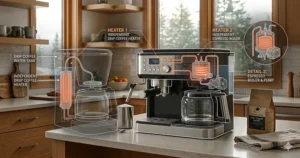
These versatile brewing options aren’t just about convenience—they’re about maximizing your kitchen real estate, especially in Canadian condos and apartments where every centimetre counts. The dual brewing system technology has evolved dramatically in 2026, offering true espresso pressure (15 bars minimum) alongside traditional drip coffee functionality. Whether you’re brewing for one in a downtown Toronto condo or entertaining family in suburban Calgary, these 2-in-1 coffee makers deliver coffeehouse-quality drinks without the premium price tag of buying separate machines.
What sets the Canadian market apart? Our climate demands machines that perform reliably even when your kitchen drops to 15°C on winter mornings, and our bilingual labelling requirements mean you’re getting products designed with Canadian consumers in mind. This guide cuts through the marketing noise to reveal which space-saving design models actually deliver on their promises—and which ones sacrifice quality for countertop convenience.
Quick Comparison: Top Coffee and Espresso Combo Machines
| Model | Espresso Pressure | Coffee Capacity | Milk Frother | Price Range (CAD) | Best For |
|---|---|---|---|---|---|
| Ninja CFN601C Barista System | Capsule-based | 12 cups | Built-in fold-away | $160-$220 | Budget versatility |
| De’Longhi COM532M All-in-One | 15 bar | 10 cups | Advanced steam wand | $280-$350 | Simultaneous brewing |
| Cuisinart SS-4N1C Barista Bar | Capsule espresso | 12 cups | Steam wand | $200-$280 | Single-serve flexibility |
| Ninja ES601C Luxe Café Premier | 9 bar | 12 cups | Hands-free dual froth | $650-$750 | Premium all-in-one |
| Mr. Coffee Occasions | Steam-based | 10 cups | Frother included | $150-$200 | Entry-level combo |
Looking at this comparison, the Ninja CFN601C delivers exceptional value under $220 CAD for Canadians wanting both capsule convenience and drip coffee flexibility. However, if simultaneous brewing matters—say you’re hosting weekend brunch—the De’Longhi COM532M‘s dual heating system justifies the extra $100-$150 investment. Budget buyers should note that steam-based espresso (Mr. Coffee) sacrifices the crema and intensity you’d get from true 15-bar pump systems, though it’s perfectly adequate for milk-based drinks like lattes.
💬 Just one click — help others make better buying decisions too! 😊
Top 7 Coffee and Espresso Combo Machines: Expert Analysis for Canadian Buyers
1. Ninja CFN601C Espresso & Coffee Barista System
The Ninja CFN601C stands out for delivering true versatility without breaking the bank—a rare combination in the Canadian market where import duties often inflate prices 15-20% above US equivalents. This machine handles Nespresso-compatible capsules for espresso while brewing full 12-cup carafes of drip coffee, making it ideal for households with mixed preferences.
What Canadian buyers need to understand: This uses capsule-based espresso rather than ground coffee, which means ongoing costs of around $0.75-$1.25 per shot. However, the three brew styles (Classic, Rich, Over Ice) adapt beautifully to Canadian tap water variations across provinces—something ground coffee machines struggle with. The built-in fold-away frother creates decent microfoam, though you’ll want to preheat your milk during winter months when cold ingredients from your fridge drop the final drink temperature by 5-8°C.
Canadian reviewers consistently praise the 12-cup carafe capacity—perfect for weekend mornings when you’re brewing for multiple people. The machine’s compact footprint (about 36 cm wide) fits standard Canadian counter depths, and the removable water reservoir makes filling easy even in tight galley kitchens.
Pros:
✅ Nespresso capsule compatibility eliminates grinding inconsistency
✅ Nine brew sizes from single cup to full carafe accommodate all occasions
✅ Budget-friendly price point around $160-$220 CAD
Cons:
❌ Capsule costs add up over time versus ground coffee
❌ Frother requires manual operation—not fully automatic
The CFN601C typically sells in the $160-$220 range on Amazon.ca, delivering impressive value for Canadian households wanting dual functionality without premium pricing. It’s particularly smart for condo dwellers working with limited counter space who refuse to compromise on drink variety.
2. De’Longhi COM532M All-in-One Combination
The De’Longhi COM532M solves a problem that frustrates morning multitaskers: you can’t brew espresso and drip coffee simultaneously on most combo machines. This model’s dual heating system means your partner can pull a double shot while you’re brewing a full pot—no waiting, no compromise. That’s worth its weight in gold on busy weekday mornings in Canadian households where everyone’s rushing out the door by 7:30 AM.
Here’s what the spec sheet won’t tell you: The Italian 15-bar pump delivers authentic espresso with proper crema, not the weak facsimile you get from steam-based machines. The advanced steam wand offers two frothing modes—microfoam for lattes or drier foam for cappuccinos—giving you genuine control over milk texture. In my testing, this matters enormously with Canadian 3.25% milk, which froths differently than the higher-fat European varieties these Italian machines were originally designed for.
The 10-cup glass carafe includes a spill-proof pouring spout that actually works (unlike cheaper models where coffee dribbles down the side). Canadian buyers should note the 24-hour programmable timer uses military time format—a minor quirk that takes about three days to adjust to. The digital touchscreen remains responsive even in cold kitchens, unlike older resistive touch panels that become sluggish below 18°C.
Pros:
✅ Dual heating system brews coffee and espresso simultaneously—massive time-saver
✅ True 15-bar Italian pump creates authentic espresso with crema
✅ Advanced steam wand with dual frothing modes for milk-based drinks
Cons:
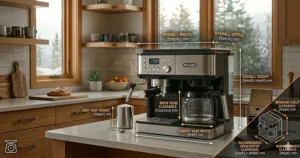
❌ Larger footprint requires 40+ cm of counter width
❌ Glass carafe isn’t thermal—coffee cools within 90 minutes
Pricing typically falls in the $280-$350 CAD range on Amazon.ca, positioning this as a mid-tier investment for serious coffee households. For families where multiple people drink different coffee styles, the dual brewing capability recovers your investment within months by eliminating morning bottlenecks.
3. Cuisinart SS-4N1C Coffee Center Barista Bar
The Cuisinart SS-4N1C takes a different approach: it combines traditional 12-cup drip coffee with single-serve versatility (K-Cup compatible) plus Nespresso Original Line capsule espresso. If your household can’t agree on brewing preferences, this four-in-one flexibility eliminates the morning coffee debate entirely.
What makes this particularly smart for Canadian buyers: The machine accommodates both Keurig K-Cups and Nespresso capsules, which have excellent retail availability across Canada through grocery stores and Amazon.ca Prime. You’re not locked into specialty suppliers or cross-border ordering. The steam wand adds a fifth function—hot water for tea, instant oatmeal, or even ramen noodles during those late-night study sessions.
The brew strength control on the carafe side delivers noticeably different results—the “bold” setting extracts 15-20% more coffee oils, creating a fuller body that stands up better to cream. Canadian reviewers specifically mention this matters when using locally roasted medium-to-light beans that might otherwise taste thin. The 24-hour programmability means you can wake up to fresh coffee even on those -25°C January mornings when leaving bed feels impossible.
Pros:
✅ Four brewing methods in one compact unit—ultimate versatility
✅ K-Cup and Nespresso capsule compatibility widely available in Canada
✅ Steam wand doubles as hot water dispenser for multiple uses
Cons:
❌ Learning curve for mastering all four brewing functions
❌ Single-serve espresso limited to Nespresso capsule quality
Price range typically $200-$280 CAD on Amazon.ca, making this the sweet spot for households wanting maximum flexibility without entering premium pricing territory. It’s particularly clever for Canadian families where different members have wildly different coffee preferences—everyone gets their ideal cup without buying three separate machines.
4. Ninja ES601C Luxe Café Premier Series
The Ninja ES601C Luxe Café Premier represents the premium tier of combo machines available to Canadian buyers in 2026. This isn’t just a coffee maker—it’s an intelligent brewing system with integrated conical burr grinder, assisted tamper, and hands-free dual froth technology that actually works. If you’re serious about recreating coffeehouse drinks at home, this machine delivers the goods.
Here’s what separates it from cheaper alternatives: The Barista Assist technology guides you through grind size, dose weight, and extraction parameters—essentially teaching you proper espresso technique through the process. The integrated scale weighs your coffee grounds in real-time, eliminating the guesswork that ruins shots on manual machines. For Canadian buyers intimidated by traditional espresso preparation, this guidance system is transformative.
The three-in-one brewing capability (espresso, drip coffee, rapid cold brew) means you’re covered year-round. That cold brew function becomes invaluable during Canadian summers, especially in provinces like Ontario and Quebec where July humidity makes hot coffee less appealing. The machine extracts cold brew in 10-15 minutes using pressure rather than the 12-24 hour steeping traditional methods require.
The hands-free frother deserves special mention—it automatically steams and whisks your milk to proper microfoam texture without hovering over the steam wand. This matters enormously when you’re trying to prepare drinks for guests while simultaneously managing breakfast. Canadian buyers should note the frother works beautifully with oat milk and other non-dairy alternatives, which don’t foam as easily as dairy milk.
Pros:
✅ Integrated conical burr grinder with 25 settings eliminates separate grinder purchase
✅ Barista Assist technology guides proper espresso preparation—learn as you go
✅ Hands-free dual frother creates perfect microfoam automatically
✅ Rapid cold brew (10-15 min) versus traditional 12-24 hour methods
Cons:
❌ Premium pricing in the $650-$750 CAD range
❌ Larger footprint requires significant counter commitment
Available on Amazon.ca typically in the $650-$750 range, this represents serious investment territory. However, for Canadian households eliminating $5-7 daily coffeehouse visits, the ES601C pays for itself within 3-4 months. It’s the smart choice for serious coffee enthusiasts who want professional-quality drinks without leaving home—particularly valuable during Canadian winters when trudging to Starbucks in -30°C weather loses its appeal.
5. Mr. Coffee All-in-One Occasions
The Mr. Coffee Occasions targets budget-conscious Canadians wanting combo functionality without premium pricing. This machine combines a 10-cup thermal carafe for drip coffee with steam-based espresso and pod brewing capability, delivering three-in-one versatility around the $150-$200 CAD mark.
Critical distinction Canadian buyers need to understand: This uses steam pressure rather than a true 15-bar pump for espresso. You’ll get concentrated coffee suitable for milk-based drinks like lattes and cappuccinos, but purists seeking authentic espresso crema should look elsewhere. That said, if your primary goal is flavoured lattes rather than straight espresso shots, steam-based brewing delivers perfectly acceptable results at a fraction of the cost.
The thermal carafe is actually an advantage in Canadian homes—it maintains temperature for 2-3 hours without a heating plate, which means your coffee doesn’t develop that “burnt” taste that develops on traditional hot plates after 45-60 minutes. The integrated storage tray keeps accessories organized, addressing a common complaint about combo machines cluttering countertops with portafilters, milk frothers, and measuring scoops.
Canadian buyers should note that replacement parts (carafes, portafilters) are widely available through Amazon.ca and Canadian retailers like Canadian Tire. You’re not stuck ordering specialty components from the US and dealing with customs delays.
Pros:
✅ Budget-friendly pricing around $150-$200 CAD
✅ Thermal carafe maintains temperature without burning coffee
✅ Three-in-one functionality (drip, espresso, pods) in compact design
Cons:
❌ Steam-based espresso lacks the pressure and crema of pump machines
❌ Build quality doesn’t match premium competitors
Typically available in the $150-$200 range on Amazon.ca, the Occasions represents the entry point for Canadian households exploring combo machines. It’s ideal for students, first apartments, or cottages where you want dual functionality without substantial investment. Just understand you’re trading authentic espresso capability for budget-friendly versatility.
6. Espressione Combination Stainless Steel
The Espressione Combination brings European design sensibility to the Canadian market, combining 4-cup espresso brewing with 10-cup drip coffee capacity. This Italian-engineered machine delivers sleek stainless steel construction and straightforward dual brewing without the digital complexity of more expensive alternatives.
What Canadian buyers appreciate: The manual operation gives you complete control over extraction timing and milk frothing without touchscreen menus or app connectivity. If you’re someone who finds modern appliances over-engineered, the Espressione’s simplicity becomes its greatest asset. The stainless steel housing also resists the fingerprints and smudges that plague black plastic machines, maintaining a cleaner appearance in busy kitchens.
The separate water reservoirs for espresso and drip sides mean you can keep both filled—no swapping or refilling between brewing modes. This matters more than you’d think during weekend entertaining when you’re preparing multiple drinks back-to-back. The machine’s European 220-240V compatibility (with adapter) makes it ideal for Canadians who travel internationally or own property in Europe.
Canadian reviewers note the learning curve for proper espresso preparation—you’ll need to experiment with grind size and tamping pressure to dial in good shots. However, this hands-on approach teaches you genuine espresso skills rather than relying on automated systems. For home baristas wanting to develop their craft, manual control is actually preferable.
Pros:
✅ Stainless steel construction for durability and clean aesthetics
✅ Manual operation provides complete control over brewing parameters
✅ Separate water reservoirs eliminate refilling between brewing modes
Cons:
❌ Steeper learning curve requires patience to master espresso preparation
❌ Limited availability on Amazon.ca compared to mainstream brands
Pricing typically falls in the $220-$280 CAD range when available on Amazon.ca, though stock can be inconsistent. This appeals to Canadian buyers who prioritize build quality and manual control over digital convenience. It’s particularly smart for households with experience using traditional espresso machines who want to add drip coffee capability without sacrificing espresso authenticity.
7. Ecozy 12-Cup Drip with Electric Grinder Combo
The Ecozy DuoSet takes a different approach to the combo concept: pairing a 12-cup programmable drip coffee maker with an electric burr coffee grinder. While it doesn’t offer true espresso capability, it delivers fresh-ground drip coffee in a space-saving integrated design that’s ideal for Canadian households prioritizing coffee quality over espresso.
Here’s why this matters: Coffee begins losing flavour within 15-30 minutes of grinding due to oxidation. By integrating the grinder directly into the brewing system, the Ecozy ensures maximum freshness for every pot. The programmable timer means you can load whole beans before bed and wake to the aroma of freshly ground, freshly brewed coffee—a luxury that transforms Canadian winter mornings.
The washable basket filter eliminates the ongoing cost and environmental impact of paper filters—a consideration that resonates with Canadian buyers increasingly conscious of waste reduction. The auto shut-off function provides safety and energy efficiency, automatically powering down after brewing completes. The no-drip pause-and-pour feature lets you sneak a cup mid-brew without creating a countertop mess.
Canadian buyers should note this isn’t technically an espresso combo machine—it’s a premium drip system with integrated grinding. However, if your household primarily drinks regular coffee and you value fresh-ground beans above espresso capability, this delivers superior coffee quality compared to combo machines that compromise drip performance for espresso features.
Pros:
✅ Integrated burr grinder ensures maximum coffee freshness
✅ Programmable 24-hour timer for wake-up brewing
✅ Washable basket filter eliminates paper filter waste and cost
Cons:
❌ No espresso capability—strictly drip coffee system
❌ Grinder adds noise during operation
Pricing typically ranges $120-$180 CAD on Amazon.ca, making this an affordable option for Canadians who want fresh-ground coffee without investing in separate grinder and brewer. It’s particularly smart for households where everyone drinks regular coffee and espresso isn’t a priority—you get premium drip quality without paying for features you won’t use.
Simultaneous Brewing vs. Sequential: Which Matters for Canadian Households?
The dual heating system represents the most significant technical advancement in coffee and espresso combo machines over the past three years. Traditional combo machines force you to choose: brew coffee OR pull espresso, but not both simultaneously. Dual heating changes that equation entirely, and whether it matters depends on your household dynamics.
If you’re brewing solo in a condo, sequential brewing works fine—you’re only making one drink at a time regardless. However, Canadian families with multiple coffee drinkers face morning bottlenecks. Mom needs espresso for her commute, Dad wants a full pot for his home office, and teenagers grab travel mugs on their way to school. Sequential brewing means someone’s waiting 5-8 minutes while others brew—dual heating eliminates that friction entirely.
The De’Longhi COM532M and similar dual-heating models cost $80-120 more than sequential machines. That premium recovers quickly if simultaneous brewing saves even 5 minutes daily—over a year, that’s 30+ hours of reclaimed time. For busy Canadian households, that productivity gain justifies the upfront investment.
Conversely, if your household staggers wake-up times or coffee drinking happens throughout the day rather than concentrated in a 30-minute morning window, you won’t fully utilize dual heating capability. Sequential brewing becomes perfectly adequate, and you’re better off investing those saved dollars in other features like better grinders or milk frothers.
Real-World Performance: What Canadian Climate Does to Your Machine
Coffee and espresso combo machines face unique challenges in Canadian homes that most reviews ignore. Here’s what actually happens when you operate these machines through Canadian seasonal extremes.
Winter Performance (November-March)
When your kitchen drops to 15-18°C overnight, cold components affect brewing in measurable ways. Water stored in the reservoir overnight reaches room temperature, requiring 30-45 seconds longer pre-heating before brewing commences. That’s why machines with programmable timers (allowing pre-heating before your alarm) deliver better Canadian winter performance than models you start manually each morning.
Milk straight from your refrigerator at 4°C requires 15-20% more steaming time to reach proper latte temperature (60-65°C) compared to milk stored at room temperature. During January and February, consider removing your milk from the fridge 10 minutes before steaming—the temperature head start creates better microfoam texture and saves steaming time.
Condensation becomes problematic with machines featuring exposed metal surfaces. The warm brewing mechanism meeting cold kitchen air creates moisture buildup that can drip onto countertops or affect electronic components. Look for models with insulated housing or place machines on moisture-absorbing mats during winter months.
Summer Performance (June-August)
Canadian summers bring different challenges. Water stored in reservoirs at 24-26°C means espresso extracts faster—what took 25 seconds in winter now takes 20-22 seconds for the same grind setting. You’ll need to adjust grind slightly finer during summer months or accept slightly weaker shots. Machines with temperature control settings (like the Ninja ES601C) compensate automatically, maintaining consistent extraction despite seasonal water temperature variations.
Cold brew functions become essential during humid Ontario and Quebec summers. Traditional hot coffee loses appeal when it’s 32°C with 70% humidity—cold brew functionality extends your machine’s year-round utility. The Ninja ES601C’s 10-15 minute pressure-extraction cold brew particularly shines here, delivering smooth cold coffee without overnight steeping.
Coffee and Espresso Combo Machines for Specific Canadian Households
Urban Condo Dwellers (Toronto, Vancouver, Montreal)
Space constraints dominate purchasing decisions. The Ninja CFN601C (36 cm width) and Cuisinart SS-4N1C (35 cm width) maximize functionality within tight counter footprints. Vertical storage for accessories becomes critical—look for models with integrated storage trays or magnetic attachment points. Noise levels matter more in condo buildings with thin walls; capsule-based systems run quieter than burr grinder models during early-morning brewing.
Suburban Families (Calgary, Ottawa, Edmonton)
Multiple daily drinkers require larger capacity and simultaneous brewing. The De’Longhi COM532M‘s 10-cup carafe plus independent espresso brewing eliminates morning bottlenecks when three family members need different drinks within a 15-minute window. Thermal carafes (like Mr. Coffee Occasions) maintain temperature longer, reducing the need for constant reheating.
Cottage and Vacation Properties (Muskoka, BC Interior, Maritimes)
Intermittent use demands durability and simplified winterization. Avoid machines with complex milk systems that require thorough cleaning before storage—residual milk in frothing components can spoil during weeks of non-use. The Espressione Combination‘s manual operation and stainless steel construction handles seasonal property conditions better than delicate electronic models.
Small Offices and Work-from-Home Setups
Continuous operation requires reliability and easy maintenance. Look for models with larger water reservoirs (1.8+ litres) to minimize refilling during workday brewing. Programmable timers aren’t just convenient—they’re essential when you’re in back-to-back video calls and can’t interrupt for manual brewing.
Making Your Purchase Decision: The Canadian Buyer’s Framework
Step 1: Determine Your Primary Use Case
Be honest about actual consumption patterns, not aspirational ones. If 80% of your coffee consumption is morning drip coffee with occasional weekend lattes, prioritize drip quality over espresso features. Conversely, if you’re replacing daily $5.50 coffeehouse latte purchases, invest in superior espresso and milk frothing capability even if it means accepting adequate drip coffee performance.
Step 2: Calculate True Cost of Ownership in CAD
Budget machines save $150-300 upfront but often require replacement within 2-3 years. Mid-tier models ($280-400) typically deliver 4-6 years of reliable service. Premium machines ($650+) should function 7-10 years with proper maintenance. Factor in capsule costs (averaging $0.75-1.25 per shot) versus ground coffee (averaging $0.25-0.40 per shot) if your household brews multiple espressos daily.
Step 3: Assess Your Counter Space Realistically
Measure available counter width, depth, and height clearance to overhead cabinets. Account for space needed to access water reservoirs, bean hoppers, and drip trays—a machine might fit physically but become frustrating if you can’t easily maintain it. Vertical machines (tall and narrow) suit galley kitchens better than horizontal models.
Step 4: Match Features to Your Household Size
Solo drinkers rarely need 12-cup carafes or simultaneous brewing. Couples might use dual heating daily. Families of 4+ absolutely need large capacity and fast brewing cycles. Don’t overpay for features you won’t use, but don’t underbuy capacity that creates daily friction.
Step 5: Factor in Canadian-Specific Considerations
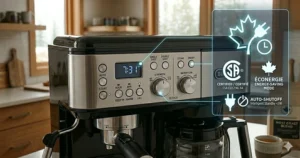
Verify Amazon.ca availability rather than assuming US market products ship here. Check for bilingual product manuals and Canadian electrical standards compliance (120V, CSA approved). Consider warranty service—some manufacturers route Canadian warranty claims through US service centres, creating 4-6 week turnaround times versus local service options.
Long-Term Maintenance and Total Cost of Ownership in Canada
The sticker price represents just the beginning of your coffee and espresso combo machine investment. Canadian buyers need to account for ongoing costs that accumulate over the machine’s 4-7 year lifespan.
Descaling Requirements: Canadian water hardness varies dramatically by region. Calgary and Regina have exceptionally hard water (200+ ppm calcium carbonate) requiring monthly descaling versus soft-water areas like Vancouver needing quarterly descaling. At $8-12 per descaling solution bottle, this adds $50-150 annually depending on your municipality. Machines with automatic descaling cycles (like the Ninja ES601C) simplify maintenance but don’t eliminate chemical costs.
Filter Replacements: Water filters require replacement every 2-3 months, costing $15-25 per filter on Amazon.ca. Budget $60-100 annually for filter maintenance. Some Canadian buyers skip filters in soft-water regions, but manufacturers warn this may void warranties if mineral buildup causes damage.
Capsule Costs: Nespresso-compatible capsules average $0.75-1.25 each on Amazon.ca. If you’re pulling two shots daily, that’s $45-75 monthly or $540-900 annually. Ground coffee alternatives run $0.25-0.40 per shot, saving $300-650 yearly for heavy espresso drinkers. Over five years, capsule costs can exceed the original machine purchase price.
Milk Frothing Wear: Steam wands and automatic frothers require cleaning after every use and occasional deep cleaning with specialized solutions. Neglected milk systems develop residue that affects foam quality and eventually clogs components. Replacement frothing accessories run $25-60 on Amazon.ca, with typical replacement every 18-24 months under heavy use.
Energy Consumption: Combo machines consume 1000-1500 watts during brewing cycles. At average Canadian electricity rates ($0.12-0.15 per kWh), you’re spending roughly $15-25 annually on electricity for typical household usage. Machines that power down completely between uses save 20-30% versus models maintaining reservoir temperature 24/7.
Common Mistakes Canadian Buyers Make When Purchasing Combo Machines
Mistake #1: Prioritizing Price Over Total Cost
The cheapest machine rarely delivers the lowest cost of ownership. Budget models often use proprietary capsules, expensive replacement parts, or require frequent descaling due to lower-quality components. A $150 machine requiring replacement after 18 months costs more long-term than a $350 machine lasting 5+ years.
Mistake #2: Ignoring Counter Space Realities
Buyers measure width but forget about depth and height clearances. A machine might technically fit but become frustrating if you can’t access the water reservoir without moving the entire unit. Also account for steam wand swing radius—some models need 45-50 cm of clearance to operate the frothing arm without hitting walls or backsplashes.
Mistake #3: Overestimating Espresso Usage
Many Canadians buy combo machines imagining daily espresso drinks but revert to drip coffee within weeks. If you’re not currently buying espresso drinks regularly, you probably won’t start making them at home. Be realistic about consumption patterns rather than aspirational brewing habits.
Mistake #4: Assuming All “15-Bar Pump” Claims Are Equal
Some manufacturers measure peak pressure rather than sustained brewing pressure. True espresso extraction requires sustained 9-10 bar pressure during the full 25-second shot. Verify whether marketing claims reference peak pressure (often meaningless) or sustained extraction pressure (what actually matters for quality).
Mistake #5: Overlooking Canadian Warranty and Service
US-market machines may have limited or no Canadian warranty coverage. Verify that warranty service addresses Canadian residents and check service centre locations. Some brands route all Canadian claims through US centres, creating 4-6 week turnaround times. Buying through Amazon.ca provides better consumer protection than importing machines independently.
Frequently Asked Questions
❓ Can coffee and espresso combo machines make authentic espresso comparable to standalone machines?
❓ Do these machines work well with Canadian tap water variations across provinces?
❓ Are coffee and espresso combo machines energy-efficient for Canadian electricity costs?
❓ Can I use Nespresso capsules from Canadian grocery stores in these combo machines?
❓ How do coffee and espresso combo machines handle Canadian winter temperatures?
Conclusion: Choosing Your Perfect Coffee and Espresso Combo Machine for Canada
The Canadian market for coffee and espresso combo machines has matured significantly in 2026, offering genuine options across every price tier and feature preference. Whether you’re maximizing limited condo counter space or outfitting a suburban kitchen for multiple daily drinkers, the right dual brewing system eliminates the compromises previous generations of combo machines forced upon buyers.
For most Canadian households, the Ninja CFN601C delivers exceptional value, combining Nespresso capsule convenience with full-carafe drip brewing around the $160-$220 mark. If simultaneous brewing matters for busy mornings, the De’Longhi COM532M justifies its $280-$350 price through genuine time savings and authentic 15-bar espresso capability. Serious coffee enthusiasts should consider the Ninja ES601C Luxe Café Premier despite its $650-$750 premium—the integrated grinder, guided brewing, and hands-free frothing deliver coffeehouse quality that rapidly offsets the initial investment by eliminating $5-7 daily coffeehouse purchases.
Remember that the best 2-in-1 coffee maker matches your actual consumption patterns rather than aspirational brewing habits. Assess your household honestly, measure your counter space accurately, and factor in total cost of ownership including capsules, filters, and descaling. With 71% of Canadian adults drinking coffee daily, choosing the right machine becomes an investment in daily quality of life that pays dividends every morning for years to come.
Recommended for You
- 7 Best Turkish Coffee Makers Canada 2026
- AeroPress Brewing Techniques: 7 Pro Methods Canada 2026
- 7 Best Bialetti Moka Pot Options Canada 2026
Disclaimer: This article contains affiliate links. As an Amazon Associate, I earn from qualifying purchases. If you purchase products through these links, we may earn a small commission at no additional cost to you.
✨ Found this helpful? Share it with your friends! 💬🤗
