
In This Article
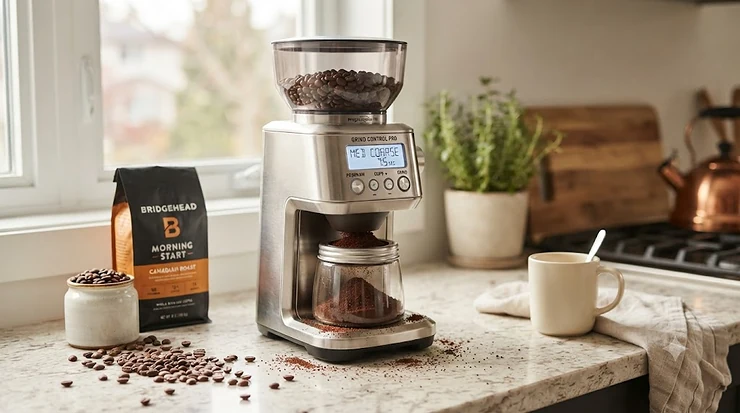
Somewhere between “good enough” and “obsessive” sits the programmable coffee grinder, and if you’re reading this, you’ve probably already decided which side of that line you’re on. Maybe you’re tired of squinting at a dial every morning, trying to remember whether “14” or “15” was the setting that made yesterday’s pour-over taste like a hug instead of battery acid. That’s the whole pitch of a programmable coffee grinder: it remembers so you don’t have to, storing your dial-in as a preset, a saved profile, a little digital breadcrumb back to the exact grind that worked. A programmable coffee grinder is an electric burr grinder that lets you save specific grind settings, dose weights, or timed durations to memory so you can recall them instantly instead of re-dialing by feel each time.
That distinction matters more than it sounds. A basic adjustable grinder gives you control; a programmable one gives you control plus a memory, which is a completely different relationship with your morning routine. Once you’ve used a grinder that reliably reproduces yesterday’s dose, going back to eyeballing it feels a bit like giving up GPS for a paper map — technically possible, occasionally charming, mostly just slower. Below, we’ve dug into seven real, currently available options spanning budget touchscreen units to grind-by-weight machines that Canadian home baristas genuinely obsess over, plus the analysis you need to figure out which one actually fits your counter and your coffee habit.
Quick Comparison: Programmable Coffee Grinders at a Glance
| Grinder | Type | Settings/Memory | Price Range (CAD) | Best For |
|---|---|---|---|---|
| Baratza Sette 270Wi | Espresso, grind-by-weight | 270 grind steps, 3 weight presets | C$700–C$800 | Espresso precision fanatics |
| Eureka Mignon Specialita | Espresso, touchscreen | Stepless + 2 timed dose memories | C$650–C$750 | Quiet, dialed-in daily espresso |
| Timemore Sculptor 078S | Espresso/pour-over hybrid | Stepless with variable RPM | C$450–C$550 | Tinkerers who brew multiple ways |
| Breville Smart Grinder Pro | All-purpose, LCD | 60 settings, Dosing IQ timer | C$280–C$360 | One grinder for everything |
| Fellow Opus | All-purpose, single dose | 41 settings, 3 timed presets | C$230–C$300 | Compact counters, mixed brew methods |
| SHARDOR Conical Burr Espresso Grinder | Espresso-focused, touchscreen | 51 settings, digital timer | C$130–C$180 | Budget espresso starters |
| Cuisinart DBM-8 | Entry-level, dial-based | 18 settings, cup selector | C$90–C$130 | First-time buyers, drip coffee |
Looking at the spread above, there’s a clear split between grinders that program a dose (weight or time) and grinders that mostly program a grind coarseness — and the two aren’t interchangeable. The Baratza Sette 270Wi and Eureka Mignon Specialita sit at the top because they combine fine-grained grind adjustment with genuine dose memory, which is the combination that actually eliminates morning guesswork. Budget picks like the Cuisinart DBM-8 are worth including honestly: they’re programmable only in a loose sense (a slide dial plus a cup-count timer), and buyers expecting Sette-level memory will be disappointed, so we’ve flagged that clearly in its section below.
💬 Just one click — help others make better buying decisions too!😊
Top 7 Programmable Coffee Grinders: Expert Analysis
1. Baratza Sette 270Wi — grind-by-weight precision into the portafilter
The headline feature here is the built-in Acaia scale, which doses directly into your portafilter by weight rather than by time — a meaningfully different approach from every other grinder on this list. The 270Wi offers 30 macro settings plus a stepless micro-adjustment ring, giving you essentially infinite grind resolution, and three programmable weight presets that you set once by holding the preset button and adjusting in tenths of a gram. Baratza’s own product literature notes the scale accounts for vibration and predicts the stopping point as it grinds, which is why it’s known for landing within roughly 0.3g of target even when you switch grind settings mid-session. Based on the spec comparison, this is squarely a machine for people running espresso as a daily ritual rather than an occasional treat — the conical burrs and vertical grind path keep retention low, which single-dose espresso drinkers will appreciate, but the learning curve and Bluetooth firmware quirks make it overkill for drip-coffee households. Reviewers consistently note the weight accuracy holds up shot after shot, though a vocal subset of long-time Sette owners prefer the older timer-only Sette 270 for its simplicity, suggesting the weight-based version is a preference, not a strict upgrade for everyone.
Pros:
- ✅ Built-in scale doses directly into the portafilter by weight
- ✅ Near-infinite grind adjustability via stepless micro ring
- ✅ Three saved presets swap dose weights in seconds
Cons:
- ❌ Some long-time users report the weighing step feels finicky
- ❌ Premium price puts it well above casual home-brewing budgets
Expect this one to land in the C$700–C$800 range at the time of research, and given the built-in scale alone would cost C$100+ separately, that math works out reasonably well for anyone who was going to buy a scale anyway.
2. Eureka Mignon Specialita — touchscreen dosing with whisper-quiet grinding
Eureka built its reputation on commercial equipment, and the Mignon Specialita is where that pedigree trickles down into a home-sized footprint. The 55mm flat steel burrs are unusually large for this price bracket, which practically translates into faster grinding and less heat transfer into the beans — something the smaller 50mm burrs on cheaper competitors can’t quite match. It runs on a stepless micrometric adjustment dial paired with a touchscreen that stores two programmable timed-dose presets, typically labelled for single and double shots. What most buyers overlook about this model is the sound insulation: independent measurements put it around 73 dBA, quiet enough that you can hold a conversation while it grinds, which matters more than spec sheets suggest once you’ve lived with a screaming espresso grinder at 6 a.m. Reviewers frequently highlight the anti-clump ACE system, which reduces static cling in the grounds — a persistent annoyance with flat-burr grinders that this one seems to have genuinely solved rather than just marketed around. This is the grinder for someone who’s already committed to espresso as a habit and wants a machine they won’t outgrow in two years.
Pros:
- ✅ 55mm flat burrs grind fast with less retained heat
- ✅ Genuinely quiet operation for early-morning use
- ✅ Anti-static ACE system cuts down on clumpy, messy grounds
Cons:
- ❌ Only two dose memories, fewer than some rivals
- ❌ Espresso-focused range makes it a poor fit for drip or French press
At around C$650–C$750, the Eureka Mignon Specialita occupies a similar tier to the Sette but trades weight-based precision for quieter, simpler touchscreen operation — a fair trade for buyers who find scales fussy.
3. Timemore Sculptor 078S — stepless adjustment with adjustable burr speed
Timemore made its name in manual grinders before jumping into electric, and the Sculptor series carries over that obsessive build quality. The 078S uses flat burrs tuned for fine, espresso-leaning grinds and pairs them with a brushless motor that lets you dial RPM anywhere between roughly 800 and 1400 — a feature almost nothing else in this list offers. Here’s what to weigh: slower RPM settings reduce heat and static for delicate light roasts, while faster speeds save time when you’re grinding through a heavier daily volume, so the adjustable speed isn’t a gimmick, it’s a genuine tool for dialing flavour. The oversized front-facing grind dial and rotary “knocker” that clears stuck fines from the spout are the kind of details you only appreciate after using cheaper grinders that trap grounds in the chute. Reviewers describe a narrower-than-expected practical sweet spot on the numbered dial — most owners of the pour-over-focused sibling land somewhere in a six-setting window — which suggests newcomers should budget extra time for burr seasoning and calibration before expecting café-quality shots.
Pros:
- ✅ Adjustable RPM lets you trade speed for flavour control
- ✅ Rotary knocker clears stuck fines without disassembly
- ✅ Commercial-grade build feels sturdier than the price implies
Cons:
- ❌ Burrs need a seasoning period before performance stabilizes
- ❌ Narrow practical adjustment window demands patience to dial in
Priced around C$450–C$550, the Timemore Sculptor 078S sits in an interesting middle tier — pricier than the Breville or Opus, but noticeably below the Eureka or Sette, making it the pick for tinkerers who want boutique feel without boutique cost.
4. Breville Smart Grinder Pro — the do-everything LCD workhorse
If there’s a grinder that most Canadian home coffee setups already own a cousin of, it’s probably this one. The Smart Grinder Pro offers 60 grind settings and Breville’s Dosing IQ technology, which lets you program grind time in 0.2-second increments — a genuinely useful level of granularity when you’re chasing a specific dose. The LCD screen displays grind setting, timer, and whether you’ve selected cups or shots, so switching between a French press morning and an espresso afternoon doesn’t require re-learning the interface. Based on the spec comparison, the real advantage here isn’t any single spec — it’s breadth: 200 to 820 microns of adjustable range covers everything from Turkish-adjacent fine to cold-brew coarse, which single-purpose espresso grinders like the Sette simply can’t do. What the spec sheet won’t tell you, but longtime reviewers note, is that the display becomes hard to read from any angle except looking straight down — a minor but persistent design quirk Breville hasn’t addressed across multiple product generations. Still, for a household that brews more than one way, this remains one of the most flexible programmable options at its price.
Pros:
- ✅ Covers the full grind range from espresso to French press
- ✅ 0.2-second timer precision through Dosing IQ
- ✅ Grinds directly into portafilter, container, or paper filter
Cons:
- ❌ LCD screen is difficult to read from most viewing angles
- ❌ 60 settings can feel like decision paralysis for new users
At roughly C$280–C$360, the Breville Smart Grinder Pro delivers the broadest brew-method coverage on this list, which is exactly why it shows up so often as the “one grinder to rule them all” recommendation.
5. Fellow Opus — compact single-dose grinder with tap-to-time presets
Fellow’s design language shows up everywhere from kettles to mugs, and the Opus brings that same intentionality to a genuinely compact footprint. It runs 41 settings on an outer macro ring plus six inner micro-steps in either direction, giving you a quick way to jump between espresso and brew ranges with a single turn. The programmable element is refreshingly simple: tap the power button once for 30 seconds, twice for 60, three times for 90, or hold for a two-minute grind — no touchscreen menus to navigate, just muscle memory. Reviewers consistently note the magnetic catch bin is one of the tidier single-dose designs on the market, snapping into place with a satisfying click and fitting both 54mm and 58mm portafilters directly. Here’s what to weigh: single dosing means you load only what you need each time rather than keeping a full hopper, which appeals to people who buy small-batch roasted beans and want minimal bean-to-bean staleness, but it also means slightly more hands-on prep work than a hopper-fed grinder for someone brewing multiple cups back to back.
Pros:
- ✅ Compact single-dose design fits tight counter space
- ✅ Tap-to-time presets are genuinely fast to learn
- ✅ Anti-static tech reduces messy clumping in the catch cup
Cons:
- ❌ Single dosing means reloading beans for every use
- ❌ 90-second max timed grind can feel short for larger batches
At around C$230–C$300, the Fellow Opus offers one of the better value propositions here for anyone who wants dual espresso-and-brew flexibility without committing to a full-size hopper grinder.
6. SHARDOR Conical Burr Espresso Grinder — budget touchscreen with real memory function
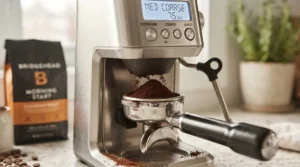
Budget grinders often skip programmability entirely, which is what makes this SHARDOR model worth a closer look. It offers 51 grind settings and a touchscreen electronic timer adjustable from roughly 1 to 60 seconds in 0.1-second increments, plus a cup-count selector from 1 to 12. The 40mm stainless steel conical burrs are noticeably smaller than the flat burrs on pricier machines, which in practice means slower, slightly less consistent grinding at the finest espresso settings — a trade-off you’d expect at this price point. What most buyers overlook is that the anti-static housing genuinely reduces the mess typical of cheap grinders, and the dual 53mm/58mm portafilter cradles are a thoughtful inclusion rarely seen below the C$200 mark. Aggregated buyer feedback across major retail listings points to strong satisfaction with value for beginner espresso setups, alongside a recurring theme that the burrs benefit from an initial seasoning period before grind consistency settles — the same pattern seen on far pricier machines, just less forgiving here given the smaller burr size.
Pros:
- ✅ Touchscreen timer with genuine 0.1-second dosing precision
- ✅ Dual portafilter cradles included for 53mm and 58mm baskets
- ✅ Anti-static housing keeps grounds contained
Cons:
- ❌ Smaller 40mm burrs run slower than flat-burr competitors
- ❌ Grind consistency dips noticeably at the very finest settings
Typically found in the C$130–C$180 range, the SHARDOR Conical Burr Espresso Grinder is one of the strongest arguments that programmable dosing doesn’t have to mean a four-figure investment.
7. Cuisinart DBM-8 — the honest entry point for drip coffee households
We’re including this one deliberately, and we want to be upfront about what it is and isn’t. The Cuisinart DBM-8 offers an 18-position slide-dial grind selector and a cup-size selector from 4 to 18 cups, with an internal timer that automatically shuts the motor off once it estimates you’ve ground enough for your selected batch size. That’s a form of programmability — you’re not manually timing a grind — but it’s not memory-based dosing or a saved grind profile the way the other six machines here operate, and buyers expecting Sette-style presets will find this a different category of tool entirely. Based on the spec comparison, the flat burr and removable grind chamber make this a sensible, low-friction upgrade from a blade grinder for someone whose daily brew is drip coffee rather than espresso. Aggregated review sentiment across retailers describes it as reliable and easy to clean, with the most common complaint being that the coarsest and finest settings both skew toward the middle of the range compared to dedicated espresso grinders — in other words, don’t expect this one to nail a proper espresso grind, because that’s simply outside its design intent.
Pros:
- ✅ Simple, low-learning-curve dial interface
- ✅ Automatic shutoff timer removes guesswork for drip brewing
- ✅ Fully removable hopper and chamber for easy cleaning
Cons:
- ❌ No true memory presets — timer estimates by cup count only
- ❌ Grind range doesn’t extend fine enough for serious espresso work
At around C$90–C$130, the Cuisinart DBM-8 is the honest budget floor of this list — a legitimate upgrade over blade grinding, just not a substitute for the memory-based machines above it.
Top 7 Grinders: Detailed Specs & Value Comparison
| Grinder | Burr Type | Grind Range | Dose Memory | Noise Level | Best For |
|---|---|---|---|---|---|
| Baratza Sette 270Wi | Conical, 40mm | Espresso-focused | 3 weight presets | Moderate | Weight-precision espresso |
| Eureka Mignon Specialita | Flat, 55mm | Espresso-focused | 2 timed presets | ~73 dBA, quiet | Quiet daily espresso |
| Timemore Sculptor 078S | Flat | Espresso, fine-leaning | Stepless dial, no digital memory | Moderate | Speed/flavour tinkering |
| Breville Smart Grinder Pro | Conical, 40mm | 200–820 microns | Timed presets via Dosing IQ | Moderate-loud | All-purpose brewing |
| Fellow Opus | Conical, 40mm | Espresso to French press | 3 tap-to-time presets | Moderate | Compact, mixed brewing |
| SHARDOR Espresso Grinder | Conical, 40mm | Espresso-focused | Digital timer memory | Moderate | Budget espresso |
| Cuisinart DBM-8 | Flat | 18 fixed positions | Cup-count timer only | Moderate | Drip coffee |
A quick read of the table above makes the split even clearer: only the Baratza Sette 270Wi, Eureka Mignon Specialita, Breville Smart Grinder Pro, Fellow Opus, and SHARDOR Conical Burr Espresso Grinder offer genuine saved-preset memory, while the Timemore Sculptor 078S trades digital memory for stepless mechanical precision, and the Cuisinart DBM-8 offers timer automation without true presets. If saved memory is your dealbreaker, that narrows your real shortlist to five machines fast.
🔍 Ready to Compare Grinders Side by Side?
Take the guesswork out of your morning routine with a grinder that actually remembers your dial-in. Click through on any model above to check current pricing and availability before you decide!
What Is a Programmable Coffee Grinder?
A programmable coffee grinder is an electric burr grinder equipped with digital or mechanical memory that lets you save a specific grind setting, dose weight, or grind duration and recall it on demand. Instead of manually adjusting a dial and estimating by eye or ear each morning, you press a saved preset button and the grinder reproduces the same result — the same grind size, the same weight, or the same timed duration — every single time, which is the entire point of the feature. According to the Wikipedia entry on burr mills, burr grinders in general produce more uniform particle sizes than blade grinders because the beans are crushed between two adjustable surfaces rather than chopped randomly; programmability simply adds a memory layer on top of that mechanical consistency, closing the loop between “consistent grind” and “consistent brew.”
How to Choose a Programmable Coffee Grinder
- Decide what you’re actually brewing. Espresso-only grinders like the Eureka Mignon Specialita or Baratza Sette 270Wi offer narrower but more precise ranges, while all-purpose machines like the Breville Smart Grinder Pro trade some fineness for versatility across brew methods.
- Check whether “programmable” means memory or just a timer. As the Cuisinart DBM-8 shows, some entry-level machines automate a shutoff without saving a true preset — read past the marketing copy before assuming feature parity.
- Weigh dose-by-weight against dose-by-time. Weight-based dosing on the Baratza Sette 270Wi is more accurate across bean density changes, but timed dosing on machines like the Fellow Opus is faster to set up and requires no separate scale calibration.
- Match burr size to your patience level. Larger 55mm+ flat burrs grind faster and run cooler, which matters more if you’re grinding daily rather than occasionally.
- Factor in noise if your kitchen is small or your mornings are early. The Mignon Specialita’s sound insulation is a genuine differentiator here, not a marketing footnote.
- Budget for burr seasoning time. Nearly every grinder in this guide, from the SHARDOR to the Sculptor, benefits from grinding through a few hundred grams of cheap beans before flavour stabilizes — plan your first week accordingly.
- Confirm portafilter compatibility if you’re espresso-focused. Not every grinder’s dosing cradle fits every basket size, so check 53mm/54mm/58mm compatibility against your machine before buying.
Electric Grinder with Memory Settings: How the Presets Actually Work
The phrase “memory settings” gets used loosely in coffee marketing, so it’s worth being precise about the mechanism. On grind-by-weight machines like the Baratza Sette 270Wi, the memory stores a target weight, and the grinder’s internal scale actively monitors output and stops the motor when it hits that number — meaning the grind duration can vary slightly day to day even though the output stays constant. On timed-preset machines like the Fellow Opus or Breville Smart Grinder Pro, the memory instead stores a duration, which assumes your grind setting and bean density stay roughly consistent between uses; change either one and your dose will drift even though the timer fires identically. Here’s what to weigh: weight-based memory is more forgiving of bean-to-bean variation, since two different roasts at the same grind setting rarely weigh the same per second, while timed memory is simpler, cheaper to manufacture, and perfectly adequate if you’re loyal to one bag of beans at a time. Reviewers of both approaches tend to agree on one thing — once you’ve experienced any form of true memory, whether weight or time-based, going back to a plain adjustment dial feels like a genuine downgrade rather than a minor inconvenience.
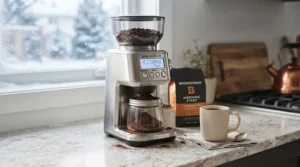
Programmable Grind Profile Coffee Grinder vs Basic Adjustable Grinders
A basic adjustable grinder, the kind with a simple dial and no digital component, still lets you change grind size — but it asks you to remember or physically mark your preferred settings yourself, often with a sticky note or a Sharpie line on the collar. A programmable grind profile coffee grinder removes that manual bookkeeping by storing the setting internally, whether that’s a numeric grind position, a dose weight, or a timed duration, and recalling it with one press. In practice, the difference shows up most starkly in multi-user households: on a basic grinder, if a partner or roommate nudges the dial while cleaning, your carefully dialed-in espresso shot is gone until you re-calibrate by taste; on a machine like the Breville Smart Grinder Pro or Fellow Opus, the saved preset stays intact even if the physical dial gets bumped, because the memory is stored digitally or mechanically separate from casual handling. The trade-off is cost and complexity — basic dial grinders like a stripped-down version of the Cuisinart DBM-8 are cheaper and have fewer parts to fail, which matters for buyers who genuinely just want fresher coffee than pre-ground bags without any interest in dialing in shot times. For anyone brewing daily and caring about repeatability, though, the programmable category earns its price premium fairly quickly in saved time and wasted beans.
Preset Grind Profiles for Every Brew Method
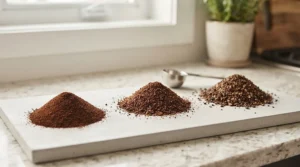
Different brew methods call for genuinely different particle sizes, and preset grind profiles are most useful when a single grinder needs to cover more than one of them. Espresso demands the finest end of the spectrum, roughly 200–400 microns, where resistance builds enough pressure for proper extraction; drip and pour-over sit in a medium 400–800 micron range that balances flow rate against contact time; and French press or cold brew need the coarsest settings, often 800 microns and up, so the grounds don’t slip through the mesh filter. On a multi-method grinder like the Breville Smart Grinder Pro, saving one preset per brew method — say, one saved timer for a double espresso shot and another for a 4-cup French press batch — means you’re never re-deriving the right ballpark from scratch. The Fellow Opus takes a similar approach with its macro-and-micro adjustment rings, letting you jump from an espresso range to a filter range with one turn and fine-tune from there. What most buyers overlook is that saved profiles only stay accurate as long as the beans stay roughly consistent; switching to a noticeably denser or oilier roast can shift the ideal setting by a few clicks even with the same nominal grind size, so treat presets as a strong starting point rather than a permanent guarantee.
Digital Display Grinders: What the Screen Actually Tells You
A digital display earns its keep by turning invisible settings into something you can actually verify at a glance, rather than trusting muscle memory or counting clicks. On the Breville Smart Grinder Pro, the LCD shows the numeric grind setting, the programmed grind time, and whether you’re grinding by cups or shots — three pieces of information that would otherwise require you to mentally track separately. The Eureka Mignon Specialita‘s touchscreen goes further, showing the actual timed dose in tenths of a second on a high-contrast white-on-black panel that’s easy to read even in dim early-morning kitchens. Based on the spec comparison, the practical value of a digital display isn’t really about looking modern — it’s about eliminating the small daily errors that come from imprecise mechanical dials, like a grind ring that’s slightly worn or a marking that’s faded after a year of use. That said, reviewers of the Breville consistently flag a real limitation: LCD screens with poor viewing angles undercut the whole benefit, since a display you can’t read from your normal counter position isn’t actually more useful than a mechanical dial you can feel by touch.
Repeatable Dosing: Why Consistency Beats Guesswork
Repeatable dosing is the feature that actually delivers on the promise of a programmable coffee grinder, because grind size alone doesn’t guarantee a consistent cup if the amount of coffee you’re using varies wildly between brews. On the Baratza Sette 270Wi, that repeatability comes from weighing the output directly, with Baratza’s own testing suggesting accuracy within a few tenths of a gram of the target dose — tight enough that most home tasters won’t detect a difference shot to shot. On timer-based machines, repeatability depends on the motor spinning at a genuinely consistent speed and the beans feeding at a consistent rate, which is part of why burr size and motor quality matter as much as the timer’s precision itself. Here’s what to weigh: for pour-over and drip brewing, where recipes are usually expressed as a coffee-to-water ratio you measure separately anyway, repeatable dosing from the grinder is a nice-to-have; for espresso, where a gram or two of difference can swing a shot from balanced to sour or bitter, repeatable dosing moves from convenience to near-necessity. This is also where the honest limitations of budget machines show up — the SHARDOR Conical Burr Espresso Grinder‘s timer is precise to a tenth of a second, but because its 40mm burrs feed beans less uniformly than larger flat burrs, the actual weight output per second can drift slightly more than on premium machines, even with an identical timer setting.
Practical Usage Guide: Your First 30 Days
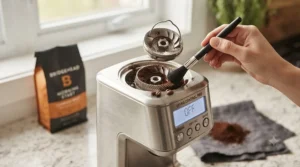
Getting a new programmable grinder to actually perform like its spec sheet promises takes a bit of deliberate setup, not just unboxing and pressing go. In the first week, run at least 200–300 grams of inexpensive beans through the machine at a middling setting to season the burrs — every grinder in this guide, from the Cuisinart DBM-8 to the Timemore Sculptor 078S, benefits from this, since fresh-from-the-factory burrs carry manufacturing residue and micro-imperfections that smooth out with use. Once seasoned, dial in your primary brew method by making small, single-click adjustments rather than large jumps; if espresso pulls too fast and sour, go one click finer, wait for a full shot to judge, then adjust again rather than guessing multiple clicks at once. Save your first preset only after you’ve confirmed the setting tastes right across two or three consecutive grinds, not just one — bean settling in the hopper can make the very first grind slightly different from steady-state grinding. A common early mistake is over-tightening portafilter cradles or dosing cups, which can misalign weight-based scales like the one in the Sette 270Wi; check your manufacturer’s calibration guide if weight readings seem inconsistent in week one. Finally, build a simple maintenance habit early: a quick brush-out of the chute after each session and a deeper burr cleaning every few weeks prevents the stale-oil buildup that gradually dulls flavour on every grinder regardless of price point.
Real-World Scenarios: Which Programmable Grinder Fits Your Routine
Picture a grad student in a Toronto apartment, brewing a single pour-over most mornings and occasionally hosting friends for French press on weekends — for that profile, the Breville Smart Grinder Pro‘s wide 200–820 micron range and cup-based presets cover both scenarios without needing a second machine, and its C$280–C$360 price fits a tighter budget better than the espresso specialists. Now picture a home barista in Calgary who pulls two espresso shots every weekday morning before work and cares deeply about consistency because a bad shot means a wasted C$1-plus of specialty beans — for that use case, the Baratza Sette 270Wi‘s weight-based repeatability earns its premium price through fewer wasted shots over time, and Canadians increasingly fit this profile as home brewing continues its steady rise even as café culture stays strong. Finally, picture a couple sharing a small condo kitchen where counter space is scarce and one person drinks drip coffee while the other pulls the occasional espresso — the Fellow Opus‘s compact single-dose footprint and dual-range macro adjustment let them switch between brew styles without permanently dedicating counter real estate to two separate grinders.
Common Mistakes When Buying a Programmable Coffee Grinder
Buyers frequently assume more settings automatically means better results, but a grinder with 60 numbered positions and poor burr quality can still underperform a 41-setting grinder with sharper, larger burrs — settings count is not a proxy for grind quality. Another frequent misstep is buying an espresso-only grinder, like the Eureka Mignon Specialita, for a household that mostly drinks drip coffee, which leaves the machine’s fine-grind specialization mostly wasted and its coarse range underwhelming compared to purpose-built all-rounders. Reviewers across multiple grinder categories also note that buyers often skip checking portafilter compatibility before purchase, only to discover their 58mm basket doesn’t fit a grinder’s stock cradle — a frustrating and avoidable return. A subtler mistake is ignoring noise ratings entirely, then discovering a genuinely loud grinder is incompatible with an early wake-up routine in a shared or open-concept living space, where the Eureka’s quieter operation would have been worth the price difference. Finally, some buyers expect “programmable” to universally mean weight-based dose memory, when in reality most machines under C$400 use timed presets instead — understanding that distinction before comparing prices prevents a lot of post-purchase disappointment.
Long-Term Cost & Maintenance
The sticker price on a programmable coffee grinder is only part of the real cost of ownership, and burr replacement is the line item most first-time buyers forget to budget for. Manufacturer guidance generally suggests replacing burrs somewhere between 500 kg and 1,000 kg of beans ground through a home machine, which for a daily two-cup household could mean anywhere from three to seven years before a replacement burr set is needed — a cost that typically runs somewhere in the C$40–C$120 range depending on burr size and brand. Premium machines like the Baratza Sette 270Wi and Eureka Mignon Specialita generally carry stronger parts-availability track records, since both brands sell direct replacement burrs and components years after a model’s release, while budget touchscreen grinders from newer entrants can be a gamble on long-term parts support. On paper this means the true cost-per-cup gap between a C$130 SHARDOR and a C$700 Sette narrows meaningfully over a five-year ownership window once you factor in burr longevity, warranty support, and reduced bean waste from consistent dosing — though the SHARDOR still wins outright for anyone unsure they’ll stick with home espresso long-term. Routine maintenance costs stay low across the board: a burr brush, occasional grinder-cleaning tablets, and a few minutes weekly are enough to keep any of these seven machines performing near their spec-sheet potential.
Safety, Certification & Canadian Regulations Guide
Any electric kitchen appliance sold in Canada should carry certification confirming it meets Canadian electrical safety standards, and this is worth checking before you buy rather than after. Look for a mark from an SCC-accredited certification body — CSA Group’s small appliance testing program is the most commonly referenced standard for household kitchen electronics sold across Canada, and products carrying a plain “UL” mark without the “c” prefix are certified only for the U.S. market, not necessarily Canada. Practically, this matters most for lesser-known imported brands, where certification labelling can be inconsistent between listings — a detail worth double-checking directly with the seller for any grinder you’re not buying from a major Canadian retailer. Beyond certification, basic electrical safety habits apply to every grinder here regardless of price: avoid running these motors continuously beyond their rated duty cycle (most home burr grinders aren’t designed for back-to-back multi-minute grinds), keep the unit unplugged during burr cleaning or hopper removal, and inspect the power cord periodically for wear if the grinder lives somewhere it gets bumped or moved often.
✨ Don’t Miss These Exclusive Deals!
🔍 Take your morning coffee routine to the next level with these carefully selected grinders. Click on any highlighted model to check current pricing and availability. A little precision now means genuinely better coffee for years to come!
Frequently Asked Questions
❓ What is the difference between a programmable coffee grinder and a regular burr grinder?
❓ Do programmable coffee grinders work for both espresso and drip coffee?
❓ How accurate is grind-by-weight dosing compared to timed dosing?
❓ How long do burrs last on a programmable coffee grinder?
❓ Are cheaper programmable coffee grinders worth buying?
Conclusion
There’s no single “best” programmable coffee grinder here, and honestly, that’s the right takeaway — the Baratza Sette 270Wi is overkill for someone who drinks one cup of drip coffee a day, just as the Cuisinart DBM-8 would frustrate a dedicated espresso enthusiast chasing consistent 18-gram doses. What matters is matching the type of memory (weight versus timed versus none at all) and the grind range to your actual brewing habits, not the longest spec sheet in the comparison table. If you’re brewing espresso daily and care about shot-to-shot consistency, the Eureka Mignon Specialita or Baratza Sette 270Wi justify their premiums quickly. If your mornings swing between brew methods, the Breville Smart Grinder Pro or Fellow Opus offer the flexibility to match. And if you’re simply upgrading from pre-ground coffee for the first time, the SHARDOR Conical Burr Espresso Grinder or Cuisinart DBM-8 prove that a genuinely better cup doesn’t require a four-figure investment. Whichever one you land on, the real upgrade isn’t the grind size — it’s never having to guess at it again.
Recommended for You
- Compact Electric Coffee Grinder for Small Kitchens: 7 Picks (2026)
- Electric Coffee Grinder vs Manual Grinder: The Ultimate 2026 Guide
- 7 Best Electric Burr Grinders in Canada: 2026 Buyer’s Guide
Disclaimer: This article contains affiliate links. As an Amazon Associate, I earn from qualifying purchases. If you purchase products through these links, we may earn a small commission at no additional cost to you.
✨ Found this helpful? Share it with your friends! 💬🤗
