
In This Article
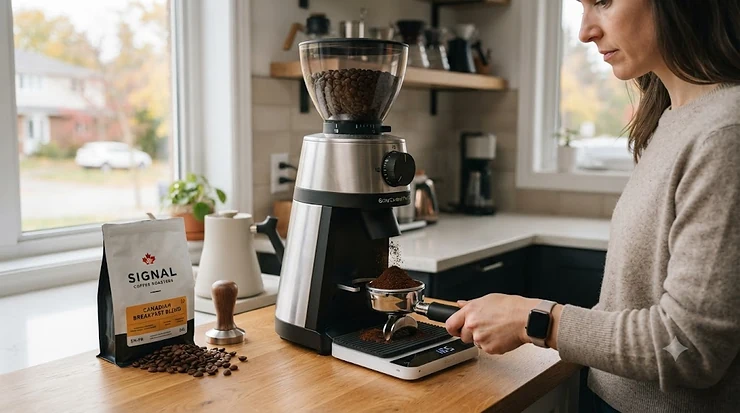
Here’s a confession every coffee snob eventually makes, usually somewhere between their third and fourth home espresso machine: none of it matters if the grinder is garbage. You can drop four hundred dollars on beans flown in from a single farm in Huila, and a bad grinder will still turn that coffee into something that tastes like flavoured cardboard. A burr grinder is a coffee machine that crushes beans between two abrasive surfaces — called burrs — set at a fixed distance apart, producing a consistent particle size instead of the random rubble a blade grinder chops out. That consistency is the whole ballgame. It’s why finding the best electric burr grinders for your actual brewing habits, not just the ones with the flashiest marketing, changes your morning more than any bag of beans ever could.
This guide breaks down seven real, currently available electric burr grinders sold in Canada, spanning roughly C$70 up into the C$350 range. We’ll get into conical versus flat burr geometry, when a mid-range machine actually beats a “prosumer” one, and what changes the moment you retire your old blade grinder for good. Canadians drink an enormous amount of coffee — by one industry estimate, more than two billion servings a year, trailing only Italy for out-of-home coffee drinking — and yet most of us are still grinding it badly. Let’s fix that.
Quick Comparison Table
| Grinder | Burr Type | Settings | Best For | Price Range (CAD) |
|---|---|---|---|---|
| Baratza Encore | Conical | 40 | Overall daily driver | C$260-C$300 |
| SHARDOR Electric Burr Grinder 2.0 | Conical | 18 | Tightest budget | C$70-C$100 |
| Cuisinart Electric Burr Grinder with Grind Selector | Flat | 18 | Automatic cup dosing | C$100-C$140 |
| OXO Brew Conical Burr Coffee Grinder | Conical | 15 | Simplicity, French press | C$150-C$190 |
| Breville Smart Grinder Pro | Conical | 60 | Drip-to-espresso versatility | C$270-C$320 |
| Baratza Virtuoso+ | Conical | 40 | Step-up grind quality | C$340-C$390 |
| Fellow Ode Gen 2 | Flat | 31 | Pour-over clarity, single-dose | C$300-C$350 |
Looking at this table, the split isn’t really budget versus premium — it’s what kind of coffee drinker you are. The Baratza Encore and SHARDOR Electric Burr Grinder 2.0 exist for people who just want to stop drinking blade-grinder sludge, while the Fellow Ode Gen 2 and Baratza Virtuoso+ are for people who’ve already fallen down the pour-over rabbit hole and know it. The Breville Smart Grinder Pro is the odd one out here, trying to be a French press grinder and an espresso grinder at once, which is either its best trick or its biggest compromise, depending on who you ask.
💬 Just one click — help others make better buying decisions too!😊
Top 7 Best Electric Burr Grinders: Expert Analysis
1. Baratza Encore — the workhorse every coffee nerd recommends first
The Baratza Encore has been the default “just buy this one” answer in home-coffee forums since 2012, and it hasn’t lost that crown. It runs on 40mm conical stainless steel burrs (Baratza calls this generation the M3 burr set) across 40 grind settings, covering roughly 200 to 1200 microns — fine enough for a passable espresso in a pinch, coarse enough for cold brew. Practically speaking, that range means one grinder can serve your AeroPress on Tuesday and your French press on Sunday without you feeling like you’re fighting the machine either day.
Based on the spec comparison against similar entry-level machines, what sets the Encore apart isn’t raw grind quality — it’s repairability and parts availability, since Baratza sells replacement burrs, hoppers, and gearboxes separately rather than forcing you to bin the whole unit when something wears out. That’s a meaningfully different ownership proposition than most appliances in this price bracket. Reviewers consistently report that the Encore develops static cling in dry winter conditions, a known quirk of conical burr grinders in general, and several online reviews mention it taking a year or more of near-daily use before any real performance drop-off, with some owners reporting a decade of service.
Pros:
- ✅ Field-replaceable burrs and parts extend real lifespan
- ✅ Wide 200-1200 micron range suits multiple brew methods
- ✅ Enormous community of guides and troubleshooting resources
Cons:
- ❌ No digital timer — grinding by feel takes practice
- ❌ Static cling is a known annoyance in dry climates
At a price in the C$260-C$300 range, the Encore is arguably the best entry point into serious home grinding — you’re paying for consistency and longevity rather than bells and whistles, and for most drip, pour-over, and French press drinkers, that’s exactly the right trade to make.
2. SHARDOR Electric Burr Grinder 2.0 — best for a genuinely tight budget
The SHARDOR Electric Burr Grinder 2.0 exists to answer one question: how good can a sub-C$100 burr grinder actually be? Its stainless steel conical burr set and 18 stepped settings won’t compete with grinders costing three times as much, but the jump from a blade grinder to this machine is enormous — you’re moving from randomly chopped fragments to an actual, repeatable particle size for the first time.
What most buyers overlook about a grinder at this price is that the motor’s ability to spin at a lower RPM matters more than the settings count on the dial. A slower motor generates less friction heat, which in turn means less of the bitter, scorched flavour that cheap blade grinders are famous for baking into your beans. Based on aggregated user reports, the SHARDOR performs reliably for drip and French press grinds, with more mixed feedback on its ability to hit a truly fine, espresso-capable grind — a common limitation of budget conical grinders generally, not a flaw unique to this model.
Pros:
- ✅ Lowest real entry price into true burr grinding
- ✅ Noticeably quieter than most blade grinders it replaces
- ✅ Compact enough for small kitchens and apartments
Cons:
- ❌ 18 settings limit fine-tuning versus 40+ setting rivals
- ❌ Struggles to reach a consistent espresso-fine grind
Priced in the C$70-C$100 range, this is the grinder to recommend to a sibling who says “I don’t need anything fancy” — because for drip coffee and French press, they genuinely don’t.
3. Cuisinart Electric Burr Grinder with Grind Selector — best automatic cup-dosing flat burr pick
If you’ve ever burned your coffee-making routine down to “I just need it to make the right amount for the pot,” the Cuisinart Electric Burr Grinder with Grind Selector is built for exactly that. Its 18-position slide dial covers ultra-fine to extra-coarse, and — unlike most of the grinders on this list — it uses a flat burr design rather than a conical one, which tends toward a narrower, more uniform particle distribution that drip-coffee fans often prefer for clarity.
Here’s what the spec sheet won’t tell you outright: the automatic cup selector, which lets you dial in “4 cups” or “8 cups” and get an approximate dose, is genuinely handy for someone brewing the same pot every morning, but it is not a substitute for weighing your coffee if you actually care about consistency day to day — think of it as a smart default, not a scale replacement. Reviewers consistently note the long service life on this line, with some owners reporting a decade or more of daily use, and the internal timer with auto-shutoff is a small but appreciated safety touch.
Pros:
- ✅ Flat burr design gives uniform, drip-friendly grounds
- ✅ Automatic cup selector simplifies daily routine dosing
- ✅ Long track record of multi-year reliability in reviews
Cons:
- ❌ 18 settings offer less granularity than premium rivals
- ❌ Cup selector dosing is approximate, not scale-precise
At around C$100-C$140, this is the flat burr electric grinder to buy if your brewing life revolves around one drip machine and you want it dialed in without thinking too hard every morning.
4. OXO Brew Conical Burr Coffee Grinder — best for uncomplicated French press and pour-over
The OXO Brew Conical Burr Coffee Grinder has quietly become one of the most trusted names in mid-budget grinding, and the numbers back it up — it carries a rating above 4.3 stars from more than 22,000 reviews on Amazon, which is a genuinely large sample for a kitchen appliance. Its stainless steel conical burrs run across 15 grind settings, a narrower range than some rivals, but one that’s calibrated specifically toward coarser filter methods rather than trying to also chase espresso.
Based on the spec comparison, what OXO optimized for here is friction reduction in daily use: the hopper twists off in one motion for cleaning or bean switching, and the push-button control doubles as a 30-second timer so you’re not eyeballing grind duration. Reviewers consistently note strong results for French press specifically, with more than one owner directly comparing it favourably against flat burr grinders for French press uniformity — which tracks with conical burrs’ tendency to produce a slightly wider particle spread that some tasters associate with fuller body in immersion brewing.
Pros:
- ✅ Exceptionally easy hopper removal for cleaning
- ✅ Large, well-established review base backs reliability
- ✅ Push-button timer removes guesswork from grind time
Cons:
- ❌ 15 settings skew coarse, weak for espresso attempts
- ❌ Compact hopper means more frequent refills for large batches
In the C$150-C$190 range, this is the conical burr grinder for someone who has already decided they’re a French press or pour-over person and doesn’t want a machine trying to talk them into espresso.
5. Breville Smart Grinder Pro — best mid-range all-rounder for drip through espresso
The Breville Smart Grinder Pro is the grinder that tries to do everything, and for a lot of home users, it actually pulls it off. Built around 40mm stainless steel conical burrs with 60 individually programmable settings, it’s got roughly 50% more granularity than the Encore or Virtuoso, plus Breville’s Dosing IQ timer that adjusts grind time in 0.2-second increments — a level of dialing-in that used to be reserved for machines twice the price.
What most buyers overlook about this model is that the adjustable internal top burr lets you recalibrate the entire settings range, meaning if you find setting 1 still isn’t fine enough for your espresso machine, you can physically shift the whole scale finer. That’s a meaningful advantage for anyone running dual-purpose espresso and drip setups on one grinder. Aggregated reviewer sentiment is broadly positive on versatility and build quality, with a recurring critique that the stepped — rather than stepless — adjustment can leave a frustrating gap between “too fine” and “too coarse” right at the edge of dialing in espresso.
Pros:
- ✅ 60 settings plus adjustable top burr for extra range
- ✅ Dosing IQ timer programs precise repeat grind times
- ✅ Cradles fit both 54mm and 58mm portafilters directly
Cons:
- ❌ Stepped settings can create awkward espresso dial-in gaps
- ❌ Conical burr geometry is a compromise, not an espresso specialist’s choice
At roughly C$270-C$320, this is the mid-range electric coffee grinder to buy if one machine genuinely needs to handle your morning drip and your weekend espresso habit, and you’d rather not own two grinders to do it.
6. Baratza Virtuoso+ — best step-up from the Encore for grind quality
The Baratza Virtuoso+ is Baratza’s answer to “what if the Encore, but better burrs and a screen.” It uses the upgraded 40mm M2 conical burr set — the same generation found in Baratza’s ESP line — spinning at a controlled speed with a digital 40-second timer and an LED-backlit grounds bin, across the same familiar 40-setting range from roughly 200 to 1200 microns.
Based on the spec comparison, the real upgrade here isn’t the settings count, which is identical to the Encore — it’s particle uniformity. The M2 burr geometry produces fewer stray fines at a given setting than the Encore’s M3 burrs, and fewer fines generally means less bitterness and muddiness in the cup, particularly noticeable in pour-over. Reviewers consistently frame the Virtuoso+ as “worth it if you can afford the difference,” rather than a night-and-day upgrade — a fair characterization, since the hardware overlap with the Encore is substantial and the gains are real but incremental.
Pros:
- ✅ Improved M2 burr set reduces fines versus the Encore
- ✅ Digital 40-second timer replaces guesswork with repeatability
- ✅ Same proven 40-setting range across espresso to cold brew
Cons:
- ❌ Roughly C$80-C$100 premium over the Encore for incremental gains
- ❌ Still a stepped, not stepless, adjustment system
Priced around C$340-C$390, this is the grinder for an Encore owner who’s ready to admit they care about the last 10% of grind consistency, or a new buyer who’d rather skip straight to the better burr set.
7. Fellow Ode Gen 2 — best premium flat burr for filter coffee obsessives
The Fellow Ode Gen 2 is a single-dose flat burr grinder built specifically around filter coffee — drip, pour-over, French press, and cold brew — rather than trying to also be an espresso machine. Its 64mm flat burr set is unusually large for a home grinder, and across 31 settings it’s engineered to minimize retention, meaning very little leftover ground coffee gets trapped inside between doses, which matters if you’re grinding a fresh single-origin bag every morning rather than a big bin of pre-ground beans.
What the spec sheet won’t tell you, but reviewers note, is how much quieter and less staticky this grinder runs compared to most conical models on this list — a direct benefit of the flat burr geometry and the larger burr diameter, which can spin slower for the same throughput. Based on the spec comparison against the DF64 and similar flat burr single-dosers referenced by specialty reviewers, the Ode Gen 2 trades some espresso-grinding flexibility for a genuinely simplified, filter-focused workflow that beginners to flat burr grinding tend to find less intimidating than stepless competitors.
Pros:
- ✅ Large 64mm flat burrs reduce retention and static
- ✅ Purpose-built for filter coffee clarity, not a compromise
- ✅ Quieter operation than most comparable conical rivals
Cons:
- ❌ Not designed or marketed for espresso grinding
- ❌ Premium price for a single-purpose filter grinder
At around C$300-C$350, this is the flat burr electric grinder for someone who has already decided espresso isn’t their thing and wants the clearest, brightest cup of filter coffee their beans are capable of.
Top 7 Grinders: Full Spec Comparison
| Grinder | Burr Size | Micron Range (approx.) | Timer | Best For |
|---|---|---|---|---|
| Baratza Encore | 40mm conical | 200-1200 | Manual switch | Daily all-rounder |
| SHARDOR Electric Burr Grinder 2.0 | Conical | Wider/coarser skew | Manual | Tightest budget |
| Cuisinart Electric Burr Grinder with Grind Selector | Flat | Fine-extra coarse | Auto cup timer | Automatic dosing |
| OXO Brew Conical Burr Coffee Grinder | Conical | Medium-coarse skew | 30-sec push timer | French press/pour-over |
| Breville Smart Grinder Pro | 40mm conical | Espresso-French press | Dosing IQ, 0.2s steps | Drip + espresso |
| Baratza Virtuoso+ | 40mm conical (M2) | 200-1200 | Digital 40-sec | Grind quality upgrade |
| Fellow Ode Gen 2 | 64mm flat | Filter-focused | Manual | Filter coffee clarity |
Reading across this table, the pattern that jumps out is burr size versus purpose: the Fellow Ode Gen 2‘s 64mm flat burrs are almost 60% larger in diameter than the 40mm conical burrs found in the Baratza Encore, Virtuoso+, and Breville Smart Grinder Pro, which is a big part of why it runs quieter and grinds faster per gram. Meanwhile, the Breville Smart Grinder Pro‘s 60 settings versus the Baratza pair’s 40 look like a clear win on paper, but in practice that extra granularity mostly matters if you’re chasing an exact espresso dial-in rather than brewing filter coffee, where the difference between adjacent settings barely registers in the cup.
Benefits vs. Blade Grinders
| Factor | Blade Grinder | Electric Burr Grinder |
|---|---|---|
| Particle consistency | Random, chopped | Uniform, adjustable |
| Heat generated | Higher (spinning blade friction) | Lower (controlled burr speed) |
| Grind repeatability | Poor — depends on grind duration | Strong — set once, repeat |
| Best brew methods | Drip only, inconsistently | Espresso through cold brew |
This is really the whole argument in one table: a blade grinder is closer to a blender than a mill, chopping beans into an unpredictable mix of dust and boulders regardless of how carefully you pulse it, while any electric burr grinder here crushes beans to a fixed, repeatable gap. That single difference is why the exact same bag of beans can taste sharp and hollow one day and rounder the next when a blade grinder is involved — the extraction is simply inconsistent from batch to batch, even when your technique doesn’t change at all.
Practical Usage Guide: Getting the Most From Your New Grinder
The first thirty days with a new burr grinder are where most people either fall in love with home coffee or quietly give up on it, so a bit of setup discipline pays off fast. Start by running a small batch of cheap beans through every setting from coarsest to finest before you commit to your “usual” grind — this calibrates your ear and eye to what your specific unit sounds and looks like at each step, since factory settings vary slightly between units even on the same model. Clean the burrs monthly with a stiff brush or specialized grinder-cleaning tablets, focusing on the burr chamber where oily residue from darker roasts builds up fastest and can turn stale over time, subtly souring fresher batches.
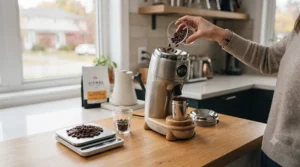
A common first-month mistake is grinding directly into a brewer without weighing the dose, which makes it nearly impossible to troubleshoot a bad cup — was it the grind size, or just too little coffee? A basic kitchen scale solves this in seconds and is worth the extra ten dollars. Static is another near-universal early frustration, especially with conical burr grinders in winter; a few drops of water stirred into the beans before grinding (the “Ross Droplet Technique” coffee nerds swear by) cuts static dramatically without affecting flavour. Finally, resist the urge to over-tighten or force any dial-based adjustment ring past its stop — most damage to home grinders in the first year comes from users trying to push settings beyond the burr’s designed range rather than from normal wear.
📊 Want the exact model that matches your brew method? Scroll back up and compare current pricing before you decide.
Real-World Scenarios: Which Grinder Actually Fits Your Life
Picture a university student in a shared apartment near campus, brewing a single pour-over most mornings and occasionally a French press for guests, on a budget that also has to cover textbooks. The SHARDOR Electric Burr Grinder 2.0 or Baratza Encore both make sense here — the SHARDOR if the budget is genuinely tight, the Encore if there’s a bit more room and a five-year horizon in the same apartment or the next one. Now picture a suburban household that bought a decent drip machine last year and grinds a full pot every morning for two adults heading to work — the Cuisinart Electric Burr Grinder with Grind Selector fits that rhythm almost perfectly, since the automatic cup dosing removes a decision point from an already rushed morning.
Finally, picture someone who got into specialty coffee during a slow winter, started ordering single-origin bags from a Canadian roaster, and now owns a proper pour-over dripper and a gooseneck kettle. That person has outgrown budget grinders and is choosing between two real upgrades: the Baratza Virtuoso+ if they want a familiar, well-supported ecosystem with better burrs, or the Fellow Ode Gen 2 if filter clarity specifically — not espresso — is the whole point of the hobby. Neither is the “wrong” choice; they’re optimized for slightly different tasting priorities.
Blade Grinder vs. Electric Burr Grinder: Why Upgrading Actually Matters
If you’re still weighing whether upgrading from a blade grinder is worth the money, the honest answer is that it’s one of the highest-impact, lowest-cost upgrades in the entire coffee chain — arguably bigger than upgrading your brewer itself. A blade grinder chops beans with a spinning propeller-style blade, and because there’s no fixed gap controlling particle size, every batch comes out as an unpredictable mix of fine dust and unground chunks. That inconsistency is the direct cause of the classic “some sips bitter, some sips sour” experience — the dust over-extracts and turns bitter while the boulders under-extract and stay sour, often in the very same cup.
An electric burr grinder fixes this at the mechanical level rather than through better technique: beans pass through a fixed gap between two burrs, so the resulting particles land in a much tighter size range no matter how tired you are at 6 a.m. What most people underestimate about upgrading from blade grinder to burr grinder is how much it also expands which brew methods are even viable — a blade grinder genuinely cannot produce a fine, even enough grind for espresso, and it struggles to hit the extra-coarse, low-fines grind that cold brew rewards. The upgrade doesn’t just make your existing coffee taste better; it unlocks brewing methods that were essentially off the table before.
Conical vs. Flat Burrs: The Real Difference
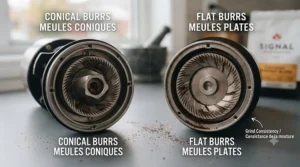
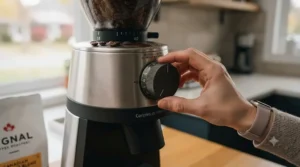
The conical versus flat burr debate gets treated like a religious argument online, but the mechanical difference is fairly simple. Conical burrs crush beans between a cone-shaped inner burr and an outer ring, which tends to produce a mixed batch of some finer and some coarser particles — a spread that many tasters associate with extra sweetness and body, and part of why conical geometry shows up in both budget grinders and high-end espresso grinders alike. Flat burrs, by contrast, shear beans between two parallel rings, producing a tighter, more uniform particle size with fewer stray fines, which often reads as a brighter, more clarified cup that pour-over drinkers tend to prefer. This basic mechanism — beans being crushed between adjustable abrasive surfaces rather than chopped — is the defining feature of every burr mill, whether it’s a hand-cranked antique or a C$350 electric model.
Here’s what most buying guides skip: for the vast majority of home brewers, that flavour distinction is far subtler than the difference between a good grinder and a cheap one. Even experienced specialty-coffee reviewers running blind taste tests between conical and flat burr grinders often report the difference isn’t obvious, and the practical, everyday factors — retention, static, noise, and how many settings you actually need — usually matter more day to day than which geometry technically produces a “brighter” cup. If you’re choosing between the Baratza Virtuoso+ (conical) and Fellow Ode Gen 2 (flat) purely on burr type, you’re probably overthinking a decision that should really hinge on whether you also want espresso capability.
How to Choose the Best Electric Burr Grinder
Picking the right grinder gets a lot simpler once you break it into a short sequence of questions rather than staring at a spec sheet. Here’s the order that actually matters:
- Decide your primary brew method first. Espresso demands fine, consistent grinds a blade grinder can’t touch and even some conical burr grinders struggle with at the extreme fine end — settle this before comparing anything else.
- Set a real budget band, not a single number. Entry-level burr grinders cluster around C$70-C$150, genuine mid-range sits closer to C$250-C$350, and anything beyond that starts chasing diminishing returns for home use.
- Check the settings count against your actual needs. More settings sound better, but 18-40 covers nearly every home brewing method fine — 60+ mostly helps espresso dial-in precision.
- Factor in burr geometry only after the above. Conical for versatility and lower retention concerns at entry-level prices, flat for filter-coffee clarity if that’s your dedicated focus.
- Look at hopper and grounds-bin capacity for your household size. A single-person pour-over routine needs far less capacity than a family drip-coffee habit.
- Confirm parts availability and warranty length. Baratza’s replaceable-parts model, for instance, meaningfully extends real-world lifespan versus sealed, non-serviceable units.
- Read aggregated review sentiment for your specific use case, not just star ratings — a 4.5-star grinder built for espresso may earn one-star reviews from French press buyers who bought the wrong tool.
Common Mistakes When Buying an Electric Burr Grinder
The single most common mistake is buying based on settings count alone, assuming 60 settings must outperform 40 — in practice, if those extra settings are stepped rather than stepless, the real-world improvement is smaller than the spec sheet implies. A close second is ignoring hopper capacity, then discovering a compact single-dose grinder like the Fellow Ode Gen 2 requires refilling for every session rather than sitting pre-loaded like the Baratza Encore‘s 8-ounce hopper.
Buyers also frequently underestimate maintenance: a grinder that isn’t cleaned periodically will develop stale, oily buildup that taints fresh beans regardless of how expensive the burrs were on day one. And a subtler mistake — one even enthusiasts make — is buying a flat burr grinder specifically expecting a dramatically different taste from their conical model, when, as covered above, aggregated reviewer experience suggests the practical difference is often smaller than marketing copy implies.
What to Expect: Real-World Performance
Specs are one thing; mornings are another. In practice, moving from a blade grinder to any of the seven machines above means your pour-over timing becomes predictable — the same grind setting will make water flow through the bed at roughly the same rate every single day, which is the entire foundation of dialing in a recipe. Expect a genuine adjustment period of one to two weeks as you calibrate “your” grind setting on a new machine, since factory calibration varies slightly unit to unit even within the same model line.
Expect static and mess to be a real, if minor, daily annoyance with conical burr grinders, particularly in dry Canadian winters when indoor humidity drops — this is normal, not a defect, and the water-droplet trick mentioned earlier handles it reliably. Expect flat burr grinders like the Fellow Ode Gen 2 to feel noticeably quieter and to finish grinding faster per gram than similarly priced conical machines, a direct result of larger burr diameter and geometry rather than raw motor power.
Mid-Range Electric Coffee Grinders: Where the Value Sweet Spot Lives
The mid-range electric coffee grinder category — roughly C$250 to C$350 in this guide — is genuinely where the best value-per-dollar lives, and it’s worth understanding why. Below this range, grinders like the SHARDOR Electric Burr Grinder 2.0 trade off settings granularity and sometimes fine-grind consistency to hit an aggressive price point. Above it, grinders push into diminishing returns, where you’re often paying a premium for stepless adjustment, larger burrs, or brand cachet more than a dramatically better cup in the average home setup.
The Breville Smart Grinder Pro and Baratza Virtuoso+ sit right in this sweet spot, and both share a common trait: genuinely usable settings ranges (40-60) paired with meaningfully better burr consistency than sub-C$150 options, without crossing into prosumer, single-purpose territory like the Fellow Ode Gen 2. For most Canadian households that brew a mix of drip, pour-over, and the occasional espresso attempt, a mid-range grinder in this band delivers the best ratio of versatility to cost — you’re not compromising on daily usability, and you’re not paying for headroom you’ll never use.
Long-Term Cost & Maintenance
Total cost of ownership rarely appears on a spec sheet, but it should factor heavily into any burr grinder decision. A C$70-C$100 budget grinder that needs replacing every two to three years due to motor wear or non-serviceable burrs can end up costing more over a decade than a single C$260-C$300 Baratza Encore with field-replaceable parts. Baratza specifically sells burrs, gearboxes, and hoppers as standalone parts, meaning a unit approaching a decade of service — a pattern reviewers report repeatedly for this line — can often be restored to near-new performance for a fraction of a full replacement’s cost.
Maintenance costs themselves are modest across this list: replacement burr sets typically run C$30-C$60 depending on the model, and cleaning supplies (brushes, grinder-cleaning tablets) add negligible ongoing expense. The bigger long-term cost consideration is actually electricity and bean waste avoidance — a consistent grind reduces over-extraction and wasted coffee from bad brews, which, over years of daily use, meaningfully offsets the higher upfront price of a quality machine.
Safety, Certification & Warranty: What Canadian Buyers Should Check
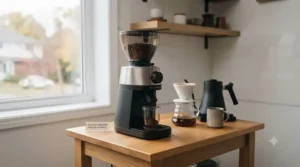
Before buying any electric grinder for a Canadian kitchen, it’s worth glancing at basic electrical safety compliance rather than assuming every listing meets local standards. Health Canada’s guidance on electrical product safety is clear that any product plugging into an outlet in Canada must meet Canadian national safety standards and carry certification from an accredited body, and it recommends checking for marks like CSA, cUL, or cETL before buying. All seven grinders featured here come from established, mainstream appliance brands that carry these certifications, but it’s a genuinely useful habit to verify on the listing itself, especially with lesser-known budget imports.
Beyond certification, warranty length is a meaningful proxy for how much a manufacturer trusts its own motor and gearbox. Baratza’s line has historically leaned on longer warranty support paired with serviceable parts, while more mainstream kitchen brands typically offer standard one- to two-year coverage. Basic kitchen electrical habits also apply here as with any appliance — keep cords away from water, unplug when not grinding for extended periods, and inspect the cord periodically for fraying, particularly on grinders that live permanently plugged in near a sink.
Price Range & Value Analysis
| Price Tier | Range (CAD) | What You Get | Example |
|---|---|---|---|
| Entry | C$70-C$150 | Basic conical or flat burr, 15-18 settings | SHARDOR Electric Burr Grinder 2.0 |
| Mid-range | C$250-C$350 | 40-60 settings, better burr consistency | Breville Smart Grinder Pro |
| Premium | C$300+ | Larger burrs, single-dose or stepless design | Fellow Ode Gen 2 |
The jump from entry to mid-range buys you real, everyday-noticeable consistency gains — this is the single biggest value jump on the whole chart. The jump from mid-range to premium buys more specialized refinement — lower retention, quieter operation, larger burrs — which matters enormously to someone chasing filter-coffee clarity but is far less noticeable to someone who just wants a solid daily cup. Check current pricing before buying in any tier, since all figures here are approximate ranges gathered at the time of research and can shift with retailer promotions.
Frequently Asked Questions
❓ Is a conical or flat burr grinder better for espresso?
❓ How many grind settings do I actually need?
❓ Do burr grinders really taste better than blade grinders?
❓ What's a reasonable price for a good electric burr grinder in Canada?
❓ How often should I clean my burr grinder?
Conclusion
If there’s one thing worth taking away from all seven of these machines, it’s that “best” always depends on what’s actually in your cup on a Tuesday morning. The Baratza Encore remains the safest all-around recommendation for someone leaving blade grinding behind, the SHARDOR Electric Burr Grinder 2.0 covers the tightest possible budget without sacrificing the core burr-grinder benefit, and the Cuisinart Electric Burr Grinder with Grind Selector solves the specific problem of automatic daily dosing for drip drinkers. Further up the price ladder, the Breville Smart Grinder Pro and Baratza Virtuoso+ earn their mid-range and step-up positions through genuinely useful precision gains, while the Fellow Ode Gen 2 and OXO Brew Conical Burr Coffee Grinder serve two very different filter-coffee philosophies — one premium and single-dose, one simple and proven.
Coffee culture in Canada keeps evolving, and the Coffee Association of Canada notes that the country has seen some of the fastest coffee-importing growth among leading traditional world markets, with more Canadians brewing seriously at home than ever. A better grinder is, quite simply, the cheapest way to participate in that shift meaningfully. Whichever of these seven you land on, the upgrade from wherever you’re grinding now will be obvious within the first cup.
✨ Found the right grinder for your kitchen? Check today’s price before it changes and get grinding tomorrow morning! ☕
Recommended for You
- Electric Coffee Grinders: 7 Best Picks for Canadians in 2026
- 7 Best Stepped Burr Grinder for Beginners Picks (2026 Guide)
- Stepless Burr Grinder Home Barista: 7 Picks Tested for 2026
Disclaimer: This article contains affiliate links. As an Amazon Associate, I earn from qualifying purchases. If you purchase products through these links, we may earn a small commission at no additional cost to you.
✨ Found this helpful? Share it with your friends! 💬🤗
