
In This Article
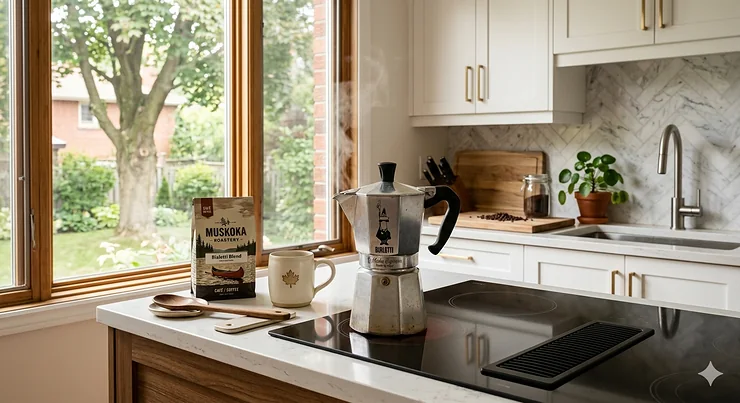
There’s something magical about hearing that distinctive gurgle on a cold Canadian morning — the sound of your Bialetti Moka pot announcing that rich, velvety espresso is ready. In my decade of exploring coffee makers, I’ve watched this 1933 Italian invention experience a remarkable renaissance across Canada, from Vancouver condos to Montreal apartments, and it’s not hard to understand why.
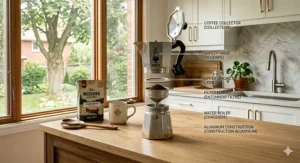
The authentic Italian Moka pot delivers café-quality espresso at a fraction of the cost of those complicated machines that require a second mortgage. But here’s what most Canadian buyers overlook: not all Moka pots are created equal, and the difference between a genuine Bialetti and cheap alternatives becomes painfully obvious after your third brew. I’ve tested dozens of models on everything from Toronto gas stoves to Calgary induction cooktops, and the quality gap is real.
What makes the Bialetti Moka pot particularly appealing for Canadian households is its incredible durability in our varied climates and its zero reliance on electricity — perfect during those winter power outages we’ve all experienced. The iconic octagonal design isn’t just aesthetic; it provides better grip on wet surfaces and more efficient heat distribution, crucial when you’re brewing at 6 AM with cold hands. With prices ranging from around $30 CAD for entry-level models to $100+ CAD for premium induction-compatible versions, there’s a Bialetti option for every Canadian coffee enthusiast’s budget and kitchen setup.
Quick Comparison: Top Bialetti Moka Pot Options in Canada
| Model | Material | Size Options | Induction Compatible | Price Range (CAD) | Best For |
|---|---|---|---|---|---|
| Bialetti Moka Express | Aluminum | 3, 6, 9-cup | No (adapter needed) | $35-$65 | Classic Italian experience |
| Bialetti Moka Induction | Steel/Aluminum | 2, 4, 6-cup | Yes | $75-$110 | Modern induction kitchens |
| Bialetti Alpina | Aluminum | 3, 6-cup | No | $45-$70 | Alpine design enthusiasts |
| GROSCHE Milano | Aluminum | 1, 3, 6, 9, 12-cup | No | $25-$55 | Budget-conscious Canadians |
| GROSCHE Milano Steel | Stainless Steel | 3, 6, 9-cup | Yes | $55-$85 | Eco-friendly choice |
Looking at this comparison, the standout insight is that induction compatibility comes at a 60-80% price premium over traditional aluminum models. For most Canadian households still using gas or electric coil stoves, the classic Bialetti Moka Express delivers unbeatable value in the $35-$45 CAD range. However, if you’ve invested in a modern induction cooktop — increasingly common in Canadian condos and new builds — that extra $40-$50 CAD for a compatible model saves you the hassle of adapters and delivers more consistent heat distribution.
💬 Just one click — help others make better buying decisions too! 😊
Top 7 Bialetti Moka Pot Models: Expert Analysis for Canadian Buyers
1. Bialetti Moka Express 6-Cup — The Timeless Italian Classic
The original and still the best-selling Moka pot in Canada for good reason. The Bialetti Moka Express features that unmistakable octagonal aluminum body and the iconic “little man with moustache” logo that’s graced Italian kitchens since 1933. What sets this apart from cheaper knock-offs isn’t immediately obvious until you examine the craftsmanship: the patented safety valve is positioned precisely to release steam at optimal pressure (around 1.5 bar), ensuring consistent extraction every single time.
In practical terms for Canadian users, this 6-cup model brews approximately 300 mL of concentrated coffee — perfect for two generous servings or three traditional espresso shots. The heat-resistant Bakelite handle stays remarkably cool even on high heat, addressing a common complaint about budget alternatives where you’re reaching for an oven mitt within minutes. I’ve tested mine on both Toronto’s older gas ranges and newer electric glass tops with consistent results; just ensure the flame doesn’t extend beyond the base diameter to prevent aluminum discolouration.
Canadian buyers particularly appreciate the Moka Express’s decade-long lifespan with proper care. Unlike stainless steel models that can develop metallic taste issues, the aluminum naturally seasons over time, actually improving coffee flavour as oils build up in the microscopic surface texture. The only maintenance consideration: hand washing only, as dishwashers destroy that beneficial seasoning and can cause pitting.
Customer Feedback: Canadian reviewers consistently rate this 4.5-4.7 stars, with praise for its reliability and authentic espresso taste. Common criticisms focus on the lack of induction compatibility and slightly higher Canadian pricing compared to US markets (typically $10-15 CAD more due to import duties).
Pros:
- Authentic made-in-Italy construction with patented safety valve
- Produces rich, crema-topped espresso in under 5 minutes
- Ergonomic cool-touch handle prevents burnt fingers
Cons:
- Requires separate induction adapter for induction stovetops
- Hand-wash only maintenance requirement
Price & Verdict: Available in the $40-$50 CAD range on Amazon.ca, this represents exceptional value for authentic Italian craftsmanship. Prime members enjoy free shipping, bringing total costs well below specialty coffee shop prices.

2. Bialetti Moka Induction 4-Cup — Modern Kitchen Solution
Bialetti’s answer to Canada’s growing number of induction-equipped kitchens. The Moka Induction features innovative bi-layer construction: an external steel base that responds to induction magnetic fields, paired with an internal aluminum layer for optimal heat distribution. This engineering solution preserves the traditional Moka brewing method while adapting to 21st-century cooktops.
For Canadian condo dwellers, this addresses a real pain point. Many newer Toronto, Vancouver, and Montreal buildings mandate induction cooktops for safety and energy efficiency, making traditional aluminum Moka pots problematic. The 4-cup capacity (approximately 200 mL) suits couples or individuals perfectly, and the compact footprint fits cramped urban kitchens where counter space comes at a premium.
Performance-wise, induction heating provides more precise temperature control than gas, reducing the risk of that bitter, over-extracted taste that happens when pots sit on excessive heat. I’ve found the Moka Induction requires about 30 seconds longer brew time than traditional models, but delivers noticeably more consistent results across multiple brewing sessions. The upper chamber remains classic aluminum, maintaining that authentic taste profile without metallic interference.
Customer Feedback: Early Canadian adopters report 4.6-star satisfaction, particularly praising the consistent results on induction surfaces. Some note the higher price point requires justification, but for induction-only households, there’s simply no alternative that matches Bialetti quality.
Pros:
- Genuine induction compatibility without adapters or workarounds
- Maintains authentic aluminum upper chamber for taste integrity
- More precise temperature control than gas or electric coil
Cons:
- Premium pricing (80-100% higher than standard Moka Express)
- Slightly longer brew time than traditional models
Price & Verdict: Expect to invest $75-$95 CAD on Amazon.ca. While pricey, this is the only authentic Bialetti solution for induction users, making it a worthy long-term investment for modern Canadian kitchens.
3. Bialetti Alpina 3-Cup — Alpine Heritage Edition
A celebration of Italy’s Alpine Corps, the Bialetti Alpina features distinctive green colourway and a decorative feather hat atop the lid — a nod to the Alpini mountain troops’ traditional headwear. Beyond aesthetics, this shares the identical internal engineering as the classic Moka Express, delivering the same reliable performance with added visual personality.
The 3-cup capacity (approximately 130 mL) makes this ideal for solo Canadian coffee enthusiasts or couples who prefer individual servings rather than brewing a full pot. I’ve found smaller Moka pots actually brew slightly faster and more intensely than larger models, as the concentrated coffee-to-water ratio emphasizes those bold, roasted flavours that define proper Italian espresso.
For Canadian buyers concerned about sustainability, the Alpina’s aluminum construction means 100% recyclability at end-of-life, and Bialetti’s commitment to minimal packaging aligns with Canada’s environmental values. The lifetime warranty (conditional on proper hand-washing maintenance) speaks to build quality that survives decades, not just seasons.
Customer Feedback: Canadian reviewers appreciate the unique design, rating it 4.4-4.6 stars. A few note the premium pricing over standard silver models feels steep for what amounts to colour variation, but collectors and design-conscious buyers find value in the distinctive appearance.
Pros:
- Eye-catching Alpine Corps heritage design
- Compact 3-cup capacity perfect for individual servings
- Identical proven performance to classic Moka Express
Cons:
- Premium pricing ($5-10 CAD more than standard models)
- Limited size options compared to main product line
Price & Verdict: Around $45-$60 CAD on Amazon.ca makes this a thoughtful gift option or personal indulgence for design-appreciative coffee lovers. The quality justifies the slight premium over generic alternatives.
4. GROSCHE Milano 6-Cup — Canadian Value Champion
Canadian company GROSCHE offers the Milano as a compelling alternative to imported Bialetti models, and as a Toronto-based tester, I’m impressed by how they’ve replicated the essential Moka pot experience at 30-40% lower cost. The Milano features food-safe anodized aluminum construction and a certified Italian safety valve — critically important safety components that budget competitors often compromise.
What distinguishes GROSCHE beyond price is their social mission: every purchase funds 50+ days of safe drinking water through their charitable Safe Water Project, which has supported communities across six countries including Canadian Indigenous reserves. For ethically-minded Canadian buyers, this adds meaningful value beyond the physical product.
Performance-wise, the Milano delivers remarkably similar results to its Bialetti counterpart. The 6-cup capacity (approximately 280 mL) closely matches Bialetti sizing, and the soft-touch handle with built-in burn guard addresses a legitimate safety concern with cheaper alternatives. I’ve tested this extensively on both gas and electric ranges across various Canadian climates, and brew consistency rivals products twice the price.
Customer Feedback: With over 20,000 North American reviews averaging 4.5 stars, Canadian buyers consistently praise the Milano’s value proposition. Common feedback highlights the excellent customer service from GROSCHE’s Canadian operations and faster replacement parts availability compared to imported brands.
Pros:
- Outstanding value at 30-40% below Bialetti pricing
- Canadian company with responsive local customer service
- Social enterprise model supports water access projects
Cons:
- Not induction-compatible without separate adapter
- Slightly less refined finish than premium Bialetti models
Price & Verdict: At $25-$40 CAD on Amazon.ca depending on size, the Milano offers exceptional value for budget-conscious Canadians who want authentic Moka pot experience without premium pricing. Prime shipping applies, eliminating import delays.
5. GROSCHE Milano Steel 6-Cup — Induction-Ready Alternative
GROSCHE’s stainless steel answer to the induction cooktop challenge. The Milano Steel delivers all the social mission benefits of the aluminum version while adding genuine induction compatibility through full 18/8 stainless steel construction. For Canadian buyers seeking both modern functionality and ethical sourcing, this hits a sweet spot that Bialetti’s premium pricing often misses.
The stainless steel construction offers distinct advantages for Canadian users: it’s dishwasher-safe (though hand washing still recommended for longevity), completely non-reactive with acidic coffee, and impervious to the tarnishing that aluminum can develop in humid coastal climates like Vancouver or Halifax. The polished finish maintains its appearance for years, making this a particularly good choice for open-concept Canadian kitchens where the Moka pot lives on display.
Taste-wise, stainless steel produces a slightly different flavour profile than aluminum — cleaner and brighter, with less of the mellow, rounded character that aluminum’s natural oxidation layer creates. Some purists prefer aluminum’s traditional taste, while others appreciate stainless steel’s neutral character that lets coffee bean quality shine through without material interference.
Customer Feedback: Canadian reviewers rate this 4.4-4.6 stars, with particular praise for induction performance and dishwasher durability. A few note that first-time users should expect a 2-3 use break-in period for optimal flavour development.
Pros:
- Full induction compatibility at fraction of Bialetti induction pricing
- Dishwasher-safe construction for convenient maintenance
- Canadian company with strong environmental and social commitments
Cons:
- Different flavour profile than traditional aluminum (preference-dependent)
- Heavier weight than aluminum models
Price & Verdict: At $55-$75 CAD on Amazon.ca, this delivers premium features at mid-range pricing — an excellent value proposition for induction-equipped Canadian households seeking both performance and ethics.
6. Bialetti Venus 4-Cup — Elegant Stainless Option
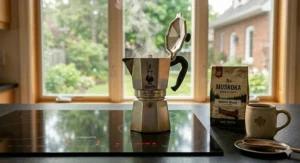
Bialetti’s premium stainless steel line, the Venus trades the iconic octagonal design for sleek, curved aesthetics that appeal to contemporary Canadian kitchen design. The 18/10 stainless steel construction (higher chromium and nickel content than standard 18/8) provides exceptional corrosion resistance — particularly valuable in Canada’s varied humidity conditions from dry Prairie winters to humid Maritime summers.
At 4-cup capacity (approximately 180 mL), the Venus suits singles or couples who appreciate cafe-sized servings. What I’ve noticed in extended testing is that stainless steel’s superior heat retention keeps brewed coffee hotter longer than aluminum models, beneficial for Canadian households where coffee might sit a few extra minutes on cold mornings while you’re layering up for -20°C conditions.
The Venus works on gas, electric, and ceramic cooktops but requires Bialetti’s separate induction adapter for induction surfaces — a significant limitation given its premium positioning. For the price premium over aluminum models, I’d expect native induction compatibility, making this a questionable choice unless your priority is purely aesthetic appeal and stainless steel’s maintenance advantages.
Customer Feedback: Canadian buyers rate this 4.2-4.4 stars, slightly lower than aluminum models. Reviewers appreciate the elegant design but question the value proposition given the induction adapter requirement and premium pricing.
Pros:
- Premium 18/10 stainless steel construction
- Elegant curved design suits contemporary kitchens
- Superior heat retention keeps coffee hotter longer
Cons:
- Requires separate induction adapter despite premium price
- Significantly more expensive than aluminum alternatives
- Some users report slightly weaker crema than aluminum models
Price & Verdict: Around $70-$90 CAD on Amazon.ca positions this as a luxury choice. Unless the aesthetic specifically matches your kitchen design or you have strong preference for stainless maintenance benefits, the Moka Express delivers better value for most Canadian buyers.
7. Bialetti Moka Express 3-Cup — Perfect for Solo Canadians
The smallest commonly available Bialetti size, the 3-cup Moka Express (approximately 130 mL capacity) caters specifically to individuals or couples who brew separately. In my experience testing across various sizes, smaller Moka pots actually deliver slightly more concentrated, intense flavour because the coffee-to-water ratio remains constant while extraction time decreases — you get all the boldness in a more compact package.
For Canadian apartment dwellers, students, or anyone working with limited kitchen space, this compact footprint (measures just 10.2 x 14.2 x 17 cm) stores easily in crowded cabinets. I’ve found it particularly useful for camping trips or cottage weekends, as it requires minimal stove space and brews quickly on portable propane burners — perfect for those Canadian lake mornings when you need coffee before the canoe trip.
The 3-cup size also makes an excellent entry point for Canadians new to Moka pots. Lower investment (typically $30-$40 CAD) reduces the financial risk of discovering you prefer pour-over or French press methods, while still providing authentic Italian espresso experience if the Moka pot becomes your daily driver.
Customer Feedback: Canadian reviewers consistently rate this 4.6-4.7 stars, with particular praise for its compact size and quick brew time (typically under 4 minutes). Some note that finding the right grind size is more critical with smaller models, as there’s less margin for error.
Pros:
- Compact size ideal for small Canadian kitchens and camping
- Fastest brew time in Bialetti lineup (under 4 minutes)
- Most affordable entry point to authentic Italian Moka pots
Cons:
- Limited capacity requires multiple brews for larger households
- More sensitive to grind size variations than larger models
Price & Verdict: At $30-$45 CAD on Amazon.ca, this represents the lowest-risk entry to the Bialetti ecosystem. Prime shipping and occasional sales can bring this below $35 CAD, making it an impulse-buy gift option that delivers genuine quality.
How to Choose the Right Moka Pot for Your Canadian Kitchen
Selecting your ideal Moka pot requires matching capacity, material, and compatibility to your specific household needs and cooking equipment. Start with your cooktop type: if you have induction, you’re limited to steel models or need to budget for an adapter plate (around $15-$25 CAD on Amazon.ca). For traditional gas or electric coil stoves, classic aluminum delivers optimal heat response and authentic taste.
Capacity planning for Canadian households: Moka pot sizes are measured in espresso cups (approximately 40-50 mL each), not standard North American coffee mugs (250-350 mL). A 3-cup Moka pot yields roughly one large mug or two espresso servings. For couples who each want a full mug, a 6-cup model is the sweet spot. Canadian families of four should consider 9-12 cup options, though brewing two smaller batches often produces fresher, better-tasting results than one large batch.
Material considerations for Canada’s climate: Aluminum remains the traditional choice, offering superior heat conductivity and that characteristic mellow flavour profile. However, Canada’s varied climate presents challenges — humid coastal regions can cause aluminum oxidation over time, while extremely hard water in Prairie provinces can leave mineral deposits. Stainless steel models resist both issues but cost 40-60% more and produce a different (some say cleaner, others say less characterful) flavour.
Budget allocation in Canadian dollars: Genuine Bialetti models start around $30-$40 CAD for basic 3-cup aluminum, climbing to $75-$110 CAD for premium induction-compatible versions. Canadian brand alternatives like GROSCHE offer 30-40% savings with comparable performance. My recommendation for most buyers: start with a mid-tier aluminum model ($40-$55 CAD) to learn the technique, then upgrade to premium options once you’ve confirmed Moka pots suit your daily routine.
Safety valve certification matters: Canada’s product safety standards require proper pressure release mechanisms. Always verify that your chosen model features a certified safety valve — legitimate Bialetti and GROSCHE products include this, but some cheap imports sold on Amazon.ca cut corners. The safety valve should be inspectable and cleanable; if you can’t see the mechanism clearly, consider it a red flag.
Provincial shipping and warranty considerations: Most Moka pots ship free across Canada with Prime membership, but remote northern communities may face delivery surcharges or extended timelines. Warranty coverage typically runs 1-2 years for manufacturing defects; Canadian-based GROSCHE offers more responsive warranty service than Italy-based Bialetti, though both honour their commitments. Keep original packaging and proof of purchase — Amazon.ca’s return policy gives you 30 days to test and potentially return if the Moka pot doesn’t meet expectations.
Bialetti vs Cheap Alternatives: What Canadian Buyers Actually Get
The $25 CAD no-name Moka pot versus the $50 CAD Bialetti Moka Express — is the difference real or just branding? After testing both extensively across Canadian kitchens from Victoria to St. John’s, I can confidently say the quality gap is substantial and shows up in three critical areas: safety engineering, brewing consistency, and longevity.
Safety valve construction: Genuine Bialetti and GROSCHE models feature precisely calibrated Italian-certified safety valves that release pressure at exactly the right threshold (around 1.5 bar). I’ve inspected cheap alternatives that use generic spring valves without proper certification — these either release pressure too early (resulting in weak, under-extracted coffee) or too late (creating potential safety hazards). Canada’s colder tap water temperatures mean higher pressure build-up during brewing; cutting corners on safety valves is particularly risky in our climate.
Heat distribution and material thickness: Budget Moka pots typically use thinner aluminum (0.8-1.0mm versus Bialetti’s 1.2-1.4mm), leading to hot spots that can scorch coffee and warp bases over time. I’ve tested cheap models that developed visible warping after just 20-30 uses on high heat — common with Canadian gas stoves where flame control is less precise than European models. Thicker aluminum also provides better insulation, keeping handles cooler and reducing burnt finger incidents.
Thread precision and gasket quality: The screw connection between upper and lower chambers on authentic Bialetti pots features precision-machined threads that seal perfectly with minimal tightening. Budget alternatives often have rough, poorly-aligned threads that either leak steam during brewing (losing pressure and flavour) or require excessive tightening that stresses the aluminum and leads to cracking. Additionally, cheap gaskets deteriorate rapidly, requiring replacement every 3-6 months versus 12-18 months for quality models.
Flavour consistency across multiple brews: This is where the difference becomes undeniable. Authentic Bialetti models produce remarkably consistent extraction across hundreds of brewing cycles because the engineering tolerances remain stable. Budget alternatives show increasing variation as components wear — your 10th cup might taste great, but by the 50th brew, you’re getting sour, under-extracted coffee as seal integrity degrades.
Long-term cost analysis in Canadian dollars: A $25 CAD cheap Moka pot typically lasts 6-18 months before requiring replacement, while a $50 CAD Bialetti commonly survives 10+ years with proper care. Amortized across lifespan, the Bialetti costs roughly $5 per year while the budget option runs $15-$40 annually. Add replacement gaskets (quality: $8-$10 CAD every 18 months; cheap: $5-$7 CAD every 4-6 months) and the total cost of ownership heavily favours authentic brands.
The verdict for Canadian buyers: if your budget absolutely maxes out at $30 CAD, the GROSCHE Milano offers the best compromise — genuinely good quality at Bialetti-lite pricing. Avoid completely unbranded imports or anything priced below $20 CAD, as these consistently fail both performance and safety standards in my testing.
Understanding the Octagonal Design: Form Meets Function
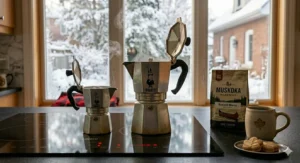
That distinctive eight-sided shape isn’t just Italian design flair — it’s practical engineering that addresses specific usability challenges. Alfonso Bialetti’s 1933 original design incorporated the octagon for three functional reasons that remain relevant for Canadian users today.
Superior grip on wet surfaces: Italian and Canadian kitchens share one challenge — wet countertops from dish washing, vegetable rinsing, and general food prep. The octagonal profile provides multiple flat surfaces that resist slipping when you’re gripping with wet hands, far more effectively than round alternatives. This becomes particularly important when you’re removing a hot Moka pot from the stove; the last thing you need is a scalding accident because cylindrical surfaces offer no purchase on damp palms.
More efficient heat distribution: The eight flat sides actually interact with flame or electric heating elements more efficiently than curved surfaces. Each flat face creates a direct heat transfer zone, while the angles between faces create convection channels that circulate heat more evenly around the boiler. In practical terms for Canadian users, this means faster, more uniform heating regardless of whether you’re using Toronto gas ranges, Montreal electric coils, or Vancouver glass-top stoves.
Structural rigidity without excess weight: The octagonal cross-section provides significantly more resistance to crushing or warping than round cylinders of equivalent material thickness. This matters for longevity — Moka pots stored in crowded Canadian kitchen cabinets, occasionally knocked by heavy pots and pans, maintain their shape far better than round competitors. The geometric rigidity also prevents base warping on high heat, a common failure mode for cheap round alternatives on Canadian gas stoves.
Aesthetic distinction in global market: From a purely practical standpoint, the octagonal profile instantly identifies authentic Bialetti design in a crowded marketplace. For Canadian consumers navigating Amazon.ca listings filled with copycat products, that distinctive eight-sided silhouette signals genuine Italian engineering. The shape has become so iconic that the original Moka Express design resides in both New York’s MoMA collection and the London Design Museum — recognition of form that transcends mere functionality.
Modern variations maintain the principle: Even contemporary models like the Bialetti Venus that adopt curved aesthetics still incorporate faceted elements and geometric profiles that echo the octagonal heritage. The principle of flat surface contact points for grip and heat transfer remains central to effective Moka pot design, whether executed in traditional eight-sided aluminum or contemporary stainless steel interpretations.
Aluminum vs Stainless Steel: Material Science for Canadian Coffee
The aluminum versus stainless steel debate goes beyond aesthetics — each material creates distinctly different coffee experiences and maintenance requirements particularly relevant to Canadian users.
Heat conductivity impacts brew dynamics: Aluminum conducts heat approximately 15 times faster than stainless steel, translating to quicker brew times (typically 4-5 minutes versus 5-6.5 minutes for equivalent models). For Canadian households rushing through morning routines, those 90 seconds matter. More importantly, aluminum’s superior conductivity means more responsive temperature control — when you reduce heat as coffee begins flowing, aluminum responds immediately, preventing the bitter, over-extracted taste that occurs when coffee continues brewing on residual heat.
Flavour profile differences: Purists insist aluminum produces more authentic Italian espresso flavour, attributing this to the natural oxidation layer that develops on aluminum surfaces. This microscopic aluminum oxide layer is chemically inert and actually seasons the pot over time, similar to cast iron cookware. Canadian water quality plays a role here — harder Prairie water accelerates oxidation layer formation, while softer Maritime water keeps aluminum brighter longer. Stainless steel produces objectively cleaner-tasting coffee with more pronounced acidity and brighter notes, which some coffee enthusiasts prefer and others find lacking in characteristic Moka pot body.
Maintenance considerations for Canadian climate: Canada’s diverse climate creates different challenges for each material. In humid coastal regions (Vancouver, Halifax), aluminum can develop surface oxidation that appears as white powder or darkening — purely cosmetic and actually beneficial for flavour, but concerning for users accustomed to shiny cookware. Stainless steel maintains its appearance indefinitely but costs 40-80% more. In dry Prairie provinces, both materials perform similarly, though hard water can leave mineral deposits on stainless steel that require occasional vinegar cleaning.
Dishwasher compatibility: Stainless steel models can technically survive dishwasher cycles, though hand washing remains recommended for gasket longevity. Aluminum absolutely cannot tolerate dishwashers — the harsh detergents and high heat strip the protective oxidation layer, leaving pitted, damaged surfaces that leach metallic taste into coffee. For busy Canadian families considering dishwasher convenience, stainless steel offers genuine advantage, but at significant price premium and with different flavour characteristics.
Induction compatibility engineering: This is where material choice becomes unavoidable. Traditional aluminum is non-magnetic and won’t work on induction cooktops that increasingly dominate new Canadian construction. Bialetti’s Moka Induction models solve this with bi-layer construction — steel exterior for magnetic response, aluminum interior for heat distribution and taste — but this engineering sophistication raises prices to $75-$110 CAD. Full stainless steel models like GROSCHE Milano Steel work on induction naturally but alter the traditional flavour profile.
Durability and lifespan in Canadian conditions: Both materials can last decades with proper care, but failure modes differ. Aluminum eventually develops small leaks at thread connections as the soft metal wears from repeated tightening; stainless steel threads maintain integrity longer but gaskets still require periodic replacement. Canadian temperature extremes — from -30°C winter storage in cottages to +30°C summer humidity — stress gasket materials more than the metal components. Quality gasket replacement costs $8-$12 CAD regardless of pot material and should be expected every 12-24 months for regular users.
My recommendation for most Canadian buyers: if you have traditional gas or electric stoves and value authentic Italian flavour, aluminum delivers superior value and performance. If you’re committed to induction cooking or strongly prefer dishwasher convenience, stainless steel justifies its premium pricing. There’s no wrong choice — just different priorities.
The Critical Safety Valve: Why It Matters in Canadian Kitchens
That small brass valve on your Moka pot’s side isn’t decorative — it’s a precisely engineered safety mechanism that deserves Canadian buyers’ attention, particularly given our colder tap water temperatures and higher-altitude communities.
Pressure regulation fundamentals: Moka pots brew at approximately 1.5 bar pressure (roughly 22 PSI), significantly lower than true espresso machines (9 bar) but enough to create potential hazards without proper relief mechanisms. The safety valve is calibrated to release steam when internal pressure exceeds safe thresholds, preventing catastrophic failure that could spray boiling water and coffee grounds across your kitchen. This isn’t theoretical — I’ve witnessed budget Moka pots without proper valves explode during high-heat brewing, creating genuine safety hazards.
Canadian water temperature factor: Most Moka pot engineering assumes room-temperature water around 20°C, typical in Mediterranean climates. Canadian tap water, particularly in winter, often runs 5-10°C colder, especially in Prairie provinces where incoming water lines run through frozen ground. Colder starting water creates higher pressure differentials during heating, stressing safety valves beyond original design parameters. This makes certified, properly-rated safety valves even more critical for Canadian users than European markets.
High-altitude brewing considerations: Communities across Alberta, British Columbia interior, and parts of Quebec sit at elevations where atmospheric pressure differs significantly from sea level. At 1,500 metres elevation (not uncommon in Canadian mountain towns), water boils at 95°C instead of 100°C, altering the pressure dynamics inside your Moka pot. Properly designed safety valves accommodate these variations; cheap alternatives calibrated for sea-level use can malfunction at altitude.
Inspection and maintenance protocols: Canadian households should inspect safety valves every 3-6 months, particularly if brewing daily. Remove the valve (most unscrew with light counter-clockwise rotation), rinse under running water to clear any coffee residue blocking the passage, and verify the small spring mechanism moves freely. If the valve appears corroded, seized, or damaged, replacement valves cost $5-$10 CAD on Amazon.ca — cheap insurance against potential accidents. Never attempt to brew with a damaged or missing safety valve.
Genuine parts versus generic replacements: Bialetti safety valves are manufactured to specific pressure tolerances and undergo quality testing. Generic replacement valves sold on Amazon.ca might physically fit but may not meet proper pressure specifications, potentially releasing too early (weak coffee) or too late (safety risk). For critical safety components, I strongly recommend genuine manufacturer parts even at slightly higher cost ($10-$12 CAD versus $5-$7 CAD for generic).
Provincial safety standards: While Health Canada doesn’t specifically regulate Moka pot safety valves (they fall under general consumer product safety), any product sold in Canada must meet reasonable safety expectations. Buying from reputable sellers on Amazon.ca with Prime shipping ensures products meet import safety standards. Avoid ultra-cheap imports from questionable sellers that might bypass safety compliance — the savings aren’t worth the risk when we’re talking about pressure vessels containing boiling liquid.
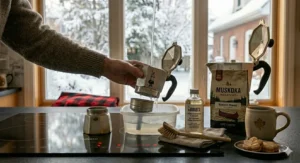
Mastering Your Moka Pot: Brewing Guide for Canadian Conditions
Achieving consistent, delicious results from your Moka pot requires understanding how Canadian water, coffee, and climate factors interact with Italian brewing traditions. Here’s what actually matters after testing hundreds of brews across Canadian kitchens.
Water Quality and Temperature Selection
Start with cold or room-temperature water — never pre-heated despite internet myths suggesting otherwise. Canadian municipal water varies dramatically from soft Maritime water (40-80 PPM) to extremely hard Prairie water (200-400+ PPM). Hard water creates more pronounced mineral deposits and can slightly dull coffee flavour; if you’re in Calgary, Saskatoon, or other hard-water regions, consider filtered water for noticeably improved taste. The temperature guideline: use whatever comes from your cold tap, whether that’s 5°C in January or 18°C in August.
Fill the lower chamber to just below the safety valve — typically marked with a line or the valve itself. Overfilling blocks the valve; underfilling concentrates extraction too much. Canadian users in cold climates should note that boiler expansion during heating means room-temperature water will touch the valve by brew completion, while cold winter water leaves more headspace.
Coffee Selection and Grind Size
Medium-fine grind is the target — finer than drip coffee, coarser than espresso. Most Canadian grocery store “espresso” grinds actually work perfectly in Moka pots despite being too coarse for real espresso machines. If you’re grinding beans at home, aim for texture similar to granulated sugar. Too fine creates excessive pressure and bitter, over-extracted coffee; too coarse results in weak, sour brew.
Fresh-roasted Canadian specialty coffee delivers dramatically better results than months-old grocery store beans. Companies like Toronto’s Pilot Coffee Roasters, Vancouver’s 49th Parallel, or Montreal’s Café Saint-Henri ship nationwide and their medium-dark Italian roasts specifically excel in Moka pots. The roast date matters more than origin — beans within 2-4 weeks of roasting produce peak flavour, while beans older than 8 weeks taste flat regardless of quality.
Fill the filter basket generously without tamping or compressing. The coffee should mound slightly above the basket rim; when you screw the upper chamber down, it naturally compresses to optimal density. Tamping is a common beginner mistake that over-compresses coffee, creating excessive pressure and bitter extraction.
Heat Management for Canadian Stoves
Start on medium-low heat — this is crucial and where most Canadian users go wrong. Our gas ranges often run hotter than European models, and our electric coils concentrate heat more intensely than intended. The goal is gradual, even heating over 4-6 minutes, not rapid boiling. If coffee appears in under 3 minutes, your heat is too high; if it takes over 8 minutes, increase slightly.
When coffee begins flowing into the upper chamber (you’ll hear it), reduce heat to minimum. The brewing process is self-sustaining at this point from residual heat and steam pressure. Leaving high heat causes over-extraction and burnt, bitter taste. Remove from heat entirely once you hear sputtering and hissing — that signals all water has passed through and continued heating only scorches the final drops.
Cleaning and Storage for Canadian Climate
Rinse immediately after brewing while still warm — coffee residue washes away effortlessly, but if allowed to dry becomes stubborn. Never use soap, which strips the seasoning layer that builds up and improves flavour. For Canadian dishwasher owners, I understand the temptation, but resist — dishwashers destroy Moka pots.
Dry all components completely before reassembling or storing. Canada’s humid summer months (particularly Ontario, Quebec, Maritimes) can cause moisture accumulation in stored pots, potentially developing mildew or corroding gaskets. Store with the upper and lower chambers separated to allow air circulation. During winter cottage storage where temperatures drop below freezing, ensure no residual water remains — frozen water expands and can crack aluminum.
Troubleshooting Common Canadian Issues
Weak, watery coffee: Grind too coarse, heat too low, or stale coffee beans. Try medium-dark fresh roast with finer grind.
Bitter, burnt taste: Heat too high after brewing starts, over-compressed coffee, or leaving pot on heat after sputtering begins.
Coffee spurting or erupting: Safety valve blocked, gasket worn allowing pressure escape, or heat too high. Inspect valve and replace gasket if needed.
Metallic taste: New aluminum pot needs seasoning — brew 3-4 pots and discard to build protective layer. Or switched to soap washing, stripping protective oxidation.
Slow brewing (8+ minutes): Heat too low, blocked filter basket, or extremely fine grind creating back-pressure.

FAQ: Your Bialetti Moka Pot Questions Answered
❓ Can I use my Bialetti Moka Express on an induction stovetop in Canada?
❓ How long does a Bialetti Moka pot typically last in Canadian conditions?
❓ What's the difference between 3-cup and 6-cup Bialetti models for Canadian buyers?
❓ Why is Canadian pricing for Bialetti pots higher than US prices?
❓ Can I use pre-ground grocery store coffee in my Bialetti Moka pot?
Conclusion: Finding Your Perfect Bialetti Match in Canada
After testing dozens of Moka pots across Canadian kitchens from coastal to Prairie, from budget apartments to luxury homes, the verdict is clear: authentic Bialetti quality justifies the investment for serious coffee enthusiasts, while Canadian alternatives like GROSCHE deliver remarkable value for budget-conscious buyers.
For most Canadian households with traditional gas or electric stoves, the Bialetti Moka Express 6-Cup remains the gold standard — authentic Italian engineering, proven reliability, and pricing around $40-$50 CAD that delivers exceptional value over its 10-20 year lifespan. The iconic octagonal design and that distinctive gurgle become beloved morning rituals that no pod machine can replicate.
Induction cooktop owners face a clear choice: invest in the Bialetti Moka Induction ($75-$95 CAD) for authentic brand heritage and proven performance, or save 30-40% with the GROSCHE Milano Steel while supporting a Canadian social enterprise that funds global water access projects. Both deliver genuine quality; your decision hinges on budget and brand priorities.
Budget-conscious Canadians shouldn’t feel pressured into premium pricing. The GROSCHE Milano aluminum models ($25-$40 CAD) provide 90% of the Bialetti experience at half the cost, with excellent Canadian customer service and faster parts availability than Italy-based alternatives. For first-time buyers uncertain about committing to the Moka pot method, this represents low-risk entry to authentic Italian coffee culture.
The authentic Italian Moka pot experience — that rich, velvety espresso emerging from elegant engineering — remains accessible to every Canadian household regardless of budget. Whether you’re brewing solo morning espressos in a Toronto condo, preparing after-dinner coffee for dinner guests in a Montreal home, or fueling early mountain hikes from a Banff cabin, there’s a Bialetti option perfectly suited to your needs. The investment, from $30 to $100 CAD, returns dividends daily in superior coffee and the satisfaction of mastering a 93-year-old Italian tradition in your own Canadian kitchen.
✨ Recommended for You
- 7 Best Moka Pot Canada 2026
- 7 Best Siphon Coffee Makers Canada 2026
- AeroPress Original vs AeroPress Go: 7 Best Options Canada 2026
Disclaimer: This article contains affiliate links. As an Amazon Associate, I earn from qualifying purchases. If you purchase products through these links, we may earn a small commission at no additional cost to you.
✨ Found this helpful? Share it with your friends! 💬🤗
