
In This Article
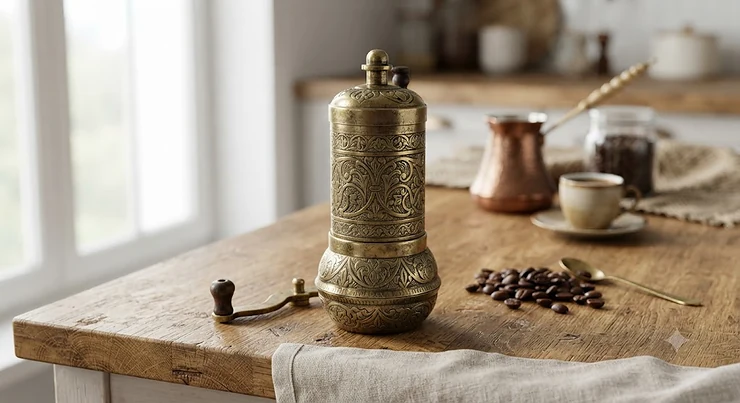
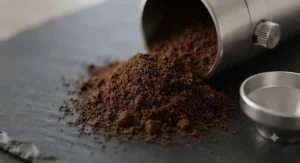
Somewhere between “this is fine” and “this is flour” lies the grind that makes or breaks a cup of Turkish coffee. Too coarse, and your cezve produces a thin, gritty disappointment. Just right, and you get that thick, foam-capped little cup that’s been part of Turkish social life since the Ottoman court kept its own coffee-makers on staff. A turkish coffee grinder is a mill built specifically to reduce roasted beans to a powder finer than table salt, finer than espresso, closer in texture to cocoa powder or confectioners’ sugar — the consistency needed for the coffee grounds to stay suspended in the cezve and brew properly instead of clumping or settling into sludge too fast.

Here’s the thing most people don’t realize until they’ve already ruined a batch of good beans: your average drip grinder, even a decent one, simply cannot get there. It either lacks the range, or it turns your beans into a burnt-smelling, uneven mess trying to force it. That’s the whole reason a dedicated grinder for Turkish coffee powder exists as its own product category, separate from the espresso and pour-over grinders that dominate coffee shelves.
This guide walks Canadian coffee drinkers — new to ibrik brewing or long overdue for an upgrade — through seven real, purchasable grinders that can actually hit that powder-fine grind consistently. We’ll compare specs honestly, flag the compromises nobody puts in the marketing copy, and help you land on the right pick whether you’re outfitting a family kitchen in Mississauga or packing light for a cabin in the Kootenays. Along the way, we’ll also get into the mechanics of what makes an ultra fine grind coffee grinder actually ultra-fine, and why traditional Turkish coffee has stayed so stubbornly resistant to modern shortcuts. This coffee ritual isn’t going anywhere — UNESCO recognized Turkish coffee culture and tradition as part of humanity’s intangible cultural heritage back in 2013, which tells you something about how seriously people take the process.
Quick Comparison Table
Before we dig into the deep-dive reviews, here’s the condensed version for anyone who wants the shape of the market at a glance.
| Grinder | Type | Grind Range | Best For |
|---|---|---|---|
| Sözen Handmade Brass Grinder | Manual, brass/steel | Turkish-only, ultra-fine | Traditionalists, gifting |
| Khaw-Fee HG1B | Manual, ceramic burr | Fine to coarse | Quiet, budget-friendly homes |
| JavaPresse Manual Grinder | Manual, ceramic burr | Fine to coarse | First-time buyers |
| Timemore Chestnut C3 Pro | Manual, steel burr | Espresso-fine to coarse | Multi-brew households |
| 1Zpresso J-Max | Manual, titanium-coated steel | Ultra-fine to coarse | Precision-obsessed enthusiasts |
| Kyocera Advanced Ceramic Mill | Manual, ceramic burr | Fine to coarse | Camping, small kitchens |
| Secura CBG-018 | Electric, steel burr | Fine to coarse | Convenience-first buyers |
Looking at the spread above, notice how six of the seven options are manual. That’s not an oversight — it’s the honest state of the market. Manual burr grinders dominate the Turkish coffee grinder category because their slow, deliberate crank motion gives you the low-heat, high-precision control that a fast-spinning electric motor struggles to match at the powder end of the scale. The one electric entry, the Secura CBG-018, earns its spot by proving that convenience and fineness aren’t always mutually exclusive, but it does ask for more patience at its finest settings than its spec sheet lets on.
💬 Just one click — help others make better buying decisions too!😊
Top 7 Turkish Coffee Grinders: Expert Analysis
We researched real products currently sold through Amazon.ca and cross-referenced their specs against aggregated owner feedback. Below is an honest, ranked breakdown of what each grinder actually delivers — no invented anecdotes, no manufactured five-star gushing, just what the specs and real reviewer sentiment tell us.
1. Sözen Handmade Brass Turkish Coffee Grinder — the authentic Istanbul-made original
If you want the grinder that started the category, this is it. The Sözen Handmade Brass Turkish Coffee Grinder is built by a family workshop that’s been making these mills since 1890, and it shows in the details: solid brass housing, a hardened tool-steel conical burr, and a bottom-mounted adjustment bolt that locks your grind setting in place so it doesn’t drift mid-session.
Capacity sits around 16 to 18 grams per load — enough for two small cups of Turkish coffee — and the burr geometry is purpose-built for one job only, unlike the multi-brew grinders further down this list. That single-mindedness is exactly why it grinds so consistently fine: there’s no compromise built in for espresso or French press. Based on the spec comparison with general-purpose mills, a dedicated single-purpose burr geometry like this one tends to produce a more even powder because the manufacturer never had to split the difference between grind ranges. Reviewers consistently note that it takes a firm hand and a bit of forearm effort to grind a full batch, and that the finish — hammered or plain brass — tarnishes over time unless you wipe it down, which some owners treat as a feature rather than a flaw, since a little patina is part of the vintage look.
Pros:
- ✅ Purpose-built burr geometry nails Turkish-fine grind reliably
- ✅ All-metal brass and steel build lasts for decades
- ✅ Doubles as a striking, giftable kitchen piece
Cons:
- ❌ Grinding a full batch takes real manual effort
- ❌ Not usable for coarser brew methods like French press
Expect to pay in the C$45-70 range depending on height and finish; at the time of research, taller and hammered-finish versions sit at the upper end. For anyone who wants the closest thing to what’s actually used in Turkish households today, this is worth the extra effort at the crank.
2. Khaw-Fee HG1B Manual Coffee Grinder — ceramic burrs that never rust or taint flavour
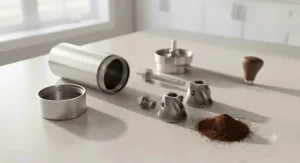
The Khaw-Fee HG1B Manual Coffee Grinder takes a different approach: instead of brass and steel, it leans on a conical ceramic burr paired with a glass catch jar and a stainless-steel crank housing. Ceramic doesn’t corrode, doesn’t pick up metallic taste over years of use, and stays sharp far longer than cheap alloy blades — which matters more than most buyers realize, because a dulling burr is the single biggest reason a “fine” grinder starts producing inconsistent powder after a year or two.
The grind adjustment is stepless rather than click-based, so dialing in true Turkish fineness is a matter of trial and error the first few times, but once you’ve found your setting you can mark it and return to it repeatedly. Aggregated review sentiment on this model is mixed but leans positive: several owners flag that the adjustment screw can loosen mid-grind and needs an occasional retightening, and a few note the glass jar’s neck is narrow enough that grip comfort varies by hand size. On the upside, the quiet operation gets called out repeatedly — this is a grinder you can run at 6 a.m. without waking the house.
Pros:
- ✅ Ceramic burr resists corrosion and holds its edge for years
- ✅ Near-silent operation, ideal for early mornings
- ✅ Glass jar lets you see grind progress and doubles as storage
Cons:
- ❌ Adjustment screw can loosen and needs periodic checking
- ❌ Narrow jar neck is awkward for larger hands
Pricing tends to land around C$40-55, occasionally dipping into the mid-C$30s during promotions — always check current price rather than assume, since Amazon listings fluctuate. For buyers prioritizing longevity over speed, this is a strong, unglamorous workhorse.
3. JavaPresse Manual Coffee Grinder — 18-click adjustability for beginners on a budget
The JavaPresse Manual Coffee Grinder is the grinder most North American coffee drinkers have already heard of, largely thanks to an aggressive subscription-bundling strategy that’s put it in a huge number of kitchens. Under the marketing, it’s a straightforward stainless-steel-bodied mill with a ceramic conical burr and 18 discrete click settings running from coarse to fine.
Here’s what the spec sheet won’t tell you, but aggregated user reports make clear: the finest of those 18 clicks gets you into Turkish-adjacent territory, but it’s genuinely one of the slower grinders in this list to operate at that setting, and grind consistency at the extreme fine end is a notch below the ceramic-burr competitors above. What most buyers overlook about this model is that its real strength is the middle of the range — pour-over, drip, and Chemex grinds — rather than the extremes. If Turkish coffee is your only use case, you can get there, but you’ll be working the crank longer than with a purpose-built option. Reviewers repeatedly mention the removable hand crank as a genuine convenience for storage, and just as many flag that the internal collection channel traps stray grounds that are mildly annoying to clean out.
Pros:
- ✅ Affordable entry point with 18 adjustable click settings
- ✅ Removable crank handle simplifies storage and travel
- ✅ Stainless-steel body feels sturdier than the price suggests
Cons:
- ❌ Slowest grinder in this roundup at the finest settings
- ❌ Fine-grind consistency trails dedicated Turkish mills
Typical pricing runs C$35-50, occasionally under C$30 during sales. This is the sensible starter pick for someone who isn’t sure yet whether ibrik brewing is going to become a daily habit or a passing curiosity.
4. Timemore Chestnut C3 Pro — espresso-grade burrs that still nail Turkish powder
The Timemore Chestnut C3 Pro sits a rung above the budget tier, and the upgrade is obvious the moment you pick it up. It uses Timemore’s S2C 38mm CNC-machined stainless steel conical burr set, mounted on dual bearings for a smoother, wobble-free crank. That bearing system matters more than it sounds: wobble in a burr shaft is one of the main causes of uneven particle size, so a stabilized shaft produces a tighter, more uniform grind curve across the whole range — from espresso-fine right through to Turkish powder and out to coarse French press.
Capacity is a modest 20 to 25 grams, and the foldable spring-assisted handle means the whole unit tucks away without tipping over on a shelf. Aggregated owner sentiment is notably positive for a grinder in this price bracket, with repeat praise for build weight (around 570 grams, which feels substantial without being bulky) and for how evenly it grinds compared to cheaper stainless-burr competitors. The honest caveat, echoed across multiple sources, is that adjusting between very different grind sizes — say, Turkish coffee one day and French press the next — takes a few practice sessions to get comfortable with the external dial.
Pros:
- ✅ Dual-bearing shaft delivers noticeably even particle size
- ✅ Genuinely versatile across the full Turkish-to-French-press range
- ✅ Foldable handle and compact body suit small kitchens
Cons:
- ❌ Switching between very different grind sizes has a learning curve
- ❌ 20-25g capacity means multiple loads for larger batches
Expect to pay in the C$85-115 range at the time of research. This is the grinder we’d point a household toward if Turkish coffee is one of several brew methods in rotation rather than the only one.
5. 1Zpresso J-Max — the most precise dial on the manual-grinder market
For readers who want precision the way a watch collector wants a chronometer, the 1Zpresso J-Max is the standout. It runs 48mm titanium-coated conical burrs on a three-bearing support system, with an external numbered dial offering roughly 450 individual settings across five full rotations, each click moving the burr by just 8.8 microns. For context, that’s a finer adjustment increment than a strand of human hair is wide.
Based on the spec comparison with every other grinder in this article, nothing here comes close on raw adjustment resolution — this precision was originally engineered for dialing in espresso shots, but it happens to translate beautifully to Turkish coffee, since you can creep toward true powder-fineness in tiny, repeatable steps instead of guessing between two clicks that are each too coarse or too fine. Reviewers who’ve put real hours into this grinder consistently praise the magnetic catch cup and the speed at which it processes a dose relative to its fineness, though several also note that tracking your position across five dial rotations takes real practice, and it’s not the grinder you want if you’re only ever going to use one grind setting.
Pros:
- ✅ Unmatched 8.8-micron adjustment precision for repeatable results
- ✅ Titanium-coated burrs hold their edge through heavy use
- ✅ Magnetic catch cup and solid build justify the premium tier
Cons:
- ❌ Multi-rotation dial has a real learning curve
- ❌ Premium price is hard to justify for single-purpose Turkish brewing only
At the time of research, this grinder sits in the C$230-270 range — squarely a premium purchase. Reserve it for the household that treats coffee as a genuine hobby, not just a morning ritual.

6. Kyocera Advanced Ceramic Coffee Mill — diamond-hard ceramic burrs that never rust
The Kyocera Advanced Ceramic Coffee Mill comes from a company better known for ceramic knives, and that manufacturing pedigree carries over directly: its burr is made from an advanced ceramic close in hardness to diamond, meaning it holds an edge essentially forever compared to metal alternatives and never introduces rust or metallic off-notes into your grounds.
It’s a slim, minimalist design — a glass jar body with a twist-crank top — that’s genuinely one of the most compact and travel-friendly options here, which is why it shows up repeatedly in camping and cottage kit lists. On paper this means slower single-batch grinding for bigger households, since the jar holds only around an ounce of beans at a time, but for a solo drinker or a couple sharing one or two cups, that’s a non-issue. Aggregated review sentiment consistently praises the low price-to-durability ratio, with several long-term owners reporting years of daily use without any noticeable burr degradation; the recurring complaint is that the ceramic burr can chip if the unit is dropped on a hard floor, so it rewards a bit of care in handling.
Pros:
- ✅ Diamond-hard ceramic burr resists wear almost indefinitely
- ✅ Compact glass-jar design is ideal for travel and small kitchens
- ✅ Consistently praised value relative to purchase price
Cons:
- ❌ Small batch capacity slows down grinding for larger households
- ❌ Ceramic burr can chip if the unit is dropped
Pricing generally falls in the C$40-60 range, making this one of the more approachable ways to get genuinely durable ceramic-burr performance without stretching your budget.
7. Secura Conical Burr Electric Coffee Grinder (CBG-018) — the only electric pick that still hits powder-fine
Every other grinder on this list is manual, and that’s deliberate — it reflects what the research actually shows about this category. But not everyone wants to hand-crank their morning coffee, so the Secura Conical Burr Electric Coffee Grinder earns its place as the electric option genuinely capable of reaching Turkish-fine territory, courtesy of an 18-setting conical stainless steel burr and a 110-watt motor tuned to run at lower speed for reduced heat transfer.
The 8-ounce bean hopper and 5-ounce grounds container make it the highest-capacity grinder in this roundup by a wide margin, and the one-button operation with automatic shutoff is about as low-effort as grinding gets. Here’s what the marketing doesn’t emphasize: reaching genuinely Turkish-fine powder means running it at its very finest setting, which multiple owner reports describe as noisier and slower than the grinder’s mid-range settings, and a handful of long-term reviews flag that the plastic grounds bin is the part most likely to crack or wear out first. Reviewers consistently note that at its coarser and mid settings it performs admirably for drip and French press, which is exactly the trade-off you’d expect from a grinder trying to do everything electrically instead of specializing.
Pros:
- ✅ Largest hopper capacity of any grinder in this list
- ✅ One-button, hands-free operation with auto shutoff
- ✅ Conical burr keeps heat and static low even at speed
Cons:
- ❌ Finest settings run noisier and slower than mid-range settings
- ❌ Plastic grounds bin is a common long-term wear point
Expect a price range of roughly C$55-80. If your priority is speed and hands-free convenience over ritual, this is the practical compromise pick.
Top 7 Products: Specs & Value Comparison
| Grinder | Burr Material | Adjustment Type | Approx. Price Range (CAD) | Best For |
|---|---|---|---|---|
| Sözen Handmade Brass Grinder | Steel | Bolt-locked, fixed fine range | C$45-70 | Traditional ibrik purists |
| Khaw-Fee HG1B | Ceramic | Stepless | C$40-55 | Quiet, long-term daily use |
| JavaPresse Manual Grinder | Ceramic | 18-click | C$35-50 | First-time buyers, tight budgets |
| Timemore Chestnut C3 Pro | Stainless steel | External dial | C$85-115 | Multi-method households |
| 1Zpresso J-Max | Titanium-coated steel | 450-position dial | C$230-270 | Precision-focused enthusiasts |
| Kyocera Ceramic Mill | Ceramic | Stepless | C$40-60 | Small households, camping |
| Secura CBG-018 | Stainless steel | 18-setting dial | C$55-80 | Convenience-first, larger batches |
Reading across this table, the value story isn’t simply “cheapest wins.” The Khaw-Fee HG1B and Kyocera Ceramic Mill both land in a similar price bracket but solve different problems — the Khaw-Fee prioritizes jar visibility and grip, the Kyocera prioritizes sheer burr longevity in the smallest possible footprint. Meanwhile, the price jump to the 1Zpresso J-Max only makes sense if you actually value micron-level repeatability; for a household that grinds the same Turkish setting every single day, that precision premium buys you consistency you’ll likely never fully exploit.
✨ Don’t Miss These Exclusive Deals!
🔍 Take your Turkish coffee setup to the next level with these carefully selected picks. Click on any highlighted grinder to check current pricing and availability — these tools will help you brew the authentic, foam-capped cups your family will love!
What Is a Turkish Coffee Grinder?
A turkish coffee grinder is a burr mill engineered to produce an exceptionally fine, powder-like grind — finer than espresso and closer to the texture of cocoa powder — because traditional ibrik brewing keeps the grounds suspended in the pot rather than filtering them out, so an uneven or coarse grind ruins both the texture and the signature foam.
How to Choose a Turkish Coffee Grinder
Picking the right mill comes down to a short list of criteria that matter far more than brand recognition:
- Burr material and geometry. Ceramic resists corrosion and holds an edge longer; hardened steel burrs cut faster and are the standard on purpose-built Turkish mills.
- True minimum grind size. Look for grinders explicitly rated for Turkish or “powder” fineness, not just “espresso-capable,” since espresso-fine and Turkish-fine are not the same thing.
- Adjustment mechanism. Stepless dials give finer theoretical control; click-based systems are easier to repeat exactly but may skip over your ideal setting.
- Batch capacity. Match the hopper size to how many cups you typically brew — an 18g Turkish mill is plenty for two people, overkill capacity elsewhere is wasted money.
- Manual versus electric. Manual grinders dominate this category because low, controlled speed reduces heat and produces more consistent fines; electric grinders trade some fineness precision for speed and convenience.
- Build materials and durability. Brass and stainless steel resist wear far better than plastic components, which matters most at the fine end where burrs work hardest.
- Ease of cleaning. Turkish-fine powder clings to burrs and housings; a grinder that disassembles easily saves real frustration over years of use.
Turkish Coffee Grinder vs Regular Coffee Grinder
It’s tempting to assume any burr grinder will eventually get you to Turkish fineness if you just crank the dial far enough — and that assumption is where most disappointing first cups come from. A regular coffee grinder, even a good one built for drip or French press, is generally engineered around a grind range that tops out somewhere near espresso. Push it past its designed limit and you’re not getting finer coffee so much as you’re grinding unevenly, generating friction heat that can scorch delicate aromatics, and stressing burrs that were never meant to run at that clearance.
A dedicated turkish coffee grinder, by contrast, is built around the opposite assumption: fine is the baseline, not the edge case. The burr geometry, the gap tolerances, even the crank leverage are all tuned so that powder-fine grinding is the easy, default operation rather than the stress test. That’s the functional difference between something like the Sözen Handmade Brass Grinder, purpose-built for exactly one job, and a general-purpose grinder like the JavaPresse Manual Grinder that can technically reach fine settings but does its best work in the middle of its range. If you already own a solid all-purpose grinder and only make Turkish coffee occasionally, you may be able to coax an acceptable result out of it. If ibrik brewing is a regular ritual, a dedicated mill earns its keep quickly in both grind quality and burr longevity.
Benefits vs Traditional Alternatives
| Factor | Dedicated Turkish Grinder | General-Purpose Burr Grinder | Blade Grinder |
|---|---|---|---|
| Grind consistency at Turkish-fine | Excellent | Fair to good | Poor |
| Heat generation at fine settings | Low | Moderate to high | High |
| Burr longevity at fine settings | Long | Moderate | Short |
| Versatility across other brew methods | Low to none | High | Moderate |
| Best For | Daily ibrik brewers | Multi-method households | Occasional, casual use |
The pattern here is straightforward: specialization buys you consistency and burr life at the cost of flexibility. A blade grinder can technically chop beans fine enough to look like powder, but the particle sizes it produces are wildly uneven — some near-dust, some still gritty — which translates directly into an inconsistent, sometimes bitter cup. A Timemore Chestnut C3 Pro or Secura CBG-018 splits the difference, giving up a little top-end fineness precision in exchange for real versatility across brew methods, which is the right trade for anyone who isn’t drinking Turkish coffee exclusively.

Common Mistakes When Buying a Turkish Coffee Grinder
Even careful shoppers trip over a handful of recurring pitfalls in this category. First, buyers frequently assume “adjustable” automatically means “adjustable fine enough for Turkish,” when plenty of grinders marketed as all-purpose simply don’t have a Turkish-fine setting in their range at all — always check for explicit Turkish or powder-fine language in the spec sheet, not just “espresso-capable.” Second, people underestimate hand fatigue: a manual grinder that feels effortless in a five-second showroom demo can feel very different after grinding a full 18-gram dose daily for a week, so weight and crank leverage matter more than they seem to at first glance. Third, plenty of shoppers chase precision specs like micron-per-click ratings without considering whether they’ll ever actually use more than one or two grind settings — that precision is wasted money if you’re a single-setting Turkish-only household. Finally, don’t overlook maintenance access: a grinder that’s a hassle to disassemble for cleaning will accumulate stale, rancid oils in the burr chamber, and that residue affects flavour far more than most people expect.
What to Expect: Real-World Performance for Ibrik Brewing
Specs on a page only tell part of the story, so here’s what the transition to a dedicated grinder actually changes in practice. The first difference most people notice is foam — the thick, tan-coloured köpük that sits on top of a properly brewed cup and that Turkish coffee culture treats as a sign of a well-made brew. That foam depends directly on grind fineness: coarser grounds simply can’t trap the same volume of tiny gas bubbles during the slow simmer, so upgrading from a mediocre grind to a genuinely fine one is often the single biggest visible improvement a new grinder delivers.
The second shift is texture in the cup itself. Turkish coffee is meant to leave a thin, settled layer of grounds at the bottom rather than a gritty mouthful in every sip, and that settling behaviour is a direct function of particle size and uniformity — inconsistent grounds settle unevenly, some staying suspended long enough to end up in your mouth. It’s also worth noting how this brew style intersects with caffeine intake: because the whole dose of grounds is simmered directly in the cup, small servings of Turkish coffee can carry a meaningful caffeine punch relative to their size, so it’s worth keeping Health Canada’s caffeine intake guidance in mind if you’re a multiple-cups-a-day drinker, particularly since Health Canada currently recommends healthy adults cap daily intake around 400 mg.
Practical Usage Guide: Setting Up and Maintaining Your Grinder
Getting a new grinder dialed in doesn’t have to be trial-and-error chaos if you follow a sensible first-use routine. Start by running a small “waste” batch of cheap beans through your grinder at a few different settings before you commit good coffee to it — this seasons the burrs and gives you a real feel for where your ideal Turkish-fine setting actually sits, since manufacturer grind charts are only ever a starting reference point. Once you’ve found your setting, mark it physically if your grinder allows (a dab of nail polish or a felt-tip line on a dial works fine) so you’re not re-hunting for it every session.
For ongoing maintenance, brush out the burr chamber after every few uses rather than letting oils and fines build up, since stale coffee oil left sitting on burrs is one of the fastest ways to introduce rancid, bitter notes into an otherwise good cup. Roughly once a month, fully disassemble manual grinders like the Timemore Chestnut C3 Pro or Khaw-Fee HG1B for a deeper clean using the brush that typically ships in the box; ceramic burrs should never be soaked in water or run through a dishwasher, since moisture trapped around the mounting hardware can corrode the metal components even when the ceramic itself is fine. The most common first-30-days mistake is over-tightening the adjustment mechanism trying to force a finer grind than the burr gap allows — if you feel real resistance and hear grinding rather than crunching, back off a notch rather than pushing through.
Real-World Scenarios: Matching a Grinder to Your Turkish Coffee Habit
Consider a university student in a shared apartment in Waterloo who makes a single cup most mornings before class. Capacity and speed matter less here than portability and quiet operation, which points toward something compact like the Kyocera Advanced Ceramic Coffee Mill — small enough for a dorm shelf, quiet enough not to wake roommates, and priced low enough that a tight student budget can absorb it without much strain.
Now picture a larger multigenerational household in the Greater Toronto Area, the kind increasingly common as interest in global coffee traditions grows — Canadian cafés have reported a genuine uptick in demand for Turkish-style coffee in recent years, especially through cooler months. A household brewing several rounds a day for guests and family is better served by higher capacity and faster grinding, which makes the Secura CBG-018‘s electric convenience and larger hopper the practical choice, even if it sacrifices a fraction of the top-end fineness precision that a dedicated manual mill offers.
Finally, picture a coffee enthusiast in Vancouver who already owns a decent all-purpose grinder but wants to get genuinely serious about ibrik brewing as a hobby, perhaps alongside espresso at home. For that buyer, the investment case for the 1Zpresso J-Max actually holds up — its micron-level adjustment isn’t wasted when you’re chasing a specific, repeatable result across multiple brew methods, and the premium price reflects real engineering rather than just branding.
Problem → Solution: Fixing Common Turkish Coffee Grinding Issues
Problem: My grind looks fine but the coffee still tastes gritty. This usually means your grinder’s “fine” setting isn’t actually reaching Turkish fineness — compare your grounds visually against powdered sugar; if there’s any visible granularity, dial down further or consider a dedicated Turkish mill like the Sözen Handmade Brass Grinder.
Problem: No foam forms on top of my brewed coffee. Weak foam is almost always a grind-fineness or freshness issue rather than a technique problem — try a finer setting first, and make sure beans are freshly roasted, since stale beans lose the CO2 that helps create foam during brewing.
Problem: Grinding takes forever and my hand gets tired. Manual grinders with smaller, single-bearing shafts tend to require more effort at fine settings; a dual-bearing design like the Timemore Chestnut C3 Pro reduces resistance noticeably, or consider an electric option like the Secura CBG-018 if hand fatigue is a recurring complaint.
Problem: My grind size seems to drift between sessions. Loose adjustment hardware is the usual culprit — check and retighten adjustment screws or bolts before each session, a known issue flagged repeatedly with models like the Khaw-Fee HG1B.
Problem: My grinder burrs feel like they’re wearing out quickly. This is typically tied to burr material — ceramic and titanium-coated steel burrs, as used in the Kyocera Advanced Ceramic Coffee Mill and 1Zpresso J-Max, hold their edge significantly longer than basic stainless alloys under frequent fine-grind use.
Long-Term Cost & Maintenance
Sticker price only tells part of the ownership story. A budget grinder like the JavaPresse Manual Grinder costs less upfront, but if softer burrs dull faster under repeated fine-grind stress, you may face a replacement sooner than you would with a grinder built around harder materials from the start. Run the numbers over a five-year span: a C$40 grinder that needs replacing every two years works out to roughly C$100 in that period, while a C$90 grinder like the Timemore Chestnut C3 Pro that lasts the full five years on durable steel burrs actually costs less per year of ownership, even though the upfront number looks larger.
Electric grinders add another variable — the Secura CBG-018‘s plastic grounds bin is a known long-term wear point according to aggregated owner reports, so factor in the modest but real likelihood of a replacement part purchase down the line. Manual grinders sidestep that particular cost entirely, since there’s no motor or plastic housing under comparable mechanical stress. For most Canadian households, a mid-range manual grinder in the C$70-120 bracket tends to deliver the best blended value: durable enough to avoid frequent replacement, versatile enough to handle more than just Turkish coffee, and inexpensive enough that the premium-tier pricing of something like the 1Zpresso J-Max only makes sense once you’re confident you’ll actually use its extra precision.
Safety, Regulations & Compliance Guide
Small kitchen appliances sold in Canada, including electric grinders like the Secura CBG-018, should carry recognized certification marks — CSA or equivalent ETL/UL certification — confirming they meet Canadian electrical safety standards; always check the product listing or packaging for one of these marks before plugging anything in. Manual grinders sidestep electrical certification requirements entirely since there’s no motor or cord involved, which is part of why they remain the simpler, lower-risk choice for many households, camping trips, and RVs where outlet access isn’t guaranteed anyway.
On the consumption side, it’s worth being realistic about how concentrated Turkish coffee actually is per serving. Because grounds are simmered directly in the water rather than filtered, a small 60 to 90 mL cup can carry a caffeine load comparable to a larger drip coffee. If you’re caffeine-sensitive, pregnant, or simply trying to track total daily intake, the University of Guelph’s Student Wellness caffeine guidance is a useful, plainly written reference point alongside Health Canada’s broader recommendations, particularly for younger drinkers newer to how concentrated this brew style really is.
Buyer’s Decision Framework
If you drink Turkish coffee daily and want the most authentic result, choose the Sözen Handmade Brass Grinder because its single-purpose burr geometry is engineered around exactly that outcome. If you want one grinder to cover Turkish coffee alongside espresso, pour-over, and French press, choose the Timemore Chestnut C3 Pro because its adjustment range genuinely spans that whole spectrum without major compromise. If your budget is tight and you’re not certain Turkish coffee will become a long-term habit, choose the JavaPresse Manual Grinder or Khaw-Fee HG1B, since both let you test the ritual without a big financial commitment. If convenience and speed matter more than ritual, choose the Secura CBG-018 and accept a small trade-off in ultimate fineness. And if you’re a genuine enthusiast chasing repeatable, near-scientific precision, the 1Zpresso J-Max is built for exactly that mindset — just go in knowing you’re paying for a learning curve as much as a burr set.

Frequently Asked Questions
❓ What grind size is needed for Turkish coffee?
❓ Can I use a regular coffee grinder for Turkish coffee?
❓ Is a manual or electric grinder better for Turkish coffee?
❓ How much does a good Turkish coffee grinder cost in Canada?
❓ Do ceramic burrs grind Turkish coffee better than steel burrs?
Conclusion
Getting Turkish coffee right starts and ends with the grind, and no amount of good beans or careful simmering compensates for grounds that are too coarse or too uneven. Across the seven grinders in this guide, the honest takeaway is that there’s no single universal winner — just a set of genuinely different trade-offs between authenticity, versatility, precision, and convenience. The Sözen Handmade Brass Grinder delivers the closest thing to tradition in a box; the Timemore Chestnut C3 Pro earns its keep as the do-everything option for a multi-brew household; and the Secura CBG-018 exists for the Canadian mornings when hand-cranking just isn’t going to happen before coffee number one.
What matters most is matching the grinder to how often you’ll actually use it and what else you brew day to day, rather than chasing the highest spec sheet or the lowest price tag in isolation. Whichever direction you land, remember that price ranges shift and stock changes, so always check current pricing and availability before you commit, and give any new grinder a few practice batches before judging it against your old routine.
Recommended for You
- Cold Brew Coffee Grinder: 7 Best Picks for Bold Batches (2026)
- 7 Best French Press Coffee Grinders in Canada (2026 Guide)
- Pour-Over Coffee Grinder: 7 Top Picks for 2026 (Canada Guide)
Disclaimer: This article contains affiliate links. As an Amazon Associate, I earn from qualifying purchases. If you purchase products through these links, we may earn a small commission at no additional cost to you.
✨ Found this helpful? Share it with your friends! 💬🤗
