
In This Article
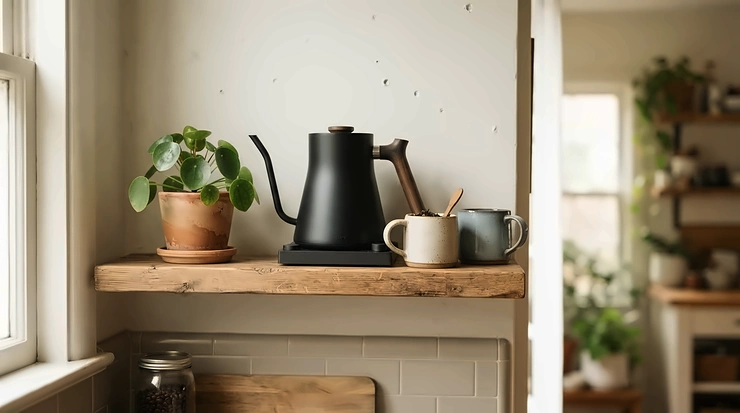
A stovetop gooseneck kettle for pour over is the least glamorous tool in specialty coffee, and arguably the most important. Your grinder gets the headlines. Your dripper gets the Instagram posts. The kettle just sits there, quietly deciding whether your water lands in a gentle spiral or a muddy splash.
Here’s the catch for Canadian kitchens: a lot of the “best kettle” advice assumes you want a plug-in appliance. Maybe you don’t. Maybe your counter is already full, or your condo came with an induction range, or you simply like the idea that a kettle with no circuit board can’t die on you in year three. A stovetop gooseneck kettle for pour over costs less, has fewer parts to fail, and (in the right design) pours just as well.
The twist is induction. An induction cooktop heats the cookware itself, so the base must be ferromagnetic, and not every pretty gooseneck qualifies. Spec sheets for the same model can even disagree depending on the production version. That’s why this guide leans hard on compatibility, plus three things most listings gloss over: ergonomic spout control, whistle-free design, and the real trade-offs against an electric model.
I researched current specs and reviewer sentiment for seven real kettles. Prices below are Canadian-dollar ranges only, so check current pricing on Amazon.ca before you buy.
Quick Comparison: Stovetop Gooseneck Kettle for Pour Over at a Glance
| Kettle | Capacity | Induction-Compatible? | Built-In Thermometer | Best For |
|---|---|---|---|---|
| Hario V60 Buono | 1.2 L brim (about 800 mL practical) | Yes (retailer specs) | No | All-round daily brewing |
| Fellow Stagg Pour-Over Kettle | 1.0 L | Varies by version; verify | Yes, in lid | Design-minded brewers |
| Coffee Gator Gooseneck Kettle | About 1.0-1.5 L (several sizes) | Yes | Yes | Thermometer fans on a budget |
| Bodum Bistro Gooseneck Kettle | 1.0 L | Yes | No | Simple, sturdy, any hob |
| Barista Warrior Pour Over Kettle | Check listing | Yes (“induction ready”) | Yes | Value seekers |
| Kalita Gooseneck Kettle 1.3 L | 1.3 L | Yes (stainless version) | No | Chemex and batch brewing |
| OPUX Pour Over Kettle | 1.2 L | Yes | Yes | Tight budgets |
Looking at the table, thermometer-equipped models cluster at the budget end, while the pricier Fellow Stagg Pour-Over Kettle is the only one where induction support depends on the version you receive. The Hario V60 Buono and Bodum Bistro skip the thermometer entirely, which suits brewers who prefer a “boil and rest” routine. If you want the most capacity per dollar, Kalita Gooseneck Kettle 1.3 L and OPUX lead.
💬 Just one click — help others make better buying decisions too!😊
Top 7 Stovetop Gooseneck Kettles for Pour Over: Expert Analysis
These seven span budget, mid-range, and premium, and every one is a real, current model. Each entry pairs specs with what they mean at the counter.
1. Hario V60 Buono (VKB-120HSV) — the benchmark all-rounder
The low-mounted spout and high-mounted handle are why this beehive-shaped kettle shows up behind so many café bars. Retailer specs list a 1.2 L brim-full capacity, but the practical brewing fill is closer to 800 mL, so treat the bigger number as headroom rather than working volume. The stainless body is listed for gas, electric, halogen, and induction. In practice that means a thin, controllable stream and enough water to pre-wet a filter and brew two mugs without a refill.
Based on the spec comparison, this is the kettle for someone who wants one dependable tool and zero gimmicks. There’s no thermometer and nothing digital, which is precisely why there’s little to break. The trade-off is that you’ll lean on a “boil, then rest briefly” habit instead of a dial. Reviewers I could verify praise the induction performance and the Japanese build quality. The recurring limitation is the missing thermometer, which fans of Coffee Gator point to.
Pros:
- ✅ Precise, thin stream from a low-set spout
- ✅ Works on gas, electric, halogen, and induction
- ✅ Simple stainless build with nothing to fail
Cons:
- ❌ No thermometer, so temperature is by feel
- ❌ Stated 1.2 L capacity overstates usable volume
Expect roughly C$60-C$90 at the time of research. Strong value if you want a long-term kettle; check current price.

2. Fellow Stagg Pour-Over Kettle (1 L) — the design-first premium pick
The counterbalanced handle is the headline, and it matters more than it sounds. Weight shifts back toward your hand, so slow, steady pours stop feeling like a wrist workout. The 1.0 L stainless body carries a lid thermometer with a marked brew range of roughly 90-96°C (195-205°F), which turns “is it ready?” into a glance instead of a guess.
Here’s the honest wrinkle. Listings disagree on induction. One Canadian retailer lists the newer v1.2 as induction compatible, while several international sellers state the kettle is not. Reviewers on one European shop split the same way: some say it works on induction, others say it doesn’t. Since specs vary by production version and stove, confirm with the seller and your cooktop maker before buying for an induction range.
Based on the reviews, the pour quality and thermometer earn consistent praise. A minor complaint is that the lid can slip as the kettle empties. This is a gas-and-coil-top darling and a “verify first” purchase for induction owners.
Pros:
- ✅ Counterbalanced handle eases slow, steady pours
- ✅ Lid thermometer shows the brew range
- ✅ Distinctive, café-grade styling
Cons:
- ❌ Induction support is inconsistent across versions
- ❌ Priciest stovetop option here
Expect roughly C$100-C$140. Worth it for design and ergonomics, provided your cooktop is compatible.
3. Coffee Gator Gooseneck Kettle with Thermometer — best budget thermometer kettle
A lid thermometer at a budget price is the draw here. It comes in several sizes (listings run from 34 oz up to 52 oz), and it’s marketed for induction, halogen, gas, and electric ranges. One review notes you can only fill it to about two-thirds of the stated volume, so a “34 oz” label means roughly 700 mL of usable water. That’s fine for a single mug and tight for two.
What most buyers overlook is that a thermometer in the lid reads steam-zone temperature, not the water itself. Treat it as a trend indicator, not a lab instrument. Even so, it narrows your guesswork from “somewhere between 85 and 100°C” to a band you can repeat.
Reviewers consistently note the thermometer and a gooseneck that pours smoothly. One comparison argues its flow control beats the Hario V60 Buono at similar money. That makes it the logical first kettle for a beginner who wants feedback built in.
Pros:
- ✅ Built-in lid thermometer at a low price
- ✅ Smooth flow from a long gooseneck
- ✅ Multiple sizes and cool-touch handle
Cons:
- ❌ Usable fill is about two-thirds of the label
- ❌ Lid thermometer is approximate, not exact
Expect roughly C$40-C$60. Excellent value for a first stovetop gooseneck kettle for pour over.
4. Bodum Bistro Gooseneck Kettle (1 L) — simple, sturdy, any hob
Bodum’s gooseneck is a no-nonsense workhorse. It’s 1.0 L, stainless steel with a plastic handle, and listed as suitable for ceramic, induction, gas, and electric hobs. Dimensions run about 28.5 cm wide, 17.5 cm high and 13 cm deep, a decent footprint for a small range. The maker’s instructions suggest filling to the MAX line, boiling, and discarding before first use.
One practical note from the retailer listing: on a gas stove, keep the flame from licking past the kettle’s edge. That plastic handle is the reason, and it’s a fair trade for a cool grip. There’s no thermometer, so the same “rest after boiling” rhythm applies.
I couldn’t verify a large pool of dependable review themes for this model, so treat claims about long-term durability cautiously and read current reviews. As analysis, though, the spec sheet makes sense for a household with mixed cooking surfaces or one that might move kitchens.
Pros:
- ✅ Compatible with induction, gas, electric, ceramic
- ✅ Comfortable heat-resistant handle
- ✅ Straightforward, easy-to-clean stainless body
Cons:
- ❌ No built-in thermometer
- ❌ Gas flames must stay within the base edge
Expect roughly C$60-C$100. Fair value for a plain, versatile kettle.
5. Barista Warrior Pour Over Kettle with Thermometer — value pick with induction support
This one pairs a lid thermometer with “induction ready” marketing, a combination that usually costs more. Reviewers at one specialty site rank it as their best overall pour-over kettle for the year, citing the combination of thermometer and pour control. Listings vary on size, so check the capacity on the page you’re buying from rather than assuming.
Where this fits: if you’re comparing the Coffee Gator Gooseneck Kettle and want a similar feature set from a different brand, it’s a reasonable alternate. The thermometer logic is identical, so the same caveat applies: steam-zone readings are a guide.
I couldn’t verify detailed dimension or gauge data, so use this entry as a shortlist item rather than a final answer. Read the latest reviews on Amazon.ca for handle comfort and finish durability, since those are the areas where budget kettles tend to differ most.
Pros:
- ✅ Thermometer plus induction compatibility
- ✅ Well regarded by independent reviewers
- ✅ Suits electric, gas, and induction stoves
Cons:
- ❌ Capacity details vary by listing
- ❌ Less long-term review data than older brands
Expect roughly C$40-C$65. Solid value if the reviews on your listing hold up.

6. Kalita Gooseneck Kettle 1.3 L (All Heat Sources) — built for batch brewing
Capacity is the story. At 1.3 L, it handles a Chemex or a four-mug pot without refilling mid-pour, which saves you from the awkward “kettle ran dry” moment. The stainless version is listed as compatible with all plates including induction.
Caution: Kalita’s range is a compatibility minefield. A Kalita enamel 1.3 L kettle is listed as working on all sources except induction, and Kalita’s 700 mL stainless and copper kettles appear in gas-only listings. Double-check the exact model name before you add to cart, and confirm “all heat sources” in the description.
Based on the spec comparison, this is a pragmatic choice for hosts, families, or anyone who brews 600 mL or more at a time. A bigger kettle is also heavier when full, so wrist strain is a real consideration. Compared with the Hario V60 Buono, you gain volume but lose some compactness.
Pros:
- ✅ Large 1.3 L capacity for batch brews
- ✅ Induction-compatible stainless version
- ✅ Suits Chemex-style multi-cup pours
Cons:
- ❌ Easy to buy the wrong, non-induction Kalita
- ❌ Heavier and bulkier when full
Expect roughly C$65-C$110. Good value for large-batch brewers.
7. OPUX Pour Over Coffee Kettle (1.2 L) — budget with a thermometer
Budget buyers get a lid thermometer, a 1.2 L body, and listed support for gas, electric, induction, and ceramic stoves. The retailer gives dimensions of about 26.7 × 14 cm (10.5 × 5.5 in), roomy but manageable. The ergonomic handle is the selling point, though “ergonomic” is a claim that only your own hand can verify.
An independent roundup includes it mainly for its looks, so don’t read that as a performance endorsement. The takeaway is that this is a “good enough” entry price for people who aren’t sure pour over will stick. If it does, you can upgrade later and keep this as a backup for travel or guests.
Reviews on retail listings can be inflated by incentivized feedback, so lean on independent reviewers when you can. At this price, the main question is whether the finish and handle hold up over a year of daily use.
Pros:
- ✅ Lid thermometer at a very low cost
- ✅ Listed for induction, gas, electric, ceramic
- ✅ Generous 1.2 L body
Cons:
- ❌ Limited independent review data
- ❌ Fit and finish may trail pricier kettles
Expect roughly C$35-C$55. Low-risk way to start.
Price Range and Value Analysis
| Kettle | Price Range (CAD) | Value Verdict | Best For |
|---|---|---|---|
| Hario V60 Buono | C$60-C$90 | Best long-term all-rounder | Daily brewers |
| Fellow Stagg Pour-Over Kettle | C$100-C$140 | Premium; verify induction | Gas or coil-top owners |
| Coffee Gator Gooseneck Kettle | C$40-C$60 | Best first kettle | Beginners |
| Bodum Bistro Gooseneck Kettle | C$60-C$100 | Fair, versatile | Mixed-hob kitchens |
| Barista Warrior Pour Over Kettle | C$40-C$65 | Strong if reviews hold | Value seekers |
| Kalita Gooseneck Kettle 1.3 L | C$65-C$110 | Good for big batches | Hosts, Chemex fans |
| OPUX Pour Over Kettle | C$35-C$55 | Cheapest entry | Trial runs |
Ranges are estimates at the time of research and may vary. The Coffee Gator Gooseneck Kettle and OPUX undercut everything on price while including a thermometer, which is where the value curve is steepest. Past about C$100, you’re paying mostly for the handle design and finish of the Fellow Stagg Pour-Over Kettle, which is worth it only if you’ll feel the difference daily.
Practical Usage Guide: Brewing With a Stovetop Gooseneck Kettle for Pour Over
A great kettle won’t rescue sloppy habits. These steps cover the first 30 days, when most mistakes happen.
Prep. Before first use, fill to the max line, boil, and discard, as Bodum’s instructions recommend. Then fill to about two-thirds of the capacity, since overfilling makes the spout dribble and the kettle heavy.
Target temperature. Many pour-over fans aim for roughly 90-96°C (195-205°F). With a lid thermometer, pull the kettle off the heat when you hit that window. Without one, take it off at a full boil and let it rest roughly 30-45 seconds. That rest drops the water into the target zone for most kitchens.
Pour. Wet the filter and warm the dripper first. Start with a gentle bloom pour to saturate the grounds, wait, then pour in slow concentric circles. Keep the spout low and the stream thin.
Maintenance. Rinse after each use and dry the exterior. Descale periodically with a mild vinegar or citric acid solution if you see mineral buildup, a common issue in hard-water regions. Avoid rough pads, since scratches can mar the finish, and keep the base clean on glass-top ranges.

Real-World Scenarios: Matching a Stovetop Gooseneck Kettle for Pour Over to Your Kitchen
Specs get clearer when you attach a person to them. Here are three profiles.
The condo dweller with induction. Think of a young professional in a downtown condo brewing one mug daily. Budget: under C$100. With an induction range and tight storage, the Hario V60 Buono or Coffee Gator Gooseneck Kettle fits. Both are listed for induction, and the thermometer on the Coffee Gator Gooseneck Kettle helps new brewers calibrate their routine.
The gas-range design lover. Consider a home brewer with a gas stove who treats mornings as a ritual and brews twice daily. Budget: C$100-C$140. The Fellow Stagg Pour-Over Kettle shines here because the counterbalanced handle and lid thermometer reward frequent, deliberate pouring. Gas can discolour the base over time, so accept that patina as part of ownership.
The weekend host. Picture someone who brews a Chemex for four people on Saturdays. Budget: C$65-C$110. The Kalita Gooseneck Kettle 1.3 L offers the volume to avoid mid-pour refills. Just confirm the stainless “all heat sources” model rather than the enamel version.
Across all three, the pattern is the same. Match capacity to your usual batch, match the base to your cooktop, and treat the thermometer as optional unless you’re still learning.
Problem → Solution Guide: Fixing Common Stovetop Gooseneck Kettle Headaches
Even good kettles misbehave. Here are the five most common problems and fixes.
Water dribbles down the spout. Overfilling is the usual cause. Fill to about two-thirds and tilt smoothly rather than flicking the wrist. On the Coffee Gator Gooseneck Kettle, remember the usable volume is lower than the label suggests.
The kettle won’t heat on induction. First, check that the base is magnetic. A refrigerator magnet that sticks firmly is a good sign. Then centre the kettle over the zone. If you own a Fellow Stagg Pour-Over Kettle and it isn’t heating, the version may be the culprit, so contact the seller.
The lid pops off mid-pour. Tilt slowly and hold the lid down if it feels loose. Some reviewers mention this on the Fellow Stagg Pour-Over Kettle as it nears empty.
The base discolours on gas. That’s a known cosmetic effect of flames on stainless. Keep the flame within the base on the Bodum Bistro Gooseneck Kettle and wipe with a non-abrasive cleaner.
Water cools during long pours. Preheat your dripper and mug, and use a slightly higher starting temperature. A larger kettle like the Kalita Gooseneck Kettle 1.3 L holds heat a little longer thanks to its mass.
What Is a Stovetop Gooseneck Kettle for Pour Over?
A stovetop gooseneck kettle for pour over is a non-electric kettle with a long, curved, narrow spout that gives you a slow, precise stream of hot water. You heat it on a stove, then pour in controlled circles over coffee grounds, which helps you extract flavour evenly and consistently.
The gooseneck spout is the key piece of engineering. A narrow outlet limits the flow rate, and the curve lets you aim it with a quick wrist tilt. Compared with a standard kettle, you get steadier saturation of the grounds and fewer channels where water rushes through unextracted.
Stovetop versions rely on your cooktop for heat, so material and base design matter. Stainless steel dominates, and for induction, the base needs a ferromagnetic layer. Many also add a lid thermometer or a hole for a probe so you can monitor temperature. That’s all you need to know to shop smartly, and the next sections show how to apply it.
How to Choose a Stovetop Gooseneck Kettle for Pour Over
Use this six-step checklist to narrow your options.
- Confirm your cooktop. Gas, electric coil, glass-top, and induction behave differently. An induction-compatible kettle must have a magnetic base, so check the exact model listing.
- Pick a capacity that matches your brew. Usable volume is often lower than the label. A one-mug brewer is happy at around 700 mL, while Chemex users want 1.2-1.3 L.
- Decide on a thermometer. If you’re learning, a lid thermometer helps. If you’ve got a routine, skip it and save money.
- Test handle and balance. Comfort over a two-to-three-minute pour matters more than looks. Look for stay-cool handles and a balanced tilt.
- Inspect the spout. A thin, smooth spout offers the most control. Avoid kettles with wide or abrupt spouts that dump water.
- Check for recalls and certifications. Health Canada publishes consumer product recalls, including kettles that can expel hot water or steam. Under the Canada Consumer Product Safety Act, recalled products can’t be sold or given away.
Follow these steps and you’ll eliminate most buying regrets before you click.
Electric Gooseneck Kettle vs Stovetop Gooseneck Kettle: Which Wins?
The electric gooseneck kettle vs stovetop gooseneck kettle debate comes down to speed, precision, and simplicity. Electric models heat faster in most cases and can hold a set temperature. One reviewer clocked the Fellow Stagg EKG at just over two minutes for 500 mL. Stovetop versions cost less and have no electronics to fail, but they need you to watch the pot.
Price spreads reflect this. One guide places stovetop goosenecks around US$20-50 and electric ones around US$80-150. Safety also deserves a mention: in May 2026 Health Canada and partners recalled Zwilling Enfinigy electric kettles over a burn hazard from spilling water. A recall like that doesn’t condemn electrics, but it shows why checking notices matters for any kettle.
| Factor | Electric Gooseneck | Stovetop Gooseneck | Best For |
|---|---|---|---|
| Heating speed | Faster | Depends on stove | Electric: rushed mornings |
| Temperature control | Set and hold | Manual or lid thermometer | Electric: precision seekers |
| Upfront cost | Higher | Lower | Stovetop: budgets |
| Durability | Electronics can fail | Few moving parts | Stovetop: long-term owners |
| Counter space | Needs outlet | Lives on the stove | Stovetop: small kitchens |
Looking at the comparison, electric wins on convenience and exact temperature, while the Hario V60 Buono and Bodum Bistro Gooseneck Kettle win on simplicity and longevity. If you brew once a day and own an induction range, stovetop is hard to beat. If you brew several times daily and want precise heat, an electric model like the Fellow Stagg EKG is the better tool.
Induction-Compatible Kettle: What to Check Before You Buy
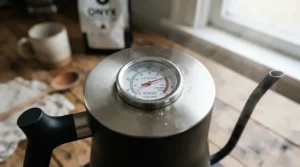
An induction-compatible kettle needs a magnetic base, and “stainless steel” alone doesn’t guarantee that. Some stainless grades are non-magnetic, which is why a listing’s compatibility line matters more than its material line.
Start with the manufacturer’s statement, then verify with a quick magnet test on the base. The Hario V60 Buono, Bodum Bistro Gooseneck Kettle, and Coffee Gator Gooseneck Kettle are all described as induction-friendly by their sellers. The Fellow Stagg Pour-Over Kettle is the cautionary example, since the same product line appears with different compatibility claims.
One more trap: not every “pour over kettle” is meant for the stove. The Timemore Fish is a popular gooseneck, but at least one retailer warns it must not sit directly on a heat source. It’s a pouring vessel for pre-heated water, so don’t confuse it with a stovetop gooseneck kettle for pour over.
Finally, centre the kettle on the cooking zone. Induction heats where the coil is, so a small-bottomed kettle on a large zone may heat unevenly or not trigger the cooktop at all.
Ergonomic Spout Control: Why Handle and Spout Geometry Matter
Ergonomic spout control is what separates a kettle you enjoy from one you tolerate. It’s a combination of spout width, curve, handle position, and balance.
The Hario V60 Buono uses a low-mounted spout with a high-mounted handle, a layout that keeps your wrist relaxed as you tilt. The Fellow Stagg Pour-Over Kettle goes further with a counterbalanced handle that moves the centre of mass back toward your hand. In practice that means less forearm tension during a three-minute pour, which matters if you brew daily.
Spout diameter affects flow rate. Narrower is slower, which is good for control but can feel fiddly when you want a quick bloom. Look for a smooth, even stream rather than a sputtering one.
Handle material matters too. The Bodum Bistro Gooseneck Kettle uses a heat-resistant plastic handle, while many budget kettles use cool-touch coatings. Wrap your hand around a kettle in a shop if you can. If you can’t, check return policies on Amazon.ca, because comfort is the one thing a spec sheet can’t promise.
Whistle-Free Design: Why Silence Is a Feature
Whistle-free design sounds like a throwaway line, but for pour over it’s functional. A whistling spout cap blocks the opening and sits right where your precise stream needs to be clear. A gooseneck’s open spout simply lets steam escape.
None of the seven kettles here uses a whistle as far as I can verify from their specifications. That makes them quiet at 6 a.m., which your sleeping household will appreciate. It also means they won’t scream when they hit the boil, so you need to watch or listen for the rumble yourself.
That’s the real trade-off. Without a whistle, it’s easier to forget the kettle is on. Set a phone timer, or choose a model with a lid thermometer like the Coffee Gator Gooseneck Kettle or OPUX so you can see progress at a glance.
Open spouts also release steam directly where your hand goes during pouring, so keep your grip on the handle and your fingers clear. For a small apartment, a whistle-free design is the polite option. For a busy kitchen, it asks a little more attention from you.
Safety and Long-Term Care for Your Stovetop Gooseneck Kettle for Pour Over
A kettle holds near-boiling water, so safety is part of the purchase. Scalds are a major source of burn injuries in young children, and experts advise keeping children away from hot drinks and food preparation areas, including the stove. Place kettles toward the back of the range, turn handles inward, and never leave one unattended while it heats.
Care also protects your investment. Hand-wash where you can, dry thoroughly, and descale when you see white buildup. Avoid dragging a kettle across glass-top ranges, since manufacturers warn that rough or unclean surfaces can mar the base finish.
Think in cost per use. A C$60 kettle used daily for five years works out to roughly C$0.03 per brew, which makes the price gap between budget and premium models look small. Spend more only if the handle or thermometer will improve your daily experience.
Finally, register for Health Canada recall notices and check your model if you buy secondhand. A kettle that’s safe, balanced, and well maintained will outlast most of your other coffee gear.

FAQ
❓ Can you use a stovetop gooseneck kettle for pour over without a thermometer?
❓ What size stovetop gooseneck kettle do I need for a Chemex?
❓ Why does my gooseneck kettle drip down the spout?
❓ Is a stovetop gooseneck kettle safe on a glass-top range?
❓ Can you use a stovetop gooseneck kettle for tea?
Conclusion
The best stovetop gooseneck kettle for pour over is the one that fits your cooktop, your usual brew size, and your hand. For most Canadian kitchens, that means starting with induction compatibility and working backward from there.
If you want a dependable all-rounder, the Hario V60 Buono is the safest bet. If you’re new and want feedback built in, the Coffee Gator Gooseneck Kettle or OPUX deliver a lid thermometer for little money. The Fellow Stagg Pour-Over Kettle is the design-forward upgrade, as long as you confirm compatibility for your stove. The Bodum Bistro Gooseneck Kettle and Barista Warrior Pour Over Kettle cover simple and value-driven needs, and the Kalita Gooseneck Kettle 1.3 L serves the batch brewer.
Choose with the checklist, mind the safety basics, and remember that ergonomic spout control and a whistle-free design matter more at 6 a.m. than any marketing line. Check current prices on Amazon.ca, read the latest reviews, and pick the kettle that makes your mornings calmer.
✨ Ready to upgrade your pour over?
🔍 Click any highlighted kettle above to check current pricing and availability, and brew your best cup yet! ☕
Recommended for You
- Variable Temperature Gooseneck Kettle: 7 Best Buys For 2026
- Electric Gooseneck Kettle: 7 Best Picks For Perfect Pours
- Bluetooth Coffee Scale vs Digital Coffee: 7 Picks (2026)
Disclaimer: This article contains affiliate links. As an Amazon Associate, I earn from qualifying purchases. If you purchase products through these links, we may earn a small commission at no additional cost to you.
✨ Found this helpful? Share it with your friends! 💬🤗
