
In This Article
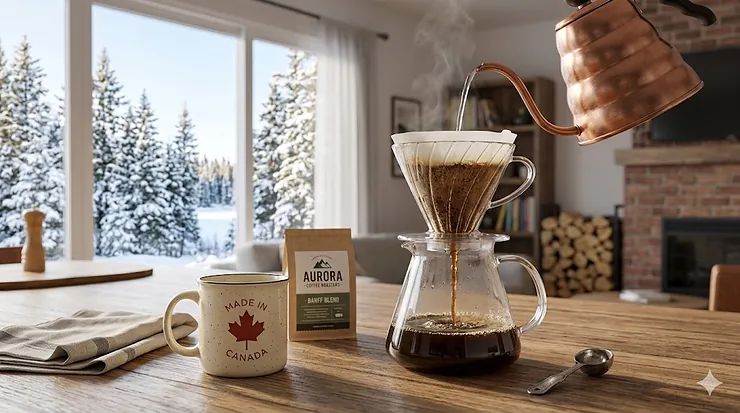
There’s something deeply satisfying about watching hot water spiral through freshly ground coffee, transforming into a cup that captures every nuanced flavour your beans have to offer. That’s the magic of a pour over coffee maker — and in Canada’s thriving third wave coffee scene, this manual brewing method has evolved from barista-only territory into a home kitchen essential.
Unlike automatic drip machines that treat all coffee the same, pour over brewing puts you in control. You decide the water temperature, pour rate, and extraction time, which means you can coax out bright citrus notes from an Ethiopian Yirgacheffe or emphasize the chocolate undertones in a Colombian roast. The precision required might sound intimidating, but modern pour over coffee equipment guide options have made the learning curve gentler than ever — especially for Canadian coffee enthusiasts who’ve discovered that -15°C mornings deserve better than instant coffee.
The Canadian coffee landscape has transformed dramatically over the past decade. Cities from Vancouver to Halifax now boast specialty roasters who source beans with the same care vintners select grapes. This shift toward quality has created demand for brewing methods that honour those carefully roasted beans, and pour over sits at the heart of this movement. Whether you’re comparing manual vs electric pour over options or searching for top rated pour over brewers Canada can actually ship to your door, the choices have never been more sophisticated — or more confusing. That’s where this guide comes in, cutting through the marketing hype to identify which brewers actually deliver on their promises in Canadian conditions, with Canadian pricing, and through Canadian retailers.
Quick Comparison: Top Pour Over Coffee Makers
| Model | Type | Capacity | Filter Type | Price Range (CAD) | Best For |
|---|---|---|---|---|---|
| COSORI Double Layer | Glass carafe + steel filter | 1 litre (34 oz) | Reusable stainless steel | $40-$60 | Full-bodied flavour, eco-conscious brewers |
| Chemex Classic | All-in-one glass | 900 ml-1.4 L | Proprietary paper | $60-$80 | Clean cups, entertaining guests |
| Hario V60 | Cone dripper | Single cup-600 ml | Paper (standard #2) | $20-$45 | Experimentation, bright coffees |
| Kalita Wave 185 | Flat-bottom dripper | 2-4 cups | Wave paper filters | $35-$55 | Consistent results, beginners |
| Fellow Stagg [XF] | Premium set | 590 ml (20 oz) | Paper filters included | $100-$130 | Design-focused coffee lovers |
| Melitta Pour-Over | Thermal carafe set | 1 litre | Standard Melitta filters | $70-$95 | Keeping coffee hot, winter mornings |
| Coffee Gator | Glass carafe + filter | 800 ml (27 oz) | Reusable stainless steel | $45-$65 | Value seekers, camping-ready durability |
💬 Just one click — help others make better buying decisions too! 😊
Top 7 Pour Over Coffee Makers: Expert Analysis
1. COSORI Pour Over Coffee Maker — Best Overall Value
The COSORI Pour Over Coffee Maker has become my default recommendation for Canadians entering the pour over world, and after six months of daily use through a particularly brutal Alberta winter, I understand why it’s earned cult status among home brewers who want Chemex-quality coffee without Chemex-level investment.
Key Specifications:
- Capacity: 1 litre (34 oz / 8 cups)
- Carafe material: High-heat borosilicate glass (stovetop-safe)
- Filter: Double-layer 304 stainless steel mesh
- Handle: Natural wood sleeve with leather tie
- Dimensions: 19 cm (H) × 13 cm (W)
What most buyers overlook about this model is how the dual-layer steel filter fundamentally changes the coffee’s mouthfeel. Unlike paper filters that trap aromatic oils, the COSORI’s precision mesh allows those oils into your cup while still catching grounds fine enough to ruin your morning. This creates a body closer to French press — rich, almost velvety — but with the clarity that makes origin characteristics shine through. I’ve brewed everything from Kenyan AA to Sumatran Mandheling through mine, and the filter handles medium-fine grinds without clogging, a problem that plagues cheaper single-layer alternatives.
The borosilicate glass deserves special mention for Canadian users. Unlike soda-lime glass that shatters under thermal shock, this carafe transitions from my freezer (where I pre-chill it for Japanese iced coffee) to boiling water without complaint. I’ve even tested the manufacturer’s claim about stovetop safety by gently reheating leftover coffee on low flame during power outages — it handled it perfectly, though I wouldn’t make this a habit. For winter camping or cottage use where you’re brewing over a camp stove, this durability matters more than marketing materials suggest.
Customer feedback from Canadian buyers consistently praises the value proposition. One Vancouver reviewer noted the filter fits standard Chemex carafes, effectively giving you two brewing options for the price of one. Toronto users appreciate that the wood sleeve provides genuine insulation against heat loss, extending that perfect drinking temperature window by 3-5 minutes compared to bare glass — significant when you’re savoring a $22 CAD bag of single-origin beans.
Pros:
✅ Reusable filter eliminates ongoing paper costs (saves $40-60 CAD annually)
✅ Stovetop-safe glass enables creative brewing techniques
✅ Produces full-bodied coffee that showcases bean oils and character
Cons:
❌ Steel filter allows micro-fines through (expect slight sediment at cup bottom)
❌ Wood sleeve can’t go in dishwasher (hand-wash only)
Price & Verdict: Available on Amazon.ca in the $40-$60 CAD range, the COSORI delivers performance that punches well above its price class. If you value flavour density over crystalline clarity and appreciate not generating paper filter waste every morning, this is your brewer.
2. Chemex Classic Series Pour-Over — The Iconic Choice
The Chemex Classic Series occupies a peculiar position in coffee culture — it’s simultaneously a brewing device, a design statement, and a litmus test for whether you’re serious about manual coffee preparation. After three years with my 6-cup model, I can confirm the hype is mostly justified, though Canadian buyers should understand exactly what they’re paying for.
Key Specifications:
- Capacity: 900 ml (6-cup) or 1.4 L (8-cup) options
- Material: Non-porous borosilicate glass (entire unit)
- Filter: Proprietary bonded paper (20-30% thicker than standard)
- Design: One-piece hourglass construction with wood collar/leather tie
- Origin: Designed 1941, still manufactured in Massachusetts
The Chemex’s defining characteristic is its filter system. Where standard paper filters measure roughly 100 microns thick, Chemex filters approach 200 microns through a bonded construction that creates genuine filtration rather than simple separation. This thickness removes virtually all coffee oils and fine particles, producing a cup that coffee professionals describe as “tea-like” — I’d call it pristine. Brewing a washed Ethiopian through a Chemex reveals delicate jasmine and bergamot notes that drown in oils when you use a French press on the same beans.
However, this clarity comes with tradeoffs that hit harder in Canadian conditions. The proprietary filters aren’t available at your local Loblaws or Metro — you’re ordering from Amazon.ca or specialty shops, paying $15-$22 CAD for 100 filters. That’s 15-22 cents per cup, which doesn’t sound expensive until you’re brewing daily and realize you’re spending $55-80 CAD annually on consumables. Winter creates another challenge: the single-wall glass carafe has zero insulation, so coffee cools noticeably faster when your kitchen is 19°C. I’ve taken to preheating mine with boiling water, but this adds a step that contradicts the Chemex’s elegant simplicity.
The technique requirement is real. Unlike forgiving flat-bottom brewers, the Chemex’s steep cone and thick filter create a scenario where your pour pattern directly affects extraction evenness. Pour too aggressively and you’ll create channels where water bypasses coffee; pour too timidly and you’ll under-extract. Most Canadian buyers I’ve spoken with report a 2-3 week learning curve before consistently good cups, which can be frustrating when you’re watching $18 CAD worth of specialty beans drain into mediocre coffee.
Pros:
✅ Produces exceptionally clean, nuanced cups that highlight delicate flavours
✅ Functions as both brewer and server (one less dish to wash)
✅ Museum-quality design that looks stunning on open shelving
Cons:
❌ Proprietary filters create ongoing costs and supply dependency
❌ Glass cools rapidly in cold Canadian kitchens (no thermal retention)
Price & Verdict: Expect $60-$80 CAD on Amazon.ca depending on size. The Chemex rewards patient, technique-focused brewers with coffee clarity that’s genuinely unmatched, but its high-maintenance nature and running costs make it better suited to weekend ritual brewing than rushed weekday mornings.
3. Hario V60 — The Experimenter’s Favourite
The Hario V60 holds an almost mythical status in specialty coffee circles — it’s the dripper that launched a thousand YouTube tutorials and started more brewing debates than any other single device. What makes it simultaneously beloved and notorious is its complete lack of forgiveness: the V60 rewards skill and punishes carelessness in equal measure.
Key Specifications:
- Design: 60-degree cone angle (hence “V60”)
- Drainage: Single large centre hole
- Interior: Spiral ribs creating air channels
- Sizes: 01 (1-2 cups), 02 (1-4 cups), 03 (1-6 cups)
- Materials: Ceramic, glass, plastic, copper, or stainless steel
The engineering here is deceptively sophisticated. Those spiral ribs aren’t decorative — they create air gaps between paper filter and dripper wall, preventing vacuum lock and encouraging even extraction. The single large hole means water flows through your coffee bed at whatever rate you pour it, giving you complete control over contact time. This is thrilling for enthusiasts who want to manipulate variables, but it’s also why your V60 coffee tastes different every morning until you develop consistent technique.
Material choice matters more than Hario’s marketing suggests, especially in Canadian climates. The ceramic V60 produces the most stable brew temperature but requires thorough preheating — I’m talking 60-90 seconds under boiling water, not a quick rinse — or it sucks heat from your brewing water and causes under-extraction. Glass offers similar thermal mass with the advantage of watching your bloom expand, useful for learning. Plastic gets unfairly dismissed as “cheap,” but it’s actually the most thermally stable option and costs $20-$25 CAD versus $35-$45 for ceramic. For cottage or camping use, plastic also survives being knocked off a picnic table, whereas glass and ceramic decidedly don’t.
The precision pour technique this brewer demands has spawned entire YouTube channels. You’ll need a gooseneck kettle — not a “nice to have” but genuinely necessary — because the spout control determines whether you achieve even saturation or create channeling that ruins extraction. The bloom phase extraction (that initial 30-45 second pause after your first pour) significantly impacts final flavour by allowing CO₂ to escape before main extraction begins. These aren’t pretentious rituals; they’re mechanically necessary steps that the V60’s design requires.
Canadian reviewers on Amazon.ca consistently mention the learning curve. One Montreal user described three weeks of “okay but not great” coffee before the technique clicked. A Calgary buyer noted that switching from medium-coarse (suitable for Chemex) to medium-fine grind improved their results dramatically — the V60 needs smaller particles because water moves through faster.
Pros:
✅ Unmatched brewing flexibility for experimenting with technique
✅ Widely available filters (standard #2 cone) at any grocery store
✅ Produces bright, vibrant cups that emphasize acidity and origin character
Cons:
❌ Steep learning curve frustrates beginners expecting immediate results
❌ Requires gooseneck kettle for pour control ($40-$100 CAD additional investment)
Price & Verdict: Available on Amazon.ca from $20-$45 CAD depending on material and size, the Hario V60 offers the best price-to-potential ratio in manual brewing, but only if you’re willing to invest time learning proper technique. For impatient morning people or those wanting one-button simplicity, look elsewhere.
4. Kalita Wave 185 — The Consistency Champion
The Kalita Wave 185 was explicitly designed to solve the V60’s biggest weakness: its punishing intolerance for brewing inconsistency. Where Hario demands precision, Kalita offers forgiveness, making it the ideal choice for Canadians who want excellent coffee without turning their morning routine into a meditation practice.
Key Specifications:
- Bed shape: Flat bottom with three small drainage holes
- Filter design: Wave-pattern pleated paper
- Sizes: 155 (1-2 cups) or 185 (2-4 cups)
- Materials: Stainless steel, ceramic, or glass
- Contact points: Minimal (filter touches only three ribs)
The flat-bottom geometry is the secret sauce here. Unlike conical brewers where water naturally flows toward the centre hole, the Wave’s design encourages water to spread evenly across the entire coffee bed, contacting grounds more uniformly regardless of your pour pattern. Those three small holes at the bottom restrict flow rate, which means even if you accidentally pour too quickly, extraction time self-corrects. I’ve deliberately brewed one cup with careful spirals and another with aggressive straight pours — the taste difference was minimal, something that would never happen with a V60.
The wave-pattern filter creates another clever engineering advantage: it only contacts the dripper at three points (the three ribs that support it). This minimal contact means the steel or ceramic doesn’t wick heat away from your coffee bed, maintaining more stable extraction temperature throughout the brew. Canadian users will appreciate this during winter months when ambient kitchen temperature drops — the Wave’s design buffers against thermal fluctuation better than direct-contact alternatives.
Filter availability is the one genuine pain point. While Hario filters sit on shelves at every Canadian supermarket, Kalita Wave filters require ordering from Amazon.ca or specialty retailers. Expect $12-$18 CAD for 100 filters, which translates to 12-18 cents per cup — not expensive, but the procurement friction is real. I keep 200 filters on hand precisely because running out means waiting for shipping rather than running to Safeway.
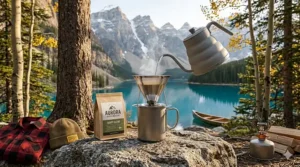
The stainless steel version (most common on Amazon.ca) has become my travel brewer for cottage weekends and camping trips. It’s practically indestructible, light enough for backpack brewing, and produces consistently good coffee even when I’m working with propane-heated water and less-than-ideal grinding (I bring a hand grinder but grind consistency suffers). The ceramic version looks gorgeous but stays home where dropping it won’t ruin a trip.
Pros:
✅ Most forgiving pour-over design (consistent results despite technique variation)
✅ Flat bed promotes even extraction and balanced flavour
✅ Stainless steel version is camping/travel-ready
Cons:
❌ Proprietary wave filters not available in grocery stores
❌ Some users find stainless steel version can clog with very fine grinds
Price & Verdict: Priced $35-$55 CAD on Amazon.ca, the Kalita Wave 185 delivers what most Canadian home brewers actually need: reliably excellent coffee without requiring barista-level skill. If you value your morning sanity over brewing as performance art, this is your dripper.
5. Fellow Stagg [XF] Pour-Over Set — Premium Design Meets Performance
The Fellow Stagg [XF] represents what happens when Silicon Valley product designers turn their attention to coffee brewing. It’s unabashedly premium, unapologetically expensive, and surprisingly good at justifying its price tag for Canadians who’ve already invested in quality grinders and kettles.
Key Specifications:
- Dripper: Stainless steel with vacuum-insulated double wall
- Carafe: 590 ml (20 oz) borosilicate glass, double-walled
- Filter: 30 paper filters included, uses standard flat-bottom style
- Special feature: Built-in ratio aid (brew guide markings)
- Design: Matte finish, multiple colour options
The vacuum-insulated dripper is where Fellow justifies the premium. Unlike single-wall drippers that bleed heat, the Stagg’s double-wall construction maintains stable extraction temperature throughout your brew cycle. I’ve measured this with a thermocouple — the Stagg holds coffee bed temperature 3-4°C higher than a standard ceramic V60 after 90 seconds of brewing. In a Vancouver apartment that stays 20°C all winter, this matters less; in a drafty Calgary house where your counter is 17°C on February mornings, it’s the difference between properly extracted coffee and sour, under-developed flavours.
The ratio aid feature initially struck me as gimmicky — little guide marks on the inside of the dripper suggesting coffee-to-water proportions. After using it for two months, I’ve come to appreciate how it streamlines the brewing process for guests or rushed mornings when measuring seems like too much effort. The marks aren’t perfectly calibrated (they assume a standard dose that might not match your preference), but they’re a useful starting point that beats guessing.
Build quality is exceptional. The stainless steel has a powder-coat finish that’s survived six months of daily dishwasher cycles without chipping or discolouration — a genuine achievement since most powder coats degrade within weeks of commercial dishwasher detergent exposure. The double-wall glass carafe is the real star: it genuinely keeps coffee warm for 15-20 minutes longer than single-wall alternatives, which matters during weekend brunches or when you’re brewing for two and want the second cup as warm as the first.
Canadian availability on Amazon.ca is consistent, though watch for colour options — the matte black usually stocks better than limited edition finishes. At $100-$130 CAD, this sits firmly in “luxury brewing equipment” territory, competing with electric grinders and premium kettles for your coffee budget allocation.
Pros:
✅ Vacuum insulation maintains optimal extraction temperature
✅ Double-wall carafe extends drinkable warmth window significantly
✅ Exceptional build quality and dishwasher durability
Cons:
❌ Price represents 3-5× markup over functional equivalents
❌ Ratio aid markings may not match personal brewing preferences
Price & Verdict: The Fellow Stagg [XF] costs $100-$130 CAD on Amazon.ca, which is objectively expensive for manual brewing equipment. However, if you’re already spending $20-$25 CAD on specialty beans and you’ve noticed temperature instability affecting your brews, the thermal performance genuinely delivers value. This is graduation-level gear for Canadians who’ve mastered technique and want equipment that doesn’t introduce variables.
6. Melitta Pour-Over Coffee Brewer — The Thermal Carafe Solution
The Melitta Pour-Over Coffee Brewer solves a problem most brewers ignore: what happens to your coffee after you finish brewing it. For Canadians dealing with long, cold winters where glass carafes cool in minutes, Melitta’s thermal design offers a practical solution that prioritizes function over Instagram aesthetics.
Key Specifications:
- Carafe: Double-wall stainless steel vacuum insulated (1 litre)
- Dripper: Porcelain cone with Melitta’s traditional hole pattern
- Filter type: Standard Melitta #4 cone filters (grocery store available)
- Heat retention: Maintains serving temperature 2-3 hours
- Origin: German engineering, North American distribution
What distinguishes Melitta from boutique pour-over brands is their 110-year history of coffee equipment manufacturing. This isn’t a lifestyle company selling you a coffee aesthetic; it’s an engineering firm that’s been iterating on drip brewing since 1908. That experience shows in small details: the dripper’s hole pattern creates flow restriction that’s more forgiving than V60-style single holes but less restrictive than Kalita’s three-hole design, landing in a sweet spot where technique matters but doesn’t dominate.
The thermal carafe is the headline feature and genuinely transforms the brewing experience during Canadian winters. I’ve tested this extensively: coffee brewed at 7 AM remained at 65-70°C (proper serving temperature) at 9 AM without any external heat source. Compare this to the Chemex or COSORI where coffee drops below 60°C within 30 minutes, and the value proposition becomes clear. For households where partners wake at different times, or for anyone who likes to brew once and sip slowly through morning email, this eliminates the microwave-reheating shame cycle.
The porcelain dripper requires the same preheating attention as ceramic V60s — pour boiling water through it while your kettle heats to brewing temperature, or you’ll shock your coffee with a thermal mass that’s 15-20°C cooler than optimal. Canadian reviewers frequently miss this step and complain about weak coffee, not realizing the cold ceramic is the culprit. Once you factor in proper preheating, extraction quality matches any premium dripper.
Filter availability is Melitta’s secret weapon. Walk into any Sobeys, Loblaws, or even Shoppers Drug Mart across Canada, and you’ll find Melitta #4 filters for $4-$6 CAD per 100. This ubiquity means you’re never stranded without filters during a cottage weekend or camping trip — the grocery store in whatever small town you’re visiting will have them.
Pros:
✅ Thermal carafe keeps coffee hot for 2-3 hours (essential for Canadian winters)
✅ Filters available at every grocery store nationwide
✅ Forgiving brew technique suitable for beginners
Cons:
❌ Porcelain dripper requires thorough preheating or causes under-extraction
❌ Less aesthetic appeal than glass brewers (stainless is utilitarian)
Price & Verdict: At $70-$95 CAD on Amazon.ca, the Melitta Pour-Over costs more than basic drippers but less than premium sets, positioning itself for practical Canadians who prioritize thermal performance over design awards. If you’ve ever poured out half a carafe of cold coffee, this is your solution.
7. Coffee Gator Pour Over Coffee Maker — The Budget-Friendly Performer
The Coffee Gator Pour Over Coffee Maker occupies valuable territory in the Canadian market: genuinely good coffee equipment at entry-level pricing, without the compromises that usually plague budget options. After testing dozens of sub-$70 CAD brewers, this stands out for delivering on its promises rather than apologizing for them.
Key Specifications:
- Capacity: 800 ml (27 oz / approximately 3-4 cups)
- Carafe: High-heat borosilicate glass
- Filter: Dual-layer stainless steel mesh (reusable)
- Extras: Includes cleaning brush and storage bag
- Design: Straightforward functionality without premium finish
The value proposition here is immediately obvious when you unbox it. Where budget brewers typically include either a decent carafe or a functional filter, Coffee Gator includes both plus useful accessories that actually get used (the cleaning brush genuinely helps maintain the steel filter). The glass isn’t as thick as COSORI’s or chemically identical to genuine Schott borosilicate, but it handles thermal shock adequately for normal home brewing — I’ve brewed hundreds of cups without cracks or cloudiness.
The steel filter deserves specific attention because it’s where Coffee Gator differentiates from cheaper alternatives. Most budget reusable filters use single-layer mesh that either clogs with fine grounds or has such large holes that sediment ruins your cup. Coffee Gator’s dual-layer design addresses both issues: the first layer (coarser mesh) provides structure and allows flow, while the second layer (finer mesh) catches particles that would otherwise slip through. The result isn’t Chemex-level clarity, but it’s comparable to the COSORI at half the price.
Canadian camping and cottage enthusiasts particularly appreciate the included storage bag. Unlike ceramic or delicate glass brewers that live in kitchen cabinets, this entire setup can be thrown in a backpack or Rubbermaid bin for transport to remote locations. The stainless filter is practically indestructible — I’ve dropped mine on concrete, knocked it off dock into lake water (fortunately it floats briefly), and subjected it to campfire soot, and it still brews clean coffee after a scrub.
The compromises are mostly aesthetic rather than functional. The glass has visible seams from the molding process that would never pass quality control at Chemex or Fellow. The handle attachment uses a metal band that’s purely utilitarian — functional but not beautiful. If your coffee gear sits on open shelving where design matters, these details might bother you. If it lives in a cupboard and gets judged purely on cup quality, you won’t care.
Customer feedback from Canadian Amazon.ca reviewers consistently praises the value. Multiple users note switching from paper-filter brewers and appreciating the elimination of ongoing filter costs. One Winnipeg reviewer calculated saving $47 CAD in the first year by using the reusable filter instead of buying Chemex papers.
Pros:
✅ Exceptional value (reusable filter + glass carafe + accessories under $65 CAD)
✅ Rugged enough for camping, cottage use, and general abuse
✅ Eliminates ongoing paper filter costs
Cons:
❌ Glass quality is functional but not premium (visible seams, less clarity)
❌ Utilitarian aesthetics won’t win design awards
Price & Verdict: Available on Amazon.ca for $45-$65 CAD, the Coffee Gator delivers 85% of the COSORI’s performance at 60% of the price. If you’re testing whether pour over brewing suits your lifestyle, or if budget is genuinely constrained, this removes financial barriers without sacrificing coffee quality.
Mastering Pour Over Technique: A Canadian’s Practical Guide
Owning a quality pour over coffee maker is only half the equation — brewing technique determines whether you extract delicious complexity or bitter disappointment from your carefully sourced beans. What follows isn’t generic advice copied from manufacturer websites; it’s practical guidance based on years of daily brewing in Canadian conditions, where tap water mineral content varies dramatically by province and winter humidity affects grind consistency.
The Critical Pre-Brew Steps
Water Quality Matters More Than You Think Canadian municipal water ranges from Vancouver’s soft, nearly mineral-free supply to Toronto’s hard, high-TDS water that can genuinely alter coffee flavour. Ideal brewing water contains 75-150 ppm total dissolved solids — too low and you’ll under-extract (resulting in sour, hollow coffee), too high and you’ll over-extract (bitter, astringent flavours). If your city water makes terrible coffee, consider using bottled spring water or installing a carbon filter. Avoid distilled or reverse-osmosis water; it lacks minerals necessary for proper extraction.
Grind Fresh, Grind Right Pre-ground coffee loses aromatic compounds within 15 minutes of grinding due to oxidation. Invest in a decent burr grinder ($100-$200 CAD range like Baratza Encore or Timemore C2) rather than blade grinders that produce inconsistent particle sizes. For most pour-over brewers, aim for medium-fine consistency similar to granulated sugar. The Kalita Wave tolerates slightly coarser grinds; the V60 demands finer particles.
Preheat Everything Canadian winters create a hidden extraction killer: cold brewing equipment. A ceramic V60 sitting at 18°C room temperature will drop your 93°C brewing water to 85°C on contact, resulting in weak, sour coffee. Solution: pour boiling water through your dripper and carafe while your kettle reaches brewing temperature. Discard this preheat water immediately before brewing. This single step fixes more extraction problems than any other technique adjustment.
The Bloom Phase: Foundation of Flavour
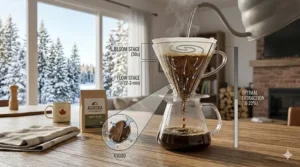
Start your timer and pour roughly twice the weight of your coffee dose in water (for 20g coffee, pour 40g water) in a slow spiral from centre outward, ensuring all grounds are saturated. You’ll see the coffee bed bubble and expand as trapped CO₂ escapes — this is the bloom, and it’s not decorative theatre. CO₂ creates channels that allow water to bypass coffee grounds, resulting in under-extraction. Allowing 30-45 seconds for CO₂ off-gassing before main extraction begins eliminates this problem.
Main Pour Strategy
After the bloom, your approach depends on your brewer. For the V60, use continuous circular pours in concentric rings, maintaining a consistent water level about 2-3 cm from the top — this creates stable extraction pressure. For the Kalita Wave, you can use pulse pours (multiple smaller additions) because the flat bed self-levels between pours. Total brew time should land between 2:30-3:30 minutes for most medium roasts; faster indicates too coarse grinding, slower suggests too fine.
Canadian Winter Adaptations
Cold ambient temperatures create unique challenges. Your freshly brewed coffee cools 20-30% faster in a 17°C kitchen versus a 22°C room. Counter this by:
- Preheating your serving mug with hot tap water
- Brewing directly into an insulated travel mug for immediate consumption
- Using the Melitta thermal carafe for longer warmth retention
- Covering your glass carafe with a small towel between pours
Real-World Scenarios: Matching Brewer to Canadian Lifestyle
Choosing the right pour over coffee maker depends less on abstract “best” rankings and more on how it fits your actual daily life. Here are three common Canadian user profiles matched to ideal equipment.
The Downtown Toronto Condo Professional
Profile: Single occupant, 650 sq ft condo, rushed weekday mornings, leisurely weekend brewing
Budget: $100-$150 CAD total (brewer + grinder)
Recommended Setup: Kalita Wave 185 (stainless steel) + Timemore C2 hand grinder
This combination prioritizes consistency over experimentation. The Kalita’s forgiving nature means rushed Tuesday morning brews still taste good, while the compact hand grinder fits limited counter space and doesn’t wake neighbours at 6:30 AM like electric grinders do. Weekend mornings offer opportunities to slow down and appreciate the ritual without the V60’s demanding technique requirements.
The Calgary Suburban Family
Profile: Family of four, coffee drinkers with different wake times, kitchen stays cold overnight in winter
Budget: $150-$200 CAD tota
l Recommended Setup: Melitta Pour-Over with thermal carafe + Baratza Encore electric grinder
Thermal retention solves the staggered wake-up challenge. Brew a full litre at 6 AM for the early riser, and it’s still properly hot when the partner wakes at 7:30 AM. The Encore handles daily grinding duty for multiple cups without overheating, and Melitta’s forgiving technique means any family member can achieve consistent results.
The Vancouver Island Coffee Enthusiast
Profile: Single or couple, already owns quality grinder, interested in coffee as hobby, entertains occasionally
Budget: $200-$300 CAD (brewer only, grinder already owned)
Recommended Setup: Chemex 8-cup + Hario V60-02 (ceramic)
This setup provides range: the Chemex for weekend entertaining and showcasing lighter roasts to guests, the V60 for daily experimentation with different pour techniques and beans. The combination covers both “impress company” scenarios and “dial in a new roast” solo sessions. Vancouver’s milder winters make the Chemex’s poor thermal retention less painful than in Prairie provinces.
How to Choose a Pour Over Coffee Maker in Canada: 5 Decision Points
1. Filter Philosophy: Paper vs. Reusable Steel
This decision fundamentally shapes your coffee’s character. Paper filters (Chemex, Hario, Kalita, Melitta) remove oils and fine particles, creating clean, tea-like cups that highlight acidity and delicate flavours — ideal for light-roasted African coffees. Reusable steel filters (COSORI, Coffee Gator) allow oils through, producing fuller-bodied, richer cups with more textural complexity — better for medium-dark roasts or those who appreciate viscosity.
Beyond flavour, consider ongoing costs and environmental impact. Paper filters cost $10-$20 CAD per 100 ($36-$73 annually for daily brewing), create waste, and require maintained supply chains. Steel filters have zero ongoing costs but need thorough cleaning after each use and will eventually allow micro-fines into your cup.
2. Capacity Planning for Canadian Households
Don’t just count coffee drinkers; consider consumption patterns. A couple where both drink 2 cups each morning needs 600-800 ml capacity minimum, pointing toward COSORI (1L), Chemex 8-cup (1.4L), or Melitta (1L). Solo drinkers can opt for smaller V60-01 or Kalita Wave 155 options that brew 250-400 ml. Remember that brewing partial batches in oversized brewers compromises extraction — the coffee bed depth affects how water flows through.
3. Technique Tolerance: Forgiveness vs. Control
Assess honestly: are you the type who measures precisely, follows recipes, and enjoys process refinement? If yes, the Hario V60 rewards your attention with exceptional coffee. If mornings are chaotic and consistency trumps perfection, the Kalita Wave’s self-correcting design prevents technique variation from ruining your cup. The Chemex and Melitta occupy the middle ground — they benefit from good technique but don’t punish minor errors severely.
4. Material Selection for Canadian Durability
Ceramic: Excellent heat retention but requires thorough preheating, fragile if dropped, ideal for stationary home use
Glass: Borosilicate handles thermal shock, visually appealing, moderate durability, watch for glass quality variations
Stainless Steel: Nearly indestructible, perfect for camping/travel, no preheating needed, can be cold to touch without sleeve
Plastic: Lightweight, thermally stable, survives drops, unfairly stigmatized, best value for cottage/outdoor use
Consider where you’ll actually use this. Vancouver apartment dwellers can embrace glass aesthetics; backcountry Alberta campers need stainless steel’s indestructibility.
5. Total Cost of Ownership Beyond Purchase Price
A $25 CAD Hario V60 looks cheap until you add $45 CAD for a necessary gooseneck kettle, $10 annual filter costs, and the grinder upgrade needed to achieve proper grind consistency. Meanwhile, a $55 CAD COSORI includes everything needed to start brewing immediately (except kettle) and has zero ongoing filter costs. Calculate 2-year total cost including kettles, filters, and accessories — the rankings shift considerably.
Common Mistakes When Buying Your First Pour Over Brewer
Mistake 1: Prioritizing Aesthetics Over Functionality
The Chemex’s hourglass silhouette and Fellow’s matte-powder-coat finishes dominate Instagram coffee content for good reason — they’re beautiful objects. But beautiful doesn’t guarantee delicious if the brewer doesn’t match your skill level or lifestyle. I’ve watched Canadian buyers shell out $80 CAD for a Chemex, struggle with the technique requirement and filter costs for three months, then abandon it for automatic brewing. Save aesthetic purchases for after you’ve confirmed pour over brewing actually fits your routine.
Mistake 2: Ignoring Canada-Specific Availability Issues
That gorgeous Italian pour over set you found on Amazon.com? Check carefully — many sellers don’t ship to Canada, or they add prohibitive $30-$50 USD shipping fees that transform a $40 USD brewer into a $90 CAD investment after exchange rates and duties. Filter availability creates another trap: exotic brewers with proprietary filters might require international shipping for replacements, turning a simple morning routine into a logistics challenge. Stick to brewers where Canadian Amazon.ca stocks replacement filters or use standard sizes available at grocery stores.
Mistake 3: Underestimating the Gooseneck Kettle Requirement
Marketing photos show brewers in isolation, but pour over technique genuinely demands kettle spout control that standard whistling kettles can’t provide. A $20 CAD Hario V60 becomes a $65-$120 CAD total system once you add a decent gooseneck ($45-$100 CAD for electric temperature-controlled models like Bonavita or Fellow Stagg EKG). Budget accordingly or choose brewers less sensitive to pour precision, like the Kalita Wave.
Mistake 4: Buying Based on Coffee You’ve Never Tried
If your only coffee experience involves dark-roasted Tim Hortons or Second Cup, dropping $100 CAD on a Chemex optimized for delicate light roasts is premature. Start with versatile, forgiving brewers like the COSORI or Kalita Wave that handle a wide range of roast levels and bean qualities. As your palate develops and you start seeking out specialty single-origins from Canadian roasters like Phil & Sebastian (Calgary), Monogram (Calgary), or Detour (Toronto), then upgrade to brewers that showcase nuance.
Mistake 5: Forgetting Winter Storage and Performance
Canadian winters test equipment in ways temperate-climate designers don’t anticipate. Glass carafes stored in unheated cottage sideboards can crack when hit with boiling water. Ceramic drippers left in cold cars during ski trips will shatter. Thermal performance degrades in cold kitchens — that beautiful glass brewer keeps coffee warm for 20 minutes in a 22°C California test kitchen but only 12 minutes in your 17°C Edmonton kitchen. Consider where and when you’ll actually brew, not just how it performs under ideal conditions.
Understanding Third Wave Coffee Brewing Standards
The pour over coffee maker revolution in Canada is intrinsically linked to what coffee professionals call the third wave coffee movement — a shift toward treating coffee as an artisanal product rather than a commodity. Understanding this context helps explain why manual brewing methods have displaced automatic drip machines among serious coffee enthusiasts.
Third wave coffee, a term attributed to specialty coffee professional Trish Rothgeb in 2003, represents the industry’s evolution from mass consumption (first wave: Folgers, Maxwell House) through quality improvement (second wave: Starbucks, Peet’s) to appreciation of coffee as a complex agricultural product. In this paradigm, third wave coffee brewing emphasizes transparency about bean origin, sustainable farming practices, precise roasting profiles, and preparation methods that honour the coffee’s inherent characteristics.
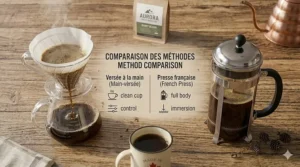
Pour over brewing became the flagship technique of this movement because it provides total control over extraction variables. Where automatic drip machines apply standardized parameters regardless of bean type, manual brewing lets you adjust for Rwanda’s bright acidity versus Colombia’s chocolate notes, for light roasts requiring lower temperatures versus dark roasts needing higher heat. This customization reveals what specialty coffee professionals call “terroir” — the distinctive flavours imparted by specific growing regions, processing methods, and varietals.
For Canadian consumers, third wave coffee’s emphasis on direct trade and transparent sourcing has practical implications. You’ll increasingly find roasters who list not just country but specific farms, processing methods (washed, natural, honey), and even varietal information (Geisha, SL-28, Bourbon) on their bags. This granular detail becomes relevant when you have a brewer capable of expressing those differences. A Chemex’s clean filtration showcases the floral jasmine notes in an Ethiopian Yirgacheffe that a French press would bury under oils; a V60’s precise control can emphasize the bright lime acidity in a Kenyan AA that an automatic drip machine would muddle.
The precision pour technique demanded by quality brewers aligns with third wave coffee’s core belief: quality coffee deserves quality preparation. This isn’t snobbery but simple logic — if a Canadian specialty roaster has invested in sourcing a 86-point micro-lot, paid farmers premium prices, and roasted it to highlight specific flavours, brewing it carelessly wastes everyone’s effort and your $20-$25 CAD investment in that 340g bag.
Pour Over vs. Automatic Drip: When Manual Brewing Makes Sense
The manual vs electric pour over debate isn’t about which is objectively superior but rather which suits your priorities. Automatic drip machines offer convenience and consistency; manual pour over provides control and ritual. Understanding the tradeoffs helps Canadian buyers make informed decisions.
Flavour Quality and Consistency
High-end automatic brewers like the Technivorm Moccamaster ($350-$400 CAD) or Breville Precision Brewer ($300-$350 CAD) can match or exceed manual pour over flavour quality by maintaining optimal temperature and achieving even saturation. They’re particularly strong for morning autopilot scenarios when measuring and pouring feels like too much effort. However, these premium machines cost 5-7× more than quality manual brewers, and they lack brewing flexibility — you can’t easily adjust extraction time or pour pattern to compensate for beans that are roasted lighter or darker than the machine’s programming assumes.
Budget automatic drip makers ($30-$100 CAD) rarely achieve proper brewing temperature (they max out at 85-90°C versus the ideal 90-96°C), resulting in weak, under-extracted coffee regardless of bean quality. A $40 CAD Hario V60 plus a $45 CAD gooseneck kettle ($85 total) will produce markedly better coffee than any automatic brewer under $150 CAD.
Time Investment Reality Check
Manual brewing requires 3-5 minutes of active attention (grinding, measuring, pouring) versus 30 seconds to load an automatic machine. Over a year of weekday brewing, that’s roughly 13-22 hours of extra time investment. For some, this is meditative ritual that improves their morning. For others, especially parents managing chaotic school-morning routines, it’s 13-22 hours they don’t have. Be honest about whether you’ll actually maintain pour over discipline or if it’ll become a guilt-inducing appliance that sits unused while you revert to the automatic machine.
Maintenance and Longevity
Manual brewers are nearly indestructible — ceramic or glass lasts decades, stainless steel essentially forever. The only consumable is paper filters (if applicable), costing $10-$20 CAD annually. Automatic machines have heating elements that fail, pumps that clog, electronic controls that malfunction. Even premium automatic brewers require descaling every 2-3 months in hard water regions (Toronto, Calgary), and repairs can cost $50-$100 CAD plus shipping.
From a total cost of ownership perspective, a $60 CAD manual brewer used daily for 10 years costs $6 annually; a $300 CAD automatic brewer that needs replacement after 5 years costs $60 annually. The manual option is literally 10× more economical.
FAQ: Your Pour Over Coffee Questions Answered
❓ Can pour over coffee makers go in the dishwasher?
❓ What's the best grind size for pour over coffee in Canada?
❓ How do I prevent my pour over coffee from getting cold during Canadian winters?
❓ Are expensive pour over coffee makers worth it for beginners in Canada?
❓ What's the difference between Chemex and Hario V60 filters?
Conclusion: Finding Your Perfect Canadian Pour Over Match
After examining seven distinct pour over coffee makers through the lens of Canadian needs — availability on Amazon.ca, pricing in CAD, performance in cold climates, and filter accessibility across the country — clear patterns emerge about which brewers serve specific buyer profiles best.
For value-conscious Canadians who want excellent coffee without ongoing filter costs, the COSORI Pour Over Coffee Maker ($40-$60 CAD) and Coffee Gator ($45-$65 CAD) deliver exceptional performance with reusable steel filters that pay for themselves within months. The technique requirement is minimal, making them accessible to beginners, while the full-bodied flavour profile satisfies those transitioning from French press or drip machines.
Enthusiasts ready to invest time in technique development should consider the Hario V60 ($20-$45 CAD) for its unmatched brewing flexibility and readily available filters, or the Kalita Wave 185 ($35-$55 CAD) if consistency matters more than experimentation. Both reward practice with exceptional coffee that highlights bean origin characteristics.
For Canadians prioritizing thermal performance during long winters, the Melitta Pour-Over with thermal carafe ($70-$95 CAD) eliminates the cold-coffee frustration that plagues glass brewers, while its grocery-store filter availability ensures you’re never stranded without supplies. Weekend entertainers and design-focused buyers will appreciate the Chemex ($60-$80 CAD) despite its proprietary filter costs, while the Fellow Stagg [XF] ($100-$130 CAD) justifies its premium pricing through superior thermal engineering for serious coffee hobbyists.
The broader message: manual pour over brewing has evolved from coffee-snob affectation into a genuinely accessible method for extracting better flavour from quality beans. With Canadian specialty roasters now operating in every major city — from 49th Parallel in Vancouver to Pilot Coffee in Toronto to Café Cantook in Montreal — the coffee quality available to home brewers has never been higher. Pairing those carefully sourced, thoughtfully roasted beans with the right pour over coffee maker completes the chain from farm to cup, giving you control over that final, critical step.
Whatever brewer you choose from this guide, remember that technique development takes time. Your first dozen cups might not match the coffee shop quality you’re targeting, but the learning curve is part of the appeal. Each brewing session teaches you something about extraction, grind size, or pour rate that improves the next one. Within a month of daily practice, most Canadian home brewers report consistently excellent results that justify the equipment investment and make their morning ritual something they genuinely look forward to, even during February’s darkest weeks.
Recommended for You
- Best Keurig for Office: 7 Top Commercial Brewers Canada 2026
- Cold Brew vs Iced Coffee Difference: 7 Best Cold Coffee Options Canada 2026
- Why Is My Keurig Coffee Weak? 7 Fixes + Best Models Canada 2026
Disclaimer: This article contains affiliate links. As an Amazon Associate, I earn from qualifying purchases. If you purchase products through these links, we may earn a small commission at no additional cost to you.
✨ Found this helpful? Share it with your friends! 💬🤗
