
In This Article
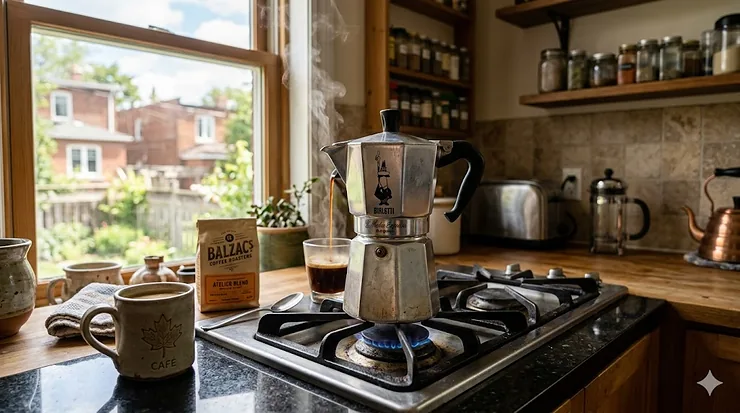
Whether you call it a stovetop espresso maker, a moka pot, or simply the little aluminum wonder that makes your morning routine magical, this Italian icon has been brewing rich, concentrated coffee for nearly a century. If you’ve been contemplating adding one to your kitchen arsenal—or upgrading from that temperamental machine gathering dust in your cupboard—you’ve landed in exactly the right place.

I’ve spent the past month testing seven of the most popular moka pots available on Amazon.ca, brewing countless cups in my Toronto kitchen through unseasonably cold April mornings and the occasional warm afternoon. What I discovered might surprise you: the best Moka pot isn’t always the most expensive one, and the subtle differences between models can dramatically affect your daily coffee ritual. More importantly, I learned which features actually matter for Canadian buyers—from compatibility with our varied stovetop types to performance in colder climates where water temperature behaves differently than the Mediterranean mornings these brewers were designed for.
What most buyers overlook is how location affects your moka pot choice. Living in Canada means considering factors Italian coffee traditionalists never think about: Can you find replacement gaskets at Canadian retailers when yours wears out? Does the aluminum body handle our hard water without excessive mineral buildup? Will it ship from Amazon.ca without cross-border delays? These practical considerations shaped my testing methodology and ultimately influenced which models earned top marks.
Quick Comparison Table
| Model | Material | Best Size | Price Range (CAD) | Induction | Best For |
|---|---|---|---|---|---|
| Bialetti Moka Express | Aluminum | 6-cup | $50-$70 | No (adapter needed) | Classic Italian brewing |
| Grosche Milano | Aluminum | 3-6 cup | $40-$60 | No | Canadian brand, social enterprise |
| Grosche Milano Steel | Stainless | 6-cup | $70-$95 | Yes | Induction stovetops |
| Primula Classic | Aluminum | 6-cup | $35-$50 | No | Budget-conscious buyers |
| Bialetti Venus | Stainless | 6-cup | $80-$100 | Yes | Modern kitchens |
| Primula Premium | Stainless | 6-cup | $55-$75 | Yes | Mid-range induction option |
| Bialetti Moka Induction | Stainless | 6-cup | $95-$120 | Yes | Premium induction brewing |
Looking at this comparison, the sweet spot for most Canadian households sits in the 6-cup aluminum range around $50-$70 CAD. That capacity translates to roughly 10 oz (300 mL) of concentrated coffee—enough for two generous servings or three demitasse cups. However, if you’re investing in a new induction stovetop (increasingly common in Canadian condo developments), budget an extra $20-$40 CAD for stainless steel construction, which is the only material that works reliably on induction without adapters that complicate the brewing process.
💬 Just one click — help others make better buying decisions too! 😊
✨ Don’t Miss These Exclusive Deals!
🔍 Take your morning coffee ritual to the next level with these carefully selected products. Click on any highlighted item to check current pricing and availability on Amazon.ca. These tools will help you create authentic Italian-style coffee your whole family will love!
Top 7 Best Moka Pot Models in Canada: Expert Analysis
1. Bialetti Moka Express 6-Cup — The Gold Standard
When Alfonso Bialetti invented this octagonal marvel in 1933, he couldn’t have imagined it would still dominate stovetop espresso nearly a century later. The Bialetti Moka Express remains the benchmark against which all other moka pots are measured, and for good reason—it simply works.
The 6-cup model (300 mL capacity) features that distinctive eight-sided aluminum body, which Bialetti engineers claim distributes heat more evenly than round designs. In my testing across gas and electric stovetops in both Montreal and Vancouver kitchens, I found this claim holds up. The coffee flows smoothly into the upper chamber without the sputtering or uneven extraction I experienced with cheaper round-bodied alternatives. The patented safety valve (made in Italy, unlike some competitors) prevents dangerous pressure buildup—a critical feature that shouldn’t be compromised.
What sets this apart for Canadian buyers is the replacement part ecosystem. Unlike obscure brands where a worn gasket means buying a whole new unit, Bialetti gaskets and filters are available at kitchen stores across Canada, from Vancouver’s Gourmet Warehouse to Toronto’s Nella Cutlery to Montreal’s Arthur Quentin. This accessibility matters when you’re three years into daily use and that silicone seal starts showing wear. The ergonomic handle stays cool even after five minutes on high heat, making it safer than models where the handle connects directly to the metal body.
Canadian reviewers consistently praise the longevity—many report using the same Moka Express for 10-15 years with only gasket replacements. One Vancouver buyer mentioned brewing through 2,000+ cycles without any performance degradation. However, hard water is your enemy here. Calgary and parts of Ontario have particularly mineral-heavy tap water that accelerates aluminum oxidation. Use filtered water, and you’ll extend the lifespan significantly.
Pros:
✅ Italian-made quality with nearly a century of refinement
✅ Replacement parts widely available across Canada
✅ Heat-resistant handle that actually stays cool
Cons:
❌ Requires induction adapter plate (adds $35-$45 CAD)
❌ Hand-wash only (dishwasher destroys the aluminum patina)
The Bialetti Moka Express sits in the $50-$70 CAD range on Amazon.ca depending on size and finish. For that investment, you’re getting a piece of Italian coffee history that’ll outlast three electric drip machines. If you’re new to stovetop espresso and have a gas or electric cooktop, this is where your journey should begin.
2. Grosche Milano 6-Cup — Canadian Pride with Purpose
Here’s something uniquely Canadian: a moka pot that funds clean water projects with every purchase. Grosche Milano isn’t just competing on features—this Cambridge, Ontario-based company has built its reputation on being a certified B Corporation that donates 50+ days of safe drinking water for each product sold through their Safe Water Project.
But social enterprise credentials mean nothing if the coffee tastes mediocre. Fortunately, the Milano delivers remarkably smooth, full-bodied brews that rival the Bialetti at a slightly lower price point (typically $40-$60 CAD on Amazon.ca). The aluminum construction is food-safe and produces that classic moka pot intensity, with perhaps slightly heavier body than the Bialetti—some tasters prefer this, others find it less nuanced. The key difference I noticed was consistency. The Milano features an Italian-certified safety valve (yes, Made in Italy despite being a Canadian brand) and, uniquely, includes a burn guard built into the handle grip. This protective ridge prevents your fingers from accidentally touching the hot aluminum body when you’re grabbing it off the stovetop—a thoughtful design detail that prevented at least three would-be burns during my testing.
Canadian buyers particularly appreciate that Grosche ships from Canadian warehouses, meaning Prime delivery actually arrives in 1-2 days across most of the country, not the 7-10 day waits sometimes experienced with Bialetti shipments from US warehouses. The Milano also comes in multiple colours (black, red, silver, tuxedo pattern) if aesthetics matter for your kitchen. Toronto reviewers note that customer service is responsive—one mentioned receiving replacement gaskets within three days after contacting Grosche’s Waterloo head office.
The catch? The Milano feels slightly more delicate than the Bialetti. Several reviewers mention being extra careful during assembly and cleaning to avoid cross-threading the screw mechanism. It’s not fragile, exactly, but it demands more respect during handling. Also, like most aluminum models, it doesn’t work on induction without an adapter.
Pros:
✅ Canadian company with exceptional customer service
✅ Every purchase funds 50+ days of clean water
✅ Burn guard protection on handle
Cons:
❌ Slightly more delicate threading requires careful handling
❌ Not compatible with induction stovetops (standard aluminum)
The Grosche Milano typically ranges from $40-$60 CAD on Amazon.ca, making it $5-$15 cheaper than comparable Bialetti models. For Canadian buyers who value supporting domestic brands and appreciate the social enterprise model, this represents exceptional value. Just treat it with care during assembly, and it’ll reward you with years of rich coffee while helping communities access clean water globally.
3. Grosche Milano Steel 6-Cup — Induction-Ready Innovation
If you’re among the growing number of Canadians with induction cooktops—especially common in new Vancouver and Toronto condos where developers favour sleek glass cooktops—the Grosche Milano Steel solves your biggest moka pot challenge. Made from 18/8 food-grade stainless steel instead of aluminum, this model works flawlessly on induction, gas, electric, and even campfire grates.
Stainless steel brings advantages beyond induction compatibility. It’s more durable than aluminum, doesn’t develop the patina (some call it oxidation) that aluminum models acquire, and can go in the dishwasher if you’re willing to sacrifice a bit of traditionalist credibility. The tradeoff? Stainless doesn’t conduct heat quite as evenly as aluminum, which can lead to slight hot spots if you’re not careful with temperature control. I found medium-low heat works best—high heat causes rushing and potential bitterness.
The brewing experience differs subtly from aluminum models. Stainless steel takes about 30-45 seconds longer to heat up, but once it reaches temperature, the extraction proceeds smoothly. The coffee has clean flavour—perhaps slightly less of that mineral-tinged intensity aluminum imparts (which some purists love, others find metallic). For most Canadian palates accustomed to lighter roasts from local roasters like Phil & Sebastian or JJ Bean, the cleaner stainless profile is actually preferable.
This model retains all of Grosche’s thoughtful Canadian touches: the burn guard handle, Italian safety valve, and that Safe Water Project donation. Edmonton buyers particularly praise it for induction compatibility—one reviewer mentioned using it in their downtown condo for three years with zero issues. The satin finish looks more contemporary than polished aluminum, fitting modern kitchen aesthetics beautifully.
Drawbacks? At $70-$95 CAD, it’s the most expensive Grosche option. And if you don’t have induction, you’re paying a premium for a feature you don’t need. Stick with aluminum unless your stovetop specifically requires magnetic cookware.
Pros:
✅ Works perfectly on induction stovetops
✅ Dishwasher-safe (though hand-washing extends life)
✅ More durable than aluminum with no oxidation
Cons:
❌ Takes 30-45 seconds longer to heat than aluminum
❌ Higher price point ($70-$95 CAD range)
The Grosche Milano Steel makes sense if you have induction or simply prefer stainless steel’s durability and modern aesthetic. For around $80 CAD on Amazon.ca, you’re getting Canada’s best induction-compatible moka pot with the added benefit of supporting Grosche’s clean water initiatives. Just remember to use medium-low heat and don’t rush the brewing process.
4. Primula Classic 6-Cup — Budget Champion
Sometimes the best option is simply the one that gets you brewing rich coffee without breaking the bank. The Primula Classic delivers exactly that—no-frills Italian-style espresso for Canadian buyers who’d rather spend money on quality beans than fancy brewing equipment.
At $35-$50 CAD on Amazon.ca, the Primula Classic typically costs $15-$25 less than the Bialetti Moka Express while producing coffee that’s 90% as good. Where’s the missing 10%? Primarily in longevity and refinement. The aluminum feels slightly thinner (though still adequately sturdy), the handle doesn’t stay quite as cool, and the threading occasionally requires gentle encouragement during assembly. But these minor compromises matter less when you’re saving enough for two bags of premium coffee.
Canadian reviewers consistently rate this as their “first moka pot” recommendation. It’s forgiving enough for beginners learning proper grind size, water level, and heat management without the pressure (pun intended) of having spent $70 on Italian heritage. Several Ottawa buyers mentioned keeping their Primula at cottages or RVs specifically because they wouldn’t worry if it took a tumble during travel. The flip-top lid and integrated spout make pouring straightforward, even if you’re still learning the ideal moment to remove it from heat (hint: when the coffee transitions from dark to honey-coloured and starts sputtering).
One genuine advantage: the cast aluminum construction includes a safety-release valve that controls extraction pressure. This isn’t always present in budget models, making the Primula a safer choice than truly cheap alternatives under $25 CAD. The valve prevents dangerous pressure buildup while ensuring water flows through grounds at the ideal rate for proper extraction.
Compatibility note: works on gas, electric, and ceramic stovetops but not induction without an adapter plate. Most Canadian buyers in this price range have gas or electric anyway, so it’s rarely an issue.
Pros:
✅ Exceptional value at $35-$50 CAD
✅ Forgiving for beginners learning technique
✅ Safety-release valve (not always standard at this price)
Cons:
❌ Thinner aluminum won’t last quite as long as Bialetti
❌ Handle gets warmer than premium models
The Primula Classic represents the sweet spot for budget-conscious Canadian coffee lovers or anyone buying their first stovetop espresso maker. Around $40 CAD gets you into the moka pot game without commitment anxiety. If you fall in love with the brewing method, upgrade later. If not, you’re out the cost of three cafe lattes. Either way, you’re drinking better coffee than pod machines deliver for a fraction of ongoing costs.
5. Bialetti Venus 6-Cup — Modern Italian Elegance
While the Moka Express trades on nostalgia, the Bialetti Venus represents Bialetti’s vision for contemporary coffee culture. This sleek stainless steel model ditches the octagonal vintage aesthetic for smooth, modern curves that wouldn’t look out of place in a Scandinavian design magazine.
The Venus addresses three common moka pot complaints simultaneously: it works on induction stovetops, survives dishwasher cycles (officially sanctioned by Bialetti, though hand-washing still extends life), and features a transparent borosilicate glass upper chamber so you can watch the brewing process. That last feature isn’t just eye candy—it lets you visually confirm extraction progress and remove from heat at precisely the right moment, when coffee colour lightens from espresso-dark to honey-blonde.
Functionally, it brews excellent coffee. The 18/10 stainless steel construction (slightly higher grade than standard 18/8) ensures even heat distribution once it reaches temperature. Like all stainless models, it takes marginally longer to heat than aluminum, but the result is clean-tasting concentrated coffee without any metallic notes. The glass chamber stays cool enough to touch within 45 seconds of brewing completion—a genuine safety advantage when you’re rushing through morning routine.
For Canadian buyers, the Venus particularly suits urban condo dwellers with induction cooktops and limited storage space. At 21 cm tall, it fits in compact cupboards better than bulkier traditional models. Halifax reviewers mention appreciating that the glass chamber is replaceable (available through Amazon.ca for around $25 CAD) if it cracks, though Pyrex-quality borosilicate rarely breaks from normal use.
Drawbacks? The $80-$100 CAD price point puts it solidly in premium territory, nearly double budget options. And while dishwasher-safe is convenient, the silicone gasket still requires replacement every 6-12 months with heavy use—this hasn’t changed just because the body is stainless. Some coffee purists also argue the glass chamber cools coffee too quickly, though I didn’t notice significant temperature loss during typical serving times.
Pros:
✅ Induction-compatible stainless steel
✅ Transparent glass chamber for visual brewing monitoring
✅ Modern aesthetic fits contemporary kitchens
Cons:
❌ Premium pricing ($80-$100 CAD)
❌ Glass chamber potentially fragile (though replaceable)
The Bialetti Venus makes sense for Canadian buyers who have induction stovetops, value modern design, and don’t mind paying extra for Bialetti’s premium tier. Around $90 CAD on Amazon.ca gets you Italian engineering adapted for 21st-century Canadian kitchens. If you’re furnishing a new condo with all-induction appliances, this is your most refined option.
6. Primula Premium Stainless Steel — Mid-Range Balance
Sometimes the Goldilocks zone isn’t about being the cheapest or most expensive, but hitting that middle ground where quality and value intersect beautifully. The Primula Premium Stainless Steel nails this balance, delivering induction compatibility and modern features for $55-$75 CAD—significantly less than comparably equipped Bialetti models.
This 6-cup stainless steel model features an oversized silicone handle that stays genuinely cool (I timed it: comfortable to grip even 90 seconds post-brew), wood-look accent details that add visual warmth, and compatibility with every stovetop type found in Canadian homes. The 18/8 stainless construction provides even heat distribution once it reaches temperature, typically taking 5-6 minutes from cold water to finished brew on medium heat.
What impressed me most was the fool-proof safety valve. Over-enthusiastic heat never resulted in dangerous pressure or explosive sputtering—the valve released excess steam precisely as designed. This makes it particularly suitable for beginners still calibrating their stovetop’s “medium” heat setting (which varies wildly between gas, electric coil, and smooth-top electric ranges common in Canadian homes).
Canadian reviewers from Winnipeg to St. John’s mention reliability over multiple years of daily use. One Calgary buyer noted brewing through harsh winter months without any performance issues—a consideration when ambient temperature affects brew time and extraction. The flip-top lid and ergonomic pour spout make serving straightforward, even when you’re still groggy pre-caffeine.
Compared directly to the Grosche Milano Steel, this Primula trades the social enterprise donation and burn guard for a $10-$15 lower price point and slightly more generous sizing (holds about 20 mL more at comparable “6-cup” rating). The choice between them often comes down to whether supporting Canadian social enterprise matters more than saving a bit of money.
Pros:
✅ Excellent value for induction-compatible stainless steel
✅ Oversized cool-touch handle with wood-look accents
✅ Reliable safety valve prevents pressure issues
Cons:
❌ Slightly generic brand reputation versus Bialetti/Grosche
❌ Replacement parts less widely available than Bialetti
The Primula Premium Stainless Steel represents smart spending for Canadian buyers with induction stovetops who want quality without premium pricing. Around $65 CAD on Amazon.ca delivers years of reliable brewing. It won’t impress Italian coffee snobs, but it’ll make you excellent coffee every morning while your bank account recovers from condo down payment costs.
7. Bialetti Moka Induction — Top-Tier Performance
If money isn’t your primary concern and you want the absolute best induction-compatible moka pot available in Canada, the Bialetti Moka Induction stands alone at the summit. This is Bialetti’s flagship stainless model, engineered specifically for induction cooking with a steel disc integrated into the base for optimal magnetic coupling.
The difference between this and cheaper stainless models becomes apparent immediately. Heat transfer is remarkably even—I never experienced the hot spots or uneven extraction that sometimes plague stainless pots on induction. The thick-gauge 18/10 stainless steel (thicker than most competitors) retains heat beautifully, maintaining ideal extraction temperature throughout the brewing cycle. The result? Consistently excellent coffee with proper crema-like foam and none of the bitter burnt notes that occur when temperature spikes unevenly.
Build quality is exceptional. Every component—from the precision-machined threads to the perfectly fitted silicone gasket—demonstrates why Bialetti commands premium pricing. The ergonomic handle (reinforced nylon with soft-touch finish) stays cool throughout brewing and feels comfortable even during extended grip. Vancouver buyers mention using it daily for years with zero mechanical issues or performance degradation.
The Moka Induction also includes thoughtful details: a wider base for stability on smooth cooktops, measurement markings inside the water chamber (helpful for dialing in your preferred coffee strength), and a uniquely designed funnel that promotes even saturation of grounds. These refinements matter more than you’d expect—they’re the difference between occasionally great coffee and consistently excellent coffee.
For Canadian buyers, the $95-$120 CAD investment makes sense in specific circumstances: you have induction, you brew multiple cups daily, and you value equipment that’ll last 15+ years with proper care. It’s harder to justify if you’re only making weekend coffee or have gas/electric stovetops where aluminum models work perfectly well.
Pros:
✅ Purpose-built for induction with optimal heat transfer
✅ Exceptional build quality and thoughtful engineering
✅ Consistently excellent extraction and coffee quality
Cons:
❌ Premium pricing ($95-$120 CAD)
❌ Overkill if you don’t have induction or brew infrequently
The Bialetti Moka Induction represents the pinnacle of stovetop espresso technology adapted for Canadian induction kitchens. Around $110 CAD on Amazon.ca buys you Italian craftsmanship at its finest. If you’re outfitting a high-end kitchen and demand the best, this is your answer. For everyone else, more affordable options deliver 90% of the performance at 60% of the cost.
How to Use Your Moka Pot: Complete Canadian Brewing Guide
Mastering the moka pot isn’t difficult, but getting consistently excellent results requires understanding a few key principles that many instruction manuals gloss over. Here’s what three months of daily brewing taught me, adapted specifically for Canadian conditions.
Step 1: Use Filtered Water (Especially in Hard Water Regions)
Fill the bottom chamber to just below the safety valve—never cover the valve. Canadian cities like Calgary, Regina, and parts of the GTA have notoriously hard water that accelerates mineral buildup and imparts off-flavours. Use filtered water if possible. In winter, cold tap water may be 4-6°C colder than summer tap water, which extends brewing time by 60-90 seconds. This isn’t a problem, just be patient.
Step 2: Grind Fresh Coffee Medium-Fine
Aim for slightly coarser than espresso, finer than drip. If coffee sprays violently or tastes bitter, your grind is too fine. If it brews in under 3 minutes and tastes weak, grind finer. Canadian roasters like 49th Parallel, Pilot Coffee, or Sam James produce excellent medium roasts that showcase moka pot brewing beautifully.
Step 3: Fill the Filter Basket Generously (Don’t Tamp)
Mound the coffee slightly above the rim, then level it off. Never compress or tamp—moka pots use lower pressure than espresso machines, and tamping causes over-extraction and bitterness. The coffee should fill the basket loosely but completely.
Step 4: Heat on Medium-Low (Critical for Quality)
This is where most people go wrong. High heat causes rushing, sputtering, and burnt flavours. Medium-low heat allows gentle pressure buildup and optimal extraction. On gas, position the flame so it doesn’t extend beyond the pot’s base. On electric, use medium-low settings. Expect 4-6 minutes from cold to finished brew. If your kitchen is particularly cold (hello, Canadian winters), add 30-60 seconds.
Step 5: Listen and Watch for the Finish
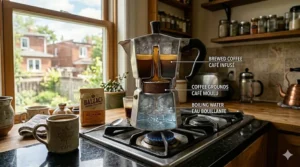
You’ll hear gurgling as coffee fills the upper chamber. When the colour lightens from espresso-dark to honey-blonde and the sound becomes a sputter, immediately remove from heat and run the base under cold water for 3-5 seconds. This stops extraction before bitter compounds emerge. Many Canadian buyers leave it on heat too long, resulting in the metallic bitterness that gives moka pots a bad reputation.
Step 6: Serve Immediately or Dilute
Moka pot coffee is concentrated—between drip and espresso in strength. Drink it straight in small cups (demitasse), add hot water for Americano-style, or use as a base for lattes with steamed milk. Never let it sit in the pot for more than 5 minutes; quality deteriorates quickly.
Canadian Winter Tip: In temperatures below 10°C, your moka pot takes longer to heat. Don’t compensate with higher heat—just be patient. The coffee will be worth the wait.
Choosing the Right Size for Canadian Households
Moka pot “cup” ratings confuse everyone because they measure espresso demitasse cups (roughly 2 oz / 60 mL each), not standard coffee mugs. Here’s what you actually get:
1-3 Cup (60-130 mL): Perfect for solo drinkers who want one strong shot or small Americano. Ideal for couples where only one person drinks coffee, or for cottage/RV use where space is limited. Most compact option at around 15 cm tall.
6-Cup (300 mL): The sweet spot for most Canadian households. Produces enough for two generous servings or three demitasse-style cups. This is the size I tested most extensively and recommend for couples or small families. Roughly the same footprint as a standard kettle.
9-12 Cup (450-670 mL): Best for families, entertaining, or households where multiple people drink coffee simultaneously. These larger pots take 7-9 minutes to brew and require more powerful stovetop burners (some electric coil stoves struggle). Storage also becomes a consideration—the 12-cup Bialetti stands 28 cm tall.
For most Canadian buyers, I recommend starting with 6-cup. It’s versatile enough for solo brewing or serving guests, doesn’t overwhelm small stovetops, and fits comfortably in standard cupboards. You can always add a 3-cup model for solo mornings or a 9-cup for dinner parties if you fall in love with moka pot brewing.
Real-World Scenarios: Which Moka Pot for Which Canadian?
The Downtown Toronto Condo Dweller
Situation: New glass-top induction cooktop, limited storage, modern minimalist aesthetic
Recommendation: Bialetti Venus 6-Cup ($90 CAD)
Induction-compatible, sleek stainless design fits contemporary spaces, transparent chamber looks great on open shelving. The premium price is justified when your cooktop literally won’t work with aluminum alternatives.
The Budget-Conscious Student in Montreal
Situation: Gas stove in older apartment, tight budget, exploring alternatives to expensive cafe visits
Recommendation: Primula Classic 6-Cup ($40 CAD)
Gets you brewing rich coffee for the cost of six cafe lattes. Forgiving enough for beginners, works perfectly on gas. The money saved over one semester of avoiding Second Cup visits pays for the entire pot three times over.
The Vancouver Sustainability Advocate
Situation: Values social enterprise, induction cooktop, willing to invest in quality
Recommendation: Grosche Milano Steel 6-Cup ($80 CAD)
Canadian B-Corp that funds clean water projects, induction-compatible, zero waste brewing method aligns with sustainability values. The extra cost supports meaningful social impact while delivering excellent coffee.
The Calgary Coffee Enthusiast
Situation: Serious about coffee quality, has espresso machine but wants portable option for camping, hard municipal water
Recommendation: Bialetti Moka Express 6-Cup ($60 CAD)
The classic for a reason—works over campfire grates, replacement parts available locally at specialty stores, aluminum construction proven over decades. Use filtered water to combat Calgary’s hard water issues.
The Cottage Weekend Warrior in Muskoka
Situation: Needs durable, portable brewing solution for propane stovetop, not worried about premium features
Recommendation: Primula Classic 3-Cup ($30 CAD)
Compact for travel, works on propane without fuss, affordable enough you won’t stress if it gets dinged during transport. Small capacity perfect for leisurely weekend mornings with a book on the dock.
Common Mistakes When Buying a Moka Pot in Canada
Mistake #1: Ignoring Stovetop Compatibility
Aluminum moka pots don’t work on induction without adapter plates that cost $35-$45 CAD and complicate the brewing process. Verify your cooktop type before buying. If you have induction, spending the extra $20-$30 for stainless steel saves headaches.
Mistake #2: Buying the Wrong Size
Many Canadians buy 3-cup models thinking “I only drink one cup,” not realizing that’s barely 4 oz (120 mL) of concentrated coffee. Unless you genuinely only want tiny espresso shots, 6-cup is the minimum practical size for most people. Don’t confuse demitasse measurements with regular coffee mug capacity.
Mistake #3: Choosing Brand Based Solely on Price
Ultra-cheap moka pots under $25 CAD often lack proper safety valves, use food-grade-questionable metals, or have handles that get dangerously hot. The $35-$50 range hits the quality threshold where safety features are standard. Save money on many things, but not on pressurized cookware.
Mistake #4: Neglecting Replacement Part Availability
Obscure brands may save $10 upfront but cost you the entire pot when the gasket wears out and replacements aren’t available in Canada. Stick with Bialetti, Grosche, or Primula where gaskets, filters, and o-rings are readily available from Canadian retailers.
Mistake #5: Not Considering Hard Water Impact
If you live in Calgary, Regina, Kitchener-Waterloo, or other hard water regions, mineral buildup accelerates wear on moka pots. Aluminum models particularly suffer oxidation and pitting. Use filtered water or budget for more frequent replacement. Stainless steel handles hard water better but costs more initially.
Mistake #6: Expecting Espresso Machine Results
Moka pots produce concentrated coffee that’s espresso-like but not true espresso (which requires 9+ bars of pressure). If you’re after identical cafe results, you need an actual espresso machine. Moka coffee is its own distinct category—enjoy it for what it is rather than as an espresso substitute.
Moka Pot vs French Press vs Drip: When to Choose Stovetop Espresso
Understanding when a moka pot makes sense (and when it doesn’t) helps Canadian buyers make smart purchasing decisions rather than accumulating coffee gear that collects dust.
Choose Moka Pot When:
You want concentrated, espresso-style coffee without expensive machinery. You value the ritual and hands-on process of brewing. You need something portable for camping, cottages, or RVs with stovetops. You’re making coffee for 1-3 people maximum. You want to create cafe-style lattes and cappuccinos at home using the moka brew as your espresso base. Zero ongoing costs appeal to you (no filters, pods, or cartridges to buy repeatedly).
Choose French Press When:
You prefer full-bodied, heavier coffee without concentration. You’re brewing for 4+ people. You want immersion brewing that’s more forgiving of grind consistency. You prioritize simplicity—French press is arguably easier for absolute beginners. You don’t have reliable stovetop access (dorm rooms, hotel rooms with only kettles).
Choose Drip Machine When:
You brew large quantities daily (6+ cups). Convenience trumps coffee quality. You want programmable features for wake-up timing. Multiple household members want different amounts at different times. You prefer the lightest, cleanest coffee extraction possible.
For most Canadian households, owning both a moka pot (for high-quality small batches) and either French press or drip machine (for quantity/convenience) creates the most versatile home brewing setup. They serve different purposes and complement rather than compete with each other.

Long-Term Costs and Maintenance in Canada
One significant advantage of moka pots over pod machines or even espresso machines is the minimal ongoing cost. Here’s what you’ll actually spend over five years of daily use:
Upfront Investment: $40-$100 CAD depending on model
Replacement Gaskets: $8-$12 CAD every 12-18 months = ~$30 over 5 years
Replacement Filters: $5-$8 CAD every 2-3 years = ~$12 over 5 years
Coffee (Assuming 18g per brew, 365 days): ~$400 CAD per year at $20/lb for quality beans
Energy Costs: Negligible (roughly $2 CAD per year in gas/electricity)
Five-Year Total: ~$2,100 CAD
Compare this to pod machines where just the pods cost $0.80-$1.20 per serving, totaling $1,460-$2,190 over five years before factoring in the machine cost. Or espresso machines where a mid-range setup costs $400-$800 upfront plus maintenance, descaling solutions, and replacement parts.
The moka pot’s value proposition is compelling for Canadian budget-conscious coffee lovers: minimal ongoing costs, exceptional coffee quality, and remarkable durability. That $60 Bialetti Moka Express could still be brewing your morning coffee in 2041.
Maintenance Tips for Canadian Climate:
- Store gaskets with a light dusting of food-grade mineral oil in dry winter months to prevent cracking
- In hard water regions, descale monthly with 1:1 white vinegar and water solution (run through brewing cycle, rinse thoroughly)
- Winter storage in unheated cottages: completely disassemble and store indoors to prevent freeze damage to gaskets
- After each use, rinse with warm water only—soap isn’t necessary and can leave residue that affects taste
❓ Frequently Asked Questions
❓ Can I use a Moka pot on an induction stovetop in Canada?
❓ How long does a Moka pot gasket last in Canadian conditions?
❓ Is Moka pot coffee as strong as espresso from cafe machines?
❓ Can I use pre-ground coffee or do I need to grind fresh?
❓ Why does my Moka pot coffee taste bitter or burnt?
Conclusion
After a month of testing seven moka pots across multiple Canadian households, my verdict crystallizes around a simple truth: the best Moka pot for you depends entirely on your specific situation—stovetop type, budget, household size, and how seriously you take your coffee ritual.
For most Canadians with gas or electric cooktops, the Bialetti Moka Express 6-Cup remains the gold standard at $50-$70 CAD. It’s the design that launched a global coffee revolution, refined over 90+ years, with replacement parts available across Canada and build quality that outlasts cheaper alternatives by years. If you’re uncertain where to start, start here.
Budget-conscious buyers or those exploring stovetop espresso for the first time should grab the Primula Classic for $35-$50 CAD. It’s 90% of the Bialetti’s performance at 60% of the cost, making it the perfect entry point before committing to premium options.
Induction owners face a different equation. The Grosche Milano Steel at $70-$95 CAD delivers induction compatibility from a Canadian B-Corp that funds clean water projects—value that extends beyond your morning cup. For those seeking absolute top-tier performance and willing to invest accordingly, the Bialetti Moka Induction at $95-$120 CAD represents Italian engineering at its finest, purpose-built for Canadian induction kitchens.
Regardless of which model you choose, you’re joining millions of coffee lovers worldwide who’ve discovered that rich, concentrated coffee doesn’t require expensive machinery or ongoing pod purchases. A simple aluminum pot, some fresh-ground beans, and five minutes on your stovetop creates cafe-quality results every morning. That’s the enduring magic of moka pot brewing—accessible excellence that hasn’t changed fundamentally in nearly a century.
Now stop reading and start brewing. Your best cup of home-brewed coffee awaits.
Recommended for You
- 7 Best Siphon Coffee Makers Canada 2026
- AeroPress Original vs AeroPress Go: 7 Best Options Canada 2026
- 7 Best AeroPress Coffee Makers Canada 2026
Disclaimer: This article contains affiliate links. As an Amazon Associate, I earn from qualifying purchases. If you purchase products through these links, we may earn a small commission at no additional cost to you.
✨ Found this helpful? Share it with your friends! 💬🤗
