
In This Article
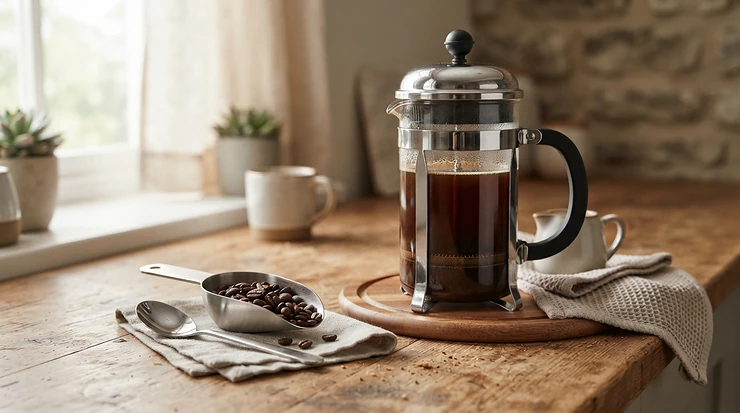
A coffee scoop and measuring spoon set is a small collection of stainless steel (or sometimes plastic) spoons sized to portion coffee grounds by volume, usually 1 tablespoon (15 mL) and 2 tablespoons (30 mL). It takes the guesswork out of dosing, so your morning cup tastes the same on Monday as it does on Friday.
Here’s the uncomfortable truth about most home coffee: the beans aren’t the problem. The scoop is. That mystery plastic spoon that came with a machine you bought in 2014? It might hold 7 grams or 14. Nobody knows. Nobody wrote it down. And so every pot is a small act of faith.
A good coffee scoop and measuring spoon set ends the faith-based brewing. It’s cheap, it’s tiny, and it quietly decides whether your pour over tastes balanced or like a pencil case. Canadians, in particular, have a wrinkle to deal with. Our recipes lean metric, our kitchens still carry imperial measuring cups, and our coffee bags are labelled in grams while our scoops are labelled in tablespoons. A tablespoon is exactly 15 mL in the international metric system, but traditional US and British tablespoons drift a little from that number, which is one more reason to check what your spoon actually holds.
This guide compares seven real, widely sold options, interprets the specs instead of parroting them, and tackles the questions people really type into search bars: what a scoop weighs in grams, how scoops map onto a coffee-to-water ratio, whether a bag-clip scoop combo is clever or gimmicky, and whether stainless steel earns its keep. Prices below are ranges in Canadian dollars gathered at the time of research. They shift constantly, so check current price on Amazon.ca before you buy.
Quick Comparison Table: 7 Coffee Scoop and Measuring Spoon Set Options
| Product | Capacity / Format | Material | Special Feature | Approx. Price Range | Best For |
|---|---|---|---|---|---|
| Orblue Premium Coffee Scoop Set | 1 Tbsp (15 mL) + 2 Tbsp (30 mL) | Stainless steel | Long handles, hanging hole | C$12–C$22 | All-round daily use |
| Coletti Stainless Steel Coffee Scoop Set | 1 Tbsp + 2 Tbsp | 18/8 stainless | Grip-focused handles | C$12–C$22 | Comfort and small drawers |
| Jasni Stainless Steel Coffee Scoop Set | Three 15 mL scoops | Stainless steel, mirror finish | Engraved standard and metric marks | C$12–C$22 | Households that scoop everything |
| Apace Living Coffee Scoop (Set of 2) | Two 2 Tbsp (30 mL) scoops | 304 (18/8) stainless | Engraved measurements | C$12–C$25 | Big-batch drip and French press |
| Norpro Stainless Steel Coffee Scoop with Bag Clip | 1.5 Tbsp | Stainless steel | Spring-loaded bag clip, 19 cm handle | C$12–C$20 | Bag-clip scoop combo fans |
| RSVP Endurance Scoop ‘N Clip | Single scoop with clip | 18/8 stainless | Long handle, secure clip | C$10–C$18 | Kitchens that lose scoops |
| Hario V60 Measuring Spoon | About 12 g of ground coffee | Stainless steel | Pour-over-focused dose | C$11–C$18 | Pour over devotees |
Reading the table sideways tells you more than any single column. The Orblue Premium Coffee Scoop Set and Coletti Stainless Steel Coffee Scoop Set are the two-size generalists. The Jasni Stainless Steel Coffee Scoop Set is the multi-pack for people who want a scoop in every canister. Apace Living Coffee Scoop (Set of 2) is the heavy hitter for larger brews, while the Norpro Stainless Steel Coffee Scoop with Bag Clip and RSVP Endurance Scoop ‘N Clip are the clip hybrids. The Hario V60 Measuring Spoon is the odd one out, deliberately sized in grams-ish terms for pour over rather than in tablespoons.
If you’re a budget-conscious buyer who brews one or two cups a day, any two-size set will do the job. If you brew pour over and care about repeatability, the Hario V60 Measuring Spoon earns a closer look. Everything in this range sits in a similar price band, so the decision is really about format, not money.
💬 Just one click — help others make better buying decisions too!😊
Top 7 Coffee Scoop and Measuring Spoon Set Picks: Expert Analysis
Every pick below is a real product sold in North America. Review comments are summarized from publicly visible listings and are described as aggregated sentiment; where ratings are thin, I say so rather than pretend otherwise. Availability on Amazon.ca can differ from US listings, so confirm the exact model before you click.
1. Orblue Premium Coffee Scoop Set — best all-round pair for daily brewing
The Orblue Premium Coffee Scoop Set wins on sheer practicality: you get a 1 tablespoon (15 mL) scoop and a 2 tablespoon (30 mL) scoop in one pack, both stainless steel with long handles.
Those long handles are the underrated spec. On paper it’s just length, but in practice it means you can reach the bottom of a tall canister or a half-empty bag without dragging your knuckles through the grounds. The listing also mentions a hanging hole, which lets you park the pair on a hook instead of losing them in a drawer. Based on the spec comparison, the two sizes cover most home needs: the 1 tablespoon for a single small cup or a creamer, the 2 tablespoon for a standard mug.
Reviewers on a major retail listing rate it highly (around 4.9 stars across roughly 110 reviews at the time of research), with recurring comments about sturdiness and mess-free scooping. A few buyers mention using it for creamer or spices, which fits the multipurpose pitch. Treat star averages as directional, since small review pools can shift.
Pros:
- ✅ Two useful sizes in one pack
- ✅ Long handles reach deep canisters
- ✅ Dishwasher-friendly stainless build
Cons:
- ❌ Plain design, nothing to stand out
- ❌ No bag clip, so it needs a canister
Price range: roughly C$12–C$22. For a pair that handles both a single cup and a full mug, the Orblue Premium Coffee Scoop Set is a strong-value default.
2. Coletti Stainless Steel Coffee Scoop Set — best for comfortable grip and small drawers
The Coletti Stainless Steel Coffee Scoop Set pairs a 1 tablespoon and a 2 tablespoon scoop, with handles shaped for a secure hold rather than the flat strip you get on conventional measuring spoons.
The grip matters more than it sounds. A flat, slim handle is fine for flour, but when you’re scooping coffee at 6:45 a.m. with one eye open, a handle that sits properly in your hand cuts down on spills. The brand also pitches the compact shape as a drawer-saver, which is a real benefit in a small Canadian apartment kitchen where every drawer is already a puzzle.
Coletti’s own listing suggests two tablespoons of grounds for roughly a 10-ounce pour-over cup. That’s a reasonable starting dose, but note that it’s a brand recommendation, not a universal rule; your beans, grind and taste will nudge it. I couldn’t verify a large pool of independent reviews for this exact set, so treat its claims as manufacturer claims until you’ve read current buyer feedback on Amazon.ca.
Pros:
- ✅ Handle designed for a secure grip
- ✅ Compact for crowded drawers
- ✅ Made from 18/8 stainless steel
Cons:
- ❌ Fewer independent reviews to verify
- ❌ Short handle for tall bags
Price range: about C$12–C$22. Pick the Coletti Stainless Steel Coffee Scoop Set if comfort and storage space top your list.
3. Jasni Stainless Steel Coffee Scoop Set — best three-pack for every canister in the house
The Jasni Stainless Steel Coffee Scoop Set gives you three 15 mL scoops, each about 6 inches (roughly 15 cm) long, with engraved standard and metric markings.
Three identical scoops sounds repetitive until you think about your actual kitchen: one lives with the coffee, one with the protein powder, one with the tea or the supplements. Cross-contamination of flavours (nobody wants a hint of vanilla protein in their pour over) is the sneaky reason multi-packs make sense. The engraved markings help, too, because engraving doesn’t wear off the way printed numbers do.
Buyer comments on a resale listing describe it as sturdy and tarnish-resistant, and one amusingly reports it ended up scooping collagen instead of coffee. The listing also showed a respectable category rank, though ranks change daily and I wouldn’t lean on them. One limitation: every scoop is the same size, so you’ll be doubling up for a full mug.
Pros:
- ✅ Three scoops, so one per canister
- ✅ Engraved markings that won’t rub off
- ✅ Mirror finish wipes clean easily
Cons:
- ❌ Only 1 tablespoon, so two scoops per mug
- ❌ Shorter handle than some rivals
Price range: around C$12–C$22. The Jasni Stainless Steel Coffee Scoop Set is the pick for households where a scoop gets used for everything but coffee, too.
4. Apace Living Coffee Scoop (Set of 2) — best for larger batches
The Apace Living Coffee Scoop (Set of 2) gives you two 2 tablespoon (30 mL) scoops made from 304 (18/8) stainless steel with engraved measurements.
Two identical 2 tablespoon scoops are a niche choice, but a sensible one. If you routinely brew a full carafe, a French press, or you scoop for two people, a 30 mL scoop halves your trips to the bag. The practical benefit is speed and consistency: fewer scoops means fewer chances to lose count.
Here’s the honest caveat. The listing I found showed a perfect 5.0 rating, but across only 11 ratings. That’s encouraging, not conclusive. Compared with the Orblue Premium Coffee Scoop Set, you lose the smaller 1 tablespoon option, so single-cup brewers will end up eyeballing half scoops. For couples or small families, though, that trade-off is fine.
Pros:
- ✅ Both scoops hold 2 tablespoons
- ✅ 304 (18/8) stainless construction
- ✅ Engraved measurements stay legible
Cons:
- ❌ No small scoop for single cups
- ❌ Very small review pool so far
Price range: roughly C$12–C$25. Consider the Apace Living Coffee Scoop (Set of 2) when your brews are big and your mornings are busy.
5. Norpro Stainless Steel Coffee Scoop with Bag Clip — best classic bag-clip scoop combo
The Norpro Stainless Steel Coffee Scoop with Bag Clip (model 5458) combines a stainless scoop and a spring-loaded clip on one long handle, about 19 cm (7.5 inches) in length.
This is the template for the whole bag-clip scoop combo category. You scoop, then you clip the bag shut with the same tool, so your scoop never goes missing and your beans spend less time exposed to air. Apartment Therapy’s reviewer described the handle as long enough to reach the bottom of a coffee bag, and liked clipping the spoon onto the bag’s outside rather than burying it in the grounds.
One spec deserves a sceptical eyebrow. The scoop is listed at 1.5 tablespoons, and a specialty retailer’s description states that equals approximately 22 grams. Ground coffee typically weighs roughly 5–7 grams per tablespoon, which would put 1.5 tablespoons nearer 8–10 grams, so that gram figure looks high for ground coffee. Another retailer’s spec table also contains a typo that says “tsp.” So verify the capacity on the exact listing, and calibrate with a scale once (see the gram-to-tablespoon conversion section below).
Pros:
- ✅ Scoop and bag clip in one tool
- ✅ Long handle for deep bags
- ✅ Built from non-porous stainless steel
Cons:
- ❌ Non-standard 1.5 tablespoon size
- ❌ Hand washing recommended by the seller
Price range: about C$12–C$20. The Norpro Stainless Steel Coffee Scoop with Bag Clip is the one to choose if you just want a tidy bag-and-scoop system.
6. RSVP Endurance Scoop ‘N Clip — best sturdy clip hybrid
The RSVP Endurance Scoop ‘N Clip is an 18/8 stainless steel scoop with a built-in clip, roughly 7 inches (about 18 cm) long.
Where the Norpro Stainless Steel Coffee Scoop with Bag Clip leans on its spring-loaded mechanism, the RSVP Endurance Scoop ‘N Clip is praised in its listing for a generous clip length that holds a bag closed securely. That matters because a short clip is the first thing to fail on a thick, bulky bag of beans. The 18/8 grade means good corrosion resistance, so washing and the occasional damp counter won’t leave rust spots.
Now the honesty note: a number of the reviews on the retailer’s page are labelled as collected through a promotion. They skew positive, which is typical of promotional programs, so I’d weigh them lightly. The recurring theme (convenient, well made, handy design) is plausible, but not independent proof.
Pros:
- ✅ 18/8 stainless, rust-resistant
- ✅ Long handle for easy reaching
- ✅ Clip length suits thicker bags
Cons:
- ❌ Single scoop size only
- ❌ Many reviews were promotion-collected
Price range: approximately C$10–C$18. The RSVP Endurance Scoop ‘N Clip suits anyone who keeps coffee in its original bag and wants a clip that actually grips.
7. Hario V60 Measuring Spoon — best for pour over precision
The Hario V60 Measuring Spoon is a stainless steel spoon that measures roughly 12 grams of ground coffee per level scoop, designed with pour over recipes in mind.
This is the one that thinks in coffee, not kitchen units. A 12 g scoop slots cleanly into pour over recipes: a 12 g dose at 1:16 pairs with about 192 g of water, and many recipes scale from there. Hario also makes plastic and wood versions; the plastic version shows 8, 10 and 12 g lines, which is handy if you want flexibility, though plastic won’t age as gracefully. The copper version is hand-wash only.
A Canadian retailer listed the stainless version at around C$11–C$16, though availability on Amazon.ca may vary. One caveat: “12 g” is an approximation. Grind size and roast level change how much a spoon holds by weight, so treat it as a handy starting point, then confirm with a scale.
Pros:
- ✅ Sized around pour over dosing
- ✅ Simple stainless build
- ✅ Pairs well with V60 recipes
Cons:
- ❌ No tablespoon marks for other uses
- ❌ 12 g is approximate, not exact
Price range: about C$11–C$18. The Hario V60 Measuring Spoon is the specialist pick for people already deep into pour over.
How to Choose a Coffee Scoop and Measuring Spoon Set
Choosing well takes about two minutes if you know what to look for. Here’s the short version:
- Decide your typical brew size. Single cup? Prioritize a 1 tablespoon option. Full carafe or French press? The 2 tablespoon scoops, like the Apace Living Coffee Scoop (Set of 2), save time.
- Check capacity in millilitres, not just “scoop.” A scoop labelled with 15 mL or 30 mL is verifiable; a vague “coffee scoop” is not.
- Pick stainless steel, ideally 18/8 or 304. It resists odours and rust, and it won’t absorb coffee oils the way plastic can.
- Look at handle length. Deep canisters and tall bags demand a long reach. A short handle turns every scoop into a minor excavation.
- Consider the bag. If you keep coffee in its original bag, a bag-clip scoop combo like the Norpro Stainless Steel Coffee Scoop with Bag Clip solves storage and measuring together.
- Look for engraved markings. Printed measurements fade; engraved ones don’t.
- Match the scoop to your method. Pour over lovers should think in grams (the Hario V60 Measuring Spoon speaks that language); drip and French press brewers can happily think in tablespoons.
Notice that nothing on the list is “fancy.” The best scoop is the one whose capacity you actually know.
✨ Don’t Miss These Exclusive Deals!
🔍 Take your morning coffee to the next level with these carefully selected measuring tools. Click on any highlighted item to check current pricing and availability. These small upgrades will help you create consistent, café-style cups your whole household will love!
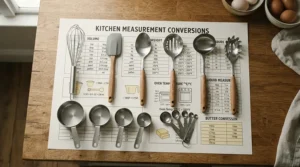
Gram-to-Tablespoon Conversion: What a Scoop Actually Weighs
This is where most people get tripped up. A tablespoon measures volume; a gram measures mass. Coffee is a fluffy, uneven solid, so there’s no single exact conversion. What exists are reasonable ranges.
One reference guide estimates that a tablespoon of ground coffee runs about 5 to 7 grams, and that a standard coffee scoop (about 2 tablespoons) lands around 10 to 14 grams. Coffee Review notes that the classic coffee scoop is 10 grams, and also complains about the downsized scoops that crept into the market. That’s why your inherited scoop is suspect.
| Measure | Approx. Ground Coffee Weight | Typical Use | Best For |
|---|---|---|---|
| 1 Tbsp (15 mL) such as the Jasni Stainless Steel Coffee Scoop Set | 5–7 g | Small cup, espresso-style dose | Single cups |
| 2 Tbsp (30 mL) such as the Orblue Premium Coffee Scoop Set | 10–14 g | One standard mug | Daily drip |
| About 12 g with the Hario V60 Measuring Spoon | ~12 g | Pour over recipes | V60 and Chemex fans |
| 1.5 Tbsp with the Norpro Stainless Steel Coffee Scoop with Bag Clip | Roughly 8–10 g (verify) | Small to medium cup | Bag-clip simplicity |
The pattern here is simple: finer, denser grinds weigh more per spoonful; coarse, fluffy grinds weigh less; heaping versus level can swing your dose by 20 percent or more. The Wikipedia entry on the tablespoon also points out that a rounded spoonful isn’t a precise measurement at all. Level your scoops with a knife edge.
The best calibration trick costs nothing: weigh five level scoops of your usual grind on a kitchen scale, divide by five, and write the number on a sticky note. Now you own the conversion for your coffee, which beats any chart.
Coffee-to-Water Ratio: Turning Scoops Into a Real Recipe
A scoop is only half the equation. The other half is water. The Specialty Coffee Association’s Golden Cup guideline is about 55 grams of coffee per litre of water, give or take 10 percent, which works out to a range of roughly 1:15 to 1:18. Many home brewers use 1:16 as a friendly middle, about 60 g per litre.
CoffeeGeek makes a smart point that deserves more attention: SCA-style ratios were built around large batch brewing. For small home batches, a 1:14 starting point of about 7 g per 100 mL often tastes better, which is basically one rounded tablespoon per 100 mL. That’s the sort of rule you can run with a scoop.
| Brew Size (Water) | Coffee at 1:16 | Rough Scoop Count | Best For |
|---|---|---|---|
| 250 mL | ~15.6 g | About 1 scoop of 2 Tbsp plus a bit | Single mug |
| 500 mL | ~31 g | About 2–3 scoops of 2 Tbsp | Two mugs |
| 1,000 mL | ~62 g | About 5 scoops of 2 Tbsp | Full carafe |
A quick way to do the math: divide your water volume in millilitres by 16 to get coffee in grams. A Hario V60 Measuring Spoon at about 12 g fits a 190–200 mL brew nicely. A pair like the Apace Living Coffee Scoop (Set of 2) keeps big brews tidy.
Treat all of these as starting points. Too bitter? Use a bit less coffee or grind coarser. Too thin? Add a scoop. As the 1:16 rule of thumb goes: it’s a starting line, not a finish line.
Coffee Measuring Cup for Pour Over: Scoop, Spoon or Scale?
People searching for a coffee measuring cup for pour over are usually hunting for something that makes dosing repeatable. The honest answer: a scoop gets you consistency, a scale gets you precision, and the sweet spot is using both.
| Method | Accuracy | Speed | Cost | Best For |
|---|---|---|---|---|
| Stainless scoop (e.g., Hario V60 Measuring Spoon) | Good if calibrated | Fastest | Low | Daily pour over |
| Mystery plastic spoon | Unknown | Fast | Free | Nobody, honestly |
| Kitchen or coffee scale | Excellent | Slower | Moderate | Dialing in new beans |
| Heaping tablespoon | Variable | Fast | Free | Emergencies |
Looking at the table, a calibrated scoop wins on convenience, and a scale wins on accuracy. Pour over is sensitive to dose because the water flows through a thin bed of coffee; a few grams of drift changes flow time and strength noticeably. So use the scale to calibrate, then let the scoop handle your weekday mornings. The Hario V60 Measuring Spoon is built for exactly that workflow, while an all-purpose pair like the Orblue Premium Coffee Scoop Set works too once you know its gram weight.
If you want a rough pour over recipe: 2 level tablespoons of grounds for about a 10-ounce cup, per Coletti’s guidance, then adjust. Whatever you pick, write down your recipe. Memory is a terrible barista.
Stainless Steel Coffee Scoop Review: What the Metal Actually Gets You
Every product in this guide is stainless steel, so a short stainless steel coffee scoop review is worth doing. The material earns its reputation for three practical reasons.
It doesn’t hold odours. Plastic scoops absorb coffee oils over time and eventually smell stale. Non-porous steel rinses clean. It resists rust and bending. Grades like 18/8 and 304 contain enough chromium and nickel to shrug off damp counters and dishwashers (check the seller’s care note, though: the Norpro Stainless Steel Coffee Scoop with Bag Clip is recommended for hand washing). It lasts. A solid steel scoop outlives most coffee makers.
The downsides are minor but real. Steel is a conductor, so it feels cold; it can scratch certain canisters; and a loose, cheap scoop with a thin rim can ding. A thicker, mirror-finish piece like the Jasni Stainless Steel Coffee Scoop Set feels more substantial in the hand.
What reviewers tend to say about the category as a whole: they like how clean-looking and sturdy these are, and they repeatedly mention using them for things besides coffee, such as protein powder, spices and supplements. What the spec sheet won’t tell you is how much that matters: a scoop that’s used for everything gets washed constantly, so durability and dishwasher tolerance are quietly the most valuable specs.
Bag-Clip Scoop Combo: Smart Design or Gimmick?
A bag-clip scoop combo sounds like something invented at 2 a.m., but it holds up under scrutiny. The case for it is storage logic: coffee begins losing freshness once the bag is opened, and a clip that seals the bag right after scooping shortens the time beans spend in contact with air.
The case against is that a clip isn’t a vacuum seal. It reduces air exposure, but it won’t match an airtight canister, and a clip on a lumpy bag can leave a gap. If you buy beans in bulk and decant them, a canister plus a plain scoop (like the Orblue Premium Coffee Scoop Set) is the better system. If you buy one bag at a time and finish it within a couple of weeks, the combo is arguably the tidier, cheaper setup.
Between the two clip hybrids here, the Norpro Stainless Steel Coffee Scoop with Bag Clip stands out for its spring-loaded clip and 19 cm reach, while the RSVP Endurance Scoop ‘N Clip gets credit for clip length and 18/8 steel. Fox Run also sells a 16 mL stainless version, if you want another option to price-check.
A practical tip: after scooping, squeeze the air out of the bag by hand, fold the top over twice, then clip. It takes five seconds and gives the clip a lot more to work with.
Common Mistakes When Buying a Coffee Scoop and Measuring Spoon Set
A few pitfalls repeat across buyers:
- Assuming “scoop” means a standard size. It doesn’t. Always check millilitres or tablespoons.
- Ignoring handle length. A short handle in a tall bag means grounds on your knuckles.
- Buying plastic to save a few dollars. It stains, holds odours, and warps in a dishwasher.
- Trusting printed markings. They wear off; engraved ones last.
- Skipping calibration. The same scoop yields different weights for different grinds.
- Buying the fanciest option. A copper or wood Hario V60 Measuring Spoon looks lovely but needs hand washing. Function first.
Fix those six and you’ve avoided most of the regret in this category.
Features That Actually Matter (And Those That Don’t)
Matters: verified capacity, stainless steel construction, handle length, and engraved markings. These four decide whether the scoop works every morning.
Matters a little: a hanging hole, dishwasher safety, and a comfortable grip. The Orblue Premium Coffee Scoop Set and Coletti Stainless Steel Coffee Scoop Set shine here.
Mostly doesn’t matter: colour (gold, rose gold, silver), “gym-weight” marketing, and elaborate packaging. A rose-gold scoop is a mood, not a measurement.
Marketing to eye with suspicion: broad gram claims. The Norpro 22 g figure is a good example, because it doesn’t match typical ground coffee density. When a listing quotes grams for a volume scoop, treat the number as approximate and verify with a scale.
Practical Usage Guide: Dial In Your Scoop in 10 Minutes
This is a simple, one-time setup that makes every future cup more predictable.
Step 1: Weigh your scoop. Fill your scoop level with your usual grind and weigh it. Repeat five times and average the weights. That’s your real dose.
Step 2: Pick a ratio. Start at 1:16, which means about 62 g of coffee per litre of water. For a 250 mL mug, that’s roughly 15–16 g.
Step 3: Count scoops. If your 2 tablespoon scoop weighs about 12 g, you’ll want one scoop plus a half for a mug. If that’s awkward, choose a scoop that fits your recipe, such as the Hario V60 Measuring Spoon.
Step 4: Taste and adjust. Bitter or harsh? Use a little less coffee or grind coarser. Sour or thin? Add a bit more coffee or grind finer.
Step 5: Write it down. A small label on the canister (“2 scoops per 500 mL”) saves you from memory lapses.
Common mistakes in the first 30 days: switching beans without recalibrating, heaping the scoop on busy mornings, and forgetting that a fresh roast is fluffier (lighter by volume) than an older one. Level every scoop and recheck your numbers when beans change.
Real-World Scenarios: Three Canadian Kitchens
The Montréal studio apartment. Small kitchen, one drawer, a single pour over each morning. A Hario V60 Measuring Spoon (about 12 g) stays beside the dripper, and the user sticks to one recipe: 12 g to about 190 g of water. Budget: under C$20. Why it works: one tool, one recipe, no maths.
The Calgary family of four. Weekend French press and weekday drip, with a canister on the counter. The Orblue Premium Coffee Scoop Set covers both: one 2 tablespoon scoop per mug, three to four for the press. The smaller 1 tablespoon scoop doubles for creamer. Why it works: two sizes, one purchase.
The Halifax commuter. Buys one bag of beans at a time, makes coffee in a rush at 6:30 a.m. A Norpro Stainless Steel Coffee Scoop with Bag Clip stays on the bag, reseals it, and never goes missing. Why it works: zero clutter, one gadget, five-second habit.
Each scenario shows the same principle: match the tool to your routine, not the other way around.
Long-Term Cost & Maintenance (Plus a Quick Safety Note)
A coffee scoop and measuring spoon set may be the cheapest piece of coffee gear you’ll own, and over a decade it costs pennies per cup. A C$15 set used once a day for ten years works out to roughly half a cent per use. Even if you replace it once, it’s a rounding error compared with your coffee budget.
Maintenance is easy. Rinse after use, dry fully, and hand wash if the seller recommends it (as with the Norpro Stainless Steel Coffee Scoop with Bag Clip). Dishwasher-friendly sets like the Orblue Premium Coffee Scoop Set save a step. Avoid abrasive scrubbers on mirror finishes like the Jasni Stainless Steel Coffee Scoop Set, since they scratch.
On safety, Canada regulates consumer products through the Canada Consumer Product Safety Act, which prohibits products that pose a danger to human health or safety. Reputable stainless steel kitchenware generally poses little concern, but buy from brands and sellers that clearly state the steel grade, and be wary of unlabelled, unusually cheap metal that doesn’t specify a food-grade alloy.
FAQ
❓ How many grams is one coffee scoop?
❓ What size coffee scoop is best for pour over?
❓ Are stainless steel coffee scoops better than plastic?
❓ Does a coffee scoop with a bag clip really keep coffee fresh?
❓ How many scoops of coffee per cup should I use?
Conclusion
Here’s the whole story in a breath: a coffee scoop and measuring spoon set is a tiny purchase with an outsized effect on your coffee. Know what your scoop holds in millilitres and grams, pair it with a ratio around 1:16, and your cups stop swinging between watery and punishing.
If you want a flexible everyday pair, the Orblue Premium Coffee Scoop Set is hard to argue with. If you like comfort and compact storage, look at the Coletti Stainless Steel Coffee Scoop Set. For the scoop-everything household, the Jasni Stainless Steel Coffee Scoop Set earns its keep, and big-batch brewers will like the Apace Living Coffee Scoop (Set of 2). Clip fans can choose between the Norpro Stainless Steel Coffee Scoop with Bag Clip and the RSVP Endurance Scoop ‘N Clip, while pour over purists should consider the Hario V60 Measuring Spoon.
Calibrate once, write the recipe down, and enjoy a quietly better cup every morning.
Recommended for You
- Cloth Coffee Filter For Drip Coffee: 7 Best Picks In 2026
- Metal Coffee Filter For Pour Over: 7 Best Picks 2026
- Paper Coffee Filters Vs Metal Coffee Filters: 7 Ultimate Picks (2026)
Disclaimer: This article contains affiliate links. As an Amazon Associate, I earn from qualifying purchases. If you purchase products through these links, we may earn a small commission at no additional cost to you.
✨ Found this helpful? Share it with your friends! 💬🤗
