
In This Article
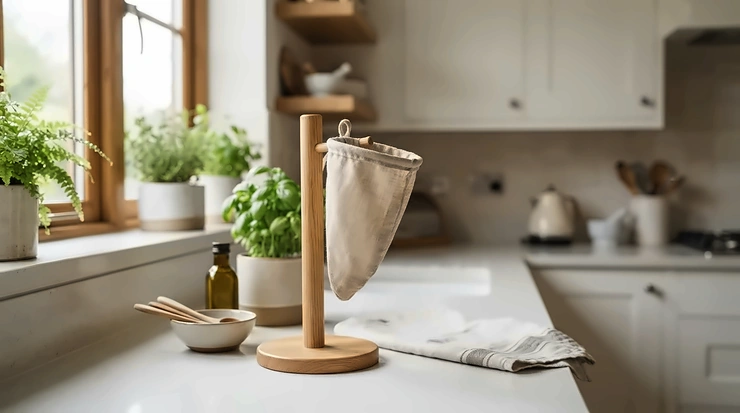
A cloth coffee filter for drip coffee is a reusable, washable filter woven from natural fibre, usually cotton, hemp or flannel, that holds the grounds while hot water drips through. Unlike paper, it lets some coffee oils into the cup. Unlike metal mesh, its tighter weave stops most of the sediment.

That middle-ground personality is the whole appeal. Coffee filters have been made from paper, cloth, metal and more, and cloth is the old-timer of the bunch. Single-use cloth filter bags were already being patented in the 1890s, well before the paper cone took over most kitchens. Today cloth is having a quiet comeback, and a cloth coffee filter for drip coffee suits anyone who wants a rounder cup and a smaller recycling bin.
Cloth isn’t magic, though. It asks for a little ritual: rinse, dry, occasionally boil, sometimes park it in the fridge. If that sounds like a chore, keep reading anyway. The honest trade-offs are laid out below.
This guide covers seven real, currently sold options you can find through Amazon.ca and Canadian specialty shops. It also gives you a reusable coffee filters vs paper filters cost comparison, a full guide to filter maintenance and cleaning, a look at eco-friendly coffee filters options, a breakdown of natural fiber material choices, and a straight talk on flavor balance. Everything here is analysis built from published specs and aggregated reviewer sentiment. No product was personally tested.
Quick Comparison: 7 Cloth Coffee Filter for Drip Coffee Picks
Price ranges are approximate Canadian-dollar estimates at the time of research. I couldn’t confirm every Amazon.ca price, so check current price before you buy.
| Product | Fits | Material | Price Range (CAD) | Best For |
|---|---|---|---|---|
| CoffeeSock Hario V60-02 | V60 size 02 dripper | Organic cotton, 2-pack | C$15–C$25 | Pour-over fans after a balanced cup |
| CoffeeSock Chemex 6-13 Cup | Chemex 6–13 cup | Organic cotton, 2-pack | C$17–C$25 | Chemex owners tired of paper shortages |
| Pinyon Cone #4 | Cone-style drip baskets | 55% hemp, 45% organic cotton | C$15–C$25 | Moccamaster-style machines, Canadian-made |
| Pinyon Basket #4 | 10–12 cup basket machines | 55% hemp, 45% organic cotton | C$15–C$25 | Replacing a sludgy gold-tone mesh |
| Hario Woodneck DPW-3 | Self-contained 480 mL glass pot | Cotton flannel | C$40–C$65 | Slow, ritual-style brewing |
| Hario FD-1 | DPW-1 one-cup woodneck pot | Cotton flannel, 3-pack | C$15–C$25 | Spare filters for a one-cup woodneck |
| Homend Woodneck | Glass woodneck pot | Flannel | C$30–C$50 | Budget entry into flannel brewing |
Look at the table and a pattern jumps out. The two CoffeeSock options and the two Pinyon picks are the practical workhorses, while the three woodneck-related entries are about ritual and richness. If you already own a Chemex or a V60, the CoffeeSock V60-02 or CoffeeSock Chemex 6-13 Cup costs the least to try. If you own an automatic machine, the Pinyon Basket #4 is the most direct swap.
💬 Just one click — help others make better buying decisions too!😊
Top 7 Cloth Coffee Filter for Drip Coffee Options: Expert Analysis
Seven filters, three budgets, two very different brewing personalities. Here’s what each one does well, and where it makes you work.
1. CoffeeSock Hario V60-02 — best for balanced pour-over cups
This one is the gateway drug. The CoffeeSock V60-02 is a two-ply filter in certified organic cotton, hand-sewn in the USA, sized for V60 size 02 drippers and sold as a pair. That natural fiber material absorbs some oils while letting acids through, which is why the cup lands between paper’s crispness and a French press’s heft.
The maker says brew times run about 20–30 seconds faster than with paper, and suggests grinding a touch finer to compensate. In practice, that means your usual paper-filter grind may under-extract and taste thin until you adjust. Based on the spec comparison, this is a filter for people willing to tweak, not people who want zero fuss.
Reviewers on retailer pages consistently say they prefer the flavour over paper, with several describing paper as too bright. They also call it easy to clean and reusable. One forum commenter, however, found the cloth difficult to keep clean, which tracks with the rinse-and-dry discipline described later.
Pros:
- ✅ Rounder body than paper, cleaner than metal
- ✅ Organic cotton with no bleach
- ✅ Spare filter included in every pack
Cons:
- ❌ Grind and pour need retuning
- ❌ Cloth care takes daily attention
Expect the C$15–C$25 range for a pair. Over a year of daily brewing, that’s strong value if you commit to the routine.
2. CoffeeSock Chemex 6-13 Cup — best for Chemex owners
Chemex lovers know the pain of a sold-out paper pack. The CoffeeSock Chemex 6-13 Cup fits 6-, 8-, 10- and 13-cup Chemex brewers, and it’s made from organic cotton, sewn in the USA. One listing claims each filter lasts over 100 uses with proper care, which is a more believable number than the “up to a year, replacing roughly 500 paper filters” language on a restaurant-supply page. Treat that second claim as a vendor best case.
The practical upside is flavour. Chemex is famous for its heavy bonded paper, which strips out oils and delivers a very clean, bright cup. Swapping in cloth adds body, so expect a softer, rounder profile and a better flavor balance for people who find Chemex too austere.
Customer sentiment on a Canadian retailer page, with 21 reviews at the time of research, is warm. Buyers describe excellent Chemex coffee and note they bought it as a backup when paper was out of stock. A separate cloth Chemex filter from another maker drew a comment that air can’t escape as easily as with paper, so remember the pour spout doubles as a vent.
Pros:
- ✅ Fits all standard 6–13 cup Chemex sizes
- ✅ Spare filter in the pack
- ✅ Over 100 uses per filter claimed
Cons:
- ❌ Doesn’t fit the 3-cup pint size
- ❌ Flavour is rounder, less crisp than paper
Budget C$17–C$25. The value verdict: worth it if paper keeps selling out.
3. Pinyon Cone #4 — best Canadian-made hemp-cotton cone
Here’s something rare: a locally made, plastic-free option. The Pinyon Cone #4 is a cone filter in a 55% hemp, 45% organic cotton blend, made in Canada. That hemp content matters because hemp fibres give the cloth a sturdier, less saggy structure than thin cotton alone.
At the time of research, the Amazon-sourced listing showed about 4.6 out of 5 across more than 1,000 ratings. Reviewers say it fits a Moccamaster and works in a Chemex too, and one reports using it for cold brew. The care instructions that reviewers repeat are simple: boil for 3–5 minutes before first use, moisten before each use, then rinse and air dry.
The complaints are consistent and fair. Some reviewers describe a learning curve on grind size because flow rate differs from paper. One notes grounds spilling over the edge when brewing ten cups.
Pros:
- ✅ Made in Canada with natural fibres
- ✅ Hemp blend holds its shape well
- ✅ Highly rated across 1,000+ listing ratings
Cons:
- ❌ Overfilled baskets can spill grounds over the edge
- ❌ Grind needs a few brews to dial in
Look at roughly the C$15–C$25 neighbourhood for a single filter, though I couldn’t verify the current figure. Strong value if you buy local.
4. Pinyon Basket #4 — best swap for gold-tone mesh
If your automatic drip machine currently runs a metal mesh filter that has started brewing sludge, this is the intervention. The Pinyon Basket #4 is built for 10–12 cup basket-style makers, made from the same hemp and organic cotton blend, handmade in Canada.
One reviewer describes replacing a gold-tone filter that had begun producing sludge after about a year, and another reports using the cloth over the top of the metal filter as a fine-particle barrier. A reviewer with a 10-cup commercial brewer also reports “all the fine grind” staying out of the mug while the oils stay in. Here the spec sheet points to a real-world advantage: finer weave, less grit, rounder body.
Cleanup is the recurring gripe. Reviewers of the sister cone line describe the cleanup as slightly annoying, and one warns that heavy large-pot use may eventually stretch the cloth. That’s a reasonable expectation for any cloth in a 12-cup machine.
Pros:
- ✅ Replaces a gritty metal mesh without grit
- ✅ Sized for 10–12 cup machines
- ✅ Natural fibres, zero paper waste
Cons:
- ❌ Rinse-and-dry routine every day
- ❌ Large pots may gradually stretch it
Expect C$15–C$25. It’s an easy upgrade for family-sized machines.
5. Hario Woodneck DPW-3 — best for slow, ritual-style brewing
Nothing here looks like a normal coffee maker, and that’s the point. The Hario Woodneck DPW-3 is a 16 oz (about 480 mL) heatproof glass pot with a wooden collar, a reusable cotton flannel filter on a stainless ring, and a handle for lifting the filter away once the drip finishes.
The flannel’s tight weave slows extraction, and the manufacturer’s guidance recommends medium-ground coffee. After brewing, the pot doubles as a serving carafe, which keeps things hot and uncluttered. Storage is non-negotiable: rinse the filter and keep it submerged in clean water in the fridge to prevent the coffee oils from oxidizing.
Aggregated sentiment on the listing is mostly glowing. Reviewers call the coffee silky and flavourful and describe the filter as forgiving. Several share freezing and fridge-storage tricks. One reviewer noted a strange aftertaste, which is a reminder that poorly stored cloth can turn funky.
Pros:
- ✅ Silky, full-bodied flavour
- ✅ Pot doubles as a server
- ✅ Beautiful on the counter
Cons:
- ❌ Fridge storage required between brews
- ❌ Glass body is fragile and small
Plan on roughly C$40–C$65. Great for a ritual-minded single drinker.

6. Hario FD-1 — best spare filters for a one-cup woodneck
Think of this as insurance. The Hario FD-1 is a three-pack of replacement cotton flannel filters made for the one-cup DPW-1 woodneck pot and its olive-wood sibling. It’s a modest product, but it solves a real pain: flannel wears out, and running without a spare means skipping coffee while one dries.
The manufacturer’s advice is blunt: wash the filter, store it wet in a little water in the fridge, and never let it dry out. A dried filter can pick up off odours or tastes, so the fridge habit is the price of admission. Size matters too. The Hario FD-1 won’t fit the larger DPW-3, so match the number to your pot.
I could verify the maker’s care guidance but not a large pool of independent reviews for this exact pack. The sentiment I’d lean on comes from the pots themselves, where owners mention original filters “still going strong” and quick daily rinsing with composted grounds. That says the material endures, but it isn’t a review of this pack.
Pros:
- ✅ Three filters in one pack
- ✅ Cotton flannel for rich body
- ✅ Cheap compared with replacing a whole pot
Cons:
- ❌ Only fits the one-cup DPW-1 family
- ❌ Needs fridge storage to stay fresh
Expect about C$15–C$25. Value verdict: essential if you own a DPW-1, irrelevant otherwise.
7. Homend Woodneck — best budget entry into flannel brewing
For anyone curious about flannel but not ready for a premium price tag, the Homend Woodneck is the entry ticket. Per its manual, the set includes a glass pot with a wooden collar tied on with a leather rope, a wood-handled flannel filter, and a spare filter shown beside it. The pot stands roughly 19 cm (7.5 in) tall and 12 cm (4.7 in) wide.
The instructions mirror every other flannel system: wet the filter first, discard the rinse water, and store it submerged in clean water in the fridge between uses. If water drains too slowly, the manual’s first suggestion is to confirm the filter has been stored properly. That’s useful intel: slow flow usually signals dried-out or clogged cloth, not a defective pot.
Honesty note: I could verify the manual but not a trustworthy sample of reviews, so I won’t summarize sentiment. Treat it as a lower-risk way to try the flannel method, then read current buyer reviews before purchasing.
Pros:
- ✅ Includes a spare flannel filter
- ✅ Wood handle lifts the filter cleanly
- ✅ Glass pot doubles as a server
Cons:
- ❌ Review pool not verified here
- ❌ Wood and leather parts need gentle care
Roughly C$30–C$50 by my estimate, so check current price. Fair value if you want to test flannel first.
Filter Maintenance and Cleaning: A Practical Guide for Cloth Filters
This is the section Amazon listings skip, and it’s where cloth lives or dies. Good filter maintenance and cleaning takes about 60 seconds a day.
- Before first use: Boil the filter for 3–5 minutes, as reviewers of the Canadian-made hemp blends describe. This removes manufacturing residue and softens the weave.
- Before every brew: Moisten the cloth with hot water. Dry cloth can channel water unevenly. Discard the rinse.
- After every brew: Tap or brush out the grounds, then rinse under running water. If you have a green bin or compost, that’s where the grounds go. Statistics Canada reports that 85% of Canadian households composted kitchen waste, yard waste or compostable bioplastics in 2023, so you’re in good company.
- Drying vs storing wet: Sewn-cone styles like the CoffeeSock V60-02 can hang to dry, and one retailer says that takes an hour or two. Flannel systems like the Hario Woodneck DPW-3 want to stay damp, submerged in clean water in the fridge. Freezing is a popular workaround among enthusiasts.
- Monthly deep clean: A commenter on a coffee forum describes soaking in water with a small amount of cleaning powder such as Cafiza, then rinsing thoroughly. Boiling every few pots, as one reviewer suggests, is the gentler option.
- When to retire it: Slow drainage, persistent stains or a stale smell means replace it.
Skip scented detergent. Cloth absorbs smells like a sponge, and nobody wants lavender in their espresso-adjacent morning.

Real-World Scenarios: Which Cloth Coffee Filter Fits Your Life?
Specs only matter if they match a daily routine. Three profiles show how the choices play out.
The apartment commuter (Toronto, one mug a day, about C$50 to spend): She owns a V60 dripper already and has a tiny kitchen. The CoffeeSock V60-02 is the logical pick, and its quick drying means no fridge shelf needed. Her flavor balance goal is “less sharp than paper.” A finer grind gets her there.
The family with a 12-cup machine (Calgary, two pots on weekends, C$25 for the upgrade): Their gold-tone mesh has started brewing sludge. The Pinyon Basket #4 is built for exactly that basket. They’ll rinse it nightly and boil it monthly, and the grit problem should shrink.
The Chemex couple (Halifax, one carafe each morning, C$20 for the experiment): They’re tired of paper stock-outs. The CoffeeSock Chemex 6-13 Cup gives them a backup that never sells out, and the pair means a rotation schedule: one in use, one drying.
Notice what’s missing: no one needs a fridge unless they choose flannel. Match the system to how much ritual you honestly want.
Problem → Solution: Fixing Common Cloth Filter Frustrations
Even devoted users hit snags. Here are five fixes.
Problem 1: Coffee tastes weak. Cloth can flow faster than paper. One Chemex reviewer reported a thinner cup with a cloth filter. Grind finer, as the CoffeeSock V60-02 maker suggests, and slow your pour.
Problem 2: Sediment in the cup. Switch from a thin weave to something denser, or double the layers. The Pinyon Basket #4 reviewers report grit staying out of the mug.
Problem 3: Off smell or funk. The filter dried out or never got deep-cleaned. Flannel owners with a Hario Woodneck DPW-3 should store it submerged in the fridge, and everyone else should boil it.
Problem 4: Slow drain. Residual oils clog the weave. A soak and boil usually restores flow, which the Homend Woodneck manual also hints at.
Problem 5: Grounds spilling over. Don’t fill a Pinyon Cone #4 beyond its sensible capacity in a ten-cup brew. Reviewers report overflow when the basket is too full.
How to Choose a Cloth Coffee Filter for Drip Coffee
Pick the filter that fits your brewer first, your taste second.
- Match your brewer. Check whether you own a V60, a Chemex, a basket machine, or a woodneck pot. Sizing is everything.
- Choose your fibre. Organic cotton is soft and widely sold; hemp blends feel sturdier. Flannel is slower and richer.
- Decide on a care routine. Hang-dry styles ask little. Flannel systems need fridge space.
- Think about batch size. Large pots stress the cloth more than single cups.
- Check the origin. Canadian-made options such as the Pinyon Cone #4 reduce shipping miles and support local makers.
- Budget for spares. A pack of two, like the CoffeeSock Chemex 6-13 Cup, lets one dry while the other brews.
- Plan for your health goals. If you watch your cholesterol, read the health section below first.
Reusable Coffee Filters vs Paper Filters Cost Comparison
Here’s the uncomfortable truth: cloth doesn’t automatically beat cheap paper on dollars. It beats premium paper, and it wins on waste.
The numbers below are my illustrative assumptions based on one brew per day, not quoted prices. Paper costs vary widely, so check current price for your own brand.
| Filter Type | Assumed Upfront Cost | Approx. Annual Cost (1 brew/day) | Lifespan Claim | Best For |
|---|---|---|---|---|
| Budget paper | C$0.03–C$0.05 each | C$11–C$18 | Single use | Convenience |
| Premium bonded paper | C$0.15–C$0.25 each | C$55–C$90 | Single use | Chemex-style clarity |
| Cloth, CoffeeSock V60-02 | C$15–C$25 per pair | C$15–C$40 | 100+ uses each | Balanced cups |
| Cloth, Pinyon Cone #4 | C$15–C$25 each | C$15–C$25 | Around 400 uses (reviewer-reported) | Machine owners |
| Stainless mesh | C$10–C$30 | Under C$10 | Years | Lowest long-term cost |
The table tells a clear story. Cloth beats premium paper handily, roughly matches or slightly exceeds budget paper in cost, and loses to metal on pure economics. One enthusiast on a coffee forum makes exactly that point about metal. The case for cloth is stronger on flavour and waste than on savings, and a reusable coffee filters vs paper filters cost comparison should include your water, drying space and the time you spend on filter maintenance and cleaning.
Eco-Friendly Coffee Filters Options
If your goal is a lighter footprint, you have more eco-friendly coffee filters options than “cloth or nothing.”
- Reusable cloth: Cuts single-use paper entirely. Certified organic cotton, as used in the CoffeeSock V60-02 and CoffeeSock Chemex 6-13 Cup, avoids much of the chemical load of conventional cotton farming. Hemp-cotton blends like the Pinyon Basket #4 go further on fibre sustainability.
- Metal mesh: Longest lifespan and cheapest long-term, though sediment and cleaning vary.
- Compostable paper: Unbleached paper plus grounds can go into a green bin where programs accept it.
- End-of-life composting: Natural cloth is compostable once it’s truly finished, which synthetic mesh can’t match.
Honest caveat: a reusable filter still uses water and a bit of energy to wash and boil. Still, it fits neatly into the 3Rs framework. Environment and Climate Change Canada notes that reducing and reusing are the most effective ways to cut the flow of garbage to landfill, and a filter that lasts hundreds of brews is reuse in action. If you want the simplest path, pick the option you’ll actually keep using.

Natural Fiber Material: Cotton, Hemp and Flannel Compared
Not all natural fibres behave alike, and the differences are practical.
Organic cotton is soft, easy to sew into tight cones and neutral in taste. One maker says cotton is about 90% cellulose, a tasteless, odourless compound, compared with 40–50% in wood and roughly 45% in hemp, though that figure comes from the manufacturer’s own marketing. The CoffeeSock V60-02 uses a higher thread count than flannel, which the maker says produces less sediment while keeping richness.
Hemp blends, like the 55/45 mix in the Pinyon Cone #4, add stiffness. A blogger who reviewed an earlier hemp filter described it as thick and sturdy, holding its shape in the basket instead of sagging. That matters in an automatic machine where collapse means overflow.
Cotton flannel, used in the Hario Woodneck DPW-3, Hario FD-1 and Homend Woodneck, is a napped, loosely woven fabric. Its slower drip means longer contact time, which is why people describe a deeper, rounder cup. The same property makes it more demanding on care.
Pick natural fiber material to match your routine, not just your values.
Flavor Balance: What a Cloth Filter Does to Your Cup
Flavor balance is the real reason people switch. Paper pulls out oils and gives clarity. Metal lets oils and fines through. Cloth lands in between, with more body and oils than paper, but less sediment than metal.
A maker of cotton filters describes the result as clear and crisp, with the acidity of paper-brewed coffee and the richness of French press without the heavy oiliness. Treat that as marketing, but it matches what many reviewers report.
Brewing adjustments help you hit that sweet spot. Cloth tends to flow faster, so grind slightly finer than your paper setting. If the cup tastes thin, as one Chemex reviewer found, slow your pour or try a double layer. If it tastes muddy, coarsen the grind slightly. Flannel systems brew slower and richer, which suits darker roasts, while lighter roasts reward tighter, faster cloth. The filter is only one lever in flavor balance, alongside water temperature (roughly 92–96°C), grind and ratio.
Cloth Filters and Your Cup: Health, Hygiene and Safety Guide
One piece of nuance matters here. Paper filters trap cafestol and kahweol, oily compounds in coffee linked to higher LDL cholesterol. Cloth and metal let more of them through.
Swedish researchers measured the difference. Paper-filtered drip coffee had a median cafestol level of about 11.5 mg/L, while boiled coffee passed through fabric dropped to about 28 mg/L. That fabric test used a boiled-coffee method, not a drip system, so the numbers aren’t a direct measure for a cloth coffee filter for drip coffee, but the direction is clear: paper traps the most. If you drink many cups daily or have been told to watch your LDL cholesterol, paper is the safer default, or ask your doctor.
Hygiene is the other half. Damp cloth can grow mould or pick up odours, which is why makers insist on boiling, drying thoroughly or fridge storage. Replace any filter that smells off. Nothing about cloth is dangerous when cared for, but neglected cloth is gross.
Common Mistakes When Buying a Cloth Coffee Filter for Drip Coffee
- Ignoring size. A Hario FD-1 fits a one-cup DPW-1, not the DPW-3. Match the model number before you click.
- Expecting paper behaviour. Cloth flows differently. Plan to adjust your grind.
- Skipping the boil. Reviewers and makers both advise a first-use boil.
- Underestimating routine. If you won’t rinse daily, you won’t enjoy cloth. Be honest about your habits.
- Buying for savings alone. As the cost table shows, cloth competes with premium paper, not the cheapest paper.
FAQ
❓ What is the best cloth coffee filter for drip coffee makers?
❓ Can you put cloth coffee filters in the dishwasher?
❓ How many times can you reuse a cloth coffee filter?
❓ Where can you buy a cloth coffee filter in Canada?
❓ Are cloth coffee filters healthier than paper?
Conclusion
A cloth coffee filter for drip coffee isn’t the cheapest option, and it isn’t the easiest. It’s the most characterful. You get a rounder cup, a smaller waste pile and a small daily ritual that some people grow to love.
Here’s the short version. The CoffeeSock V60-02 and CoffeeSock Chemex 6-13 Cup suit pour-over owners. The Pinyon Cone #4 and Pinyon Basket #4 fit automatic machines and support Canadian makers. The Hario Woodneck DPW-3, Hario FD-1 and Homend Woodneck serve the slow-brew crowd. Your reusable coffee filters vs paper filters cost comparison depends on how often you brew, and your best eco-friendly coffee filters options depend on how much care you’ll give them. Commit to filter maintenance and cleaning, pick a natural fiber material you trust, and tune your grind for the flavor balance you want.
If cholesterol is a concern, keep paper nearby. Otherwise, give cloth a fair run.
✨ Don’t Miss These Exclusive Deals!
🔍 Take your morning brew to the next level with these carefully selected filters. Click on any highlighted item to check current pricing and availability. These tools will help you create authentic, full-bodied cups your family will love!
Recommended for You
- Metal Coffee Filter For Pour Over: 7 Best Picks 2026
- Paper Coffee Filters Vs Metal Coffee Filters: 7 Ultimate Picks (2026)
- Reusable K-Cup Filter: 7 Best Picks For Canadians In 2026
Disclaimer: This article contains affiliate links. As an Amazon Associate, I earn from qualifying purchases. If you purchase products through these links, we may earn a small commission at no additional cost to you.
✨ Found this helpful? Share it with your friends! 💬🤗
