
In This Article
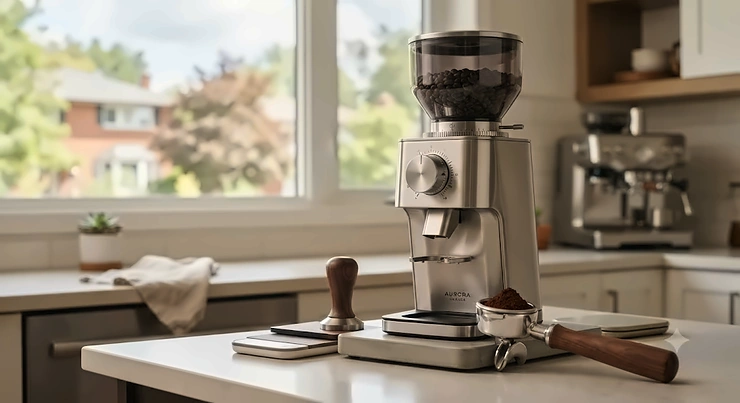
Somewhere between your third mediocre pour-over and the moment you finally taste a shot pulled on a grinder that actually knows what it’s doing, something clicks. You start reading burr geometry forum threads at midnight. You start saying words like “retention” out loud, unprompted, at dinner parties. Welcome to the club. A high end conical grinder home use setup is, in plain terms, a grinder built around a cone-shaped inner burr nested inside a ring-shaped outer burr, designed to run cooler and quieter than its flat-burr cousins while still delivering café-calibre consistency on your own kitchen counter. The “high end” part matters too: at the prosumer level, burr size, motor torque, and retention control separate a grinder that merely chops beans from one that genuinely transforms them.
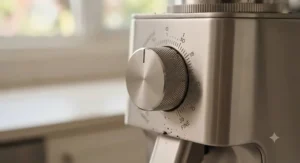
This guide digs into seven real grinders worth your money in 2026, from a compact manual option under three hundred dollars to a boutique American-built machine that costs more than some people’s first car. We will not pretend every grinder here is for every person — a single dose espresso obsessive and a household that wants one machine for everything have very different shopping lists. What follows is honest analysis built on published specifications, manufacturer documentation, and aggregated review sentiment from people who have actually run these burrs through thousands of grams of coffee, not a rewritten product listing.
Before we get into the lineup, a quick framing point: conical burrs aren’t simply “the budget option” anymore. As manual burr grinders rotate one grinding surface against the other, with coffee mills usually featuring a handle that provides leverage for the many turns required in hand grinders, and as electric conical designs scale that same geometry up with motors and torque, the category now spans everything from sixty-dollar hand grinders to commercial-grade single-dose machines costing thousands. Let’s sort out where your money should actually go.
Quick Comparison Table
Here’s the fast version for anyone who wants the shortlist before the deep dive.
| Grinder | Burr Size & Type | Price Range (CAD) | Best For |
|---|---|---|---|
| Niche Zero | 63mm conical, single dose | C$850–C$950 | All-round prosumer flagship |
| Kafatek Monolith Conical | Dual 71mm conical | C$3,200–C$3,500 | Obsessive enthusiasts, boutique build |
| Baratza Sette 270Wi | 40mm conical, grind-by-weight | C$800–C$850 | Precision dosing without single-dose fuss |
| Option-O Lagom Mini 2 | 48mm conical, USB-C powered | C$400–C$650 | Compact countertop single dosing |
| 1Zpresso K-Ultra | 48mm conical, manual | C$280–C$330 | Travel, backup, or no-electricity workflow |
| Fellow Opus 2 | 48mm conical, all-purpose | C$270–C$320 | First serious grinder, full brew-method range |
| Breville Smart Grinder Pro | 40mm conical, digital dosing | C$300–C$380 | Households needing one grinder for everything |
Looking at this spread, the price gap between the Breville and the Kafatek is roughly tenfold, yet both grinders use genuinely conical geometry — the difference lives almost entirely in burr size, motor precision, and retention engineering rather than in the basic concept. If your household drinks two espressos a day and occasionally a French press, the bottom half of this table will serve you well. If you’re chasing the absolute ceiling of what a conical burr can extract from a light-roast Gesha, the top half starts to make a lot more sense.
💬 Just one click — help others make better buying decisions too! 😊
✨ Don’t Miss These Exclusive Deals!
🔍 Ready to upgrade your morning ritual? Click through to check current pricing and availability on any of these conical grinders before you commit. Stock on prosumer models moves fast, and waiting times can stretch out — so once you’ve found your match, don’t sleep on it.
Top 7 High End Conical Grinders for Home Use: Expert Analysis
A quick note before we get into individual models: every grinder below uses true conical burr geometry, not a flat-burr machine wearing a conical-sounding name (a surprisingly common bit of marketing fuzziness in this category). We verified burr type against manufacturer specification sheets for each pick.
1. Niche Zero — the single-dose grinder that started the category
The Niche Zero’s claim to fame is genuinely simple: it was one of the first home grinders to combine commercial-grade 63mm conical burrs with a near-zero retention design built specifically for single dosing. The burrs are hardened steel, the same family used in respected café-grade conical grinders, and they’re driven by a permanent-magnet DC motor geared down to a notably slow, quiet rotation. In practice, that slower speed means less heat transfer into the grounds and a noise level low enough to use before anyone else in the house is awake. The straight-through grind path is the real engineering trick here — beans fall almost directly from burrs to dosing cup with minimal lateral travel, which is why independent testing has documented retention figures under half a gram. For a buyer choosing between competing single dose conical grinder reviews, the Niche Zero remains the reference point nearly everyone else gets compared against. It particularly suits home baristas who pull one or two drinks per session and prize repeatability over raw speed; reviewers consistently note that once dialled in, the grind setting reproduces reliably session after session.
✅ 63mm conical burrs rival grinders costing far more
✅ Near-zero retention suits frequent bean switching
✅ Whisper-quiet operation for early mornings
❌ No auto-stop function, requires manual switch-off
❌ Long wait times have been reported during demand spikes
In the C$850–C$950 range, the Niche Zero sits firmly in prosumer territory, and most buyers who’ve compared it against pricier flat-burr alternatives still call it excellent value for the workflow it enables.
2. Kafatek Monolith Conical — the boutique benchmark for obsessive home baristas
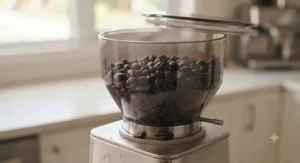
If the Niche Zero is the gateway, the Kafatek Monolith Conical is where things get genuinely serious. Hand-built in Seattle in small batches, this grinder pairs dual 71mm conical burrs — a coarse pre-breaker stage followed by a fine grinding stage using proprietary Shurikone geometry — with a variable-speed brushless DC motor adjustable across a wide RPM range. The dual-stage approach is the standout feature: rather than asking one burr set to handle both the rough crushing and the fine espresso grind, the Monolith splits the job, which reviewers say produces noticeably more even particle distribution, especially with light roasts. Each unit is individually tested with a refractometer before shipping, an unusually hands-on quality step for a consumer product. Honest analysis here has to acknowledge the trade-off plainly: this is a niche purchase for people who have already owned and outgrown a Niche Zero or similar, not a sensible first grinder. The reward is grind quality that competitors in the professional conical burr grinder space routinely cite as a high-water mark for boutique craftsmanship.
✅ Dual-stage 71mm conical burrs for exceptional uniformity
✅ Individually hand-tested with real espresso extractions
✅ Variable RPM lets you tune speed to roast density
❌ Small-batch production means longer wait times
❌ Price puts it well outside most home budgets
Sitting in the C$3,200–C$3,500 range, this is unmistakably an enthusiast’s purchase — the kind of grinder you buy once you already know exactly what you’re chasing.
3. Baratza Sette 270Wi — grind-by-weight precision without the single-dose ritual
Baratza’s Sette 270Wi takes a different philosophical approach than the Niche or Kafatek: instead of obsessing over single-dose retention down to a tenth of a gram through pure mechanical design, it solves the dosing problem with an integrated Acaia scale. The 40mm conical burrs, manufactured by Etzinger in Liechtenstein, sit on a spiral geometry that pulls grounds down through the outer burr rather than the inner one — an inversion of the typical conical setup that roughly doubles usable grinding surface area for a given burr diameter. What this means practically: the 270Wi grinds fast, often dispensing a full dose in well under fifteen seconds, while still hitting tenth-of-a-gram accuracy thanks to the scale’s auto-tare and auto-offset calculations. Reviewers consistently flag one real trade-off — it’s a notably loud grinder compared to the Niche Zero’s hushed DC motor, a fair complaint if early-morning quiet matters to your household. For anyone evaluating a conical burr grinder for espresso pro use who also wants hands-free, weight-accurate dosing straight into the portafilter, this is one of the strongest arguments in the category.
✅ Integrated Acaia scale grinds to within a tenth of a gram
✅ Fast grind speed, often under fifteen seconds per dose
✅ Bluetooth app tracks settings and grind history
❌ Noticeably louder in operation than comparable models
❌ Plastic components in some areas feel less premium than the price suggests
Expect to pay in the C$800–C$850 range, putting it nearly on par with the Niche Zero but aimed at a buyer who values automated weight precision over manual single-dose ritual.
4. Option-O Lagom Mini 2 — the compact single-doser for tight counters
The Lagom Mini 2 proves that conical single-dosing doesn’t require a large footprint or a traditional power brick. It runs on 100W USB-C power delivery, a genuinely unusual choice that lets the grinder shrink down to a billet-aluminium body small enough to tuck into a narrow gap between appliances. Inside sits the Mizen 48MS conical burr set alongside an auto-off function that shuts the motor down ten seconds after grinding completes, a small but thoughtful touch that’s easy to underrate until you’ve forgotten to flip a switch on a less considerate machine. What most buyers overlook about this model is how far its stepless adjustment range stretches — from fine espresso through to Turkish-style ultra-fine and out to coarse cold brew, all without swapping burrs. That kind of range is unusual at this size and price point, and it’s a big part of why this grinder regularly comes up in discussions among people hunting for a high end home grinder amazon.ca shoppers can realistically fit on a studio-apartment counter.
✅ Genuinely compact footprint without sacrificing burr quality
✅ USB-C PD power simplifies cabling and travel use
✅ Stepless adjustment spans espresso through cold brew
❌ USB-C power requirement means you can’t use just any charger
❌ Smaller brand means less established long-term parts support
Pricing typically lands in the C$400–C$650 range depending on configuration, making it one of the more approachable entries into genuine single-dose conical grinding.
5. 1Zpresso K-Ultra — manual conical precision for the no-electricity crowd
Not every high-end conical grinder needs a motor. The 1Zpresso K-Ultra packs large 48mm stainless steel conical burrs — a heptagonal geometry 1Zpresso calls the “K Burr” — into a hand-cranked body that folds down for travel and runs on nothing but elbow grease. The external adjustment ring is the standout feature here: rather than fiddling with an internal mechanism that forces you to remove the catch cup first, you simply align a number on a visible dial, giving over one hundred clicks of resolution at roughly twenty microns per step. That’s an unusually fine adjustment range for a manual grinder, and it’s a big part of why this model keeps coming up favourably in comparisons against pricier electric options. Aggregated review sentiment points to strong all-round performance, with particular praise for pour-over clarity, though several reviewers note espresso grinding takes noticeably longer by hand than on an electric machine — a reasonable trade-off for portability and a complete lack of electrical dependence.
✅ Large 48mm conical burrs unusual for a hand grinder
✅ External dial gives over 100 clicks of precise adjustment
✅ Folds compact for travel, camping, or power outages
❌ Hand-grinding for espresso takes real time and effort
❌ Catch cup capacity tops out around 35–40 grams
At roughly C$280–C$330, the K-Ultra represents some of the best burr-quality-per-dollar in this entire lineup, particularly for anyone who already owns an electric grinder and wants a capable backup.
6. Fellow Opus 2 — the accessible all-rounder for first-time serious buyers
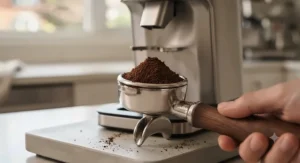
Fellow’s Opus 2 occupies an interesting niche: it’s priced like an entry-level grinder but built around 48mm conical burrs that are genuinely sized for serious use, a step up from the 40mm burrs in the original Opus. The grinder handles the full brew spectrum — espresso, pour-over, French press, cold brew — through a stepless adjustment dial, with grind-size guidance printed directly on the lid for anyone still building intuition about settings. Based on the spec comparison against same-priced competitors, what stands out is the included espresso catch cup compatible with both 54mm and 58mm portafilters, a detail that saves new buyers from an awkward accessory hunt. An upgraded ionizer reduces static cling in the grounds, addressing a common complaint about the earlier Opus generation. Reviewers describe this as the rare grinder genuinely capable of being someone’s only grinder, rather than a stepping stone they’ll outgrow within a year.
✅ 48mm conical burrs are large for this price ti
✅ Covers the full brew range from espresso to cold brew
✅ Espresso catch cup fits both 54mm and 58mm portafilters
❌ Mostly plastic housing trades some premium feel for affordability
❌ Espresso grind clarity trails dedicated single-dose machines
Expect to pay around C$270–C$320, making this one of the easiest entry points into genuinely capable conical grinding without committing to a four-figure purchase.
7. Breville Smart Grinder Pro — the household generalist with digital dosing
Rounding out the list is the grinder most likely to already be sitting in a friend’s kitchen: the Breville Smart Grinder Pro pairs a 40mm conical burr with sixty programmable grind settings and a backlit LCD display that shows grind time, dose count, and selected fineness at a glance. The standout feature is its dual-portafilter-fork design alongside a 450-gram on-demand hopper, a combination that suits households juggling multiple coffee styles rather than a single dedicated espresso ritual. What the spec sheet won’t tell you, but reviewer consensus makes clear, is that the digital interface is what wins over first-time burr grinder buyers — switching between a single shot, a double shot, and a batch-brew dose takes seconds, no manual timer required. It won’t out-grind a Niche Zero or Sette 270Wi at the finest espresso settings, but for versatility across brewing methods in one accessible package, it remains a popular and pragmatic choice.
✅ 60 programmable settings with digital timer display
✅ Dual portafilter forks streamline single and double shots
✅ Large 450g hopper suits multi-person households
❌ Less precise at the extreme fine end than dedicated single-dosers
❌ Hopper-based design means more retained grounds than single-dose models
Priced around C$300–C$380, this is the most widely available grinder on the list and a sensible starting point for anyone not yet ready to commit to single-dosing rituals.
Practical Usage Guide for Your Conical Burr Grinder
Getting a new grinder home is only step one. The first thirty days matter more than people expect, because burrs need a brief seasoning period and your palate needs time to calibrate to the new equipment. Start by running through roughly fifty grams of inexpensive beans before you trust the grinder with anything special — fresh burrs often carry microscopic machining residue that affects the first few grinds. Once seasoned, dial in coarse-to-fine gradually rather than jumping straight to your old setting number from a previous grinder; conical burr geometry behaves differently from flat burrs at equivalent click counts, so your old reference points won’t transfer directly.
For maintenance, a light brush-out after each session keeps static buildup manageable, while a deeper clean with food-safe grinder cleaning tablets every two to four weeks dissolves the coffee oils that accumulate on burr surfaces over time, particularly with darker roasts. A common first-month mistake is over-adjusting in response to a single bad shot — give any new setting at least two or three pulls before deciding it’s wrong, since puck prep and tamping technique introduce their own variability that’s easy to misattribute to the grinder. Finally, store beans away from the grinder’s heat-generating components and avoid topping up a hopper with stale beans sitting on top of fresher ones; for single-dose machines this isn’t an issue, which is one more quiet argument in their favour.
Single Dose Conical Grinder Review: Real-World Scenarios
Picture three different households shopping this list. First, a condo-dwelling professional who drinks one careful flat white before work and values quiet, repeatable results — the Niche Zero or Option-O Lagom Mini 2 fits this life well, since both minimise retention and counter footprint without demanding much daily fuss. Second, a couple who alternates between pour-over on weekends and espresso on weekdays, where the Fellow Opus 2’s full brew-range stepless adjustment earns its keep by avoiding the need for two separate grinders. Third, a larger household with several coffee drinkers and varied tastes, where the Breville Smart Grinder Pro’s hopper capacity and digital dose memory reduce daily friction far more than a single-dose workflow would for that volume of grinding.
A fourth scenario worth naming honestly: the camper or frequent traveller who wants café-quality grounds without a wall outlet. The 1Zpresso K-Ultra answers that brief specifically, trading grinding speed for total independence from power. None of these are wrong choices — they’re simply optimised for different daily rhythms, which is exactly why this category resists a single “best” answer.
Buyer’s Decision Framework: Choosing Your Prosumer Espresso Grinder
If you make one drink at a time and hate wasting beans, choose a single-dose conical grinder like the Niche Zero or Lagom Mini 2, because near-zero retention means every gram you weigh out is a gram you actually drink. If you want automated dosing accuracy without manually weighing each shot, choose the Baratza Sette 270Wi, because its integrated scale removes that step entirely. If your budget caps under three hundred and fifty dollars but you still want genuine 48mm conical burrs, choose the Fellow Opus 2 over a smaller-burr competitor, because burr size at this tier correlates strongly with grind consistency. If you need a grinder that survives a power outage or a weekend at the cabin, choose the 1Zpresso K-Ultra. And if cup quality is the only variable that matters to you and budget genuinely isn’t a constraint, the Kafatek Monolith Conical’s dual-stage burr design represents the practical ceiling of what conical geometry can deliver in a home setting today.
A simple priority checklist to run through before buying: rank retention, dosing automation, portability, brew-method range, and budget in your own order of importance, then match that ranked list against the table above rather than chasing whichever grinder is loudest on social media this month.
How to Choose a Professional Conical Burr Grinder
Selecting the right machine comes down to a handful of criteria that matter far more than marketing copy suggests.
- Burr size. Larger burrs generally run cooler and faster for a given dose, since more cutting surface means less work per square millimetre — this is why 63mm and 71mm models command a premium over 40mm entry points.
- Retention design. Single-dose grinders with straight-through grind paths waste fewer beans and avoid stale carryover between sessions, which matters most if you rotate between several bags of coffee.
- Adjustment mechanism. Stepless adjustment offers infinite fine-tuning, while stepped systems are easier to return to a known setting reliably — neither is objectively better, but your workflow should dictate which you prefer.
- Motor and noise profile. Slower RPM conical designs run quieter and cooler but grind more slowly; if early mornings in a shared home matter, weigh noise heavily.
- Brew-method versatility. Some grinders, like the Sette 270Wi, are purpose-built for espresso; others, like the Opus 2, are deliberately general-purpose. Decide which philosophy matches your actual drinking habits, not your aspirational ones.
- Build and parts support. Established brands with long track records typically offer more accessible replacement burrs and customer support down the line, a real consideration on a multi-year purchase.
- Total cost versus your espresso machine. A widely cited rule of thumb among home baristas suggests budgeting a grinder at roughly 25 to 50 percent of your espresso machine’s cost, since grind quality has an outsized effect on extraction relative to machine price alone.
Common Mistakes When Buying a Conical Burr Grinder for Espresso Pro Use
The single most common mistake is buying burr size and price tier without checking whether the grinder actually suits your brew method. A grinder optimised purely for espresso, like the Sette 270Wi, will frustrate a French press drinker, while an all-purpose grinder asked to perform at the very finest espresso settings may lack the resolution serious dialling-in requires. A second frequent error is underestimating retention as a real cost — a grinder holding back two to five grams per dose isn’t just wasting beans, it’s serving you yesterday’s stale grounds mixed into today’s fresh shot, which dulls flavour in ways that are easy to misattribute to the coffee itself rather than the equipment. Third, many first-time buyers skip the seasoning period entirely and judge a brand-new grinder’s performance on its very first dose, when burrs typically need fifty to one hundred grams of throughput before settling into consistent behaviour. Finally, plenty of shoppers chase stepless adjustment as an automatic upgrade without realising that stepped systems can be just as precise and considerably easier to return to a remembered setting — it’s a preference question, not a hierarchy.
Conical Burr Grinder vs Flat Burr Grinder: The Real Differences
This debate generates more forum arguments than almost any other coffee topic, so it’s worth being precise about what actually differs. Conical burrs use a cone-shaped inner piece nested inside a ring-shaped outer burr, relying on gravity to pull grounds downward and out the bottom. Flat burrs use two parallel discs facing each other, with grounds typically exiting to the side under centrifugal force rather than gravity. The practical consequences flow from that geometry: conical burrs generally run at lower RPM, generate less heat, and operate more quietly, while flat burrs tend toward more uniform particle size distribution and often a more separated, clarity-forward flavour profile, particularly prized for light-roast filter coffee.
Neither type is objectively superior — the perfect parallelism achievable with flat burr assembly genuinely does produce tighter particle distribution in controlled testing, but conical geometry’s bimodal distribution (a mix of finer and coarser particles within the same grind) tends to favour body and sweetness in the cup, which is exactly why traditional Italian-style espresso has historically leaned conical. If you’re chasing maximum flavour separation and bright acidity in single-origin light roasts, a flat burr grinder may suit you better. If you want a richer, more chocolate-forward shot with lower noise and heat at a given price point, conical remains the smarter buy. For more on the underlying mechanics, the difference between how flat and conical burrs are assembled affects achievable grind consistency, with conical designs facing tougher concentricity tolerances than flat designs face parallelism tolerances.
What to Expect: Real-World Performance From a High End Conical Grinder
Specs on a page rarely capture what changes day to day. In practice, switching from an entry-level blade or basic burr grinder to any machine on this list means noticeably less channeling during espresso extraction, since uniform particle size lets water pass through the puck evenly rather than carving fast-flowing tunnels through clumpy, inconsistent grounds. Expect your shot times to become far more repeatable once you’ve dialled in a setting — a properly seasoned conical burr grinder should let you return to the same number tomorrow and get within a second or two of today’s extraction time. Noise becomes a genuine daily-life factor too: anyone who’s ground coffee at 6am on a loud flat-burr commercial-style grinder while a partner sleeps down the hall will understand why the Niche Zero’s hushed operation earns so much praise.
One adjustment most new owners don’t anticipate is taste. Conical burrs tend to produce a noticeably sweeter, fuller-bodied cup compared with whatever basic grinder came before, which some people initially read as “less interesting” simply because it’s less acidic and bright than what flat burrs or cheap blade grinders were producing. Give your palate two or three weeks before passing final judgment on flavour character — that adjustment period is real and well documented across reviewer experiences.
Shopping for a High End Home Grinder on amazon.ca
Several of the grinders on this list, including the Fellow Opus 2 and Breville Smart Grinder Pro, are readily available through Canadian retail channels including amazon.ca, while boutique options like the Kafatek Monolith Conical are typically sold direct from the manufacturer with longer lead times. Demand for this kind of gear keeps climbing alongside the broader trend of Canada’s specialty coffee scene growing fastest in cities like Vancouver, Calgary, and Montréal, with home brewing equipment riding that same wave of interest. When comparison shopping on amazon.ca, check the seller listing carefully — third-party sellers sometimes list grey-market imports without Canadian warranty support, which matters on a prosumer purchase you’re expecting to last a decade or more. Look for fulfilment by established retailers or the brand’s own storefront where available, and always check current pricing and availability directly on the listing rather than relying on third-party price trackers, since prosumer coffee gear pricing shifts with currency fluctuation and import costs more often than mainstream kitchen appliances do.
🔍 Take Your Coffee Setup to the Next Level
✨ Click through to check live pricing and availability on your shortlisted grinder before stock runs low. A well-chosen grinder is the highest-leverage upgrade in your entire home coffee setup — better than a pricier machine, better than fancier beans alone.
Long-Term Cost & Maintenance
| Grinder | Typical Burr Lifespan | Replacement Burr Cost (Est. CAD) | Maintenance Frequency |
|---|---|---|---|
| Niche Zero | Many years of home use | Moderate | Light clean weekly, deep clean monthly |
| Kafatek Monolith Conical | Rated for very high throughput | Higher, boutique parts | Light clean weekly |
| Baratza Sette 270Wi | Several years typical | Moderate | Vacuum weekly, tablets monthly |
| Option-O Lagom Mini 2 | Multi-year, smaller burr | Lower to moderate | Light clean weekly |
| 1Zpresso K-Ultra | Very long, low wear hand grinder | Low | Brush after each use |
| Fellow Opus 2 | Multi-year, moderate burr size | Lower | Light clean weekly |
| Breville Smart Grinder Pro | Multi-year, standard wear | Lower | Light clean weekly |
Looking at the table, the upfront price gap between something like the Fellow Opus 2 and the Kafatek Monolith Conical is dramatic, but the long-term cost-per-cup gap narrows considerably once you factor in burr longevity and how rarely most home users actually wear out a burr set in the first place. For most households, the bigger ongoing cost driver isn’t the grinder at all — it’s bean spend and how much retention waste a given machine generates over years of daily use, which is yet another argument in favour of low-retention single-dose designs if you’re rotating through different bags frequently.
Best Grinder for Specialty Coffee: Features That Actually Matter
Marketing copy loves to highlight settings counts and flashy displays, but a handful of features genuinely move the needle on cup quality while plenty of others are essentially cosmetic. Burr size and geometry matter enormously — this is the single biggest lever on grind consistency and flavour character. Retention engineering matters just as much for anyone rotating through specialty single-origin bags, since stale carryover actively muddies a cup that cost real money to source. Motor torque and RPM control matter for heat management, particularly with light roasts that are more sensitive to flavour degradation from excess heat.
What matters considerably less: the number of programmable timer presets beyond a handful that cover your actual drinks, elaborate LCD displays once you’ve memorised your settings, and colour options, however nice they look on a countertop. A genuinely good grinder for specialty coffee earns that title through burr quality and retention control, not through feature-count one-upmanship — which is exactly why a well-built manual grinder like the 1Zpresso K-Ultra can outperform a flashier, more expensive electric machine on pure grind quality, even without a single digital display.
FAQ
❓ What is the difference between a conical burr grinder and a flat burr grinder?
❓ Is a conical burr grinder good for espresso?
❓ How much should I spend on a high end conical grinder for home use?
❓ What does single dosing mean on a coffee grinder?
❓ Do conical burr grinders need regular maintenance?
Conclusion
There is no single best conical grinder, only the best conical grinder for how you actually make coffee. The Niche Zero remains the most balanced all-rounder for serious single dosing, the Kafatek Monolith Conical sits at the genuine top of the boutique ceiling for buyers who’ve already outgrown everything else, and the Fellow Opus 2 and Breville Smart Grinder Pro prove that real conical performance doesn’t require a four-figure budget. The Baratza Sette 270Wi and Option-O Lagom Mini 2 each solve a specific workflow problem — automated weight precision and compact single-dose convenience, respectively — while the 1Zpresso K-Ultra offers a no-compromise manual option for anyone who values portability or simply enjoys the ritual of hand grinding.
Whichever grinder you land on, the underlying lesson from every product reviewed here is consistent: burr size, retention design, and honest maintenance habits matter more than settings counts or display screens ever will. A high end conical grinder home use setup is, at its core, an investment in consistency — the kind that turns an average bag of beans into a genuinely good cup, morning after morning. One last practical note as your cup count climbs along with your enthusiasm: Health Canada recommends healthy adults keep daily caffeine intake under 400 mg, roughly three average cups of brewed coffee, so let your new grinder improve the coffee you’re already drinking rather than be an excuse to drink a lot more of it.
✨ Ready to Upgrade Your Mornings?
🔍 Take your home coffee setup to the next level with a grinder built for the way you actually drink coffee. Click through to check current pricing and availability, and start brewing the shots your beans deserve.
Recommended for You
- Best Conical Burr Grinder $100–$300 Canada: 7 Top Picks (2026)
- Budget Conical Burr Grinder: 7 Top Picks for Canada (2026)
- Burr Grinder vs Blade Grinder: The Real Difference (2026 Canada)
Disclaimer: This article contains affiliate links. As an Amazon Associate, I earn from qualifying purchases. If you purchase products through these links, we may earn a small commission at no additional cost to you.
✨ Found this helpful? Share it with your friends! 💬🤗
