
In This Article
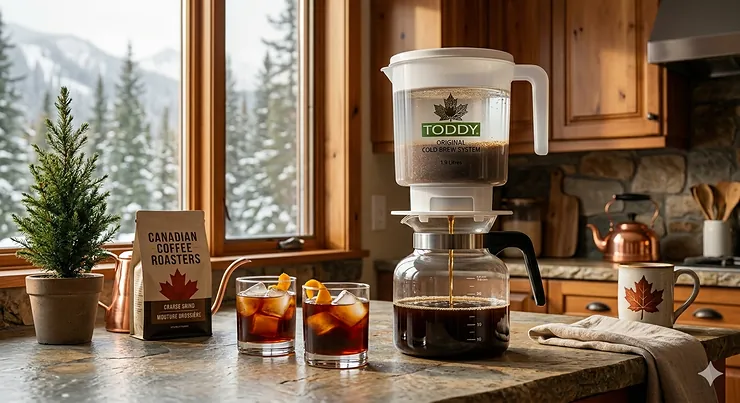
Picture this: it’s a sweltering July morning in Toronto, and you’re craving that perfect coffee kick without the harsh acidity that leaves your stomach doing backflips. Or maybe you’re in Vancouver, looking for a way to stretch your coffee budget while the cost of everything keeps climbing. Enter the Toddy cold brew system – the original cold brew pioneer that’s been quietly revolutionizing how Canadians enjoy their daily cup since the 1960s.
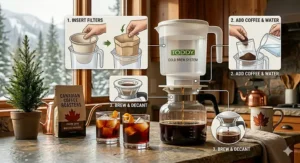
What makes the Toddy cold brew system special? Unlike those fancy espresso machines that cost more than a weekend ski trip to Whistler, this elegantly simple system uses time instead of heat. You steep coarsely ground coffee beans in cold water for 12 to 24 hours, and the result is a smooth, concentrated brew that’s up to 67% less acidic than traditional hot-brewed coffee. According to research published in Scientific Reports, cold brew coffee has significantly lower titratable acidity than hot brew, making it easier on sensitive stomachs – something many Canadians appreciate during our already-challenging winters.
The beauty of the 12-hour steeping process lies in its simplicity. While you’re sleeping or working, chemistry is doing the heavy lifting. Cold water extracts the coffee’s natural sweetness and rich flavours while leaving behind many of the bitter compounds and acids that hot water aggressively pulls out. The result? A concentrate so versatile you can enjoy it hot or cold, diluted with water or milk, and it’ll stay fresh in your fridge for up to two weeks. For budget-conscious Canadians, that’s like having a personal café that never closes.
Quick Comparison Table
| Product | Capacity | Price (CAD) | Rating | Best For |
|---|---|---|---|---|
| Toddy T2N Cold Brew System | 1.6L concentrate | $75-$90 | 4.8/5 | Classic home brewing |
| Toddy Commercial Model | 4.7L concentrate | $380-$420 | 4.7/5 | Coffee shops, offices |
| Takeya Deluxe Cold Brew Maker | 1L | $25-$35 | 4.6/5 | Budget-friendly option |
| OXO Good Grips Cold Brew | 950ml | $55-$70 | 4.5/5 | Easy pour design |
| HARIO Mizudashi Cold Brew Pot | 1L | $45-$60 | 4.7/5 | Japanese minimalism |
| Primula Burke Deluxe | 1.6L | $40-$55 | 4.6/5 | Glass carafe lovers |
| County Line Kitchen Mason Jar | 2L | $45-$65 | 4.5/5 | Maximum capacity |
💬 Just one click – help others make better buying decisions too! 😊
Top 7 Cold Brew Systems Available in Canada: Expert Analysis
1. Toddy T2N Cold Brew System – The Original Pioneer
The Toddy T2N Cold Brew System is the granddaddy of cold brew makers, and for good reason. This non-electric system has been trusted by coffee shops across Canada since 1964, and it’s still the gold standard for home brewers who take their coffee seriously.
Key Specifications:
- Produces 1.2-1.6L of coffee concentrate
- Includes brewing container, glass decanter, 2 reusable felt filters, silicone stopper
- BPA-free food-grade plastic brewing container
Price Range: $75-$90 CAD on Amazon.ca
What Canadian Buyers Say: Buyers from Alberta to Nova Scotia consistently praise the system’s durability and the quality of the concentrate it produces. One Saskatchewan user noted it makes enough concentrate for 12-16 servings per batch, calculating that even with the system cost and coffee beans, each cold brew works out to about $2 – a significant savings compared to $5-7 café prices.
✅ Pros: Industry-standard quality, makes large batches, includes reusable filters, glass decanter prevents plastic taste
❌ Cons: Filters need occasional replacement, larger footprint than some alternatives, requires manual lifting when full
2. Toddy Commercial Model – For Serious Coffee Enthusiasts
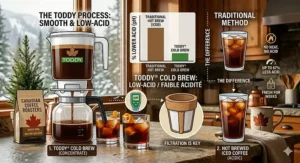
If you’re running a small café in Montreal or supplying cold brew for your office in Calgary, the Toddy Commercial Model is built to handle the volume. This heavyweight champion produces nearly three times the concentrate of the home model.
Key Specifications:
- 4.7L concentrate capacity (approximately 40-50 servings)
- Commercial-grade construction
- Same cold water extraction process as home model
Price Range: $380-$420 CAD
What Canadian Buyers Say: Small business owners appreciate the consistency and reliability. One Ottawa café owner mentioned they’ve been using the same unit for three years without issues, serving dozens of customers daily.
✅ Pros: Commercial capacity, incredibly durable, consistent results, pays for itself quickly in business settings
❌ Cons: Expensive for home use, takes up significant counter space, overkill for individual consumption
3. Takeya Deluxe Cold Brew Maker – Budget Champion
The Takeya Deluxe Cold Brew Maker proves you don’t need to spend big to enjoy excellent cold brew. This pitcher-style brewer is Amazon.ca’s bestseller in the category for good reason – it’s affordable, dishwasher-safe, and produces consistently smooth results.
Key Specifications:
- 1L capacity (4 servings per batch)
- BPA-free Tritan plastic pitcher
- Airtight, leak-proof lid with silicone handle
- Fine-mesh coffee filter included
Price Range: $25-$35 CAD
What Canadian Buyers Say: Over 300 Canadians purchased this in the past month alone. Reviewers love that it fits in most refrigerator doors and is completely dishwasher-safe – perfect for busy mornings. Some BC buyers noted it’s great for camping trips too.
✅ Pros: Very affordable, dishwasher-safe, compact design, available in multiple sizes, no paper filters needed
❌ Cons: Smaller capacity than Toddy, plastic construction (though high-quality), mesh filter less effective than felt for ultra-smooth brew
4. OXO Good Grips Cold Brew Coffee Maker – The Design Enthusiast’s Choice
OXO Good Grips Cold Brew Coffee Maker brings thoughtful design to every detail. If you appreciate products that just work intuitively, this one’s for you. The Rainmaker lid distributes water evenly over coffee grounds, and the switch mechanism makes serving incredibly easy.
Key Specifications:
- 950ml concentrate capacity
- Perforated Rainmaker lid for even water distribution
- Glass carafe with measurement markings
- Stainless steel mesh filter (no paper filters needed)
Price Range: $55-$70 CAD on Amazon.ca
What Canadian Buyers Say: Toronto and Vancouver users particularly appreciate the sleek design that looks good on the counter. The switch mechanism gets consistent praise – just flip it to start the brewing process into your carafe below.
✅ Pros: Brilliant Rainmaker design, easy pour mechanism, dishwasher-safe parts, attractive aesthetics, precise measurements
❌ Cons: Mid-range price, slightly smaller capacity, glass carafe requires careful handling in winter (thermal shock risk)
5. HARIO Mizudashi Cold Brew Coffee Pot – Japanese Precision
Japanese design meets cold brew perfection with the HARIO Mizudashi Cold Brew Coffee Pot. This minimalist wonder features a wine-bottle shape that maximizes refrigerator space while the fine mesh filter produces silky-smooth results.
Key Specifications:
- 1L capacity in distinctive bottle design
- Fine-mesh stainless steel filter
- Heat-resistant glass construction
- Dishwasher-safe components
Price Range: $45-$60 CAD
What Canadian Buyers Say: Montreal’s coffee aficionados love the aesthetic appeal and the ultra-fine filter that produces restaurant-quality clarity. Several reviewers mention using it for cold-brew tea as well, especially during summer.
✅ Pros: Beautiful minimalist design, space-efficient shape, excellent filter, versatile for tea, easy to clean
❌ Cons: Glass requires careful handling, narrow shape can be tricky to fill with grounds, smaller capacity than Toddy
6. Primula Burke Deluxe Cold Brew Iced Coffee Maker – Glass Carafe Classic
The Primula Burke Deluxe combines affordability with the satisfaction of brewing in glass. If you’re particular about avoiding plastic contact with your coffee (even BPA-free plastic), this 1.6L glass beauty delivers.
Key Specifications:
- 1.6L glass carafe (6 cups)
- Comfort-grip handle
- Removable mesh filter
- Dishwasher-safe construction
Price Range: $40-$55 CAD on Amazon.ca
What Canadian Buyers Say: Atlantic Canada buyers appreciate the durable glass construction that doesn’t retain odours or stains. The wide mouth makes filling and cleaning significantly easier than narrow-neck designs.
✅ Pros: Affordable glass option, generous capacity, comfortable handle, wide-mouth design, dishwasher-safe
❌ Cons: Glass is fragile (shipping/handling concerns), mesh filter not as fine as felt, handle can get cold in fridge
7. County Line Kitchen Glass Cold Brew Maker – Maximum Capacity
The County Line Kitchen Glass Cold Brew Maker wins the capacity crown with its massive 2L (64 oz) heavy-duty glass construction. If you’re a household of cold brew enthusiasts or simply hate making frequent batches, this wide-mouth wonder is calling your name.
Key Specifications:
- 2L (64 oz) maximum capacity
- Heavy-duty glass with leak-proof lid
- Wide mouth for easy filling and cleaning
- Stainless steel filter included
- V-shaped pour spout
Price Range: $45-$65 CAD
What Canadian Buyers Say: Prairie families love the large capacity – one batch typically lasts a family of four the entire week. The wide mouth gets special mention for accommodating large ice cubes and making cleanup a breeze with a bottle brush.
✅ Pros: Largest capacity in this comparison, wide mouth design, leak-proof, precision pour spout, excellent value
❌ Cons: Heavy when full, requires more fridge space, glass weight makes it awkward for some users, uses more coffee grounds per batch
What is Toddy Cold Brew System? Understanding the Pioneer
The Toddy cold brew system isn’t just another coffee maker – it’s the original cold water extraction device that sparked the entire cold brew revolution. Invented by Todd Simpson in the 1960s after experiencing smooth cold coffee in Guatemala, the Toddy method uses a 12-hour steeping process to extract coffee’s desirable flavours while leaving harsh acids and bitter oils behind.
According to Wikipedia, cold brew coffee is prepared by steeping coarse-ground beans in water at cool temperatures for an extended period – typically 12 to 24 hours. The Toddy system optimizes this process with a thoughtfully designed brewing container, a felt filter that captures fine particles, and a glass decanter for storing your finished concentrate.
What sets the best manual cold brew system options like Toddy apart from electric brewers? Control and simplicity. You’re not dependent on heating elements, pumps, or electronics that can fail (especially important during Canadian winters when power outages happen). The manual process also produces a more nuanced flavour profile that automatic brewers often miss.
The magic happens during those 12 hours of steeping. Cold water molecules move more slowly than hot water, extracting compounds at different rates. This selective extraction is why cold brew tastes fundamentally different from iced coffee (which is just hot-brewed coffee cooled down). Research published in Scientific Reports confirms that while pH levels are similar between hot and cold brew, cold brew has significantly lower total titratable acidity – the compounds responsible for that harsh, sour bite that bothers sensitive stomachs.
How to Use Toddy Cold Brew Maker: Step-by-Step Canadian Guide
Mastering how to use Toddy cold brew maker is surprisingly straightforward, but a few Canadian-specific tips will ensure perfect results every time.
The Basic Brewing Process
Step 1: Assemble Your Materials
You’ll need coarsely ground coffee (about 340-450g for a full batch), cold filtered water (1.8L), your Toddy brewing container, felt filter, and silicone stopper. Canadian tap water works fine in most cities, but if you’re in an area with heavily chlorinated or hard water, consider filtered water for better taste.
Step 2: Insert the Stopper and Filter
Place the silicone stopper in the bottom hole of the brewing container from the outside. Position one felt filter inside the bottom of the brewing container. This creates the foundation for your brewing process.
Step 3: Add Coffee and Water in Layers
This is where technique matters. Add 1 cup (240ml) of cold water first to wet the filter. Then add half your coffee grounds (170-225g). Pour 3 cups (720ml) of water in a circular motion, ensuring all grounds are saturated. Add remaining grounds, then slowly add the remaining water. Do NOT stir – gravity and time will do the work.
Step 4: Steep for 12-24 Hours at Room Temperature
Most Canadians find 12-16 hours produces the optimal balance. In winter, room temperature is typically 18-20°C, perfect for brewing. In summer, if your kitchen exceeds 25°C, consider 10-12 hours to prevent over-extraction. Don’t refrigerate during steeping – cold temperatures slow extraction too much.
Step 5: Release the Concentrate
After steeping, place your brewing container over the glass decanter. Remove the stopper and let gravity do its work. This takes 20-30 minutes. Don’t press or squeeze – patience rewards you with cleaner-tasting concentrate.
Step 6: Store and Enjoy
Your concentrate will keep refrigerated for up to 2 weeks. To serve: mix 1 part concentrate with 3 parts water (or milk) for cold brew, or with hot water for a smooth hot coffee. Adjust ratios to your taste preference.
Canadian Winter Tip
During cold months, ensure your concentrate doesn’t freeze if stored in a garage fridge. The high concentration won’t freeze solid until about -5°C, but it can become slushy, affecting texture.
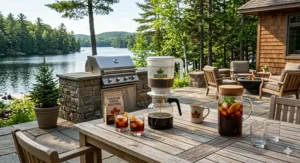
Cold Brew Concentrate Recipe: Perfecting Your Ratios for Canadian Taste
The standard cold brew concentrate recipe is forgiving, but understanding ratios helps you dial in your perfect cup. Most Canadians prefer a slightly less intense brew than Americans – we tend toward 1:3 or 1:4 concentrate-to-water ratios rather than 1:2.
Basic Concentrate Formula
For Toddy T2N System (Full Batch):
- 340g coarsely ground coffee
- 1.8L cold filtered water
- Results: approximately 1.2-1.4L concentrate
Serving Ratios:
- Light brew: 1 part concentrate + 4 parts liquid (perfect for those new to cold brew)
- Medium brew: 1 part concentrate + 3 parts liquid (most popular in Canada)
- Strong brew: 1 part concentrate + 2 parts liquid (for espresso lovers)
Regional Canadian Variations
Prairie Double-Double Style:
Mix 60ml concentrate with 120ml milk and 2 teaspoons of maple syrup for a distinctly Canadian twist. The maple complements coffee’s natural caramel notes beautifully.
West Coast Wellness Version:
Blend 60ml concentrate with 180ml oat milk, ice, and a dash of vanilla extract. Vancouver’s health-conscious crowd loves this dairy-free option.
Maritime Morning Fuel:
Mix 90ml concentrate with 150ml hot water for a bold start to Atlantic Canada’s early fishing mornings. The hot water unlocks different aromatic compounds while maintaining the smooth, low-acid profile.
Coffee-to-Water Ratios Comparison Table
| Ratio | Coffee (g) | Water (L) | Concentrate Yield | Strength | Best For |
|---|---|---|---|---|---|
| 1:5 | 340g | 1.7L | ~1.3L | Very Strong | Espresso replacement |
| 1:5.5 | 340g | 1.9L | ~1.4L | Strong | Traditional Toddy recipe |
| 1:6 | 340g | 2.0L | ~1.5L | Medium | Most Canadian preferences |
| 1:7 | 340g | 2.4L | ~1.7L | Light | Budget-stretching |
Toddy vs Other Cold Brew Methods: Which System Wins for Canadians?
When comparing Toddy vs other cold brew methods, several factors matter to Canadian buyers: cost, convenience, quality, and durability through our temperature extremes.
Immersion vs. Drip Methods
The Toddy system uses immersion brewing – coffee grounds sit fully submerged in water for the entire steeping period. This differs from cold drip towers (Kyoto-style), where water slowly drips through grounds. Immersion is simpler, more forgiving, and doesn’t require the precise calibration drip systems demand. For Canadian homes where space and simplicity matter, immersion wins.
French Press Cold Brewing
Many Canadians already own a French press and wonder if they should bother with a dedicated cold brew system. While you can make cold brew in a French press, the Toddy’s felt filter produces significantly smoother results. French press metal screens let through more fine particles and oils, creating a cloudier, grittier concentrate. If you value clarity and silky texture, the Toddy’s reusable filters included in the system justify the investment.
Mason Jar DIY Method
The ultimate budget approach – steep coffee in a large mason jar, then strain through cheesecloth or coffee filters. This works but is messy and time-consuming. You’ll often end up with sediment in your concentrate, and achieving consistent results is challenging. The initial cost of a Toddy system pays for itself after about 15-20 batches when you factor in wasted coffee and filters.
Electric Cold Brew Makers
Devices like the Dash Rapid Cold Brew System promise cold brew in 5-10 minutes using vacuum technology. Sounds appealing, but here’s the truth: the 12-hour steeping process exists for a reason. Rushing extraction with technology changes the chemical profile. Research from Health Canada notes that caffeine extraction rates vary significantly with temperature and time. Quick methods produce different caffeine concentrations and miss subtle flavour compounds that long steeping captures.
Method Comparison Table
| Method | Initial Cost | Ease of Use | Quality | Cleanup | Durability |
|---|---|---|---|---|---|
| Toddy System | $75-90 CAD | ★★★★☆ | ★★★★★ | ★★★★☆ | ★★★★★ |
| French Press | $30-50 CAD | ★★★★★ | ★★★☆☆ | ★★★☆☆ | ★★★★☆ |
| Mason Jar DIY | $10-20 CAD | ★★☆☆☆ | ★★☆☆☆ | ★☆☆☆☆ | ★★★★★ |
| Cold Drip Tower | $150-400 CAD | ★★☆☆☆ | ★★★★★ | ★★★☆☆ | ★★★★☆ |
| Electric Rapid | $60-120 CAD | ★★★★★ | ★★★☆☆ | ★★★★☆ | ★★★☆☆ |
Benefits vs. Traditional Hot Coffee Brewing
| Aspect | Cold Brew (Toddy) | Hot Drip Coffee |
|---|---|---|
| Acidity | Up to 67% less acidic | Higher titratable acidity |
| Caffeine per ml | Slightly higher in concentrate | Moderate (dilutes quickly) |
| Brewing Time | 12-24 hours | 5-10 minutes |
| Equipment Cost | $25-90 CAD one-time | $20-200+ CAD |
| Shelf Life | Up to 14 days refrigerated | Best within 30 minutes, max 12 hours |
| Versatility | Serve hot or cold | Best served hot |
| Ease of Use | Set and forget | Active supervision needed |
| Cost per Serving | $0.40-0.80 CAD | $0.30-0.50 CAD |
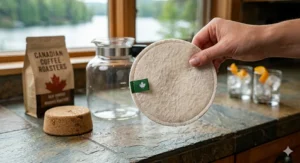
Understanding the 12-Hour Steeping Process: Science Behind Smoothness
The 12-hour steeping process isn’t arbitrary – it’s the sweet spot where chemistry and convenience meet. But what’s actually happening during those hours while you sleep or work?
Hour 0-2: Initial Extraction
Water molecules begin penetrating coffee cell walls. Highly soluble compounds like caffeine start dissolving immediately. This is when you’ll notice the water turning light brown. Temperature matters here – Canadian room temperature (18-22°C) is ideal. Too cold slows everything down; too warm can create off-flavours.
Hour 2-6: Flavour Development
Sugars, amino acids, and chlorogenic acids dissolve into solution. This is when cold brew develops its characteristic sweetness without adding sugar. Unlike hot brewing, which can caramelize and denature these compounds, cold extraction preserves their natural state.
Hour 6-12: Full Saturation
The final stage achieves chemical equilibrium. Extraction rate slows significantly, but subtle aromatic compounds continue dissolving. This is why 12 hours produces noticeably better results than 6 hours – you’re capturing those delicate notes that give cold brew its complexity.
Hour 12-24: Diminishing Returns
Beyond 12 hours, you’re still extracting, but gains are minimal. Some Canadians prefer 18-24 hour steeps for maximum strength, but be aware that longer times can pull more tannic compounds, creating astringency. If you notice bitterness, reduce your steeping time rather than diluting more.
According to Health Canada recommendations, adults can safely consume up to 400mg of caffeine daily. A typical serving of cold brew concentrate (diluted 1:3) contains approximately 150-200mg of caffeine – less than a large Tim Hortons coffee but more satisfying due to the smooth delivery.
Reusable Filters Included: Environmental and Economic Benefits
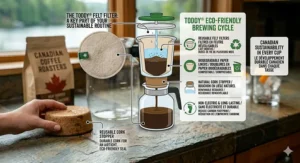
One of the Toddy cold brew system’s greatest strengths is its reusable filters included in the package. This isn’t just about convenience – it’s about sustainability and long-term savings that matter to environmentally conscious Canadians.
Economic Impact
Each Toddy felt filter lasts approximately 10-12 brewing cycles with proper care. At $6-8 CAD per replacement filter versus $0.10-0.15 per paper filter for drip machines, the math favours Toddy over time:
- Paper filters for one year (daily coffee): 365 × $0.12 = $43.80 CAD
- Toddy filters for one year (bi-weekly batches): 26 batches ÷ 10 = 3 filters × $7 = $21 CAD
You save roughly $22.80 annually on filters alone while producing less waste. For Canadian families brewing multiple batches monthly, savings multiply quickly.
Environmental Footprint
Canada produces approximately 3 billion coffee pods annually, contributing significantly to landfill waste. While Toddy’s felt filters eventually need replacing, three filters yearly versus 365 paper filters dramatically reduces your environmental impact. Some creative Canadians compost used Toddy filters in their gardens – the natural wool and cotton fibers break down, unlike synthetic paper filter adhesives.
Filter Care Tips for Canadian Climate
After each use, rinse your felt filter thoroughly with cold water (avoid soap, which leaves residue). In winter’s dry air, filters can become brittle, so store them in a sealed bag with a damp paper towel to maintain flexibility. In summer’s humidity, ensure filters dry completely between uses to prevent mildew – hang in a well-ventilated area or near a dehumidifier.
Choosing the Right Coffee Beans for Your Toddy System in Canada
The best manual cold brew system deserves quality coffee beans. Here’s what Canadian buyers should know about selecting beans that shine in cold extraction.
Roast Level Matters
Medium to medium-dark roasts work best for cold brew. They’ve developed enough body and caramel sweetness while retaining enough acidity for complexity. Light roasts can taste sour in cold brew, while very dark roasts sometimes produce flat, one-dimensional results.
Popular Canadian roasters for cold brew:
- 49th Parallel (Vancouver) – their Old School Espresso works beautifully
- Phil & Sebastian (Calgary) – Automatic blend is cold-brew approved
- Pilot Coffee Roasters (Toronto) – their Ethiopia Yukro shines
- Anchored Coffee (Halifax) – Maritime Morning Blend designed for cold brewing
Origin Characteristics
Different growing regions produce distinct flavour profiles in cold brew:
Central American (Guatemala, Costa Rica): Chocolate, nuts, caramel – safe, crowd-pleasing choices
South American (Brazil, Colombia): Nutty, smooth, low acidity – excellent for beginners
African (Ethiopia, Kenya): Fruity, floral, complex – adventurous and delicious
Indonesian (Sumatra): Earthy, heavy-bodied – divisive but beloved by some
Grind Size: Coarse is King
This cannot be overstated – use coarse grounds similar to breadcrumbs or coarse sea salt. Fine grinds create over-extraction and sediment. Most Canadian coffee shops will grind beans to “French press coarse” upon request, which works perfectly for Toddy systems.
Freshness Factor
Buy whole beans and grind just before brewing for maximum flavour. Coffee begins oxidizing within 15 minutes of grinding. Vacuum-sealed pre-ground coffee works in a pinch, but whole beans ground fresh produce noticeably superior results.
Canadian storage tip: In summer, store beans in an airtight container in your pantry. In winter, avoid storing coffee in unheated garages or near heat vents – temperature fluctuations degrade flavour quickly.
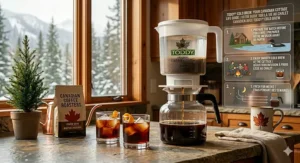
Maintenance and Care: Making Your Toddy System Last Decades
With proper care, your Toddy system can last 10-20 years. Canadian buyers report still using systems purchased in the early 2000s. Here’s how to ensure longevity through our demanding climate.
After Each Brew Cycle
Rinse the brewing container with warm (not hot) water. Avoid soap unless absolutely necessary – cold brew oils are delicate and soap residue affects taste. Rinse felt filters thoroughly with cold water, gently squeeze out excess water (don’t wring), and hang to dry.
Deep Cleaning (Monthly)
Fill your brewing container with warm water and 2 tablespoons of baking soda. Let sit for 30 minutes, then scrub gently with a soft brush. This removes coffee oil buildup without harsh chemicals. Rinse thoroughly multiple times.
Winter Storage Considerations
If you’re storing your Toddy during winter travel (snowbirds heading south!), ensure all components are completely dry before packing. Moisture in felt filters can freeze and damage fibers. Store in a temperature-controlled area – extreme cold makes plastic brittle.
Filter Replacement Schedule
Replace felt filters every 10-12 uses or when you notice:
- Slow drainage (taking longer than 30 minutes to filter)
- Coffee sediment in your concentrate
- Musty odours even after washing
- Visible tears or thinning
Replacement filters cost $6-8 CAD for a 2-pack on Amazon.ca, making this a minimal ongoing expense.
Glass Decanter Care
The glass decanter is dishwasher-safe but hand washing extends its life. Canadian water hardness varies dramatically – Calgary and Winnipeg have particularly hard water that leaves mineral deposits. If you notice cloudiness, fill the decanter with equal parts water and white vinegar, let sit for an hour, then rinse thoroughly.
Troubleshooting Common Cold Brew Issues Canadian Users Face
Even with a straightforward system like Toddy, questions arise. Here are solutions to the most common issues Canadian cold brew enthusiasts encounter.
Problem: Bitter or Harsh Taste
Solution: You’re likely over-extracting. Reduce steeping time to 10-12 hours rather than 16-24. Also verify your grind size – if it’s too fine (like drip coffee grounds), it’ll over-extract. Ask your roaster for “French press coarse” grind.
Problem: Weak, Watery Concentrate
Solution: Increase your coffee-to-water ratio. Try 400g of coffee to 1.8L water instead of the standard 340g. Also ensure you’re using fresh beans – stale coffee (more than 3 weeks past roast date) produces lackluster results regardless of method.
Problem: Sediment in Concentrate
Solution: This usually indicates worn filters or grounds that are too fine. Replace your felt filters if they’ve exceeded 12 uses. Also ensure you’re not pressing or squeezing during the filtration phase – let gravity do the work even if it takes 45 minutes.
Problem: Mold Growth in Brewing Container
Solution: This happens in humid Canadian summers when containers aren’t dried thoroughly. After washing, leave your brewing container inverted on a dish rack in a well-ventilated area until completely dry. Consider running a dehumidifier in your storage area during July-August.
Problem: Slow Drainage After Brewing
Solution: Rinse filters more thoroughly between uses. Coffee oils accumulate and clog filter pores. If rinsing doesn’t help, soak filters in a solution of 1 cup water + 1 tablespoon baking soda for 30 minutes, then rinse thoroughly.
Problem: Concentrate Tastes Different Each Batch
Solution: Consistency requires measuring. Use a kitchen scale for coffee (within 5g accuracy) and measure water precisely. Temperature variations matter too – steeping at 16°C produces different results than 24°C. Maintain consistent room temperature during steeping.
Price Range & Value Analysis for Canadian Shoppers
Understanding the true cost of cold brew systems helps Canadian buyers make informed decisions. Let’s break down the economics over one year of regular use.
Initial Investment Comparison
Entry-Level Systems ($25-45 CAD):
Products like Takeya and Primula offer excellent starting points. You’ll produce good-quality cold brew without breaking the bank. Best for individuals trying cold brew for the first time or casual drinkers (1-2 batches monthly).
Mid-Range Systems ($45-90 CAD):
The Toddy T2N, OXO, and HARIO fall here. Superior build quality, better filters, and thoughtful design features justify the premium. Ideal for regular cold brew enthusiasts (2-4 batches monthly) who value convenience and consistency.
Premium/Commercial Systems ($90-420 CAD):
Toddy Commercial and high-end glass systems target serious enthusiasts and small businesses. Unless you’re serving a large household or running a café, these exceed most Canadian home needs.
Cost Per Serving Analysis
Let’s assume you buy quality medium-roast beans at $18/lb (about average for Canadian specialty coffee):
Toddy System (1.3L concentrate, diluted 1:3 = 5.2L finished coffee):
- Coffee: 340g = $13.50
- Water: Negligible
- Filter wear: $0.70 (based on 10-use lifespan)
- Total: $14.20 for 20 servings (260ml each) = $0.71 per serving
Café Cold Brew in Canada:
- Average price: $4.50-6.50 for 473ml (Grande)
- Cost: $4.50-6.50 per serving
Savings per serving: $3.79-5.79 when making at home
If you drink cold brew 3 times weekly, annual savings reach $590-902 CAD. Your Toddy system pays for itself in roughly 2-3 weeks. Even accounting for bean quality upgrades and occasional filter replacements, home brewing saves thousands annually for regular cold brew drinkers.
Hidden Value Factors
Beyond direct cost savings, consider:
- Convenience: No coffee shop lineups during -30°C winter mornings
- Customization: Adjust strength, sweetness, and temperature exactly to your preference
- Availability: Never run out – always have concentrate ready
- Quality control: Know exactly what’s in your coffee (no mystery syrups or stabilizers)
FAQ: Your Toddy Cold Brew Questions Answered
❓ How much does a Toddy cold brew system cost in Canada?
❓ Can I use regular ground coffee for Toddy cold brew system?
❓ How long does Toddy cold brew concentrate stay fresh in Canada?
❓ Is cold brew coffee healthier than regular hot coffee in Canada?
❓ What's the best coffee-to-water ratio for Toddy system in Canada?
Conclusion: Is the Toddy Cold Brew System Right for Your Canadian Kitchen?
After exploring seven excellent cold brew systems, understanding the science behind the 12-hour steeping process, and crunching the numbers, here’s the bottom line: if you’re drinking cold brew 2-3 times weekly or more, investing in a Toddy system makes financial and practical sense for Canadian households.
The Toddy T2N Cold Brew System remains the gold standard for most Canadians. At $75-90 CAD, it delivers professional-quality results, includes reusable filters included that save money over time, and will last through decades of Prairie winters and Maritime summers. The concentrate stays fresh for two weeks, meaning one Sunday evening brewing session supplies your entire week.
For budget-conscious first-timers or smaller households, the Takeya Deluxe at $25-35 CAD offers remarkable value. It won’t produce the same silky-smooth texture as Toddy’s felt filters, but it’s dishwasher-safe, compact, and introduces you to cold brew without significant commitment.
The key takeaways? Cold brew isn’t complicated, but quality equipment matters. The best manual cold brew system for you depends on your consumption patterns, available budget, and quality expectations. Whether you choose Toddy, Takeya, OXO, or another option, you’re joining thousands of Canadians who’ve discovered that smooth, low-acid coffee doesn’t require a café visit or a second mortgage.
Ready to transform your morning routine? Start with quality whole beans from a local Canadian roaster, use coarse-ground coffee, follow the cold brew concentrate recipe ratios we’ve outlined, and give the 12-hour steeping process time to work its magic. Your stomach, your wallet, and your taste buds will thank you.
✨ Don’t Miss These Exclusive Deals!
🔍 Take your cold brew game to the next level with these carefully selected products available in Canada. Click on any highlighted item to check current pricing and availability on Amazon.ca. These tools will help you create authentic café-quality cold brew your family and friends will love!
Recommended for You
- 7 Best Electric Cold Brew Makers Canada 2026
- 7 Best Cold Brew Makers Canada 2026
- Nespresso vs Keurig: 7 Best Coffee Makers Canada 2026
Disclaimer: This article contains affiliate links to Amazon.ca. If you purchase products through these links, we may earn a small commission at no additional cost to you.
✨ Found this helpful? Share it with your friends! 💬🤗
