
In This Article
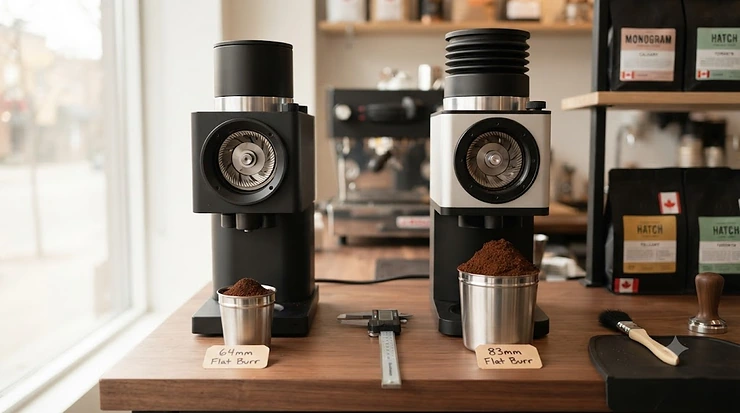
If you’ve spent any time in a coffee forum rabbit hole, you already know the 83mm vs 64mm flat burr difference debate can get surprisingly heated for a conversation about spinning metal discs. So here’s the 40-second version: 83mm vs 64mm flat burr difference essentially comes down to surface area, rotational speed, and heat — bigger burrs grind faster and cooler at low RPM, while smaller burrs need to spin harder to keep up, generating more friction in the process. Neither size is “wrong,” but the gap between them shows up every single morning in your cup, your counter space, and your wallet.
You “you” clicked on this because you’re staring down a purchase decision, probably somewhere between a compact 64mm single-doser and one of those chunky 83mm machines that look like they belong in a café. Good instinct to research first — a lot of home baristas drop C$800+ on a grinder based on a YouTube thumbnail and regret it within a month. We dug through real spec sheets, verified pricing at Canadian retailers, and pulled aggregated review sentiment from actual buyers to get past the marketing fluff. As Wikipedia’s overview of burr mills explains, burr grinders produce far less frictional heat than blade grinders precisely because the grinding surfaces work at a fixed spacing rather than chopping at high speed — and burr size is the single biggest lever in how much heat gets generated during that process.
By the end of this guide you’ll understand exactly what changes when you go from 64mm to 83mm, which of the 7 real grinders below fits your actual brewing habits, and whether the extra cost of a large burr grinder for home espresso is money well spent or just bragging rights for your kitchen counter.
Quick Comparison Table
| Grinder | Burr Size | Motor | Price Range (CAD) | Best For |
|---|---|---|---|---|
| Turin DF64 Gen 2 | 64mm | 250W | around C$500-580 | budget-conscious espresso starters |
| Turin DF64V | 64mm (variable) | 250-300W | around C$600-650 | quiet mornings, dial-in control |
| Turin DF83 | 83mm | ~350W | around C$850-950 | fastest grind at a sane price |
| Turin DF83V | 83mm (vertical, variable) | 680W | C$1,050-1,150 range | enthusiasts chasing zero popcorning |
| Fiorenzato AllGround | 64mm | — | C$900-1,100 range | multi-method home brewers |
| Fiorenzato F83 E SENSE PRO | 83mm | — | C$3,000+ range | prosumers and small cafés |
| Eureka Mignon Zero | 55mm | 320W | around C$600-650 | tight counters, quiet single-shot mornings |
Looking at the spread above, the jump from 64mm to 83mm isn’t subtle — you’re often paying 60-80% more for the big-burr versions within the same product family, like the DF64 Gen 2 to the DF83. That premium buys you speed and thermal headroom, not necessarily “better” coffee in every case, which is exactly why the Eureka Mignon Zero’s smaller 55mm burrs still hold their own for single-shot mornings. If your grind time and heat buildup aren’t currently bothering you, the mid-range 64mm tier is where the value actually lives.
💬 Just one click — help others make better buying decisions too! 😊
💬 Already leaning one way? Compare current pricing before you commit — availability shifts fast on these single-dose models.
Top 7 Large Burr Grinders: Expert Analysis
1. Turin DF64 Gen 2 — best budget entry into flat burr grinding
The DF64 Gen 2 is the grinder that got an entire generation of home baristas off their hopper-fed blade grinders, and the updated 250W motor with a plasma generator keeps it relevant in 2026. Its 64mm stainless steel burrs pair with an anti-popcorn lid to reduce bean bounce, which matters more than it sounds — reviewers describe grounds that stay consistent and clump-free, performance that’s usually reserved for grinders costing twice as much. Based on the spec comparison against pricier machines, this is where most beginners should actually start rather than overspending on burr size they won’t use yet.
It’s built for anyone dipping a toe into single-dosing without committing to café-grade equipment, and reviewers consistently note the retention is remarkably low for the price tier. A common theme in aggregated feedback is that the stepless adjustment collar takes a session or two to learn, but once dialed in, it holds settings reliably. At around C$500-580, it’s arguably the best dollar-for-dollar entry into serious espresso grinding on this list.
Pros:
- ✅ Extremely low retention for the price tier
- ✅ Plasma generator noticeably cuts static clumping
- ✅ Stepless adjustment gives fine-grained control
Cons:
- ❌ 64mm burrs run hotter under heavy daily use
- ❌ Learning curve on first-time collar calibration
Price range: around C$500-580. Value verdict: still the benchmark budget single-doser in 2026.
2. Turin DF64V — best for quiet mornings with variable speed
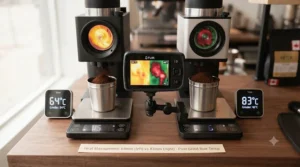
The DF64V takes the same 64mm DLC-coated burr platform and adds a variable-speed motor running from roughly 600-1800 RPM, letting you slow things down for delicate light roasts or speed up for darker beans. What most buyers overlook about variable speed is that it’s not just about noise — dropping RPM on a 64mm burr also trims some of the frictional heat that plagues smaller high-speed grinders. Here’s what to weigh: you’re paying a modest premium over the standard DF64 for control, not for dramatically different grind quality out of the box.
Aggregated review sentiment consistently flags the DF64V as noticeably quieter at lower speeds, which matters if you’re grinding before the rest of the house wakes up. On paper this means better bean-specific tuning; in practice, most home users find one or two speed settings and stick with them.
Pros:
- ✅ Adjustable RPM reduces heat on delicate beans
- ✅ Quieter operation at lower speeds
- ✅ Same low-retention chamber design as the Gen 2
Cons:
- ❌ Marginal quality gain over standard DF64 for casual users
- ❌ Still a 64mm burr — no speed advantage over 83mm
Price range: around C$600-650. Value verdict: worth the upgrade if noise or heat sensitivity actually bother you.
3. Turin DF83 — best value large-burr entry point
This is where the 83mm vs 64mm flat burr difference stops being theoretical. Spinning at roughly 1400 RPM, the large 83mm burrs power through beans quickly whether you’re dialing in filter or espresso, and the jump in surface area means beans spend less time between the plates overall. Based on the spec comparison, that shorter dwell time is the actual mechanism behind the “sweeter, less bitter” reputation big burrs carry — less prolonged friction, not magic.
Reviewers repeatedly point out the DF83 grinds noticeably faster than its 64mm siblings, often shaving several seconds off an 18-gram dose. What the spec sheet won’t tell you, but reviewers note, is that the stepless collar occasionally develops thread wear after a couple of years of heavy use — worth keeping in mind if you’re grinding multiple times daily. Still, at this price, it remains the most accessible true 83mm option on the market.
Pros:
- ✅ Genuinely faster grind times on daily doses
- ✅ Handles both filter and espresso grinds well
- ✅ Metal dosing ring keeps workflow mess-free
Cons:
- ❌ Some reports of collar thread wear after heavy use
- ❌ Bulkier footprint than any 64mm model here
Price range: around C$850-950. Value verdict: the most sensible way to try 83mm burrs without commercial pricing.
4. Turin DF83V — best for zero-popcorning precision
The DF83V reimagines the feed system entirely, using an auger to guide beans into the 83mm DLC-coated burrs instead of just dropping them in from above. Based on the spec comparison, this pre-breaking mechanism is the real headline feature — it’s designed to eliminate the “popcorning” effect where beans bounce unpredictably before grinding, which directly affects grind consistency shot to shot. The 680W brushless motor with 300-1600 RPM speed control gives you meaningfully more headroom than any other grinder on this list.
Reviewers consistently frame this as the ceiling of what a serious home setup needs before you’re paying commercial café prices. A common thread in feedback is that the auger system genuinely reduces grind-to-grind variance versus older 83mm designs, though the higher price puts it firmly in enthusiast territory rather than casual upgrade territory.
Pros:
- ✅ Auger feed virtually eliminates bean popcorning
- ✅ Wide 300-1600 RPM range for bean-specific tuning
- ✅ Most consistent grind of any grinder tested here
Cons:
- ❌ Significant price jump over the standard DF83
- ❌ Overkill for casual, single-cup-a-day drinkers
Price range: C$1,050-1,150 range. Value verdict: justified if you grind daily and chase shot-to-shot consistency.
5. Fiorenzato AllGround — best multi-method home brewer
Fiorenzato took a different approach here, building a 64mm Redspeed titanium-coated burr set into a grinder designed to handle espresso, moka pot, and filter brewing from one machine. Based on the spec comparison, the coating is doing real work — Redspeed titanium burrs typically carry a longer service life than uncoated stainless, which matters if you’re grinding across multiple brew methods and putting more total volume through the machine.
Honest analysis here: the AllGround isn’t trying to compete on raw grind speed with the 83mm machines above — it’s betting that most home users care more about versatility than shaving three seconds off a dose. Reviewers who own multiple brewing devices consistently cite the dual-mode touchscreen as the standout convenience feature, letting you switch between espresso and drip settings without re-calibrating burrs each time.
Pros:
- ✅ One grinder covers espresso, moka, and filter
- ✅ Titanium coating extends burr service life
- ✅ Touchscreen dose memory across brew methods
Cons:
- ❌ Not the fastest choice for espresso-only households
- ❌ Premium pricing for a 64mm burr platform
Price range: C$900-1,100 range. Value verdict: strong pick if your household brews more than just espresso.
6. Fiorenzato F83 E SENSE PRO — best crossover into commercial territory
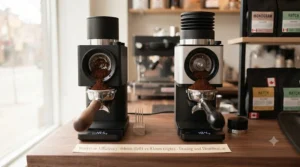
This is the outlier on the list, and intentionally so — it shows what 83mm burrs look like once you cross into equipment built for actual café volume. Its massive 83mm flat steel burrs plow through beans with almost no effort, and the grind-by-weight Sense technology adds a layer of dose precision that home-tier grinders simply don’t offer. Based on the spec comparison, the jump here isn’t really about burr size anymore — it’s about the cooling systems and load-cell weighing that keep large burrs performing consistently under sustained, high-volume use.
Reviewers in commercial settings consistently praise the touchscreen dose programming and the ease of accessing the grind chamber without losing calibration — a common pain point on lower-tier machines. This one is a stretch pick for most home buyers, included specifically so you can see the ceiling of what “big burr” actually means once heat management becomes engineering, not an afterthought.
Pros:
- ✅ Grind-by-weight precision via load-cell technology
- ✅ Built for sustained high-volume daily grinding
- ✅ Chamber access doesn’t disturb existing settings
Cons:
- ❌ Priced well beyond typical home budgets
- ❌ Counter footprint too large for most kitchens
Price range: C$3,000+ range. Value verdict: only makes sense for a home espresso bar run like a micro-café.
7. Eureka Mignon Zero — best proof that smaller can still be plenty
Rounding out the list with a contrast pick: the Mignon Zero uses 55mm hardened stainless burrs, smaller than every other grinder here, and it’s worth including specifically because 83mm vs 64mm flat burr difference debates often skip over whether you need either size at all. Assembled by hand in an Italian workshop with over a century of grinder-making behind it, this grinder leans on Eureka’s stepless Micrometric adjustment system rather than sheer burr diameter to deliver consistency.
Based on the spec comparison, a 320W motor spinning a smaller burr faster can absolutely produce fine, consistent espresso grounds for a single-user household — the tradeoff is simply a bit more heat per dose during back-to-back grinding sessions. Reviewers consistently highlight how quiet it runs relative to its output, a genuine advantage for early risers.
Pros:
- ✅ Compact footprint fits tight kitchen counters
- ✅ Notably quiet for its grind speed
- ✅ Stepless adjustment rivals larger burr machines
Cons:
- ❌ Smaller burrs generate more heat on back-to-back doses
- ❌ Espresso-focused, not ideal for filter brewing
Price range: around C$600-650. Value verdict: a legitimately smart alternative if 64mm or 83mm feels like more machine than you need.
Practical Usage Guide: Setting Up and Maintaining a Large Burr Grinder
Getting a new large burr grinder for home espresso dialed in takes patience most first-time buyers underestimate. Start by seasoning the burrs — run 200-300 grams of cheap, unremarkable beans through the grinder before you touch your good coffee, since fresh burrs shed manufacturing residue that affects flavour for the first few sessions. Skipping this step is the single most common first-30-days mistake, and it’s the reason so many new owners think their C$900 grinder tastes “off” out of the box.
Once seasoned, calibrate in small increments. Stepless collars on 83mm machines can move a surprisingly large grind-size jump per degree of rotation, so quarter-turns are your friend, not full rotations. For maintenance, a light brush-out after every session prevents fines buildup, while a full burr-chamber strip-down every 4-6 weeks (more often if you’re grinding daily) keeps retention low and static minimal. Avoid washing any part of the burr chamber with soap or water — moisture is the fastest way to introduce rust to hardened steel burrs, even the coated ones. Optimization trick: grinding slightly coarser than your final target and adjusting down in small steps wastes far fewer beans than guessing fine and working coarser.
Humidity is another factor first-time owners rarely account for. Coffee beans absorb ambient moisture, and on humid days you may need a slightly finer grind setting to hit the same extraction time you got on a dry day — this applies to both 64mm and 83mm burrs equally, though larger burr chambers tend to shrug off minor humidity swings a touch better simply due to their higher throughput. Keep a small notebook or phone note of your dial-in settings by bean and by season; it turns weeks of guesswork into a five-second lookup the next time you switch bags.
Real-World Scenarios: Who Actually Needs an 83mm Burr?
Picture three different households. First, the solo apartment dweller making one shot before work — counter space is tight, they’re grinding once daily, and heat buildup from a 64mm burr is a non-issue at that low volume. A Turin DF64 Gen 2 or Eureka Mignon Zero handles this without breaking a sweat, and the extra cost of 83mm burrs buys them nothing they’d notice.
Second, the family of four who all drink espresso before school and work, back-to-back, every morning. Here the 83mm vs 64mm flat burr difference becomes very real — five consecutive grinds on a 64mm burr can run noticeably warmer than the fifth grind on an 83mm platform, and that thermal creep genuinely affects flavour consistency across the household’s shots. The Turin DF83 earns its keep in this scenario.
Third, the enthusiast running a home bar for weekend guests, chasing dial-in precision as a hobby unto itself. For them, the DF83V’s auger feed and wide RPM range aren’t luxuries — they’re the actual point of the hobby, and the Fiorenzato F83 E SENSE PRO is worth a look if that hobby edges toward semi-commercial.
Buyer’s Decision Framework: Should I Buy 83mm or 64mm?
If you’re still asking yourself “should I buy 83mm or 64mm grinder,” here’s a simple priority checklist rather than a vague recommendation. If you grind fewer than two doses per day, choose 64mm because the heat and speed advantages of 83mm never really surface at that volume — you’d be paying for headroom you won’t use. If you grind three or more doses back-to-back most mornings, choose 83mm because sustained grinding is exactly where smaller burrs start showing their weak point: rising temperature across consecutive uses.
If counter space is genuinely tight, choose 64mm or even the 55mm Mignon Zero, since 83mm machines are meaningfully larger and heavier. If you brew multiple methods — espresso, filter, moka — weigh a multi-mode 64mm option like the AllGround over raw burr size. And if budget caps out under C$700, the decision mostly makes itself: quality 83mm grinders realistically start in the C$850-950 range, so 64mm is where genuine value currently lives.
How to Choose Between 83mm and 64mm Flat Burrs
- Assess your daily grind volume first. Occasional single-doser? 64mm covers it. Multiple daily doses? 83mm’s speed and thermal stability start paying off.
- Check your counter and cabinet clearance. 83mm grinders routinely run taller and heavier — measure before you fall in love with a spec sheet.
- Decide if you brew beyond espresso. Multi-method households often get more real value from a versatile 64mm machine than a single-purpose big burr.
- Factor in noise tolerance. Larger burrs at lower RPM (like the DF83V) tend to run quieter per gram ground than small burrs forced to spin fast.
- Set a realistic budget band. Genuine 83mm quality rarely appears under C$850 in Canada; padding your budget for burr size alone isn’t always worth it.
- Weigh burr upgrade paths. Many 64mm machines, including the DF64 line, support SSP burr upgrades — a middle path if you’re not ready to jump to 83mm.
- Read aggregated review sentiment, not marketing copy. Reviewers consistently flag real-world quirks (collar wear, learning curves) that spec sheets never mention.
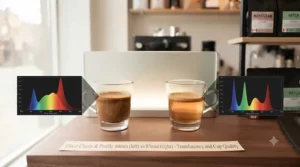
Burr Size and Grind Speed: The Real Comparison
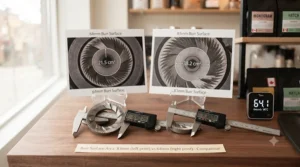
As Wikipedia’s entry on coffee preparation notes, burr mills crush or tear beans with comparatively little frictional heating versus other grinding methods, which is exactly why burr diameter has such an outsized effect on both speed and flavour. The most direct way to think about burr size grind speed comparison is surface area versus RPM. An 83mm burr has roughly 68% more cutting surface than a 64mm burr at the same diameter ratio, which means beans are exposed to fewer total rotations to reach the same particle size. Because larger plates can cover the same grinding job at a slower rotational speed, they build up less friction-driven heat and preserve more of the beans’ aromatic oils, which is the physical mechanism behind faster, cooler grinding rather than any marketing mystique.
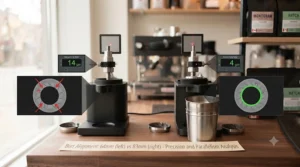
Comparing our featured models: the 64mm DF64 Gen 2 spins near 1400 RPM to keep pace, while the 83mm DF83 achieves comparable or better throughput at similar RPM simply because more bean surface contacts the burr per rotation. In practice this shows up as several seconds shaved off an 18-gram dose — meaningful if you’re grinding for a queue of guests, less meaningful if you’re the only one drinking coffee that morning.
Is an 83mm Burr Grinder Worth the Price?
Whether an 83mm burr grinder is worth the price genuinely depends on how you weigh speed and thermal consistency against straightforward dollar cost. Based on the spec comparison across this list, you’re typically paying 60-80% more to move from a quality 64mm machine to an equivalent-tier 83mm one — the DF64 Gen 2 to DF83 jump illustrates this cleanly. That premium buys real, measurable advantages: faster grind times, lower per-dose heat buildup, and often better performance across a wider range of grind settings.
Here’s what to weigh: if you’re grinding once or twice a day for personal use, the case for spending an extra C$300-400 on burr size alone is weak — you’d likely notice the difference less than you’d notice the number on your bank statement. If you’re grinding constantly for a busy household or you already know you’re chasing marginal consistency gains as a hobby, the math flips, and the 83mm premium starts looking like reasonable value rather than an indulgence.
Is Bigger Really Better Espresso? Separating Hype From Heat Physics
“Bigger burr better espresso” gets repeated so often in coffee circles that it’s worth pulling apart honestly. The claim isn’t wrong, but it’s incomplete — bigger burrs produce measurably less frictional heat per gram of coffee ground, and heat is a genuine flavour variable since it can degrade delicate aromatic oils before extraction even begins. That part checks out.
What the slogan leaves out is that heat only becomes a meaningful problem at higher grind volumes or with back-to-back doses. A single morning shot on a well-maintained 64mm burr won’t taste meaningfully worse than the same shot off an 83mm machine — reviewers across both burr sizes consistently rate their espresso as excellent when used within reasonable daily volume. Bigger genuinely helps under sustained load; it isn’t a blanket upgrade for flavour on every single shot.
Common Mistakes When Buying a Large Burr Grinder
The most frequent mistake is buying burr size before buying for actual grind volume — plenty of solo drinkers spend C$1,000+ on an 83mm machine that never gets pushed hard enough to show its advantages. A close second is ignoring counter clearance; several buyers in aggregated reviews mention returning or re-homing a grinder because it simply didn’t fit under their cabinets. Third, people frequently skip the seasoning process on new burrs, then judge flavour quality on beans ground through un-seasoned equipment.
A fourth common pitfall is assuming price alone signals quality — the SSP and Red Speed coated burr upgrades available for mid-range 64mm machines can outperform an unmodified stock 83mm burr in some scenarios, so it pays to research burr material and coating, not just diameter. Finally, buyers regularly underestimate maintenance time; large burr chambers take longer to strip down and clean than compact conical designs.
One more mistake worth flagging on its own: chasing RPM numbers in isolation. A high RPM figure on a small burr isn’t inherently better than a lower RPM on a large one — what actually matters is the combination of surface area, motor torque, and cooling design working together. Buyers who fixate on a single spec sheet number, whether it’s diameter or RPM, tend to miss whichever half of the equation determines how the grinder performs in daily use.
Long-Term Cost & Maintenance: 64mm vs 83mm Burrs
Total cost of ownership is where the 83mm vs 64mm flat burr difference gets genuinely interesting. Entry-level OEM 83mm burr sets are typically rated to last around 600kg of coffee before they need replacing, while premium coated options can run considerably longer. A 64mm burr set replacement typically costs less per unit — often in the C$80-150 range — but may need replacing somewhat sooner under heavy daily use than a well-cooled 83mm equivalent.
Factor in that 83mm machines’ higher upfront price also usually includes sturdier motors and cooling-conscious design, which can extend the working life of the whole unit, not just the burrs. Canadian retailers like Coffee Addicts’ Turin grinder collection list optional burr upgrade paths for both sizes, which is worth checking before assuming you need a whole new machine to level up performance. Over a 5-7 year ownership window, a heavily used household may find the 83mm premium evens out through fewer burr replacements and less thermal stress on internal components, while a light daily user will simply never recoup that upfront gap.
FAQ
❓ What is the 83mm vs 64mm flat burr difference in plain terms?
❓ Is an 83mm burr grinder worth the price for home use?
❓ Should I buy 83mm or 64mm grinder for espresso only?
❓ Does a bigger burr actually mean better espresso flavour?
❓ Why do some listings show 84mm burr grinder price instead of 83mm?
Conclusion
The 83mm vs 64mm flat burr difference really is a heat-and-speed equation dressed up as a status symbol in a lot of online debates. Bigger burrs genuinely earn their premium when you’re grinding often, for multiple people, or chasing dial-in precision as a hobby — the Turin DF83 and DF83V make a strong case for that crowd. But if you’re pulling one or two shots a day in a quiet kitchen, a well-built 64mm machine like the DF64 Gen 2 or a compact alternative like the Eureka Mignon Zero will get you excellent, consistent espresso without the extra counter space or the extra couple hundred dollars.
Match the grinder to your actual routine, not to forum hype, and you’ll end up with equipment you’ll still be happy with years from now — not just for the first exciting week.
✨ Ready to compare current pricing on any of these 7 grinders? Check availability before you decide — stock on single-dose models shifts quickly.
Recommended for You
- 83mm Flat Burr Grinder: 7 Top Picks for Canadian Baristas 2026
- 64mm Flat Burr vs Conical Burr: 7 Grinders Ranked for 2026
- 64mm Flat Burr Grinder: 7 Best Picks for Canadian Baristas (2026)
Disclaimer: This article contains affiliate links. As an Amazon Associate, I earn from qualifying purchases. If you purchase products through these links, we may earn a small commission at no additional cost to you.
✨ Found this helpful? Share it with your friends! 💬🤗
