
In This Article
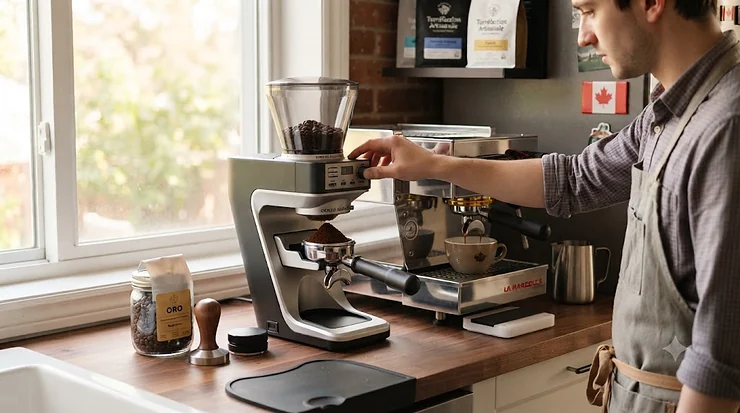
There’s a specific kind of frustration that comes with owning a decent espresso machine and a mediocre grinder — shots that channel, pucks that look more like wet sand than a puck, and a Sunday morning that turns into a science experiment before you’ve even had a sip. A stepless burr grinder home barista setup is, more often than not, the fix nobody warns you about when they sell you your first machine. Instead of clicking between fixed grind “steps” that jump too far in either direction, a stepless grinder lets you rotate through an essentially infinite range of positions, so the gap between “too fast, sour shot” and “too slow, bitter shot” can actually be closed.
This guide walks through seven real, currently available stepless grinders that suit different budgets and different coffee habits — from a sub-C$300 flat burr option that punches well above its price to a 83mm flagship that belongs behind a bar as much as on a counter. Every product here has been researched from manufacturer specs, retailer listings, and aggregated owner and reviewer sentiment; nothing is invented, and where the review record is thin, that’s said plainly rather than papered over. Expect metric grind figures, CAD price bands (never exact dollar amounts, since Amazon pricing shifts constantly), and honest trade-off analysis instead of a repackaged spec sheet. Whether you’re chasing your first real dial-in or replacing a stepped grinder that’s been holding your espresso back, there’s a fit here — and a few reasons to think twice before you buy the wrong one.
Quick Comparison Table
Before diving into the deep dives below, here’s the fast version for anyone short on time. Burr size and type say a lot about a grinder’s ceiling: bigger flat burrs generally mean faster, cooler, more uniform grinding, while conical burrs tend to be quieter and gentler on light roasts.
| Grinder | Burr Type & Size | Adjustment | Price Range (CAD) | Best For |
|---|---|---|---|---|
| Turin DF54 | 54mm flat | Stepless, 90 positions | C$280-C$340 | Best stepless burr grinder under $300 |
| Baratza Encore ESP Pro | 40mm conical | Stepless, digital readout | C$390-C$450 | All-round espresso + filter |
| Eureka Mignon Manuale | 50mm flat | Stepless micrometric | C$330-C$390 | Beginners wanting Italian build quality |
| Timemore Sculptor 064S | 64mm flat | Stepless, adjustable RPM | C$640-C$710 | Espresso + drip households |
| Turin DF64 Gen 2 | 64mm flat | Stepless micrometric | C$540-C$610 | Serious single-dosing home baristas |
| Option-O Lagom Mini 2 | 48mm conical | Stepless | C$490-C$550 | Small kitchens, USB-C portability |
| Turin DF83 | 83mm flat | Stepless | C$880-C$980 | Enthusiasts wanting café-speed grinding |
Looking at the spread, there’s a fairly clean line between the sub-C$400 tier (DF54, Encore ESP Pro, Mignon Manuale) and the “I’m not upgrading again for years” tier (Sculptor 064S, DF64 Gen 2, DF83). Burr size correlates loosely with speed and grind uniformity, but not with how forgiving a grinder is to dial in — smaller flat burrs like the DF54’s 54mm can actually be trickier to nail because each degree of dial rotation shifts the grind more per turn than on a larger burr. The Option-O Lagom Mini 2 is the outlier here: conical instead of flat, and built around portability rather than raw throughput, which matters if counter space or apartment living is a factor.
💬 Just one click — help others make better buying decisions too!😊
Top 7 Stepless Burr Grinders for the Home Barista: Expert Analysis
1. Turin DF54 — best flat burr grinder under $300
The Turin DF54 (also sold under the MiiCoffee name) is the rare budget grinder that doesn’t feel like a compromise once you’ve used it for a few weeks. Its standout feature is being one of the only flat burr grinders available anywhere near this price point, since most competitors at C$300 or under still rely on conical burrs.
Specs that matter in practice: 54mm stainless steel flat burrs spinning at roughly 1,400 RPM, a stepless dial with 90 reference positions, and a claimed retention under 0.1g when the included bellows is used properly. In real terms, that low retention means the shot you pull tastes like the beans you just poured in, not a blend of today’s dose and yesterday’s stale fines sitting in the chute — a problem that plagues cheaper hopper-fed grinders. The 150W motor keeps a single 18g dose moving in roughly 8-12 seconds depending on roast density.
Based on the spec comparison with other sub-C$400 grinders, the DF54’s flat burr geometry is what earns it a recommendation over similarly priced conical models — flat burrs tend to produce more uniform particle size distribution, which shows up in the cup as clearer flavour separation rather than one-note muddiness. It’s best suited to a beginner or budget-conscious buyer who wants to skip the “starter grinder” phase entirely and go straight to something they won’t outgrow in six months.
Reviewers consistently report that build quality outpaces the price tag, with a machined aluminum body that shows no flex under normal use; a smaller number of owner reports flag the plastic dosing cup and grind-adjustment ring spacing (numbers not perfectly centred over the true zero point) as the two areas where cost-cutting shows.
Pros:
- ✅ One of very few flat burr grinders under C$300
- ✅ Under 0.1g retention keeps grounds fresh between doses
- ✅ Stepless dial with 90 reference points for real precision
Cons:
- ❌ Plastic dosing cup feels out of step with the metal body
- ❌ Smaller 54mm burrs run slower than 64mm rivals
At around C$280-C$340, the Turin DF54 is hard to beat if flat burr clarity matters more to you than raw grinding speed — genuinely one of the better value calls on this whole list.
2. Baratza Encore ESP Pro — best all-rounder for espresso and filter
The Baratza Encore ESP Pro stands out for pairing true stepless adjustment with a digital readout, solving the classic stepless-grinder complaint of “where was I again?” without giving up the fine-tuning that makes stepless worth choosing in the first place.
Under the hood: 40mm conical M2 burrs manufactured in Europe, a 550 RPM DC motor, and a dual-range system where settings 1-40 deliver roughly 2.2-2.5 micron adjustments for espresso while settings 40.5-60 jump in larger increments suited to filter and French press. What that means day to day is that the same grinder can pull a legitimately good shot in the morning and grind coarse enough for a Sunday afternoon pour-over, without needing a second machine on the counter.
Here’s what the spec sheet won’t tell you: the fully stepless collar has less tactile “click” feedback than Baratza’s older stepped Encores, so new owners sometimes overshoot their target grind on the first few tries, particularly with beans loaded in the hopper rather than the single-dose funnel. Whole Latte Love’s testing team noted it took some getting used to before dial-ins became repeatable. This makes it a strong fit for anyone who already owns a scale and is willing to log grind settings by bean, rather than someone expecting instant plug-and-play precision.
Reviewers consistently note the built-in anti-static ionizer as a genuine upgrade over the standard Encore ESP, and most testers found it capable of choking out home machines with pressurized or bottomless portafilters alike — a claim borne out by CoffeeGeek’s dial-in tests, which pulled a clean 1:2 shot in under 28 seconds at setting 5.5.
Pros:
- ✅ Digital display solves the “lost setting” stepless problem
- ✅ Genuinely dual-purpose for espresso and filter brewing
- ✅ Baratza’s well-regarded parts and repair support
Cons:
- ❌ Stepless collar feels looser than older stepped Baratza models
- ❌ Produces noticeably more static than some premium rivals
Priced around C$390-C$450, this is the grinder to buy if you want one machine to competently cover your whole household’s coffee habits rather than optimizing purely for espresso.
3. Eureka Mignon Manuale — best entry point into Italian-built precision
The Eureka Mignon Manuale carries Eureka’s patented micrometric adjustment system into an accessible, manually dosed package — a standout for anyone who wants commercial-grade grinding lineage without a commercial-grade price.
Its 50mm flat hardened-steel burrs spin at 1,350 RPM, and the stepless knob is a “bottom-burr adjust” design, meaning the lower burr carrier moves rather than the whole hopper twisting — a detail that matters because it lets you disassemble the burrs for cleaning without losing your calibrated grind setting, a genuine convenience that cheaper grinders skip. Manual dosing means you activate the grind by pressing your portafilter into the fork-style switch, which pairs naturally with a scale for weight-based dosing.
What most buyers overlook about this model is that “entry-level” in Eureka’s lineup still means Milan-assembled construction and the same ACE anti-static/anti-clump system found on pricier Mignon models — the compromises here are about convenience features, not build integrity. It’s a strong match for a beginner who’s serious about the craft but doesn’t want to gamble on an unfamiliar brand, or for anyone upgrading from a shared café’s grinder and wanting that same tactile, Italian-made feel at home.
Aggregated reviewer sentiment across retailer listings is consistently positive on grind consistency and quietness relative to price, with the most common critique being the manual, one-at-a-time portafilter dosing workflow, which some buyers find slower than timer-based grinders when making back-to-back drinks for guests.
Pros:
- ✅ Milan-built with genuine commercial-grade micrometric system
- ✅ Bottom-burr adjust preserves your grind setting through cleaning
- ✅ Strong reputation for consistency at its price tier
Cons:
- ❌ Manual portafilter dosing is slower for multiple drinks
- ❌ 50mm burrs are modest by flat-burr standards
Sitting around C$330-C$390 through Canadian specialty retailers, the Eureka Mignon Manuale is the pick for buyers who value brand pedigree and repairability as much as raw grind numbers.
4. Timemore Sculptor 064S — best for switching between espresso and drip daily
The Timemore Sculptor 064S distinguishes itself with adjustable motor RPM, a feature almost no other grinder in this list offers, letting you slow the burrs down for delicate light roasts or speed them up for faster daily throughput.
Its 64mm flat burrs run on a brushless motor rated between 800 and 1,200 RPM, and the dial is stepless with 36 indexed reference points layered on top for repeatability. In practice, the wider adjustment range plus a big, easy-to-turn dial means switching from a fine espresso grind to a coarser drip grind — a real scenario for mixed-preference households — takes just a couple of seconds rather than a full recalibration. A patented rotary knocker shakes loose statically clung fines from the exit chute, addressing a common complaint about the visually similar Fellow Ode.
Based on the spec comparison with the DF64 Gen 2, the Sculptor’s biggest functional edge is that RPM control; the trade-off is a noticeably higher price for what is, burr-size-for-burr-size, a comparable grinder. It suits an intermediate-to-advanced home barista who genuinely brews more than one method regularly, rather than an espresso purist who’d rarely touch the RPM dial anyway.
Reviewers consistently praise the low retention (within 0.1-0.2g according to home-barista.com’s long-term testing) and the tactile dial-indicator design, while a recurring criticism targets the flimsy catch cup and a power button that feels less premium than the rest of the unit.
Pros:
- ✅ Adjustable RPM is a genuinely rare, useful feature
- ✅ Big stepless dial with 36 reference points for repeatability
- ✅ Rotary knocker meaningfully reduces static-clung fines
Cons:
- ❌ Catch cup feels flimsy relative to the grinder’s price
- ❌ Premium price for a burr size shared with cheaper rivals
Expect to pay in the C$640-C$710 range for the Timemore Sculptor 064S — a fair ask if the RPM control and dual-brew flexibility genuinely fit your routine.
5. Turin DF64 Gen 2 — best for serious single-dosing home baristas
The Turin DF64 Gen 2 (also sold as the MiiCoffee DF64 II) stands out for its burr-upgrade ecosystem — few grinders at this price let you swap in SSP or Mazzer aftermarket burrs down the line, effectively future-proofing the whole unit.
Under the hood sits a 250W AC motor turning 64mm flat stainless steel burrs at roughly 1,400 RPM, true stepless micrometric adjustment, and a redesigned exit chute with integrated plasma ionizer probes that meaningfully cut static compared to the original DF64. Retention is rated under 0.1g with the included bellows, and Tom’s Grinder Lab’s testing clocked a 12.5g dose in under six seconds — noticeably faster than the smaller-burr grinders on this list.
What the spec sheet won’t tell you, but the burr-swapping community consistently notes, is that this grinder’s real long-term value comes from treating it as a platform rather than a finished product: pop in a different burr set and you’re effectively buying a new grinder’s flavour profile for a fraction of the cost of replacing the whole machine. It’s the natural upgrade path for anyone who started on a DF54 or Encore ESP and now wants to chase specific flavour characteristics rather than just “good enough.”
Aggregated owner sentiment across multiple specialty retailers is strongly positive on workflow speed and cleanliness, with the most consistent limitation being noise — reviewers note a higher-pitched motor whine than some rivals, which matters if you’re grinding early and live with light sleepers nearby.
Pros:
- ✅ Burr-upgrade ecosystem extends the grinder’s useful life for years
- ✅ Fast, low-retention single-dose workflow
- ✅ Plasma ionizer meaningfully reduces static mess
Cons:
- ❌ Motor pitch is louder and higher than some competitors
- ❌ Best suited to espresso; filter coffee is a secondary strength at best
At roughly C$540-C$610, the Turin DF64 Gen 2 rewards buyers who plan to stick with — and gradually upgrade — the same grinder for years rather than replace it outright.
6. Option-O Lagom Mini 2 — best for small kitchens and portability
The Option-O Lagom Mini 2 is a genuine outlier on this list, standing out for running entirely on 100W USB-C power rather than a wall outlet — a detail that changes how and where you can realistically use it.
Its 48mm Mizen conical burrs are compact by flat-burr standards but paired with an auto-off function that shuts the motor down 10 seconds after grinding finishes, and the whole unit is machined from billet aluminum with a footprint small enough to fit in a travel bag. CoffeeGeek’s comparative testing notes it’s on the slower side — up to 50 seconds for an 18.5g dose — a real trade-off for the compact form factor and quiet operation.
Here’s what most buyers overlook: because it’s USB-C powered, it can run off a power bank, which makes it a legitimately different category of product from every other grinder here — genuinely usable in a cabin, a small apartment with limited outlets, or even packed for travel, not just a smaller version of a countertop grinder. On paper this means slower throughput; in practice it means near-silent grinding that won’t wake anyone up.
Reviewer sentiment consistently frames the Lagom Mini 2 as punching above its size in flavour clarity for espresso, though its own maker recommends against using it more than five or six times a day, which rules it out for households making multiple drinks back-to-back on a regular basis.
Pros:
- ✅ USB-C powered — works with power banks, ideal for travel
- ✅ Compact billet aluminum build fits tiny kitchens
- ✅ Notably quiet compared to AC-motor rivals
Cons:
- ❌ Slow grind speed — up to 50 seconds per dose
- ❌ Not rated for high daily volume or back-to-back drinks
Priced around C$490-C$550, the Option-O Lagom Mini 2 is a niche but genuinely useful pick for anyone whose living situation, not their coffee habit, is the real constraint.
7. Turin DF83 — best for enthusiasts who want café-level speed
The Turin DF83 earns its spot as the premium tier of this list through sheer burr size — at 83mm, its flat burrs are noticeably larger than anything else here, translating directly into faster, cooler grinding sessions.
Specs worth flagging: 83mm flat burrs spinning at roughly 1,400 RPM, true stepless micrometric adjustment with a graduated dial for repeatable reference points, and a metal dosing ring built for direct-to-portafilter grinding. In real-world terms, the larger burr surface area means less heat builds up per gram ground, which matters most with lighter roasts that are more prone to tasting flat or muted when overheated during grinding.
Based on the spec comparison with the 64mm-class grinders on this list, the DF83’s main advantage is speed and heat management at higher volumes — genuinely useful if you’re grinding for more than one drink at a time, hosting, or simply impatient in the morning. It’s the clearest “no more upgrades needed” purchase here, best suited to an enthusiast or small home-office setup rather than someone just getting into specialty coffee, since the price premium over the DF64 Gen 2 is hard to justify without wanting that extra speed and burr headroom.
Reviewer sentiment from Turin’s own retail partners is largely enthusiastic about the build quality and grind speed, though the review pool for the DF83 specifically is smaller and less mature than for the more established DF64 Gen 2, so buyers should weigh that thinner track record accordingly rather than assume identical reliability.
Pros:
- ✅ Large 83mm burrs grind faster with less heat transfer
- ✅ Stepless micrometric dial with graduated reference marks
- ✅ Metal dosing ring built for direct portafilter use
Cons:
- ❌ Smaller, less-established review pool than sibling models
- ❌ Premium price with diminishing returns for casual users
At around C$880-C$980, the Turin DF83 is the grinder to buy last, not first — once you already know exactly what you want from a stepless setup.
Practical Usage Guide: Setting Up and Maintaining Your Stepless Grinder
Getting a stepless grinder home is only step one — the first 30 days determine whether it feels intuitive or frustrating. Start by seasoning the burrs: run through roughly 200-300g of cheaper beans before dialing in with your good coffee, since new burrs shed micro-metal shavings that affect flavour early on. Next, find your rough zone before fine-tuning — most manufacturers mark an approximate espresso range on the dial, so start there rather than guessing from zero.
A common first-30-days mistake is making large adjustments with beans still sitting in the grinding chamber; on several grinders in this guide (notably the Encore ESP Pro and Sculptor 064S), big swings under load can jam or strain the motor. Always adjust with the chamber cleared, or in single-dose mode with an empty hopper. Another frequent misstep: judging a new setting after just one shot. Grind size, dose, and tamp pressure all interact, so change one variable at a time and pull at least two consecutive shots before deciding a setting is wrong.
For maintenance, a light brush-out after each session prevents oil buildup on flat burrs, which are more prone to clumping than conical designs. Every two to four weeks, run a grinder-specific cleaning tablet through to purge stale oils — Cafetto and Urnex both make widely available options in Canada. If your grinder has a bellows or knocker (DF54, DF64 Gen 2, Sculptor 064S), use it after every dose, not just when you remember to; skipping it is the single biggest cause of static complaints in owner reviews across this entire list.
Real-World Scenarios: Which Stepless Grinder Fits Your Coffee Life
Consider three different buyers. First, a university student living in a shared apartment in Halifax, brewing one espresso a day before class on a compact machine, with a tight budget and limited counter space — the Turin DF54 or Option-O Lagom Mini 2 both fit, with the Lagom’s USB-C power being a genuine advantage in a dorm or shared kitchen with limited outlets.
Second, a couple in Calgary where one person drinks straight espresso and the other prefers drip coffee, brewing twice daily and wanting one grinder to competently cover both — the Baratza Encore ESP Pro or Timemore Sculptor 064S make the most sense here, since both are explicitly built for dual-purpose grinding rather than optimized purely for one method.
Third, a home-office worker in Toronto hosting weekend coffee for friends, grinding for three or four drinks in quick succession and caring more about speed and flavour ceiling than price — the Turin DF83 or Turin DF64 Gen 2 fit that higher-volume, higher-expectation use case, with the DF83’s larger burrs specifically addressing the “grinding for a group” scenario the smaller machines start to struggle with.
How to Choose a Stepless Burr Grinder for Espresso
- Match burr size to your volume. Smaller burrs (40-54mm) suit single servings and slower mornings; 64mm-plus burrs suit households or entertaining.
- Decide conical or flat first. Conical burrs run quieter and are more forgiving with light roasts; flat burrs generally deliver more uniform particle size and flavour clarity.
- Check retention specs, not just adjustment range. A stepless dial means little if 2g of yesterday’s stale grounds mix into every fresh dose.
- Confirm portafilter compatibility. Most dosing cups fit 51-58mm, but always check against your specific machine before buying.
- Weigh single-dose against hopper-fed. Single-dose grinders (DF54, DF64 Gen 2, Sculptor 064S) suit bean-rotation habits; hopper-fed suits grab-and-go routines.
- Factor in noise tolerance. If you’re grinding before 7am in a shared space, quieter conical options like the Lagom Mini 2 are worth the trade-off in speed.
- Budget for accessories. Cleaning tablets, a scale, and occasionally a dial indicator upgrade are near-universal added costs across every grinder on this list.
Stepless vs Stepped Grinders: What the Difference Actually Means
A stepped grinder locks you into a fixed number of pre-set positions — turn the dial and it clicks into place at position 12, or 13, with nothing in between. A stepless grinder removes those clicks entirely, letting the burr carrier move continuously through its whole range. On paper this sounds like stepless simply wins, but the reality is more nuanced.
Stepped grinders are more forgiving for beginners precisely because there’s no in-between to get lost in — you turn to a number, you remember the number, you’re done. Stepless grinders demand more attention: without a digital readout like the Encore ESP Pro’s, or reference markings like the Sculptor 064S’s 36 indexed points, it’s genuinely possible to lose your exact setting after cleaning or moving the dial by accident. What stepless buys you in exchange is the ability to make truly tiny corrections — the kind needed when a shot is running 2 seconds too fast and a full stepped “click” would overshoot into sour, under-extracted territory. For espresso specifically, where a shift of a few microns can be the difference between balanced and bitter, most home baristas who’ve used both eventually settle on stepless once they’re past the beginner stage.
Common Mistakes When Buying a Stepless Coffee Grinder
The most common mistake is buying based on burr size alone, assuming bigger automatically means better — a 64mm grinder isn’t inherently superior to a well-built 50mm one if your daily volume is a single shot. A second frequent error is overlooking retention specs entirely; a beautifully stepless grinder that hoards 2-3g of stale grounds in its chute defeats much of the purpose of buying fresh beans in the first place. Third, buyers often skip checking portafilter compatibility, then discover the included dosing cup doesn’t match their machine’s basket size. Fourth, some shoppers assume “stepless” automatically means “easy to dial in” — as the Encore ESP Pro reviews make clear, a fully free-spinning collar can actually be harder to control precisely than a well-designed stepped system, at least until you’re used to it. Finally, ignoring noise ratings is a common regret among buyers in apartments or with early-riser households, since flat burr grinders in particular tend to run louder than conical designs.
Stepless Espresso Grinder Precision Dialing: What to Expect in Practice
What is a stepless burr grinder home barista setup, in the simplest terms? It’s an electric coffee grinder with continuous, click-free grind adjustment, letting you fine-tune particle size in near-infinite increments rather than jumping between fixed steps — a distinction that matters most for espresso, where microns of difference change shot time and taste.
Dialing in on a stepless grinder follows a fairly predictable rhythm once you understand it. Start coarse, pull a shot, and time it — if it’s running fast (under 20-22 seconds for a typical 1:2 ratio), nudge the dial slightly finer and try again. On grinders with reference markings like the DF54’s 90-position dial or the Sculptor 064S’s 36 indexed points, note the number so you’re not starting from scratch with your next bag of beans. Reviewers consistently note that the first few dial-ins take longer than expected — often 20-30 minutes across four or five test shots — but that subsequent adjustments for the same bean become fast, sometimes a quarter-turn correction and nothing more. The payoff, according to aggregated owner feedback across every grinder in this guide, is a level of shot-to-shot consistency that stepped grinders simply can’t match once you’ve found your zone.
Best Grinder for Espresso Ratio: Matching Burr Size to Your Shots
Your grind setting and your espresso ratio are more connected than most new buyers realize. A 1:2 ratio (18g in, 36g out) pulled in 25-30 seconds is the common home-barista starting point, but hitting that window consistently depends heavily on burr size and grinder speed. Smaller burrs like the DF54’s 54mm or the Lagom Mini 2’s 48mm conical set can struggle to keep pace if you’re grinding for a 1:3 or lungo-style ratio that needs a larger dose ground quickly before the shot starts channeling from heat buildup.
Larger flat burrs — the DF64 Gen 2’s and DF83’s 64mm and 83mm sets — handle bigger doses with less thermal drift, which matters if your preferred ratio leans toward bigger, longer shots rather than traditional ristretto pulls. For buyers chasing a specific ratio rather than just “good espresso,” it’s worth matching burr size to typical dose weight: under 18g, almost anything on this list performs well; above 20g regularly, the 64mm-plus options hold their consistency better shot after shot.
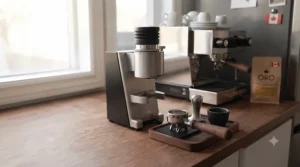
Stepless Burr Grinder Under $300: Is Budget Enough for Real Precision?
The honest answer is: mostly yes, with one clear caveat. The Turin DF54, sitting comfortably under C$300 in most listings, delivers genuine stepless flat burr performance that would have been unheard of at this price just a few years ago — sub-0.1g retention, 90 reference positions, and flat burr clarity that beats most conical grinders twice its price. The trade-off isn’t precision so much as speed and headroom: a smaller 54mm burr set runs slower per gram than a 64mm one, and there’s less room to grow into aftermarket burr upgrades down the line compared with the DF64 Gen 2’s ecosystem.
For a genuinely budget-conscious buyer prioritizing precision over speed, C$300 is enough today. What it won’t buy is the RPM control of the Sculptor 064S or the multi-year burr-swapping runway of the DF64 Gen 2 — those are premium-tier features, not budget-tier ones, and no amount of research changes that basic trade-off.
Long-Term Cost & Maintenance: The Real ROI of a Stepless Grinder
A stepless grinder’s real cost isn’t just the sticker price — it’s burrs, cleaning supplies, and eventual replacement parts. Flat burrs on daily-use grinders like the DF64 Gen 2 or DF83 typically hold their edge for 300-500kg of coffee before noticeable dulling, which for a two-shot-a-day household translates to roughly 4-6 years before a burr swap is worth considering; conical burrs on the Encore ESP Pro or Lagom Mini 2 tend to run a similar or slightly longer lifespan given their gentler grinding action. Replacement burr sets generally run from the low hundreds for entry-level models to considerably more for aftermarket SSP or Mazzer upgrades on burr-swappable platforms like the DF64 Gen 2.
Cleaning tablets, at roughly a box every two to three months, are a minor recurring cost across every grinder here, and worth budgeting for rather than skipping — neglected grinders accumulate rancid oil residue that measurably affects flavour long before the burrs themselves wear out. Compared against the ongoing cost of café espresso, even the priciest grinder on this list, the DF83, tends to pay for itself within roughly a year for a daily two-shot household — a rough but broadly consistent figure across home-barista cost breakdowns.
Features That Actually Matter (And Those That Don’t)
Retention specs, burr material, and motor RPM control genuinely affect your coffee — these are worth paying attention to and worth paying more for. Digital displays, like the Encore ESP Pro’s, matter less for flavour than convenience, but they meaningfully reduce the “lost my setting” frustration that’s common with fully unmarked stepless dials. Anti-static ionizers, found on the DF64 Gen 2 and Encore ESP Pro, are a genuine quality-of-life upgrade rather than a marketing gimmick — static-clung fines are a real, common complaint across cheaper grinders.
On the other hand, flashy touchscreens and app connectivity, common on higher-end grind-by-weight machines not covered in this guide, add cost without meaningfully improving the actual grind for most home baristas. Similarly, oversized hoppers matter far less for anyone leaning toward single-dosing, which most of the grinders in this guide are built around; a large hopper mostly just means more stale beans sitting exposed to air and light.
Safety, Certification & Buying Stepless Grinders in Canada
Any electric grinder sold in Canada should carry a mark from a certification body accredited by the Standards Council of Canada, commonly CSA, cUL, or cETL — a plain “UL” mark without the “c” prefix indicates U.S.-only certification and isn’t a reliable signal of Canadian electrical compliance. When shopping via Amazon.ca, check the listing’s certifications section or product images for one of these marks before buying, particularly with lesser-known import brands.
On the health side, coffee consumption ties directly into caffeine intake guidelines. Health Canada recommends a daily intake of no more than 400 mg of caffeine for healthy adults, which for most espresso drinkers works out to roughly four to five standard shots depending on bean and extraction — worth keeping in mind if a new, more precise grinder tempts you into pulling more shots than usual simply because the coffee suddenly tastes better.
FAQ
❓ What does stepless mean on a coffee grinder?
❓ Is a stepless burr grinder better than a stepped one for espresso?
❓ How much should I budget for a stepless espresso grinder in Canada?
❓ Do stepless grinders need more maintenance than stepped grinders?
❓ Can a stepless grinder work for both espresso and filter coffee?
Conclusion
Choosing a stepless burr grinder home barista setup ultimately comes down to matching burr size, adjustment style, and price to how you actually drink coffee — not to whichever spec sheet reads most impressively. The Turin DF54 proves that genuine flat burr precision no longer requires a premium budget, while the Turin DF83 shows what’s possible once speed and burr headroom become the priority instead of price. In between, grinders like the Baratza Encore ESP Pro and Timemore Sculptor 064S earn their spot by handling both espresso and filter coffee competently for households that don’t want two separate machines.
None of these seven are the “wrong” choice in isolation — they’re built for different rooms, different budgets, and different mornings. What matters most is being honest about your own volume and patience for dialing in before buying, since even the best stepless grinder rewards a bit of practice before it starts paying off in the cup. Whichever one ends up on your counter, the jump from a stepped or blade grinder to true stepless control is one of the more noticeable upgrades a home espresso setup can make.
✨ Don’t Miss These Exclusive Deals!
🔍 Take your home espresso setup to the next level with these carefully selected grinders. Click on any highlighted item to check current pricing and availability on amazon.ca. These stepless picks will help you dial in genuinely café-quality shots your whole household will love!
Recommended for You
- Stepless vs Stepped Grinder: Which Is Better? 7 Picks (2026)
- Stainless Steel Burr Grinder: 7 Top Picks for Canadians (2026)
- Ceramic Burr Coffee Grinder: 7 Top Picks for Canadians (2026)
Disclaimer: This article contains affiliate links. As an Amazon Associate, I earn from qualifying purchases. If you purchase products through these links, we may earn a small commission at no additional cost to you.
✨ Found this helpful? Share it with your friends! 💬🤗
