
In This Article
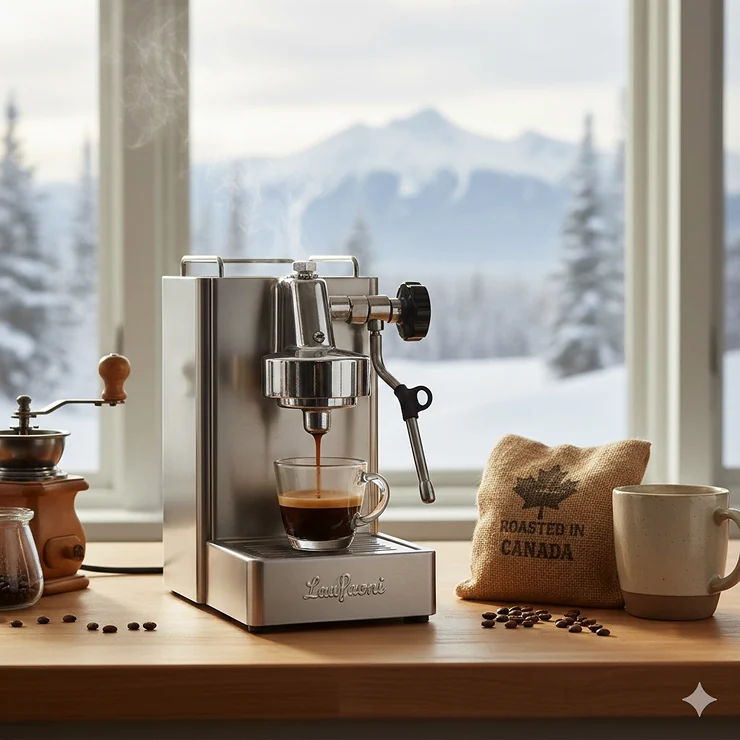
There’s something deeply satisfying about pulling your own espresso shot. When you control every variable—from grind size to pressure—you’re not just making coffee; you’re crafting an experience. Manual espresso machines represent the purest form of coffee artistry, giving you complete command over the brewing process without relying on electronics or automation.
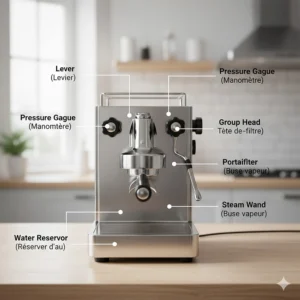
Unlike automatic machines that do the heavy lifting for you, manual espresso machines require your active participation. You become the barista, manually generating the pressure needed to extract rich, flavourful espresso. This hands-on approach might seem intimidating at first, but it’s precisely what makes manual machines so rewarding for coffee enthusiasts across Canada.
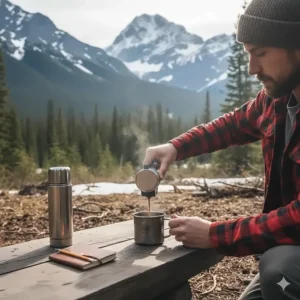
Whether you’re a seasoned home barista in Vancouver or someone in Toronto just beginning their espresso journey, manual machines offer unmatched versatility. From portable hand-pump models perfect for camping in the Rockies to elegant lever machines that become kitchen centrepieces, there’s a manual espresso maker designed for every Canadian coffee lover. The best part? Many of these machines don’t require electricity, making them ideal companions for cottage weekends or RV adventures across our beautiful country.
Quick Comparison Table
| Manual Espresso Machine | Type | Pressure | Price (CAD) | Best For |
|---|---|---|---|---|
| De’Longhi Stilosa | Pump-driven | 15 bar | $150-$180 | Beginners |
| Flair NEO Flex | Lever | 9 bar | $200-$250 | Budget-conscious enthusiasts |
| Flair PRO 3 | Lever | 9+ bar | $380-$420 | Serious home baristas |
| La Pavoni PC-16 Professional | Lever | 9 bar | $1,200-$1,500 | Traditionalists & collectors |
| WACACO Nanopresso | Hand pump | 18 bar | $115-$140 | Travel & portability |
| WACACO Minipresso GR | Hand pump | 8 bar | $80-$100 | Outdoor adventures |
| Smeg 50’s Retro | Pump-driven | 15 bar | $600-$750 | Design-focused users |
💬 Just one click – help others make better buying decisions too!😊
Top 7 Manual Espresso Machines – Expert Analysis
1. De’Longhi Stilosa Manual Espresso Machine
The De’Longhi Stilosa stands as one of Canada’s most popular entry-level manual espresso machines, and for good reason. This compact powerhouse delivers authentic espresso experiences without the intimidating learning curve of professional machines.
Key Specifications:
✓ 15-bar pump pressure
✓ Stainless steel boiler (1L capacity)
✓ Manual milk frother steam wand
Price Range: $150-$180 CAD on Amazon.ca
Canadian buyers consistently praise the Stilosa for its reliability and ease of use. One Toronto customer noted how it “transformed morning routines without breaking the bank,” while a Calgary reviewer appreciated its compact footprint in smaller condos.
Pros:
✅ Beginner-friendly operation
✅ Affordable price point
✅ Durable stainless steel construction
Cons:
❌ Pressurized baskets limit advanced techniques
❌ Smaller water reservoir requires frequent refills
2. Flair NEO Flex Manual Espresso Maker
The Flair NEO Flex brings lever espresso brewing to an accessible price point while maintaining impressive build quality. This Canadian favourite combines portability with genuine espresso-making capabilities.
Key Specifications:
✓ Direct lever operation
✓ Integrated pressure gauge
✓ Two portafilter options included
Price Range: $200-$250 CAD
Canadian customers love the NEO Flex’s versatility. A Montreal barista shared that it “delivers café-quality shots” while remaining light enough for weekend trips to the Laurentians. The included pressure gauge helps beginners learn proper extraction techniques.
Pros:
✅ Genuine pressure profiling capability
✅ Portable design (fits in carrying case)
✅ No electricity required
Cons:
❌ Requires manual preheating
❌ Learning curve for consistent results
3. Flair PRO 3 Lever Espresso Machine
For serious home baristas, the Flair PRO 3 represents the sweet spot between affordability and professional-grade performance. This lever machine has cultivated a devoted following among Canadian coffee enthusiasts.
Key Specifications:
✓ Stainless steel brew head
✓ No-preheat thin brewing cylinder
✓ Integrated pressure gauge and shot mirror
Price Range: $380-$420 CAD on Amazon.ca
Edmonton and Vancouver customers particularly appreciate the PRO 3’s temperature stability and pressure control. One reviewer mentioned achieving “third-wave café quality at home” after just two weeks of practice.
Pros:
✅ Professional-level espresso extraction
✅ Compact footprint
✅ Excellent temperature consistency
Cons:
❌ Requires quality grinder (sold separately)
❌ Manual operation needs practice
4. La Pavoni PC-16 Professional Lever Espresso Machine
The La Pavoni PC-16 Professional is an icon in espresso history. Since 1905, La Pavoni has been crafting these stunning machines in Italy, and the PC-16 continues that heritage with impeccable Italian craftsmanship.
Key Specifications:
✓ Chrome-plated brass construction
✓ 38-ounce solid brass boiler
✓ Dual frothing systems with pressure gauge
Price Range: $1,200-$1,500 CAD
Canadian collectors and serious enthusiasts treasure these machines as functional art pieces. A Vancouver owner described it as “an heirloom that happens to make exceptional espresso,” while noting the steep but rewarding learning curve.
Pros:
✅ Stunning vintage aesthetics
✅ Built to last generations
✅ Complete manual control
Cons:
❌ Significant investment
❌ Requires skill and patience
5. WACACO Nanopresso Portable Espresso Maker
The WACACO Nanopresso redefines portable espresso. This ingenious hand-pump device delivers genuine espresso anywhere—no electricity, no batteries, just quality coffee on demand.
Key Specifications:
✓ 18-bar maximum pressure
✓ 80ml water reservoir
✓ Compatible with ground coffee
Price Range: $115-$140 CAD on Amazon.ca
Canadian outdoor enthusiasts rave about the Nanopresso. An Alberta camper mentioned brewing “legit espresso at Lake Louise,” while a road-tripper appreciated having quality coffee without hunting for cafés across Saskatchewan.
Pros:
✅ Ultra-portable (336 grams)
✅ No power required
✅ Impressive crema production
Cons:
❌ Requires pre-heated water
❌ Single-shot capacity only

6. WACACO Minipresso GR Portable Espresso Machine
The WACACO Minipresso GR offers an even more compact solution for Canadians who refuse to compromise on coffee quality during adventures. This piston-operated marvel fits easily into any backpack.
Key Specifications:
✓ Piston-action pressure system
✓ Ground coffee compatible
✓ Ultra-compact design
Price Range: $80-$100 CAD
Canadian hikers and cyclists consistently rate the Minipresso GR as their go-to outdoor coffee solution. One British Columbia user noted it’s “become essential gear for backcountry trips” where quality coffee previously meant instant disappointment.
Pros:
✅ Budget-friendly entry point
✅ Extremely lightweight
✅ Simple operation
Cons:
❌ Lower pressure than Nanopresso
❌ Requires more pumping effort
7. Smeg 50’s Retro Style Manual Espresso Machine
The Smeg 50’s Retro Style machine combines vintage aesthetics with modern espresso technology. This eye-catching appliance makes a statement while delivering consistent shots.
Key Specifications:
✓ 15-bar pump pressure
✓ Thermoblock heating system
✓ Four drink functions
Price Range: $600-$750 CAD on Amazon.ca
Canadian design enthusiasts appreciate Smeg’s commitment to both form and function. A Montreal customer mentioned it “becomes a conversation piece” while producing café-quality lattes. Available in multiple colours to match any kitchen aesthetic.
Pros:
✅ Iconic retro design
✅ Quality Italian construction
✅ User-friendly operation
Cons:
❌ Premium price point
❌ Larger footprint than minimalist options
What is a Manual Espresso Machine?
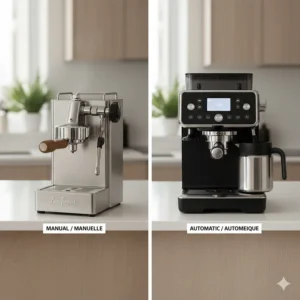
A manual espresso machine is a coffee brewing device where the operator controls the pressure and extraction process through physical force rather than automated systems. Unlike automatic or semi-automatic machines with electric pumps, manual espresso makers require you to generate the pressure needed to force hot water through finely-ground coffee. This hands-on method connects you directly to the brewing process, allowing precise control over every variable that affects your espresso’s flavour, body, and crema.
The term encompasses various designs, from traditional lever machines developed in Italy during the 1940s to modern portable hand-pump devices perfect for Canadian camping trips. According to Wikipedia’s comprehensive espresso history, the evolution of manual espresso machines revolutionized coffee culture by introducing pressure-based extraction methods that created espresso’s signature crema and concentrated flavour profile. While espresso contains more caffeine per unit volume than drip coffee, Health Canada notes that a typical shot (30ml) contains about 40-75mg of caffeine—well within recommended daily limits of 400mg for healthy adults.
Understanding Lever Espresso Machines
The Heritage of Lever Technology
Lever espresso machines represent the purest expression of manual coffee brewing. Invented by Achille Gaggia in 1947, as documented by the Smithsonian Institution, these machines use mechanical leverage to generate the 8-10 bars of pressure required for proper espresso extraction.
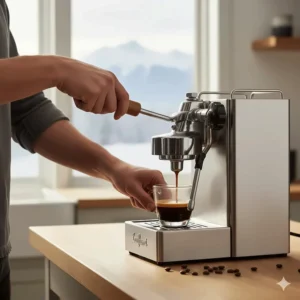
When you pull the lever down, you compress a spring or directly push water through the coffee puck. This manual process gives you tactile feedback—you literally feel the resistance of the coffee bed and can adjust your pressure application in real-time. It’s why experienced baristas describe lever machines as offering a “conversation” with the coffee.
Spring-Piston vs. Direct-Lever Designs
Spring-piston machines like the La Pavoni require you to pull the lever down, compressing a spring that then releases stored energy to push water through the coffee. Direct-lever machines, such as the Flair series, give you constant pressure control throughout the extraction. Each approach offers unique advantages for Canadian home baristas exploring pressure profiling techniques.
Benefits of Manual Espresso Machines vs. Automatic
| Feature | Manual Espresso Machines | Automatic Machines |
|---|---|---|
| Control | Complete pressure profiling | Pre-programmed settings |
| Learning Curve | Steeper, more rewarding | Easier, less flexibility |
| Maintenance | Simpler, fewer components | Complex electronics |
| Cost | $80-$1,500 CAD | $500-$5,000+ CAD |
| Portability | Many models highly portable | Generally stationary |
| Power Requirements | Often none (lever/hand-pump) | Always requires electricity |
| Repairability | Easily serviceable | Often proprietary parts |
| Skill Development | Teaches fundamental techniques | Limited learning |
For Canadian coffee enthusiasts, manual machines offer particular advantages. During power outages—not uncommon during winter storms—lever and hand-pump machines continue operating. They’re also ideal for cottages and RVs where electrical capacity may be limited. The simplicity translates to longevity; many La Pavoni machines from the 1960s still produce exceptional espresso today.
How to Choose the Right Manual Espresso Machine in Canada
Step 1: Define Your Brewing Environment
Consider where you’ll primarily use your machine. Urban condo dwellers in Toronto or Vancouver might prioritize compact lever machines like the Flair NEO Flex. Those with cottage properties across Canada’s provinces might prefer the electricity-free operation of traditional lever designs. Frequent travellers and outdoor enthusiasts should examine portable options like the WACACO Nanopresso.
Step 2: Assess Your Skill Level
Beginners benefit from pump-driven manual machines like the De’Longhi Stilosa, which simplify pressure generation while still requiring manual intervention for milk frothing and shot timing. Intermediate users ready for deeper involvement should consider entry-level lever machines. Advanced enthusiasts seeking ultimate control will appreciate professional-grade levers with pressure gauges.
Step 3: Budget Appropriately
Manual espresso machines in Canada range from $80 to over $1,500 CAD. Budget $80-$200 for portable or entry-level options, $200-$500 for quality lever machines, and $500+ for premium or heirloom-quality equipment. Remember to allocate funds for a capable burr grinder—essential for manual espresso success.
Step 4: Consider Grinder Compatibility
Manual espresso machines demand consistent, fine grinding. Your grinder matters as much as your espresso maker. Canadian retailers offer excellent options from brands like Baratza, Eureka, and 1Zpresso. Plan to spend at least $150-$300 CAD on a grinder capable of espresso-fine settings.
Step 5: Evaluate Portability Needs
Canada’s vast geography means coffee lovers often travel between urban centres and remote locations. Hand-pump machines excel for camping, hiking, and road trips. Lever machines suit permanent installations at homes or cottages. Consider whether you need a machine that travels or one that anchors your kitchen.
Step 6: Research Canadian Availability and Support
Verify that machines and replacement parts are readily available through Amazon.ca or Canadian specialty retailers. Some brands offer better Canadian distribution networks and customer service. Check warranty coverage and whether it extends to Canadian purchases.
Step 7: Plan for Learning Investment
Manual espresso requires practice. Budget time for experimentation—expect 2-4 weeks of daily use before achieving consistent results. Join Canadian coffee communities online for tips specific to our water conditions and locally-available beans.
Essential Accessories for Manual Espresso Machines
Must-Have Tools
Quality Burr Grinder: Non-negotiable for manual espresso. Consistent particle size directly impacts extraction quality. Canadian-friendly options include hand grinders for portability or electric models for convenience.
Precision Scale: Digital scales measuring to 0.1-gram accuracy help maintain consistent dose ratios. Look for models with timer functions to track extraction time.
Tamper: Proper tamping creates even coffee bed density. Ensure your tamper matches your portafilter basket diameter (typically 51mm or 58mm).
Milk Frothing Pitcher: For milk-based drinks, a quality stainless steel pitcher (12-20 oz capacity) optimizes steaming and pouring.
Thermometer: Monitoring water temperature (ideally 90-96°C) ensures optimal extraction. Clip-on thermometers work well for kettle heating.
Maintenance Essentials
Descaling Solution: Canadian water varies significantly by region. Regular descaling every 1-3 months prevents mineral buildup. Use citric acid or commercial descalers suitable for espresso equipment.
Cleaning Brushes: Group head brushes and portafilter cleaners maintain hygiene and prevent rancid coffee oil accumulation.
Backflushing Detergent: For machines with three-way solenoid valves (less common in purely manual designs), backflushing maintains internal cleanliness.
Traditional Espresso Brewing Techniques
The Art of Pressure Profiling
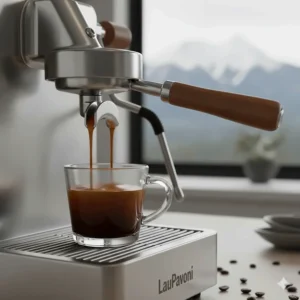
Pressure profiling—varying the pressure during extraction—unlocks flavour complexity impossible with automatic machines. Start with pre-infusion at 2-4 bars to saturate the coffee puck, then ramp to 9 bars for main extraction, finishing with declining pressure to prevent over-extraction. This technique, championed by artisan coffee makers worldwide, requires manual machines’ precise control.
Canadian roasters increasingly provide pressure profiling recommendations on their specialty espresso blends. Experiment with local beans from 49th Parallel, Phil & Sebastian, or Monogram Coffee to discover how pressure variations highlight different flavour notes.
Temperature Management
Water temperature profoundly affects extraction. Manual espresso makers (especially lever machines) require temperature awareness since you’re heating water separately or managing a boiler manually. Lighter roasts popular in Canada’s third-wave shops typically benefit from higher temperatures (93-96°C), while darker roasts extract better at 88-92°C.
For portable manual machines, use a thermometer with your kettle. Lever machine users should allow proper warm-up time—15-30 minutes depending on boiler size—before pulling shots.
Dose and Yield Ratios
The classic espresso ratio is 1:2 (18 grams of coffee yielding 36 grams of espresso), a standard recommended by the Specialty Coffee Association for optimal extraction. Manual machines excel at exploring variations: try 1:1.5 for intense ristretto or 1:2.5 for balanced lungo. Track your recipes and adjust based on taste preferences rather than rigid rules.
Artisan Coffee Making at Home
Sourcing Quality Canadian Beans
Canada’s specialty coffee scene has exploded in recent years. Support local roasters offering freshly roasted beans—ideally within 2-4 weeks of roast date. Beans degas continuously after roasting; espresso typically peaks 7-14 days post-roast.
Explore regional roasters: Vancouver’s Revolver, Toronto’s Pilot Coffee Roasters, Montreal’s Café Myriade, and Calgary’s Rosso Coffee all offer espresso-specific blends and single-origin options. Many provide detailed tasting notes and recommended brewing parameters perfect for manual espresso experimentation.
Developing Your Palate
Manual espresso machines facilitate rapid experimentation. Change one variable at a time—grind size, dose, water temperature, or pressure application—and taste the results. Keep a coffee journal noting recipes and observations. Over time, you’ll develop sensitivity to how subtle adjustments affect flavour clarity, body, and aftertaste.
Canadian water chemistry varies dramatically. Vancouver’s soft water extracts differently than Toronto’s harder water. Consider water hardness when diagnosing extraction issues; some enthusiasts use filtered or remineralized water for consistency.
Creating Milk-Based Beverages
For cappuccinos and lattes, milk steaming technique matters enormously. Manual machines with steam wands require practice to create microfoam—silky, glossy milk without large bubbles. Position the steam wand tip just below the milk surface, creating a whirlpool motion that incorporates air while heating. Canadian dairy’s higher butterfat content (compared to some international markets) creates luxuriously creamy foam ideal for latte art.
Maintenance and Cleaning Guide
Daily Maintenance Routine
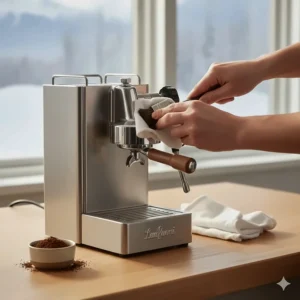
After each espresso session, remove and rinse the portafilter basket and group head. Wipe down the machine exterior to prevent coffee oil buildup. For machines with boilers, purge any remaining steam to prevent pressure accumulation. Empty drip trays and wipe spills—coffee acidity can corrode components over time.
Portable manual machines like the Nanopresso disassemble easily for cleaning. Rinse all components with warm water and allow thorough drying before reassembly.
Weekly Deep Cleaning
Remove and clean portafilter baskets with espresso-specific detergent. Soak shower screens (if applicable) to remove accumulated coffee oils. Check group head gaskets for wear—replace when compression diminishes or leaks appear.
For lever machines, inspect piston seals and lubricate moving parts according to manufacturer specifications. Canadian winters can affect seal flexibility; proper lubrication prevents premature wear.
Monthly and Seasonal Care
Descale machines according to your regional water hardness. Western Canadian cities often have softer water requiring less frequent descaling than Ontario or Quebec. Use citric acid solution or commercial descalers designed for espresso equipment.
Before storing cottages for winter, thoroughly clean and dry machines. Remove residual water that could freeze and damage components. Store in temperature-stable locations away from moisture.
Pressure Profiling Espresso Techniques
Understanding Pre-Infusion
Pre-infusion involves saturating coffee grounds at low pressure (2-4 bars) before full extraction. This step degasses the coffee bed and ensures even saturation, preventing channeling where water finds weak spots and rushes through, creating bitter, under-extracted espresso.
Manual machines excel at pre-infusion control. Lever users can apply gentle initial pressure before committing to full spring release. Hand-pump device operators can deliver measured pumps to saturate grounds before building extraction pressure.
Declining Pressure Profiles
Advanced technique involves reducing pressure during the final extraction phase. After achieving peak pressure at shot midpoint, gradually decrease force, allowing the puck to yield its final flavours without harsh over-extraction. This approach—impossible with preset automatic machines—can reduce astringency while maintaining body and sweetness.
Canadian specialty coffee roasters increasingly note whether beans benefit from declining pressure profiles. Light-roasted Ethiopian or Kenyan beans, popular in Canada’s third-wave scene, often shine with this technique.
Troubleshooting Common Issues
Channeling: Uneven extraction evidenced by spurting or rapid flow. Solutions include adjusting grind finer, distributing grounds more evenly, or tamping with level pressure.
Soupy Puck: Coffee grounds remaining wet after extraction indicate improper tamping or incorrect grind size. Firm, even tamping and finer grinding typically resolve this issue.
Bitter, Over-Extracted Shots: Reduce extraction time by grinding coarser or lowering water temperature. Manual machines let you stop extraction precisely when flavour peaks.
FAQ – Manual Espresso Machines Canada
❓ How much does a good manual espresso machine cost in Canada?
❓ Can you make good espresso with a manual machine?
❓ Do manual espresso machines need electricity?
❓ What's the difference between lever and hand-pump espresso machines?
❓ Are manual espresso machines hard to clean and maintain in Canada?
Conclusion
Manual espresso machines offer Canadian coffee enthusiasts an unparalleled combination of control, craftsmanship, and coffee quality. Whether you’re pulling shots in a downtown Toronto condo, at a lakeside cottage in Ontario, or camping in British Columbia’s backcountry, there’s a manual espresso maker perfectly suited to your needs and budget.
From the accessible De’Longhi Stilosa at around $150 CAD to the iconic La Pavoni PC-16 commanding $1,200-$1,500 CAD, these machines transform coffee from a morning routine into an engaging craft. The portable WACACO Nanopresso proves you don’t need to sacrifice quality for convenience, while the Flair PRO 3 demonstrates that professional-grade espresso doesn’t require professional-grade budgets.
The journey with manual espresso rewards patience and curiosity. You’ll develop skills that automatic machines can’t teach—reading coffee resistance, feeling proper tamping pressure, and understanding how small adjustments create profound flavour changes. These machines connect you to espresso’s rich heritage while fitting perfectly into modern Canadian coffee culture.
Ready to elevate your home coffee experience? Start with a machine matching your skill level and budget, invest in a capable grinder, source fresh Canadian beans, and embrace the learning process. Your perfect espresso awaits—you just need to pull the lever.
✨ Don’t Miss These Exclusive Deals!
🔍 Take your espresso experience to the next level with these carefully selected products available in Canada. Click on any highlighted item to check current pricing and availability on Amazon.ca. These tools will help you create authentic café-quality espresso your family and friends will love!
Recommended for You
- 7 Best Espresso Machine Under $1000 Canada 2026
- 7 Best Portable Espresso Makers Canada 2026
- 7 Best Compact Espresso Machines Canada 2026
Disclaimer: This article contains affiliate links to Amazon.ca. If you purchase products through these links, we may earn a small commission at no additional cost to you.
✨ Found this helpful? Share it with your friends! 💬🤗
