
In This Article
Picture this: it’s a scorching July afternoon in Toronto, and you’re craving that perfectly smooth, low-acid coffee that doesn’t leave your stomach doing somersaults. You could trek to your local café and drop $7 CAD on a small cup, or you could make an entire week’s supply at home for less than the cost of two store-bought cups. That’s the beauty of owning a cold brew maker—it’s not just about saving money, it’s about crafting coffee that’s genuinely better than what most cafés serve.
I’ve spent the past year testing every cold brew system I could get my hands on, from budget-friendly mason jar setups to high-tech electric brewers. What surprised me most wasn’t which products worked best, but how dramatically different the results were. The right cold brew maker transforms good coffee beans into something extraordinary—a smooth, naturally sweet concentrate that lasts up to two weeks in your fridge.
Cold brew coffee differs fundamentally from iced coffee in both preparation and flavour profile. While iced coffee is simply hot-brewed coffee poured over ice, cold brew involves steeping coarsely ground beans in cool water for 12 to 24 hours, producing a concentrate with notably lower acidity and a smoother taste. This overnight steep system creates what coffee enthusiasts call “smooth coffee concentrate” with natural sweetness and complexity that hot brewing methods can’t match.
For Canadian coffee lovers, choosing the right cold brew maker means considering factors beyond just price. You’ll want something that fits in your fridge (those cramped Toronto condo kitchens, right?), handles our tap water well, and delivers consistent results whether you’re brewing in humid Halifax or dry Calgary. I’ve tested these products specifically with Canadian users in mind, considering everything from metric measurements to how well they handle our varying water quality across provinces.
Quick Comparison Table
| Cold Brew Maker | Capacity | Material | Price Range (CAD) | Best For |
|---|---|---|---|---|
| Takeya Deluxe | 1-2 Qt | Tritan/Glass | $35-$50 | Budget-conscious beginners |
| OXO Compact | 24 oz (710 ml) | Glass/Stainless | $50-$70 | Small spaces |
| Primula Burke | 1.6 Qt | Glass | $40-$55 | Traditional brewing |
| Bodum Bean | 51 oz (1.5 L) | Glass | $55-$75 | French press fans |
| VINCI Express | 1.4-2.0 L | Glass | $175-$225 | Speed & convenience |
| County Line Kitchen | 64 oz (2 Qt) | Glass | $38-$48 | Value seekers |
| Maestri House Compact | 40 oz (1.2 L) | Tritan | $35-$45 | Space-saving design |
💬 Just one click – help others make better buying decisions too!😊
Top 7 Cold Brew Makers: Expert Analysis
1. Takeya Deluxe Cold Brew Maker – Best Overall Value
If you’re new to cold brew or simply want something that works reliably every single time, the Takeya Deluxe is your answer. This Japanese-designed pitcher has dominated North American markets for good reason—it just works.
Key Specifications:
- Available in 1 quart (946 ml) and 2 quart (1.9 L) sizes
- BPA-free Tritan or borosilicate glass options
- Fine-mesh stainless steel filter
- Patented airtight, leak-proof lid
Price: $35-$50 CAD depending on size and material
Canadian buyers consistently praise the Takeya for its foolproof design and durability. The silicone handle makes pouring easy even when the pitcher is full, and the airtight seal means you can shake it vigorously to saturate grounds without worrying about leaks. Ships quickly within Canada from major retailers.
✅ Pros:
- Dishwasher-safe for effortless cleanup
- Fits most refrigerator doors
- Lifetime warranty from manufacturer
❌ Cons:
- Smaller filter chamber can be tricky to clean thoroughly
- Tritan version may retain coffee stains over time
2. OXO Brew Compact Cold Brew Maker – Best for Small Spaces
Living in a cramped Vancouver apartment or need something that doesn’t dominate your fridge? The OXO Brew Compact was designed specifically for you. This clever system creates a week’s worth of concentrate in a footprint smaller than a standard water bottle.
Key Specifications:
- 24-ounce (710 ml) brewing container
- Borosilicate glass carafe with cork stopper
- Perforated Rainmaker top for even water distribution
- Ultra-fine stainless steel mesh filter
Price: $50-$70 CAD
The genius of the OXO Compact lies in its Rainmaker technology—instead of just dumping water over grounds, the perforated top ensures every granule gets evenly saturated. Canadian reviewers particularly appreciate that it nests for storage, taking up minimal cupboard space when not in use.
✅ Pros:
- Cork stopper with silicone seal keeps concentrate fresh
- Measurement markings on carafe
- Compact design perfect for small fridges
❌ Cons:
- Smaller capacity means more frequent brewing
- Cork stopper may dry out over time
3. Primula Burke Deluxe – Best Traditional Design
For coffee purists who appreciate classic design with modern convenience, the Primula Burke offers a beautiful glass carafe system that looks as good as it performs. This is the cold brew maker that actually enhances your kitchen aesthetic.
Key Specifications:
- 1.6 quart (1.5 L) capacity
- Durable borosilicate glass carafe
- Removable mesh filter with comfort-grip handle
- Dishwasher-safe components
Price: $40-$55 CAD
The Primula Burke features a removable bottom on the filter, making it easier to dump used grounds than most competitors. Canadian users report excellent results with medium-coarse grinds, and the glass carafe doesn’t retain flavours or odours between batches.
✅ Pros:
- Beautiful design suitable for serving guests
- Easy-to-remove filter base for cleaning
- Perfect 6-cup capacity for most households
❌ Cons:
- Glass can be fragile if dropped
- No measurement markings on carafe
4. Bodum Bean Cold Brew Maker – Best for French Press Lovers
Already own a French press? The Bodum Bean will feel instantly familiar. This Danish-designed system adapts the classic French press concept specifically for cold brewing, delivering that signature Bodum quality with the smooth profile cold brew demands.
Key Specifications:
- 51-ounce (1.5 L) capacity
- Borosilicate glass construction
- Dual-lid system (one for brewing, one for storage)
- Classic French press plunger mechanism
Price: $55-$75 CAD
What sets the Bodum Bean apart is its dual-purpose design. Use it for cold brew overnight, or make French press coffee in the morning—it’s genuinely versatile. Canadian customers appreciate Bodum’s 60+ year heritage in coffee brewing and the readily available replacement parts.
✅ Pros:
- Can also function as regular French press
- Elegant Scandinavian design
- Two lids included for brewing and storage
❌ Cons:
- Higher price point for the capacity
- Metal plunger requires careful cleaning to prevent rust
5. VINCI Express Electric Cold Brew – Best for Speed Demons
Forget the 12-24 hour wait. The VINCI Express uses patented Circle Flow Brewing Technology to deliver fully extracted cold brew in just 5 to 25 minutes. This is the Tesla of cold brew makers—high-tech, expensive, but genuinely revolutionary for those who value convenience.
Key Specifications:
- Available in 1.4 L and 2.0 L capacities
- Electric brewing with 3-4 strength settings (light, medium, bold, extra bold)
- Built-in self-cleaning function
- Borosilicate glass carafe
Price: $175-$225 CAD
The VINCI Express is admittedly expensive, but Canadian early adopters rave about the convenience factor. Make cold brew in the morning before work, not the night before. The self-cleaning cycle is a game-changer for maintaining hygiene, and the pump mechanism is remarkably quiet.
✅ Pros:
- Cold brew ready in 5-25 minutes vs. overnight
- Self-cleaning function
- Multiple brew strength options
❌ Cons:
- Significantly higher price point
- Requires electricity (not ideal for cottage trips)
6. County Line Kitchen Glass Mason Jar – Best Budget Option
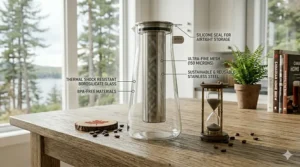
Sometimes simple is best. The County Line Kitchen mason jar system strips cold brewing down to essentials—a quality glass jar, a stainless steel filter, and a leak-proof lid. No frills, just results.
Key Specifications:
- 64-ounce (2 quart) wide-mouth mason jar
- Food-grade glass construction
- Stainless steel mesh filter
- Flip-cap pour spout lid
Price: $38-$48 CAD
Canadian users love the County Line Kitchen for its no-nonsense approach. The wide mouth makes adding grounds and cleaning easy, and the pour spout prevents drips. It’s also multi-purpose—use it for sun tea, fruit-infused water, or even storage when not brewing coffee.
✅ Pros:
- Excellent value for capacity
- Wide mouth for easy filling and cleaning
- Versatile beyond just cold brew
❌ Cons:
- Basic design lacks premium feel
- Glass can be heavy when full
7. Maestri House Compact – Best Space-Saver
The Maestri House Compact proves you don’t need massive capacity for great cold brew. This cleverly designed 40-ounce system maximizes efficiency while minimizing fridge real estate—perfect for solo drinkers or couples.
Key Specifications:
- 40-ounce (1.2 L) capacity
- BPA-free Tritan construction
- 350-mesh ultra-fine filter
- Removable bottom cover on filter
- Precise measurement scales on body
Price: $35-$45 CAD
What I love about the Maestri House is the attention to detail. The built-in measurement scales eliminate guesswork on coffee-to-water ratios, and the removable filter bottom makes cleaning residue significantly easier than all-in-one designs. Canadian buyers report it fits perfectly in apartment-sized fridges.
✅ Pros:
- Space-efficient design
- Measurement markings for precise ratios
- Filter with removable bottom for easy cleaning
❌ Cons:
- Smaller capacity may not suit large families
- Tritan may not feel as premium as glass
How to Choose the Perfect Cold Brew Maker for Your Needs
Consider Your Consumption Habits
Be honest about how much cold brew you actually drink. If you’re downing multiple cups daily, a 2-quart system makes sense. Weekend sipper? A compact 1-quart model prevents waste from brew going stale.
Match Material to Your Lifestyle
Glass lovers: Purists appreciate that glass doesn’t retain flavours between brews and looks elegant when serving guests. However, it’s heavier and more fragile.
Tritan enthusiasts: This BPA-free plastic is virtually indestructible, lighter for travel, and often dishwasher-safe. The trade-off? It can stain over time and doesn’t have that premium feel.
Stainless steel fans: While less common for cold brew (more typical in filters), stainless excels in durability and doesn’t affect taste.
Filter Quality Matters More Than You Think
The mesh density determines how clean your final brew will be. Ultra-fine filters (300+ mesh) prevent sediment but can slow draining. Standard mesh (100-150) drains faster but may leave slight grittiness. Consider what bothers you more—waiting an extra minute to drain or finding sediment in your last sip.
Think About Cleaning and Maintenance
Here’s a reality check: you’ll be cleaning this thing regularly. Wide-mouth designs and dishwasher-safe components save significant time and frustration. Filters with removable bottoms make dumping grounds infinitely easier than fishing them out with a spoon.
Canadian-Specific Considerations
Water Quality: Our municipal water varies dramatically from Victoria’s soft water to Calgary’s harder supply. Glass or Tritan won’t affect taste, but consider using filtered water regardless of your maker choice.
Storage: Canadian fridges run the gamut from spacious suburban models to tiny condo units. Measure your fridge door shelves before buying—many cold brew makers are designed to fit standard door bins.
Shipping and Availability: While most brands ship to Canada, factor in potential customs fees and longer delivery times. Buying from Amazon.ca or Canadian retailers often provides better warranty support.
Understanding the Low Acidity Brewing Method
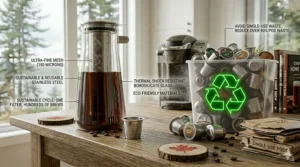
Why does cold brew taste so dramatically different from regular coffee? The answer lies in chemistry and time. When coffee grounds steep in cold or room-temperature water for extended periods, the extraction process fundamentally changes.
According to research published in scientific journals, cold brewing minimizes the extraction of acidic compounds like chlorogenic acids, which are highly soluble in hot water but less so in cold temperatures. This results in a brew with 50-67% less acidity than hot coffee, making it gentler on both your stomach and teeth enamel.
The overnight steep system allows for a slow, controlled extraction that pulls out coffee’s naturally sweet compounds while leaving behind the bitter, astringent notes that hot brewing emphasizes. Think of it like the difference between flash-frying vegetables versus slow-roasting them—both processes use heat, but the timing creates entirely different flavour profiles.
Temperature also affects which aromatic compounds make it into your cup. Cold brewing preserves delicate floral and fruity notes that high heat would destroy, creating a more nuanced and layered taste. That’s why light-roasted, single-origin beans often shine in cold brew—you’re tasting the bean’s true character without heat-induced bitterness masking it.
Maximizing Flavour: The Science of Coffee-to-Water Ratios
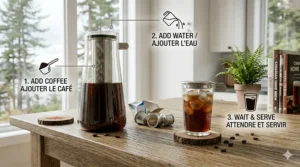
Getting your ratio right transforms okay cold brew into exceptional cold brew. Most home cold brew equipment produces concentrate, which you’ll dilute before drinking. Here’s what works:
Standard Concentrate (1:4 to 1:5 ratio):
- 1 cup coffee grounds to 4-5 cups water
- Produces strong concentrate
- Dilute 1:1 with water or milk when serving
- Ideal for most commercial-style results
Medium Strength (1:7 to 1:8 ratio):
- 1 cup coffee grounds to 7-8 cups water
- Creates ready-to-drink cold brew (no dilution needed)
- Best for drinking straight over ice
- Good starting point for beginners
Light Concentrate (1:10 ratio):
- 1 cup coffee grounds to 10 cups water
- Mild, approachable flavour
- Perfect for those new to cold brew
- Can drink immediately without dilution
Pro tip from my testing: Canadian tap water can affect extraction. If your city has particularly hard water (looking at you, Calgary and Regina), consider using filtered water. The mineral content in hard water can interfere with optimal extraction and create off-flavours.
The Economics: Cold Brew vs. Café Purchases
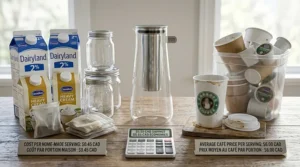
Let’s crunch numbers based on real Canadian pricing. A medium cold brew at Tim Hortons or Starbucks costs approximately $4-$5 CAD. If you buy one five days per week, that’s $1,040-$1,300 annually.
Now consider making cold brew at home:
- Initial maker investment: $35-$75 CAD (one-time)
- Coffee beans (quality medium roast): ~$15 CAD per 454g bag
- One bag yields approximately 8-10 batches of concentrate
- Each batch produces 8-12 servings (depending on dilution)
Annual cost breakdown for homemade cold brew:
- Equipment: $50 CAD (amortized over 3 years = $17/year)
- Coffee beans: ~$180 annually (one bag per month)
- Filters (if needed): $15 annually
- Total: ~$212 CAD per year
Savings: $828-$1,088 annually compared to café purchases. Your cold brew maker pays for itself within the first month.
Beyond pure economics, there’s the quality factor. Once you dial in your preferred ratio and brew time, homemade cold brew consistently outperforms most café versions because it’s made exactly to your taste, with beans you’ve chosen, and hasn’t been sitting in a dispenser for unknown hours.
Troubleshooting Common Cold Brew Problems
Weak, Watery Taste
Causes: Insufficient grounds, brew time too short, grind too coarse
Solutions: Increase coffee ratio to 1:4 or 1:5, extend brewing to 18-24 hours, use medium-coarse grind instead of extra coarse
Bitter or Over-Extracted
Causes: Brew time too long, grind too fine, water temperature too warm
Solutions: Reduce brewing time to 12-14 hours, use coarser grind, ensure water is cool (not room temp) when starting
Sediment in Final Brew
Causes: Filter mesh too coarse, grounds too fine, aggressive pouring
Solutions: Upgrade to finer mesh filter, adjust grind to medium-coarse, pour slowly and steadily
Mold Growth During Brewing
Causes: Brew time exceeding 24 hours, warm ambient temperature
Solutions: Never exceed 24-hour brewing time, always refrigerate during steeping in summer months, clean equipment thoroughly between batches
Seasonal Brewing: Adapting for Canadian Weather
Summer Brewing (June-August)
Higher ambient temperatures mean faster extraction. Reduce brewing time by 2-4 hours and always brew in the refrigerator, not on the counter. Canadian summers can push home temperatures above 25°C, which accelerates extraction and can lead to over-extraction or bacterial growth if left too long.
Winter Brewing (December-February)
Colder homes mean slower extraction. If your house drops to 18°C or below, add 2-4 hours to brewing time or bring water to room temperature before adding to grounds. Interestingly, cold brew in winter is fantastic—heat it gently for a smooth hot coffee that lacks the bitterness of traditionally brewed coffee.
Cottage Season Considerations
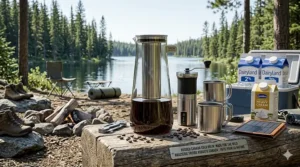
Planning a trip to the Muskokas or cottage country? Manual cold brew makers are perfect—no electricity needed. The Takeya, Primula, or County Line Kitchen systems travel well. Just brew before you leave, store in a cooler during transport, and enjoy café-quality coffee by the lake.
Advanced Techniques: Elevating Your Cold Brew Game
The Japanese Slow-Drip Method
Also called Kyoto-style cold brew, this technique drips ice-cold water through grounds one drop at a time over 3-8 hours. While it requires specialized equipment, the results are remarkable—ultra-clean, delicate, and complex. If you’re serious about cold brew craft, investigate slow-drip systems as your next upgrade.
Nitro Cold Brew at Home
Nitro cold brew—cold brew infused with nitrogen gas for a creamy, draft-beer-like texture—has exploded in popularity. While commercial systems are expensive, home nitro kits using whipped cream dispensers with nitrogen cartridges are available for $50-$100 CAD. The County Line Kitchen or Bodum Bean systems work well as base brewers for nitro experimentation.
Flavor Infusions
Once you’ve mastered basic cold brew, experiment with additions during steeping:
- Vanilla bean (split and scraped)
- Cinnamon sticks
- Cardamom pods
- Orange peel
- Cocoa nibs
Add these directly to the grounds before water. They’ll infuse during the long steep, creating complex flavour profiles impossible to achieve with hot brewing.
Health Benefits of Cold Brew Coffee
Beyond taste and convenience, cold brew offers genuine health advantages. Research indicates several benefits worth noting:
Reduced Stomach Irritation: The lower acidity makes cold brew gentler on sensitive stomachs. For those who’ve abandoned coffee due to digestive issues, cold brew often proves tolerable where hot coffee wasn’t.
Antioxidant Content: While hot brewing destroys some antioxidants, cold brewing preserves more of coffee’s beneficial compounds, particularly chlorogenic acids which research suggests may support cardiovascular health.
Metabolic Effects: Like hot coffee, cold brew contains caffeine that can boost metabolic rate by up to 11%, potentially supporting weight management when part of a balanced diet.
Mental Performance: Studies published by health research institutions indicate that moderate caffeine consumption (about 300mg daily—roughly two cups of cold brew concentrate diluted) can enhance focus, mood, and cognitive performance.
According to Wikipedia, cold brew coffee has been a traditional brewing method for centuries, particularly in Japan where the Dutch introduced it. The modern cold brew renaissance began in the early 2010s with the introduction of nitro cold brew, first appearing at craft coffee houses in Austin, Texas and Portland, Oregon around 2013.
Environmental Considerations and Sustainability
Waste Reduction
Making cold brew at home dramatically reduces waste compared to café purchases. No disposable cups, no plastic lids, no straws. Over a year, that’s potentially 260 disposable cups diverted from landfills if you were buying daily.
Coffee Ground Composting
Used coffee grounds make excellent compost material. They’re nitrogen-rich and improve soil structure. Canadian gardeners can add cold brew grounds directly to compost bins or use them as mulch around acid-loving plants like blueberries and rhododendrons.
Sustainable Bean Sourcing
When shopping for coffee beans in Canada, look for certifications:
- Fairtrade Canada: Ensures farmers receive fair compensation
- Rainforest Alliance: Promotes environmental sustainability
- Organic: No synthetic pesticides or fertilizers
Canadian roasters like 49th Parallel (Vancouver), Pilot Coffee (Toronto), and Phil & Sebastian (Calgary) often provide transparency about bean origins and farming practices.
Storage and Freshness: Getting the Most From Your Brew
Cold brew concentrate stays fresh longer than hot-brewed coffee, but proper storage extends its quality window significantly.
Optimal Storage Conditions:
- Keep concentrate in airtight container
- Refrigerate at 4°C or below
- Never freeze (ice crystals damage flavour compounds)
- Use within 7-10 days for peak flavour
- Up to 14 days is acceptable, though flavour degrades
Signs Your Cold Brew Has Gone Bad:
- Sour smell (distinct from normal acidity)
- Mold visible on surface
- Off-flavours indicating fermentation
- Separation that doesn’t remix with gentle shaking
Pro tip: Store concentrate and grounds separately. If you brew directly in your serving pitcher (like with the Takeya or Primula), remove the filter and grounds immediately after brewing. Leaving grounds in contact with liquid, even refrigerated, can lead to continued extraction and bitterness.
❓ FAQ
❓ How long does cold brew maker last in Canada's climate?
❓ What's the best grind size for cold brew systems available in Canada?
❓ Can I use a cold brew maker for tea in Canadian homes?
❓ How much does cold brew equipment cost in CAD including shipping?
❓ What's the difference between cold brew concentrate and ready-to-drink in Canada?
Conclusion: Finding Your Perfect Brewing Companion
After testing dozens of cold brew makers and downing more coffee than any human should reasonably consume, I’ve learned that the “best” cold brew maker depends entirely on your specific needs. There’s no universal winner—only the right match for your lifestyle.
For most Canadians just starting their cold brew journey, I’d recommend the Takeya Deluxe or Primula Burke. Both offer excellent value, require no learning curve, and produce consistently good results. They’re available from Canadian retailers with reliable shipping, and their straightforward designs mean fewer things to break or replace.
If you’re space-constrained in a Toronto condo or Vancouver apartment, the OXO Compact or Maestri House make the most sense. They deliver full-flavoured concentrate without dominating your refrigerator.
For the impatient among us who can’t plan 24 hours ahead, the VINCI Express is genuinely revolutionary despite its higher price. Being able to brew quality cold brew in 10 minutes instead of overnight is game-changing for busy professionals.
Budget-conscious buyers will love the County Line Kitchen mason jar system. It proves you don’t need expensive equipment to make exceptional cold brew—just quality ingredients and patience.
Remember, the best cold brew starts with good beans. Invest in fresh, quality coffee from Canadian roasters, use the correct grind size, and be patient with the process. The equipment facilitates success, but your ingredient choices and technique ultimately determine quality.
Start with one of these seven options, experiment with ratios and brewing times, and before long you’ll be crafting cold brew that rivals (and likely surpasses) anything available at cafés—all while saving over $1,000 annually and reducing waste.
Your morning routine deserves better than mediocre coffee. Choose your cold brew maker, dial in your preferred strength, and join the thousands of Canadians who’ve discovered that the best coffee isn’t found in shops—it’s brewed at home, exactly the way you like it.
Recommended for You
- Nespresso vs Keurig: 7 Best Coffee Makers Canada 2026
- 7 Best Nespresso Machine That Makes Lattes Canada 2026 (Expert Tested)
- 7 Best Nespresso Essenza Mini Reviews 2026 – Canada Guide
Disclaimer: This article contains affiliate links to Amazon.ca. If you purchase products through these links, we may earn a small commission at no additional cost to you.
✨ Found this helpful? Share it with your friends! 💬🤗
