
In This Article
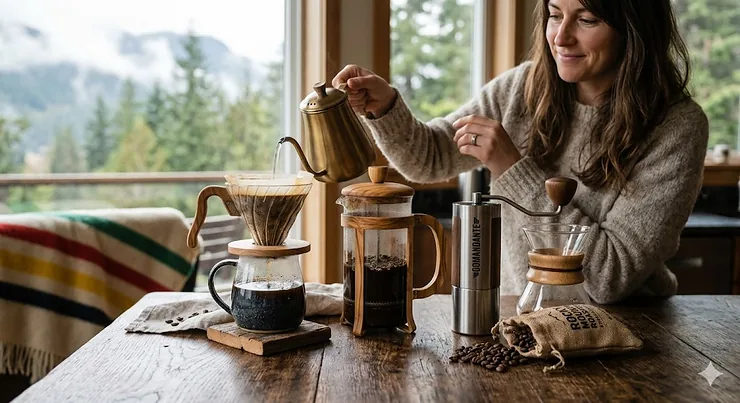
If you’re tired of watching a mountain of K-Cup pods pile up in your recycling bin — or worse, your landfill — you’re not alone. Canadians drink more coffee per capita than almost any other nation, and a growing number of us are waking up to the uncomfortable truth: our beloved morning ritual carries a serious environmental cost. Switching to eco-friendly manual coffee makers isn’t just a lifestyle trend. It’s a practical, wallet-friendly, and deeply satisfying solution to one of our kitchens’ dirtiest little secrets.
What exactly are eco-friendly manual coffee makers? Simply put, they are non-electric brewing devices made from sustainable, long-lasting materials — think borosilicate glass, stainless steel, and ceramic — that eliminate the need for single-use pods, plastic components, or paper filters. They generate minimal waste, consume zero electricity, and often last a decade or more when properly cared for.
The numbers are hard to ignore. According to global waste research, over 500 billion single-use coffee cups are discarded worldwide annually — and that figure doesn’t even count the billions of plastic-lined pods. Canada has already mandated that 25% of coffee cups must be reusable by 2025, signalling a clear regulatory shift toward sustainable brewing. Meanwhile, SustainableBiz Canada warns that suitable coffee-growing land could be halved by 2050 — making the beans in your cup a genuinely finite resource worth treating with care.
For Canadian buyers, switching to a zero waste coffee brewing method makes particularly good sense. You’re not just reducing landfill contributions; you’re also cutting your electricity bill, avoiding cross-border compatibility headaches, and investing in products built to withstand our notoriously punishing winters. I’ve researched seven real, Amazon.ca-available options that genuinely deliver — at every price point in CAD.
Quick Comparison Table: Top 7 Eco-Friendly Manual Coffee Makers Available on Amazon.ca
| Product | Type | Material | Reusable Filter | Capacity | Price Range (CAD) | Best For |
|---|---|---|---|---|---|---|
| Chemex Pour-Over Glass Coffeemaker (6-Cup) | Pour Over | Borosilicate glass | Optional (metal add-on) | 900 ml (30 oz) | $60–$80 | Clean-cup purists |
| Hario V60 Pour Over Set (02 Glass) | Pour Over | Borosilicate glass + silicone | Paper or reusable metal | 600 ml (20 oz) | $35–$55 | Precision brewers |
| AeroPress Original Coffee Maker | Immersion/Pressure | BPA-free polymer | Metal reusable available | 1–3 cups | $45–$60 | Travellers & minimalists |
| Bodum Chambord French Press (8-Cup) | French Press | Borosilicate glass + stainless steel | Permanent steel mesh | 1,000 ml (34 oz) | $35–$55 | Families & daily multi-cup brewers |
| Coffee Gator Pour Over Coffee Maker (14 oz) | Pour Over | Borosilicate glass | Permanent stainless steel | 400 ml (14 oz) | $30–$45 | Solo minimalist brewers |
| CASA BRAVA Glass Pour Over Set | Pour Over | Borosilicate glass + bamboo + stainless steel | Permanent stainless steel | 850 ml (28 oz) | $40–$60 | Eco-gifting & kitchen aesthetics |
| Bodum Brazil French Press (3-Cup) | French Press | Borosilicate glass + plastic accents | Permanent steel mesh | 350 ml (12 oz) | $20–$35 | Budget-conscious beginners |
The table above makes one thing immediately clear: you don’t have to spend a fortune to brew sustainably. The $20–$35 CAD range (Bodum Brazil) and the $30–$45 range (Coffee Gator) offer genuinely plastic-free brewing paths, while the Chemex anchors the premium tier without crossing into luxury pricing. What the table can’t show is how wildly different these brewers feel to use day-to-day — and that’s exactly what the product section below unpacks.
💬 Just one click — help others make better buying decisions too! 😊
✨ Don’t Miss These Exclusive Deals!
🔍 Take your zero waste coffee brewing to the next level with these carefully selected products. Click on any highlighted item to check current pricing and availability on Amazon.ca. These tools will help you start every Canadian morning sustainably — and deliciously!
Top 7 Eco-Friendly Manual Coffee Makers: Expert Analysis
1. Chemex Pour-Over Glass Coffeemaker (6-Cup)
The Chemex is arguably the most iconic pour-over brewer ever made, and for good reason — it has barely changed since a chemist named Peter Schlumbohm designed it in 1941. That’s either a testament to perfect design or stubborn tradition, and in this case, it’s genuinely the former.
The hourglass-shaped borosilicate glass carafe handles thermal shock beautifully — meaning you can pour near-boiling water (90–96°C is ideal) directly into it without worry, which matters when you’re brewing in a cold Canadian kitchen in January. The iconic wood collar and leather tie double as an insulated grip that’s fully removable for dishwasher cleaning, a detail most competitors miss entirely.
What makes the Chemex exceptional for eco-friendly brewing is the filter system. The brand’s proprietary filters are 20–30% thicker than standard paper filters and trap oils more effectively, producing an extraordinarily clean, tea-like cup. Yes, those are still paper filters — but the Chemex is also compatible with third-party reusable stainless steel filters, bringing your waste footprint to near zero. The spec sheet says “6-cup” but understand: Chemex measures in 5-oz (148 ml) “cups,” so realistically this brewer fills two generous 450 ml mugs — perfect for a couple’s morning routine.
Canadian customers consistently praise its durability and the fact that it doubles as a serving carafe at brunch. The one honest downside: the glass is not insulated, so your brew cools faster than you might like on a frigid February morning. A simple pre-heated ceramic mug solves this completely.
✅ Elegant, all-glass brew path with zero plastic contact
✅ Produces an exceptionally clean, smooth cup ideal for light roasts
✅ Compatible with reusable metal filters for true zero waste brewing
❌ Coffee cools quickly without an insulated vessel
❌ Proprietary brand filters cost more than generic alternatives
Price range: $60–$80 CAD. Premium, but the Chemex routinely lasts 10+ years with basic care — making the cost-per-cup one of the lowest on this list.
2. Hario V60 Pour Over Set (02, Glass)
The Hario V60 is what serious home baristas reach for when they want precision control over every variable: grind size, water temperature, pour speed, and bloom time. It’s the brewer most specialty coffee shops in Canada use to train their staff — which tells you something about its credibility.
The “V60” refers to the 60-degree angle of the cone, which combined with the spiral ridges inside creates a single large drainage hole. This design forces water to pass through the coffee bed at a rate controlled entirely by your pour — meaning you hold the power to extract exactly the flavour profile you want. The glass version (as opposed to ceramic or plastic) keeps heat retention consistent and adds no flavour of its own, which is the gold standard for a sustainable pour over.
What I find compelling about the Hario V60 for Canadian buyers specifically is the borosilicate glass body paired with a heat-safe silicone band. During a Canadian winter, kitchen surfaces get cold quickly, and that silicone band is the difference between holding a warm carafe comfortably and burning your fingers. It brews 1–3 cups per session, making it ideal for a solo coffee ritual or a quiet weekend morning for two.
Pair it with a reusable Hario metal filter or a third-party stainless mesh filter (available separately on Amazon.ca) and you’ve eliminated paper waste entirely. Canadian reviewers regularly highlight how the V60’s simple design makes it genuinely easy to clean, even with hard water — a minor but real issue in many Ontario and Prairie municipalities.
✅ Surgical precision over extraction — yields café-quality results at home
✅ Minimal, elegant design with zero plastic in the brew path
✅ Compatible with reusable metal filters for plastic-free French press-level sustainability
❌ Has a steep learning curve — requires a gooseneck kettle for best results
❌ Glass dripper sits separately from carafe — more pieces to wash
Price range: $35–$55 CAD. Outstanding value for the quality delivered, especially if you already own a gooseneck kettle.
3. AeroPress Original Coffee Maker
Don’t let the AeroPress’s slightly unassuming appearance fool you. This is the one manual brewer serious coffee travellers and outdoor enthusiasts consistently reach for, and it has earned a cult following in Canada’s camping, van life, and remote-worker communities.
The AeroPress uses a hybrid immersion-and-pressure method: ground coffee steeps in hot water (like a French press), then you press a plunger to push the brew through a micro-filter. The result is a remarkably smooth, low-acid cup that can mimic anything from a lungo to an espresso-style concentrate. The BPA-free, phthalate-free polymer body is nearly indestructible — a fact that matters enormously when you’re camping in Algonquin Park or surviving a backcountry Yukon trip.
For Canadians worried about plastic-free French press alternatives, it’s worth noting that while the AeroPress isn’t glass, its polymer is rigorously food-safe and contains no BPA or PFAS — the chemicals that actually pose health risks. Switch out the paper micro-filters for AeroPress’s own reusable metal disk filter (sold separately on Amazon.ca) and the entire system becomes virtually waste-free.
The Original AeroPress brews 1–3 cups per press in under two minutes and cleans up with a single rinse — something you’ll deeply appreciate when the dishwasher is already full. Canadian reviewers specifically flag its resilience in cold temperatures; unlike glass brewers, there’s zero risk of thermal shock cracking in a cold car or on an icy campsite table.
✅ Nearly indestructible — ideal for travel, camping, and harsh Canadian conditions
✅ Brews in under 2 minutes with minimal cleanup
✅ Works with reusable metal filters — virtually zero waste
❌ Maximum output is ~3 cups per press — not ideal for family brewing
❌ Plastic body (albeit food-safe) may deter strict plastic-free purists
Price range: $45–$60 CAD. The best value travel brewer on this list by a significant margin.
4. Bodum Chambord French Press (8-Cup)
The Bodum Chambord is one of the most recognizable coffee makers in Canada, and with good reason — it’s been a kitchen staple since 1974 and still represents some of the best value in sustainable brewing. This is the model recommended by coffee experts at NBC Select and consistently cited as the benchmark French press by barista trainers.
The 8-cup (1,000 ml / 34 oz) capacity makes it the go-to choice for households brewing for two or more people. The borosilicate glass carafe is durable and tastefully simple; the permanent stainless steel mesh plunger filter eliminates paper waste entirely from day one. No paper, no pods, no packaging — just coffee, hot water, and four minutes of your time.
What distinguishes the Chambord from cheaper imitations is the quality of the mesh filter. A fine double-wall mesh keeps grounds out of your cup without over-filtering the oils that give French press coffee its characteristic body. For Canadian buyers accustomed to hard water, the stainless filter is also far easier to descale than plastic mesh alternatives.
One practical tip for Canadian winters: pre-heat your Chambord carafe with hot water for 60 seconds before brewing. This simple step prevents the glass from absorbing heat from your brew water, keeping your coffee at optimal temperature (85–90°C) throughout the steeping process — something that matters more when your kitchen sits at 19°C during a Manitoba January.
✅ Permanent stainless steel filter — zero ongoing paper waste
✅ Large 1,000 ml capacity — ideal for families or multi-cup mornings
✅ Dishwasher-safe components; remarkably easy to maintain
❌ No insulation — coffee cools within 20–30 minutes
❌ Some sediment in the cup is unavoidable with a French press (it’s actually a flavour feature, but not everyone enjoys it)
Price range: $35–$55 CAD. One of the best cost-to-sustainability ratios on this entire list.
5. Coffee Gator Pour Over Coffee Maker (14 oz / 400 ml)
The Coffee Gator Pour Over is the smartest choice for the solo Canadian coffee drinker who wants a fully plastic-free experience without committing to the learning curve of the Hario V60. It’s a complete, self-contained system: a 400 ml high-heat borosilicate glass carafe with a permanent stainless steel drip filter built right in.
What makes this particularly clever is the elimination of a separate dripper unit — you brew directly into the carafe, reducing both the number of components and the cleanup time. The permanent stainless steel mesh filter means zero paper filter purchases, ever. For context, the average Canadian who buys paper filters spends roughly $25–$40 CAD per year on filters alone; the Coffee Gator pays back that cost in its first year.
The 400 ml (1–2 cup) capacity is deliberately minimal, and that’s the point. If you’re a single-person household who brews one focused cup each morning — and doesn’t want the guilt of dumping half a pot down the sink — this is your brewer. It’s compact enough to pack for weekend trips to a cottage, durable enough to handle daily use, and aesthetic enough to leave on the counter.
Canadians with smaller kitchens (city condos in Toronto, Montreal, or Vancouver) frequently highlight the Coffee Gator’s compact footprint as a decisive advantage. Some note the glass can be a touch delicate when dropped, which is fair — but this is true of all glass brewers. A spot on a stable counter surface costs nothing.
✅ All-in-one plastic-free system — carafe and filter in one piece
✅ Permanent stainless steel filter eliminates paper waste permanently
✅ Compact and cottage-friendly
❌ 400 ml capacity limits it strictly to single-serve brewing
❌ No wooden or silicone collar included — the glass body can get warm to hold
Price range: $30–$45 CAD. Excellent entry-level option for the eco-conscious solo brewer.

6. CASA BRAVA Glass Pour Over Coffee Maker Set (28 oz / 850 ml)
The CASA BRAVA set is the most visually complete plastic-free package on this list, and if you’re shopping for someone who cares as much about their kitchen’s look as their coffee’s taste, this is the one to reach for. The 850 ml (28 oz) heat-resistant carafe pairs with a stainless steel reusable dripper, a bamboo stand, and a measuring spoon — all in one eco-conscious bundle.
The bamboo stand deserves a special mention. Bamboo is one of the world’s most rapidly renewable materials, growing back fully in 3–5 years versus 20–80 years for hardwood. That choice of material is a deliberate statement about the brand’s sustainability philosophy, and it’s consistent throughout the product: no plastic in the brew path, no synthetic materials in the stand, no paper filters required.
At 850 ml, the CASA BRAVA brews comfortably for two people or yields one very generous serving — ideal for the Canadians who top off their travel mug before heading out the door on a cold winter morning. The stainless steel dripper produces a slightly fuller-bodied cup than the Chemex’s thick paper filter, with a mild sweetness that comes from allowing more of the coffee’s natural oils into the carafe.
This is also the most gift-friendly option on the list. The complete set requires nothing extra to get started, it comes in clean, minimal packaging, and it looks genuinely handsome on a kitchen counter. For Canadian gift-givers looking for an eco-conscious housewarming or hostess gift, this hits the mark beautifully.
✅ Complete plastic-free set — no additional purchases required
✅ Bamboo stand adds genuine sustainable material value
✅ Larger 850 ml capacity suits households of two
❌ Bamboo stand requires hand-washing only — dishwasher will damage it
❌ Less widely reviewed than Chemex or Hario, so long-term durability data is more limited
Price range: $40–$60 CAD. Premium feel at a mid-range price — strong value as a gift or kitchen upgrade.
7. Bodum Brazil French Press (3-Cup / 350 ml)
The Bodum Brazil is the no-frills entry point to sustainable coffee brewing, and it’s worth taking seriously precisely because it doesn’t try to be more than it is. This is a compact, 350 ml (3-cup / 12 oz) French press with a borosilicate glass carafe, a permanent stainless steel mesh plunger, and plastic accents on the handle and lid — making it the most budget-friendly and the least “plastic-free” brewer on this list.
That plastic is honest, though. The handle and lid moulding don’t contact the brewing water at any point, so while strict minimalists may prefer a fully stainless alternative, there’s no meaningful health or flavour compromise here. What you get is a reliable, nearly indestructible daily brewer that will survive Canadian apartment life for years.
At $20–$35 CAD, the Bodum Brazil is the gateway drug to sustainable home brewing. For students in Montréal or Halifax sharing a small apartment, recent grads furnishing their first kitchen, or anyone curious about zero waste coffee brewing who isn’t ready to spend $60 yet — this is the brewer to start with. It’s forgiving, it’s simple, and it will absolutely make you question why you ever needed a pod machine.
The small 350 ml capacity actually doubles as a feature: you can’t make more coffee than you’ll drink, which eliminates the silent waste of dumping half a carafe. Pair it with a cheap stainless travel mug and your entire morning routine becomes zero-waste.
✅ Lowest price point on the list — genuine sustainability without the premium
✅ Permanent stainless filter — no paper purchases ever
✅ Small capacity naturally prevents over-brewing and coffee waste
❌ Plastic handle and lid accents (non-brew-contact, but still plastic)
❌ 350 ml is too small for households needing more than 2 cups per session
Price range: $20–$35 CAD. The most accessible entry point to eco-friendly brewing in Canada.
How to Brew Zero Waste Coffee at Home: A Step-by-Step Canadian Guide
Switching to a manual brewer is simpler than most people expect. Here’s how to get the most out of your new eco-friendly manual coffee maker from day one — including a few Canada-specific tips you won’t find on Amazon product pages.
Step 1: Invest in a burr grinder. Pre-ground coffee loses 60–70% of its aromatics within 15 minutes of grinding. A decent hand-crank burr grinder (available on Amazon.ca in the $35–$80 CAD range) completely transforms the quality of your cup and generates zero additional waste.
Step 2: Use filtered water where possible. Canadian municipal water quality varies significantly — Toronto’s water is excellent, while many rural Prairie communities deal with harder mineral profiles that can create scale in glass carafes. A simple Brita-style pitcher handles this elegantly and costs nothing to operate.
Step 3: Pre-heat your brewer in winter. This is the most commonly skipped step and the one that makes the biggest difference in cold Canadian kitchens. Pour 200 ml of just-boiled water into your empty carafe, swirl, discard. Your brew temperature will stay 4–6°C higher throughout extraction.
Step 4: Nail your coffee-to-water ratio. Start with 1:15 (coffee:water by weight): 15 g of coffee per 225 ml of water. Adjust from there based on taste. This ratio works reliably across pour over, French press, and AeroPress methods.
Step 5: Compost your grounds. Spent coffee grounds are nitrogen-rich and make exceptional garden compost — particularly valuable for Canadian gardeners dealing with clay-heavy Prairie soils. Many municipalities, including those in Metro Vancouver and the Toronto area, accept coffee grounds in their green bin programs. Check your local waste management guidelines at canada.ca/en/environment-climate-change.
Step 6: Clean weekly, not daily. A quick rinse after each use is sufficient. A weekly soak in warm water with a drop of unscented dish soap prevents oil buildup that can make your coffee taste rancid. Avoid abrasive scrubbers on borosilicate glass — a soft bottle brush handles all cleaning tasks.
Real Canadian Buyer Profiles: Who Should Buy What
The Vancouver Condo Dweller — Maya, 31, Marketing Manager
Maya brews one precise cup every morning before her 30-minute commute. Her condo kitchen has roughly 60 cm (24 inches) of counter space, and she already owns a gooseneck kettle. She composts through the City of Vancouver’s green bin program. Best match: Hario V60 Pour Over Set. It fits on a single mug, requires no permanent counter real estate, cleans in under a minute, and rewards the attention to detail Maya already brings to her morning routine.
The Saskatoon Family of Four — The Bergmanns
Two adults, two teenagers. Everyone wants coffee at a slightly different time, and the weekends involve long lazy mornings with guests. They’ve been spending roughly $80/month on K-Cup pods and feel guilty about the waste. Best match: Bodum Chambord 8-Cup French Press. The 1,000 ml capacity handles four generous mugs in a single brew, the stainless filter requires no ongoing purchases, and the whole unit comes apart for dishwasher cleaning — a non-negotiable for a family household.
The Backcountry Adventurer — Tristan, 26, Algonquin Park Seasonal Guide
Tristan needs a brewer that survives being bounced around in a 65 L backpack, works at altitude above the treeline, and doesn’t shatter when he drops it on a granite rock. He cares about taste and portability equally. Best match: AeroPress Original. The near-indestructible BPA-free body, 2-minute brew time, and compatibility with cold brew (steep 12–14 hours in cold water, then press) make it the obvious outdoor choice. A reusable metal disk filter means no paper waste in the backcountry — an Environment and Climate Change Canada Leave No Trace principle well worth following.
How to Choose Eco-Friendly Manual Coffee Makers in Canada: 6 Key Criteria
1. Material of the brew path. This is the single most important criterion. Look for borosilicate glass, stainless steel, or ceramic in direct contact with hot water. Avoid polycarbonate plastics (often used in budget pour-over systems from unknown brands). The Chemex, Hario V60, both Bodums, Coffee Gator, and CASA BRAVA all pass this test with clean results.
2. Filter system. Permanent stainless steel or stainless mesh filters eliminate ongoing paper purchases and are the truest expression of zero waste coffee brewing. French presses come with permanent filters by default. Pour-over brewers like the Chemex and V60 require you to either buy paper filters or invest in a separate reusable metal filter — factor this into your budget.
3. Capacity vs household size. A 350 ml brewer (Bodum Brazil) serves 1–2 people. The Chemex’s “6-cup” model realistically serves 2 generous cups. The Chambord 8-Cup fills 4 large mugs per brew. Buying too small means multiple brew sessions; buying too large means dumping leftover coffee, which contradicts the entire sustainable philosophy.
4. Cold-weather durability. Borosilicate glass handles thermal shock well but should never be used directly from a cold garage or car trunk. Let your brewer reach room temperature before pouring near-boiling water. For outdoor or camping use, the AeroPress is the clear winner — it simply cannot break under normal use conditions.
5. Amazon.ca availability and shipping. All seven products on this list are available on Amazon.ca. Prime members benefit from free shipping regardless of order size; non-Prime orders typically qualify for free shipping on orders over $35 CAD. If you’re in a remote northern community, delivery timelines vary — check availability at checkout before purchasing.
6. Long-term cost of ownership in CAD. A $25 French press with zero ongoing filter costs beats a $15 drip machine that burns through $40/year in disposable filters. Run the five-year math: a Bodum Chambord at $45 CAD with $0 in filter costs totals $45 over five years. A pod machine at $80 CAD with $80/year in pods totals $480 over the same period. The eco option is also the financially smarter option — by a significant margin.
Manual Coffee Makers vs Pod Machines: The Honest Comparison
| Criterion | Manual Coffee Makers | Pod Coffee Machines |
|---|---|---|
| Upfront cost (CAD) | $20–$80 | $80–$300 |
| Ongoing annual cost (CAD) | $0–$15 (filters if used) | $600–$900+ (pods) |
| Plastic waste per year | Near zero | 500–1,000+ pods |
| Brew quality ceiling | Very high | Moderate |
| Ease of use | Moderate learning curve | Plug and press |
| Electricity use | Zero | 1,200–1,500W per brew |
| Canadian cold-weather performance | Excellent (no electronics to fail) | Electronics sensitive to humidity |
| Longevity | 10–25 years | 3–7 years |
The numbers above make a compelling case, but the real revelation is the electricity line. With Canadian electricity rates averaging $0.12–$0.18 per kWh (higher in Nova Scotia and PEI, lower in Quebec and Manitoba), running a 1,200W pod machine twice a day adds roughly $10–$18 CAD per year to your hydro bill — which sounds minor until you also add in pod costs. Manual brewing eliminates that expense entirely.
What most buyers overlook is the longevity column. A Chemex or Bodum French press maintained properly lasts 15–25 years. A pod machine’s electronic heating element and pump typically begin failing around year four or five. The minimal environmental impact of a glass and steel brewer manufactured once, used daily for two decades, is orders of magnitude lower than the lifecycle footprint of a pod machine replaced every five years.
The honest trade-off is convenience. Pod machines win the morning rush for people with zero patience for a two-minute pour over. If that’s genuinely your reality, the AeroPress (under two minutes, minimal cleanup) is the manual brewer that competes most directly on speed.
Common Mistakes When Buying Eco-Friendly Coffee Makers in Canada
Mistake 1: Assuming “eco-friendly” on the packaging means plastic-free. Many products marketed as sustainable still contain significant plastic in the brew path. Always check what material actually contacts your hot water, and read the product description on Amazon.ca carefully before buying.
Mistake 2: Ignoring grind size. The single biggest variable in manual brewing isn’t the brewer — it’s the grind. A coarse grind for French press vs a medium-fine grind for pour over vs a fine grind for AeroPress can mean the difference between a world-class cup and something undrinkable. Buy a hand burr grinder before blaming the brewer.
Mistake 3: Buying based on capacity labels rather than actual volume. The Chemex “6-cup” brews 900 ml total — but Chemex defines a “cup” as 5 oz (148 ml), not a realistic mug size. The Bodum Chambord “8-cup” brews 1,000 ml. Always look at the millilitre figure and compare it to your actual mug size (most Canadian mugs hold 350–450 ml).
Mistake 4: Skipping pre-heating in winter. Canadian kitchens can drop to 18°C on cold mornings, and a cold glass carafe will pull heat out of your brew water rapidly, dropping extraction temperature well below the optimal 90–96°C range. Pre-heating takes 30 seconds and transforms the quality of your cup.
Mistake 5: Neglecting Canadian warranty and cross-border considerations. Products purchased through Amazon.ca from Canadian-based sellers are subject to Canadian consumer protection standards. Products shipped from US sellers may have warranties that don’t cover Canadian returns. Check the seller location and return policy before purchasing — look for “Ships from Canada” in the listing details.
Long-Term Cost & Maintenance in Canada
Here’s the five-year cost-of-ownership breakdown in CAD for the brewers on this list, assuming daily use:
| Brewer | Purchase Price (CAD) | Annual Supplies Cost | 5-Year Total |
|---|---|---|---|
| Chemex 6-Cup (with metal filter add-on) | ~$70 + $25 filter | $0 | ~$95 |
| Hario V60 (with metal filter) | ~$45 + $20 filter | $0 | ~$65 |
| AeroPress (with metal disk filter) | ~$55 + $15 filter | $0 | ~$70 |
| Bodum Chambord 8-Cup | ~$45 | $0 | ~$45 |
| Coffee Gator Pour Over | ~$35 | $0 | ~$35 |
| CASA BRAVA Glass Pour Over Set | ~$50 | $0 | ~$50 |
| Bodum Brazil 3-Cup | ~$25 | $0 | ~$25 |
Every option above comes in under $100 CAD for five years of daily use once a reusable filter is included — a figure that should put the $480–$600+ total cost of a pod machine to shame. That’s not a criticism of anyone who uses a pod machine; it’s simply honest math that Amazon product pages rarely present this clearly.
Maintenance is genuinely minimal. Borosilicate glass can go in the dishwasher (top rack only — confirm per model). Stainless steel filters need a weekly brush to clear coffee oil buildup. Bamboo components (CASA BRAVA) must be hand-washed to prevent cracking. The AeroPress is the easiest of all — a single push of the plunger ejects the used grounds, and a quick rinse completes cleanup. No descaling, no mineral buildup treatments, no replacement parts to order from overseas.
FAQ
❓ Are eco-friendly manual coffee makers available with free shipping on Amazon.ca?
❓ What is the best zero waste coffee brewing method for beginners in Canada?
❓ Do reusable filters for pour over coffee makers affect taste?
❓ Can I use borosilicate glass coffee makers outdoors in Canadian winter camping?
❓ Are manual coffee makers bilingual-labelled for Canadian regulations?
Conclusion: The Simplest Thing You Can Do for the Planet Every Morning
Here’s the thing about eco-friendly manual coffee makers: they don’t require a lifestyle overhaul. They don’t demand you become a specialty coffee expert or memorise extraction ratios before your second cup of the day. They simply require choosing a brewer that lasts a decade instead of filling a landfill with pods every week.
Canada generates an extraordinary amount of coffee-related waste — and with over 70% of Canadians drinking coffee daily, the scale of impact from switching to zero waste coffee brewing is genuinely meaningful. A single household switching from a pod machine to a Bodum Chambord or a Hario V60 eliminates 500–1,000 plastic pods per year. Multiply that across even a small fraction of Canadian households, and the numbers become significant very quickly.
The seven brewers on this list span every budget in CAD, every skill level, every household size, and every Canadian lifestyle — from backcountry adventures to family Sunday mornings to solo condo rituals. There is no wrong choice among them. The only wrong choice is continuing to brew the same wasteful way while telling yourself you’ll switch eventually.
Start with whichever option fits your budget and your counter space. Learn the grind. Pre-heat the carafe. Compost the grounds. And enjoy one of the most consistently rewarding upgrades a Canadian kitchen can make.
✨ Don’t Miss These Exclusive Deals!
🔍 Ready to make the switch? Click on any highlighted product above to check current pricing and availability on Amazon.ca. Every purchase supports a slightly cleaner planet — one perfectly brewed cup at a time.
Recommended for You
- Best Office Coffee Machine Combo Canada 2026
- 7 Best Manual Coffee Maker Gifts in Canada 2026
- Pour Over Coffee for Beginners: 7 Best Starter Kits in Canada (2026)
Disclaimer: This article contains affiliate links. As an Amazon Associate, I earn from qualifying purchases. If you purchase products through these links, we may earn a small commission at no additional cost to you.
✨ Found this helpful? Share it with your friends! 💬🤗
